2 Samuel 3:34
Thy hands were not bound, nor thy feet put into fetters: as a man falleth before wicked men, so fellest thou. And all the people wept again over him.
Translations
Your hands were not bound, nor your feet put into fetters: as a man falls before wicked men, so fell you. And all the people wept again over him.
King James Version, Webster Bible
Thy hands were not bound, nor thy feet put into fetters: as a man falleth before wicked men, so fellest thou. And all the people wept again over him.
Thy hands were not bound,
Nor thy feet put into fetters:
As a man falleth before wicked men, so fellest thou.And all the people wept again over him.Thy hands were not bound, nor thy feet put into fetters: as a man falleth before the children of iniquity, so didst thou fall. And all the people wept again over him.
Thy hands were not bound, nor thy feet put into fetters:
As a man falleth before the children of iniquity, so didst thou fall.And all the people wept again over him.Thy hands not bound, And thy feet to fetters not brought nigh! As one falling before sons of evil — Thou hast fallen!' and all the people add to weep over him.
Thy hands were not bound, Nor thy feet put into fetters; As a man falleth before wicked men, Fellest thou! And all the people wept again over him.
Thy hands, were not bound, And, thy feet, near to fetters, were not brought, As one falleth before assassins, so didst thou fall! And again all the people wept over him.
Berean Standard Bible, Majority Standard Bible
Your hands were not bound,
your feet were not fettered.
As a man falls before the wicked,
so also you fell.”And all the people wept over him even more.Your hands weren’t bound, and your feet weren’t put into fetters. As a man falls before the children of iniquity, so you fell.”All the people wept again over him.
Your hands were free, your feet were not chained: like the downfall of a man before evil men, so was your fall. And the weeping of the people over him went on again.
Thine handes were not bounde, nor thy feete tyed in fetters of brasse: but as a man falleth before wicked men, so diddest thou fall. And all the people wept againe for him.
Douay-Rheims (Challoner revision)
Thy hands were not bound, nor thy feet laden with fetters: but as men fall before the children of iniquity, so didst thou fall. And all the people repeating it wept over him.
Pictures
Cross-references
- 2 Samuel 3:27
And when Abner was returned to Hebron, Joab took him aside in the gate to speak with him quietly, and smote him there under the fifth rib, that he died, for the blood of Asahel his brother.
Joab kills Abner by deceit.
- 2 Samuel 3:28-29
And afterward when David heard it, he said, I and my kingdom are guiltless before the LORD for ever from the blood of Abner the son of Ner:
both declare David guiltless and condemn Joab
Commentary
Each commentary is drawn from primary sources: the writings of Ellen G. White and Adventist pioneers and periodicals. Each commentary is separate. Its own words are not a quotation; follow the references to read the source passages.
Ellen G. White
1 source
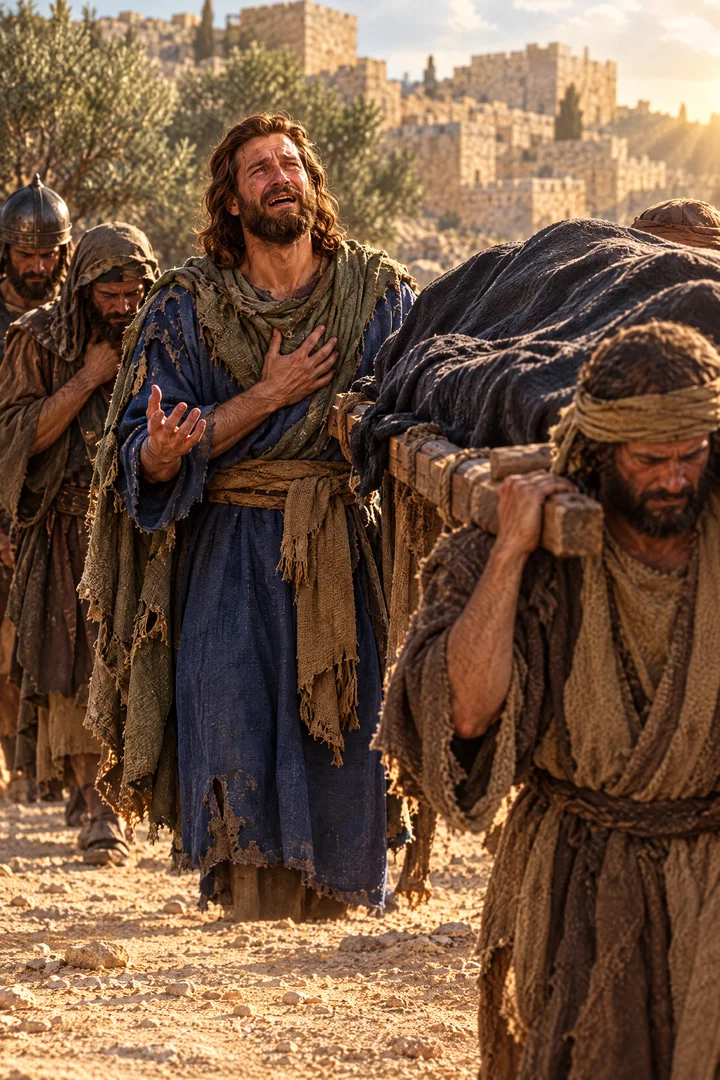
David uttered this lament as chief mourner at Abner's grave on the day of burial, after keeping a fast through the day.PP 699.3 He required the whole army, with Joab himself at its head, to take part in the mourning in torn garments and sackcloth.PP 699.3 The setting made the lament a public, royal act of mourning led by the king in person.PP 699.3 Its sense is that Abner did not die with hands bound and feet in fetters like a condemned wrongdoer meeting a just sentence.PP 699.3 He fell as a man falls before wicked men, struck down by treacherous assault and murder as a victim overcome by evil men.PP 699.3
By these words David gave Abner public honor in his burial.PP 699.3 He also showed his own grief and horror at the bloody deed.PP 699.3 At the same time he declared himself and his kingdom guiltless of Abner's blood.PP 699.3 The words were also a sharp rebuke upon Joab and his house, with Abishai joined with him in the guilt.PP 699.3 David could not then visit them with just punishment because the kingdom was still unsettled and because of their power and position.PP 699.3
Sources
Pioneers and periodicals
3 sources
The verse belongs to the long war between the house of Saul and the house of David, at the point when Abner had revolted to David and was then murdered by Joab on account of the slaying of Saul's son Ishbosheth.ST Apr 14, 1909 The statement about his hands and feet means he was not bound and his feet were not put in fetters.RH May 23, 1865RH Dec 29, 1859 Instead of dying in battle, he fell as a man falls before wicked men, struck down in a violent and treacherous murderous attack by Joab.RH May 23, 1865RH Dec 29, 1859 The lament presents his death as the death of a fool.RH Dec 29, 1859 The verse records that all the people wept again over him.RH May 23, 1865 His fall illustrates how the hidden, seductive designs of a trusted person can bring sudden destruction.RH Dec 29, 1859
Sources