2 Samuel 5:22
And the Philistines came up yet again, and spread themselves in the valley of Rephaim.
Translations
American King James Version, King James Version, KJV Cambridge Paragraph Bible, Revised Version, American Standard Version, Darby Translation
And the Philistines came up yet again, and spread themselves in the valley of Rephaim.
And the Philistines came yet again, and spread themselves in the valley of Rephaim.
And the Philistines add again to come up, and are spread out in the valley of Rephaim,
And, yet again, did the Philistines come up, —and they spread themselves out in the vale of Rephaim.
Berean Standard Bible, Majority Standard Bible
Once again the Philistines came up and spread out in the Valley of Rephaim.
The Philistines came up yet again and spread themselves in the valley of Rephaim.
And the Philistines came up again, and went in every direction in the valley of Rephaim.
Againe the Philistims came vp, and spred themselues in the valley of Rephaim.
Douay-Rheims (Challoner revision)
And the Philistines came up again and spread themselves in the valley of Raphaim.
Pictures
Cross-references
- 1 Chronicles 14:13-16
And the Philistines yet again spread themselves abroad in the valley.
The renewed Philistine attack and David’s victory follow his seeking God’s direction.
Commentary
Each commentary is drawn from primary sources: the writings of Ellen G. White and Adventist pioneers and periodicals. Each commentary is separate. Its own words are not a quotation; follow the references to read the source passages.
Ellen G. White
2 sources
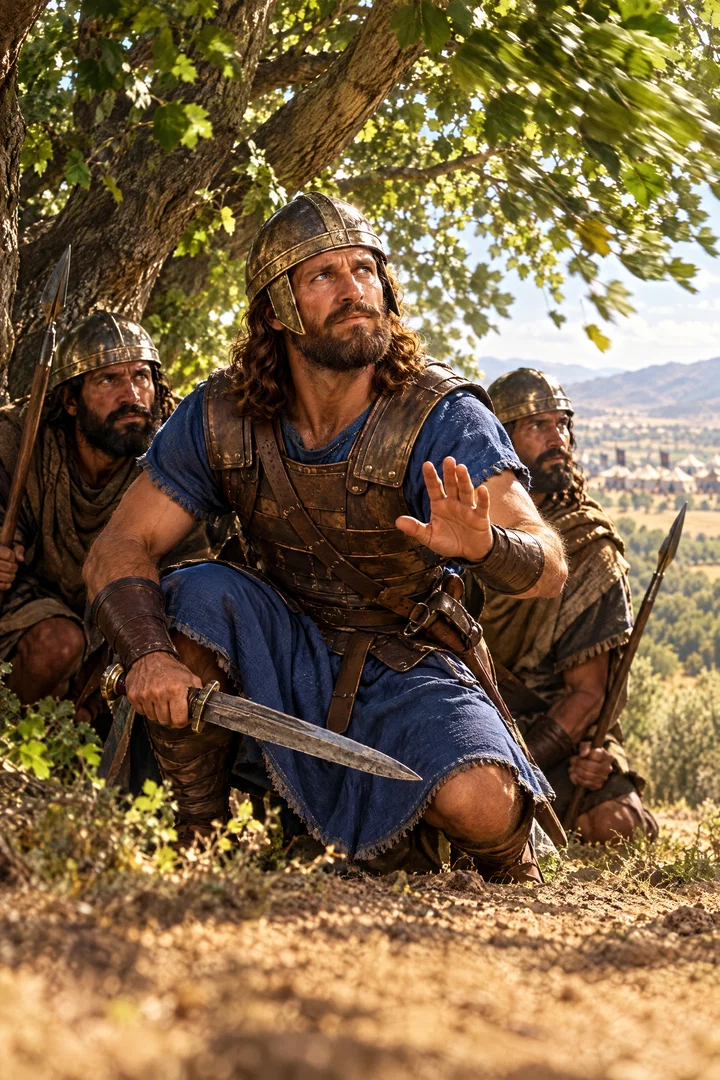
After their earlier defeat, the Philistines came up yet again with a larger force and took up position once more, spreading themselves out in the valley of Rephaim near Jerusalem.PP 703.4–704.2PP 704.3–4 Their renewed advance came as Israel was growing stronger under David, springing from their hostility toward him and his kingdom.PP 703.4–704.2 Faced with this second invasion, David did not rely on his former victory but sought the Lord's direction again.PP 704.3–4 God answered by telling him not to go up and meet them directly, but to circle around behind them and hold back until the appointed signal was given, and only then to strike.PP 704.3–4
Sources
Pioneers and periodicals
6 sources
The verse was written by Nathan or Gad and stands in the account of the rise of David's kingdom, including the moving of his capital from Hebron to Jerusalem, showing God's providence in building up the Israelite kingdom.ST Apr 29, 1913
It records a renewed Philistine attack, the second of two attacks after David became king, with the same people coming to the same place in the valley of Rephaim against the same enemy under apparently the same conditions, moved by jealousy of his growing power, gathering and spreading themselves through the valley, and ending in their defeat.ST Jan 11, 1916RH Nov 6, 1913ST Aug 2, 1910ST Sep 10, 1896
Their power spreading through the valley was later cast down through God's instruments, including David, so that they were no longer a power to fear.ST Aug 2, 1910
Faced with this repeat attack, David did not rely on his former victory but sought the Lord again for instruction about whether to attack.ST Jan 11, 1916RH Nov 6, 1913
God answered with an entirely different course from before, giving the sound of a going in the tops of the mulberry trees as the signal to move forward, because the Lord himself would go before David and strike the Philistine army.ST Jan 11, 1916RH Nov 6, 1913
Fresh prayer brought new light and victory came in a new way, so that God was glorified and the seeker was blessed.ST Jan 11, 1916
The chapter shows God's supernatural directions and assistances to David, proving that God sees all things and is everywhere and concerns himself with the affairs of his creatures.RH Aug 28, 1856
The verse means it is never safe to suppose that the same task must always be done in the same way, for past methods may have been good but God has better ones for today for him who prays.ST Jan 11, 1916
The same directions and assistances can be communicated now, but they are not because they are not asked for, and they are not asked for because they are not expected, and they are not expected because men lack faith, being under a refined spirit of atheism with no spiritual intercourse with their Maker and putting their own wisdom, prudence, and strength in the place of God instead of acknowledging him in all their ways.RH Aug 28, 1856
Faith in God must be exercised and cultivated, and then mountains may be removed.RH Aug 28, 1856
Sources