Acts 11:8
But I said, Not so, Lord: for nothing common or unclean hath at any time entered into my mouth.
Translations
But I said, Not so, Lord: for nothing common or unclean has at any time entered into my mouth.
King James Version, KJV Cambridge Paragraph Bible, Webster Bible
But I said, Not so, Lord: for nothing common or unclean hath at any time entered into my mouth.
Revised Version, American Standard Version
But I said, Not so, Lord: for nothing common or unclean hath ever entered into my mouth.
and I said, Not so, Lord; because anything common or unclean hath at no time entered into my mouth;
And I said, In no wise, Lord, for common or unclean has never entered into my mouth.
But I said—By no means, Lord, because, a common or unclean thing, hath at no time entered into my mouth.
Berean Standard Bible, Majority Standard Bible
‘ No, Lord,’ I said, ‘ for nothing impure or unclean has ever entered my mouth.’
But I said, ‘ Not so, Lord, for nothing unholy or unclean has ever entered into my mouth.’
But I said, No, Lord; for nothing common or unclean has ever come into my mouth.
And I said, God forbid, Lord: for nothing polluted or vncleane hath at any time entred into my mouth.
Douay-Rheims (Challoner revision)
And I said: Not so, Lord; for nothing common or unclean hath ever entered into my mouth.
Pictures
Cross-references
- Acts 10:9-16
On the morrow, as they went on their journey, and drew nigh unto the city, Peter went up upon the housetop to pray about the sixth hour:
Peter’s vision prompts the protest and its correction.
- Acts 10:28
And he said unto them, Ye know how that it is an unlawful thing for a man that is a Jew to keep company, or come unto one of another nation; but God hath shewed me that I should not call any man common or unclean.
Peter explains that God taught him not to call any person common or unclean.
- Acts 10:34-35
Then Peter opened his mouth, and said, Of a truth I perceive that God is no respecter of persons:
Peter recognizes that God accepts people from every nation without favoring one nation over another.
- Acts 11:17-18
Forasmuch then as God gave them the like gift as he did unto us, who believed on the Lord Jesus Christ; what was I, that I could withstand God?
The Spirit’s gift showed that God accepted the Gentiles and granted them repentance unto life.
- Leviticus 11
And the LORD spake unto Moses and to Aaron, saying unto them,
Peter recalls observing the dietary distinction between clean and unclean animals.
- Acts 10:44-48
While Peter yet spake these words, the Holy Ghost fell on all them which heard the word.
The Spirit’s gift to Gentiles confirms Peter’s understanding of the vision.
- Acts 10:15
And the voice spake unto him again the second time, What God hath cleansed, that call not thou common.
God's answer correcting the refusal
- Acts 15:7-11
And when there had been much disputing, Peter rose up, and said unto them, Men and brethren, ye know how that a good while ago God made choice among us, that the Gentiles by my mouth should hear the word of the gospel, and believe.
Peter recalls God accepting Gentiles without imposing circumcision.
- Acts 10:5-6
And now send men to Joppa, and call for one Simon, whose surname is Peter:
An angel directs Cornelius to Peter for instruction.
- Deuteronomy 14:3-20
Thou shalt not eat any abominable thing.
The written dietary law cited alongside Peter’s statement.
- Acts 11:3
Saying, Thou wentest in to men uncircumcised, and didst eat with them.
The charge about eating with uncircumcised men prompts Peter to recount his vision of clean and unclean things.
- Acts 11:18
When they heard these things, they held their peace, and glorified God, saying, Then hath God also to the Gentiles granted repentance unto life.
The vision led to God granting the Gentiles repentance unto life.
Commentary
Each commentary is drawn from primary sources: the writings of Ellen G. White and Adventist pioneers and periodicals. Each commentary is separate. Its own words are not a quotation; follow the references to read the source passages.
Ellen G. White
6 sources
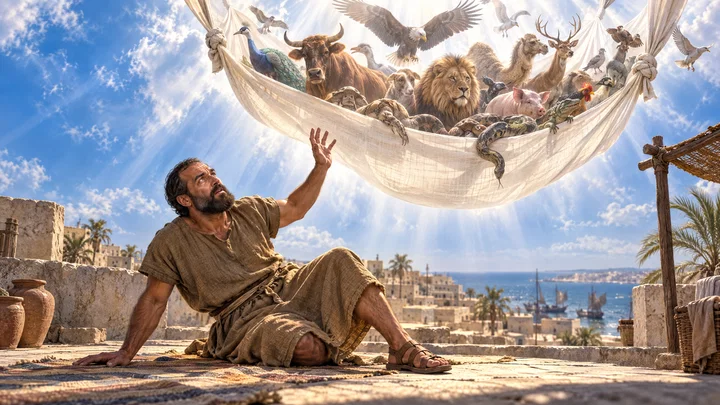
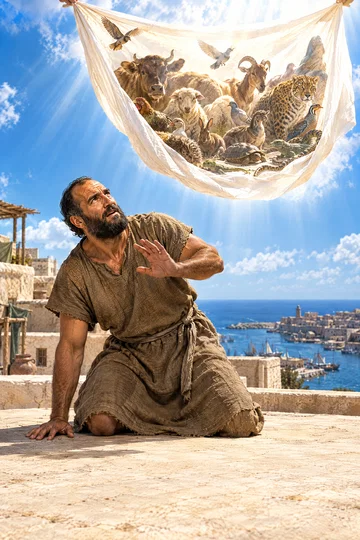
At Joppa Peter fell into a trance and was shown unclean creatures with the command to slay and eat, but he refused, answering that nothing common or unclean had at any time entered his mouth.7RED 65.2–67.1AC1 65.3–66.1Ms 160a, 1898, par. 36–38Ms 126, 1902, par. 30–31 He could answer so because he had always kept the Jewish law against forbidden food and had never eaten anything he regarded as common or unclean.7RED 65.2–67.1AC1 65.3–66.1Ms 160a, 1898, par. 36–38Ms 126, 1902, par. 30–31 He was answered three times that what God has cleansed must not be called common.7RED 65.2–67.1AC1 65.3–66.1 His refusal showed his hold on the ceremonial distinction of clean and unclean, and the answer taught him to no longer keep up the distinction of circumcision and uncircumcision nor look upon Gentiles as unclean, because God is no respecter of persons.7RED 65.2–67.1AC1 65.3–66.1
The verse belongs to a new phase in which God opened the gospel to the Gentiles, so that Gentile believers stand equal with Jewish believers.Ms 160, 1898, par. 32–34Ms 160a, 1898, par. 36–38Ms 126, 1902, par. 30–31 They are to be accepted as equal members of the church without circumcision, with God giving them the Holy Spirit just as to Jewish believers and granting them repentance leading to life.Ms 116, 1903, par. 17–20Ms 160, 1898, par. 32–34Ms 160a, 1898, par. 36–38Ms 126, 1902, par. 30–31 The vision that drew this reply prepared Peter to go to Cornelius and associate with Gentiles, challenging and breaking down the Jewish prejudice that stood in the way of the gospel reaching them.Ms 116, 1903, par. 17–20Ms 160, 1898, par. 32–34Ms 160a, 1898, par. 36–38Ms 126, 1902, par. 30–31
Peter retold this refusal and answer to the brethren in Judea to defend entering a Gentile house and eating with uncircumcised men.7RED 65.2–67.1 He showed caution by taking six brethren as witnesses, to prove that old prejudice and exclusiveness must be destroyed by the gospel.7RED 65.2–67.1 His reluctance and correction show that God's servants must be willing to be taught by God and to yield their own and inherited ideas and have them corrected.Ms 160, 1898, par. 32–34Ms 160a, 1898, par. 36–38 If they will not yield, God may pass them by and use others willing to follow His way.Ms 160, 1898, par. 32–34
Sources
Pioneers and periodicals
13 sources
Peter refused the command to kill and eat because nothing he regarded as common or unclean had ever entered his mouth.ST Oct 28, 1897RH Nov 16, 1916ST Jul 12, 1883 He spoke those words afterward at Jerusalem as he retold the vision shown him on the housetop at Joppa and defended his going to the Gentiles as obedience to God that he could not withstand.RH Nov 16, 1916ST Oct 28, 1897RH May 15, 1856 The vision did not abolish the distinction between clean and unclean animals or make every creature lawful food, for the nature of the beasts was unchanged.ST Jul 12, 1883ST Oct 31, 1906ST Nov 18, 1903 The unclean beasts stood for people, teaching what Peter and the other apostles had failed to learn, that what God has cleansed must not be called common or unclean.ST Oct 28, 1897ST Oct 31, 1906ST Nov 18, 1903 By that lesson he was prepared to enter the house of Cornelius at Caesarea without distinction, showing that God is no respecter of persons and that Gentiles of every nation stand on equal footing with Jews, accepted by Him and given repentance unto life through belief.ST Oct 28, 1897RH Nov 16, 1916RH Apr 21, 1868RH Nov 21, 1907
Words and Historical Setting
Peter refused the command to rise, kill and eat, declaring that nothing common or unclean had at any time entered his mouth, meaning he had never eaten anything he regarded as common or unclean.ST Oct 28, 1897RH Nov 16, 1916ST Jul 12, 1883ST Oct 31, 1906 His reply was his initial refusal and objection when told to kill and eat what was shown to him in the vision.ST Oct 28, 1897RH Apr 21, 1868 That showing took place at Joppa on the housetop of Simon the tanner, where he abode many days, when a sheet full of all manner of fourfooted beasts and creeping things and birds was presented with the voice commanding him to rise and kill and eat.ST Oct 28, 1897ST Nov 18, 1903
The verse is Peter's retelling and rehearsal of that vision afterward, recounting his stated dietary practice in response to what he was told.RH Nov 16, 1916ST Oct 28, 1897RH May 15, 1856 It records his first resistance to the vision's instruction that he had never eaten anything common or unclean.RH May 15, 1856ST Nov 18, 1903 In that rehearsal he defended his following of its direction as obedience he could not withstand because God had directed it.RH May 15, 1856
It belongs to Peter's prayer and vision together with the vision of Cornelius the Roman centurion and his conversion.RH Apr 21, 1868RH Nov 21, 1907ST Jun 23, 1909 The two visions instructed the early church in its duties, instructing Peter to go to the Gentiles.RH Apr 21, 1868RH May 15, 1856 That going was fulfilled at the house of Cornelius at Caesarea two days afterward, which Peter afterward rehearsed at Jerusalem to the apostles and brethren of Judea.ST Nov 18, 1903
In wider history it belongs to the progress and spread of the gospel in Judea and Samaria and the uttermost parts of the earth in execution of Christ's commission.RH Nov 16, 1916 It stands at the point when, after the expiration of the seventy weeks, the Gentiles were admitted to equal privileges with the Hebrews.RH Mar 4, 1862 Then the church that had been composed exclusively of Jewish converts came to comprise Gentile as well as Jewish believers.RH Nov 16, 1916
Vision's Meaning and Application
The sheet did not set aside the written distinction between clean and unclean creatures or turn every living thing into lawful food, for the refusal itself appeals to continued keeping of that dietary law.ST Jul 12, 1883ST Oct 31, 1906ST Nov 18, 1903 Permission to eat every kind of animal was not given, since the unclean character of the beasts remained unchanged because it belongs to their nature, which the showing did not alter.ST Jul 12, 1883ST Oct 31, 1906ST Nov 18, 1903 The animals stood for human beings, and the correcting word was that what God had cleansed must not be counted common.ST Oct 28, 1897ST Oct 31, 1906ST Nov 18, 1903 The spiritual lesson, before unlearned even though often repeated, is that no person is to be called common or unclean.ST Oct 28, 1897ST Oct 31, 1906ST Nov 18, 1903
By that correction Peter was made ready to enter a Gentile house and to act without distinction toward those he had regarded as unclean, since God had accepted them and poured out the Holy Spirit upon them.ST Oct 28, 1897RH Apr 21, 1868RH May 15, 1856 The two showings together directed the early church to its duty, sending Peter to the Gentiles when he could no longer withstand God.ST Oct 28, 1897RH Apr 21, 1868RH May 15, 1856 Through this instruction it was made plain that people of every nation stand equal before God, who shows no respect of persons.ST Oct 28, 1897RH Nov 21, 1907ST Mar 25, 1897 Gentiles were therefore to share the blessings of Christianity on the same footing as Jews, accepted by God, receiving the Holy Spirit, obtaining remission of sins by believing, and granted repentance unto life.ST Oct 28, 1897RH Nov 16, 1916RH Mar 4, 1862ST Mar 25, 1897ST Jun 18, 1902
The refusal lays bare the traditional customs and Jewish narrowness saturating prior history, which made the widening of the church filled with the new wine of the gospel a great question.RH Nov 16, 1916ST Mar 25, 1897 That narrowness was of men and not of God, and it had to be put away so that Jew and Gentile might stand equal in Christ.RH Nov 16, 1916ST Mar 25, 1897 The reading therefore calls for confidence that God is able to deliver.RH Nov 16, 1916ST Mar 25, 1897
Sources