Acts 16:27
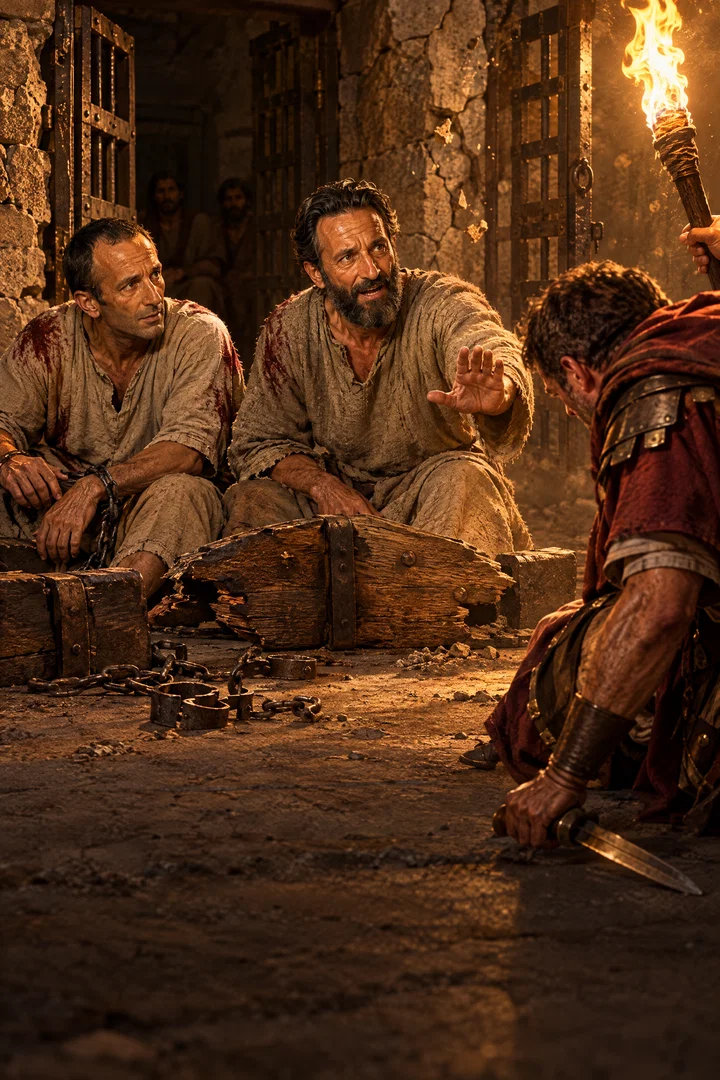
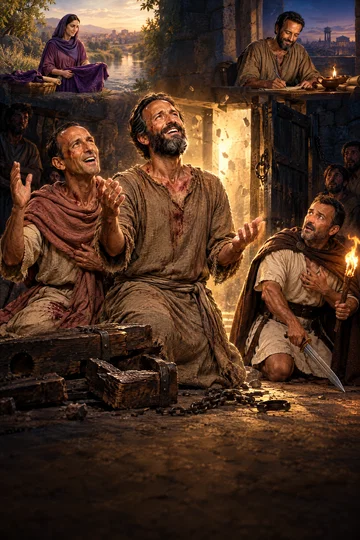
And the keeper of the prison awaking out of his sleep, and seeing the prison doors open, he drew out his sword, and would have killed himself, supposing that the prisoners had been fled.
Translations
American King James Version, King James Version, KJV Cambridge Paragraph Bible
And the keeper of the prison awaking out of his sleep, and seeing the prison doors open, he drew out his sword, and would have killed himself, supposing that the prisoners had been fled.
And the keeper of the prison awaking out of his sleep, and seeing the prison doors open, he drew out his sword, and would have killed himself, supposing that the prisoners had fled.
And the jailor being roused out of sleep, and seeing the prison doors open, drew his sword, and was about to kill himself, supposing that the prisoners had escaped.
And the jailor, being roused out of sleep and seeing the prison doors open, drew his sword and was about to kill himself, supposing that the prisoners had escaped.
and the jailor having come out of sleep, and having seen the doors of the prison open, having drawn a sword, was about to kill himself, supposing the prisoners to be fled,
And the jailor being awakened out of his sleep, and seeing the doors of the prison opened, having drawn a sword was going to kill himself, thinking the prisoners had fled.
And, the prison-keeper, being wakened and seeing that the doors of the prison had been opened, drawing his sword, was about to kill himself, supposing the prisoners to have fled.
Berean Standard Bible, Majority Standard Bible
When the jailer woke up and saw the prison doors open, he drew his sword and was about to kill himself, presuming that the prisoners had escaped.
The jailer, being roused out of sleep and seeing the prison doors open, drew his sword and was about to kill himself, supposing that the prisoners had escaped.
And the keeper, coming out of his sleep, and seeing the prison doors open, took his sword and was about to put himself to death, fearing that the prisoners had got away.
Then the keeper of the prison waked out of his sleepe, and when he sawe the prison doores open, he drewe out his sword and would haue killed himselfe, supposing the prisoners had bin fled.
Douay-Rheims (Challoner revision)
And the keeper of the prison, awaking out of his sleep, and seeing the doors of the prison open, drawing his sword, would have killed himself, supposing that the prisoners had been fled.
Pictures
Cross-references
- Acts 16:32-34
And they spake unto him the word of the Lord, and to all that were in his house.
After the prison-door incident, the jailer hears the word, cares for the apostles, and is baptized with his household.
- Acts 16:31
And they said, Believe on the Lord Jesus Christ, and thou shalt be saved, and thy house.
The jailer asks how to be saved after the prison crisis.
- Acts 12:7-10
And, behold, the angel of the Lord came upon him, and a light shined in the prison: and he smote Peter on the side, and raised him up, saying, Arise up quickly. And his chains fell off from his hands.
Both show God delivering imprisoned apostles.
- Acts 16:32
And they spake unto him the word of the Lord, and to all that were in his house.
The word of the Lord is spoken to the jailer after his repentance.
- Genesis 39:20-23
And Joseph’s master took him, and put him into the prison, a place where the king’s prisoners were bound: and he was there in the prison.
Joseph’s imprisonment is compared with theirs.
Commentary
Each commentary is drawn from primary sources: the writings of Ellen G. White and Adventist pioneers and periodicals. Each commentary is separate. Its own words are not a quotation; follow the references to read the source passages.
Ellen G. White
27 sources
Awakened by the earthquake to find every prison door open, the Philippian keeper assumed the prisoners had escaped and drew his sword to take his own life rather than face disgraceful execution for failing his charge under Roman law.8RED 40.1–3Ms 66, 1905, par. 33–37RH Jun 29, 1905EW 170.1–2SLP 76.3–77.2 Paul cried out that all were still there, having held the freed prisoners so completely by his presence and self-control that not one attempted to flee.8RED 40.1–3Ms 66, 1905, par. 33–37RH Jun 29, 1905ST Jul 3, 18793SP 382.2–383.2 They stayed because flight would have disgraced the gospel as if they were criminals, would have left the keeper to die, and repaid cruelty with the kindness of Christ instead of resentment or revenge.AA 216.1–217.1ST Jul 3, 18793SP 386.1–2 Convicted by the earthquake and by their conduct, the trembling keeper dropped his sword, confessed his sins, asked what he must do to be saved, washed their wounds, and was baptized with all his house rejoicing in God.Ms 66, 1905, par. 33–37RH Jun 29, 1905AA 216.1–217.1AA 426.2SLP 244.1 What looked like failure became providence, showing that faithfulness under suffering lets light shine even in prison, wins souls to Christ, and turns persecution to the glory of God.Ms 6, 1884, par. 7–8GW 107.317MR 81.4–82.1
Midnight Earthquake at Philippi
The scene is Philippi, the chief city of that part of Macedonia and a colony, reached by a straight course from Troas by Samothracia and Neapolis to preach the gospel after the night vision of the man of Macedonia saying come over and help, carrying the work beyond Asia Minor into Europe without delay.AA 211.2
Before the earthquake Paul and Silas had been beaten and left with swollen and bleeding wounds, then locked with their feet in stocks, yet they were singing God's praises.Ms 66, 1905, par. 33–37ST Jul 3, 1879 Angels were beside them as they sang, and the jailer had heard their prayers and singing with amazement.Ms 66, 1905, par. 33–37ST Jul 3, 1879 He had himself fastened their feet in the instrument of torture, had expected bitter wailing and groans from them, and had fallen asleep with joyful praise in his ears.ST Jul 3, 1879
Suddenly the foundations and walls were shaken by an earthquake that opened every prison door and loosed every band, chain and fetter.Ms 66, 1905, par. 33–37ST Jul 3, 18793SP 382.2–383.2 The glory of God penetrated the walls, flooding the darkest dungeon with beams of heavenly light.17MR 81.4–82.1
Awakened out of sleep by the earthquake, the keeper saw the prison doors open and supposed the prisoners had fled.8RED 40.1–3Ms 66, 1905, par. 33–37RH Jun 29, 1905EW 170.1–2SLP 76.3–77.2 His first thought on waking to the shaking of the walls and the open doors was that the prisoners had escaped.AA 426.2ST Jul 3, 1879
Jailer's Despair and Rescue
The keeper had received the prisoners under an explicit charge to keep them safely, and waking to see the doors open he supposed they had fled and felt sure that under Roman law death would be the penalty for his apparent unfaithfulness in failing to guard them.8RED 40.1–3EW 170.1–2SLP 76.3–77.2AA 426.2ST Jul 3, 1879 In despair and bitterness he drew his sword and was about to kill himself, crying that it was better to die by his own hand than to submit to disgraceful execution.8RED 40.1–3AA 216.1–217.1ST Jul 3, 1879ST Jul 3, 1879AA 215.1–3
He was also trembling at the wrath of God manifested in the earthquake, and the fear of escape and punishment afterward seemed of little consequence beside a new strange dread about his own condition and a desire to possess the tranquillity and cheerfulness the apostles had shown under suffering and abuse, whose countenances showed the light of heaven.AA 216.1–217.1 Paul cried out loudly that all were still there, and his words of reassurance stopped the death and prevented harm to the jailer.8RED 40.1–3Ms 66, 1905, par. 33–37RH Jun 29, 1905EW 170.1–2ST Jul 3, 1879 That warning that none were missing held him back from the sword when he was ready to take his own life.SLP 76.3–77.2ST Jul 3, 1879AA 215.1–3
Though the earthquake had opened every door and loosed every chain, band and fetter so that they could have escaped, Paul controlled the liberated prisoners so perfectly that not one attempted to escape and they remained in their places, restrained by his presence and self-control.ST Jul 3, 18793SP 382.2–383.28RED 43.2–33SP 386.1–2SLP 79.4 Their staying spared the keeper the death penalty he would have faced if they had fled.8RED 43.2–3SLP 79.4ED 66.4 They stayed because flight would have acknowledged they were criminals to the disgrace of the gospel, would have exposed the jailer to the penalty of death, and would have made a bad general influence.ST Jul 3, 18793SP 386.1–2
The severity with which the jailer had treated them had not roused resentment, revenge, or malice, for otherwise they would have allowed him to kill himself, but with hearts filled with the love of Christ they repaid cruelty with kindness, held no malice against their persecutors, and showed concern for him, proving the character of Christ's religion.AA 216.1–217.1ST Jul 3, 18793SP 386.1–2 He knew God had miraculously interposed to save their lives, proving they were servants of the most high God showing the way of salvation.AA 216.1–217.1
Conversion and Witness
The earthquake together with the prisoners' conduct brought the jailer under conviction, and unlike Felix he did not stifle it.AA 426.2SLP 244.1RH Nov 2, 1911 Trembling and humble he came forward, dropped his sword, sought forgiveness, confessed his sins, found pardon, and welcomed the Spirit of God into his heart and home, choosing to serve God as a child of God and heir of heaven.AA 216.1–217.1AA 426.2SLP 244.1RH Nov 2, 1911 What had looked discouraging and like failure became success when the trembling jailer brought them out and asked what he must do to be saved.Ms 66, 1905, par. 33–37RH Jun 29, 1905AA 216.1–217.1 He and his house heard the word of the Lord, he was moved by the faith that had sustained Paul under suffering, he washed their stripes, he was baptized at once with all his household, and he rejoiced believing in God.Ms 66, 1905, par. 33–37SLP 244.1ST Jul 20, 1904 His household also came to faith and joined Christ's disciples.SLP 244.13SP 386.1–2ST Jul 20, 1904
The imprisonment itself was direct providence to bring the light of truth inside the prison walls.Ms 6, 1884, par. 7–8 Through it officers in the emperor's service were converted.3SP 387.2 There among convicted sinners in the Macedonian dungeon Paul lifted up Christ as the One who hates sin and loves the sinner.CEv 27.1MC 32.1Ms 23, 1890, par. 5 He proclaimed Him as the bearer of human sins who has authority to impart His righteousness.CEv 27.1MC 32.1Ms 23, 1890, par. 5 His faith, strengthened by effort and sacrifice, upheld him so that opposition and persecution did not turn him from serving Christ.GW 107.3
Angels from heaven came right into the prison house on Paul's behalf when he suffered for truth's sake, to take their prey from the enemy.5MR 125.1–126.1 This proves that God is constantly working on behalf of His people.5MR 125.1–126.1 It teaches families that angels of God go in and out of the house, guarding and watching over men.5MR 125.1–126.1 Christ's church was present in the Philippian prison, for where two or three love and obey God's commandments Jesus presides even within prison walls.17MR 81.4–82.1 The suffering of His saints there spread faith, won souls to Christ, and glorified His name, proving that all things work together for good to those who love God.17MR 81.4–82.1
The verse means believers must bear God's message wherever they are and constantly let their light shine.Ms 6, 1884, par. 7–8 They are to obey God rather than man when laws and powers oppose God, continuing to proclaim Jesus though forbidden and thrust into prison.Ms 6, 1884, par. 7–8 Faithfulness to truth brings reproach, persecution and strait places, especially when the message goes with a loud cry.Ms 6, 1884, par. 7–8 The bitterest opposition from those who hate God's moral standard should not shake the steadfast soul who trusts fully in God.Ms 6, 1884, par. 7–817MR 81.4–82.1
Sources
Pioneers and periodicals
54 sources
The keeper woke from sleep to find the prison doors open, concluded the prisoners had escaped, drew his sword to take his own life, and was stopped when told they were all still there.ST Jun 26, 1893ST Jun 26, 1893ST Jan 28, 1903 He had been roused by the midnight earthquake that shook the prison to its foundations, threw open every door and loosed every band while Paul and Silas prayed and sang and the other prisoners listened.ST Jun 26, 1893RH Nov 21, 1912 Believing he would be held answerable for the escape, he chose death by his own hand rather than face the government, for by Roman law a jailer bore the penalty due an escaped prisoner.ST Jun 26, 1893ST Dec 17, 1902ST Jan 28, 1903ST Jun 24, 1897ST Dec 17, 1902 The open doors did not mean flight, for the prisoners remained in place through God's power and Paul's restraining presence, with opportunity to flee yet not one attempting to escape.ST Jul 3, 1879ST Mar 31, 1914ST Jan 19, 1882RH Mar 28, 1912 That moment of despair became the opening for salvation, as the reassured keeper asked what he must do to be saved, heard the word of the Lord with his household, believed in Christ, washed the apostles' wounds, and was baptized with his house before morning.RH Jun 29, 1905RH Jan 9, 1908RH Jun 16, 1874ST Jan 17, 1878RH Jun 16, 1863
Words and Night Setting
The keeper awoke from sleep and saw the prison doors open, and supposing the prisoners had fled he drew his sword and was about to kill himself.RH Jun 29, 1905ST Jun 26, 1893ST Jun 26, 1893ST Jan 28, 1903ST Mar 18, 1903 He believed he would be held responsible for the escape and feared the consequences from those over him, so death by his own hand seemed before him.ST Jun 26, 1893ST Jun 26, 1893ST Jan 28, 1903ST Jan 19, 1882 He was stopped when Paul called out with a loud voice that all were still there, warning him that no one had fled.RH Jun 29, 1905ST Jun 26, 1893ST Jun 26, 1893ST Jan 19, 1882 The opened doors did not mean the prisoners had left, for they remained in their places, and the crisis became the opening for him to hear the way of salvation and ask how to be saved.RH Jun 29, 1905ST Jan 19, 1882
He had been awakened by the earthquake in the night that threw open the prison doors, and he awoke to find them open and supposed the prisoners had fled.ST Jun 26, 1893RH Nov 21, 1912RH Jul 16, 1872 It was the midnight earthquake that shook the foundations of the prison house, opened all the doors, and loosed everyone's bands while Paul and Silas were praying and singing hymns to God and the prisoners were listening to them.ST Jun 26, 1893ST Jan 13, 1898 The event followed the punishment of Paul and Silas by the magistrates and their imprisonment, and it belongs to an answer to prayer that led to the jailer's conversion and the baptism of himself and his family.RH Nov 21, 1912ST Jan 9, 1912 The same earthquake that freed Paul and Silas shook the keeper from carnal security, and what seemed a disaster became a means of deliverance and blessing.RH Jul 16, 1872ST Jan 9, 1912
He had heard with amazement the prayers and singing of Paul and Silas, had seen their swollen and bleeding wounds, and had himself fastened their feet in the instrument of torture.ST Jul 3, 1879 He had expected bitter wailing and groans, yet he had fallen asleep with joyful praise in his ears, and he awoke to the earthquake shaking the prison walls with the first thought that the prisoners had escaped.ST Jul 3, 1879 He remembered the explicit charge with which the prisoners had been entrusted to his care and felt sure death would be the penalty for his apparent unfaithfulness under Roman law, crying out in bitterness that it was better to die by his own hand than submit to disgraceful execution.ST Jul 3, 1879 The apostles might have fled when the earthquake opened the doors and loosened the chains and fetters from every prisoner, but Paul controlled the liberated prisoners so perfectly that not one attempted to escape.ST Jul 3, 1879 Flight would have acknowledged they were criminals to the disgrace of the gospel, would have exposed the jailer to the penalty of death, and would have made a bad general influence, and the severity with which the jailer had treated them had not roused resentment, for otherwise they would have allowed him to kill himself, but their hearts were filled with the love of Christ and held no malice against their persecutors.ST Jul 3, 1879
He did not die by that sword, for when it was day he was still alive in the prison.ST Jan 20, 1898 He then reported to Paul the magistrates' words to let Paul and Silas go and to come forth and go in peace.ST Jan 20, 1898
Fear of Roman Punishment
Awakened to find the doors standing open, the keeper concluded the prisoners had fled and that he would be held answerable for their escape, and in fear of what the government would do he drew his sword to take his own life before Paul's warning stopped him.ST Jun 26, 1893ST Jan 28, 1903RH Jan 13, 1874RH Nov 23, 1905 He acted to avoid death at the government's hands for letting his prisoners go.ST Dec 17, 1902ST Dec 17, 1902 His fear of the consequences drove him to choose suicide rather than face reckoning.RH Nov 23, 1905
He had been charged especially to keep Paul and Silas secure, and now the danger was not theirs alone but that all the prisoners were loose.ST Dec 17, 1902ST Dec 17, 1902 The opening of every door left him facing the loss of his entire charge, not only the two apostles.ST Dec 17, 1902ST Dec 17, 1902
By Roman law a jailer bore the same penalty to which an escaped prisoner had been condemned, so that if their lives were forfeited to the state his own life was forfeited.ST Dec 17, 1902ST Jun 24, 1897ST Dec 17, 1902 Escape on his watch meant he must suffer what they were to suffer.ST Jun 24, 1897
Fearing execution for failing his charge, he judged it better to die by his own hand than to submit to the executioner.ST Jul 3, 1879ST Mar 31, 1914ST Jun 24, 1897 The death he dreaded was a disgraceful execution for apparent unfaithfulness under Roman law, and in bitterness he cried out that self-destruction was preferable.ST Jul 3, 1879ST Jul 3, 1879 Losing his prisoners exposed him to the penalty of death, so with the open doors before him he was on the point of killing himself when Paul called out and stopped him.ST Jul 3, 1879ST Mar 31, 1914
His despair and trembling came not only from natural fear at feeling the earth rock beneath him and not only from dread of Roman justice if those in his charge escaped.ST May 12, 1890 It came also from guilt for the great wrong he had done to God's messengers, and from connecting the power that wrecked the prison with the power that had accompanied his prisoners' work.ST Jun 24, 1897 In that shock of earthquake he felt a premonition of the great judgment about which Paul and Silas had preached, trembling under his load of guilt until he fell down to ask what he must do to be saved.ST May 12, 1890
Prisoners Who Remained
The open doors did not mean that anyone had gone, for all the prisoners were still there in their places.ST Jan 19, 1882RH Mar 28, 1912ST Jun 26, 1893RH Jun 16, 1874 They had remained through God's power and were restrained by Paul's presence, and Paul called out to stop the jailer from killing himself by telling him they were all there.ST Mar 31, 1914ST Jul 20, 1904ST Jan 19, 1882RH Mar 28, 1912 The crisis of the supposed escape thus became the opening for the jailer to hear the way of salvation.ST Jan 19, 1882
Though the earthquake had opened the doors and loosened the chains and fetters from every prisoner and had given full opportunity to flee, Paul controlled the liberated prisoners so perfectly that not one attempted to escape.ST Jul 3, 1879 Paul and Silas would not flee, because flight would have acknowledged that they were criminals to the disgrace of the gospel, would have left the jailer to die under the penalty of death, and would have made a bad general influence.ST Jul 3, 1879 The severity with which they had been treated had not roused resentment, for otherwise they would have allowed him to kill himself, but their hearts were filled with the love of Christ and held no malice against their persecutors.ST Jul 3, 1879 By staying they spared the jailer's life and showed presence of mind and the spirit of the religion of Jesus, opening the way for the conversion of the keeper and of the prisoners.
At Philippi the prisoner remained that the jailer might be saved.ST Jun 26, 1893 The supernatural event together with the prisoner's kindness moved the jailer's heart.ST Jun 26, 1893 Reassured that Paul and Silas were still there, the crisis led him to ask how to be saved and to hear the way of salvation.ST Jul 20, 1904ST Jan 19, 1882RH Jun 16, 1874
Mission at Philippi
The keeper's despair belongs to Paul's crossing to Europe with Silas after the stay in Antioch and the tour to strengthen the churches in Syria and Cilicia.ST Jun 4, 1902 The Holy Spirit forbade labor in Asia and in Bithynia and by vision sent them to Macedonia because waiting hearts were there, including the Philippian jailer whose heart could be reached.RH Jun 11, 1901 The Spirit knew stripes and the stocks in the inner prison awaited them, yet knew they would be victors in the end, so the jailer's awakening to find the prison doors open and his despair over supposed escape became the opening for his reaching.RH Jun 11, 1901
At Philippi pious Gentiles were in the habit of assembling on the Sabbath for worship, and there Paul laid the foundation of the Philippian church.RH Nov 21, 1871 Among them was Lydia of Thyatira, a seller of purple who worshiped God, whose heart the Lord opened to heed the things spoken by Paul so that she was baptized with her household and constrained Paul to abide in her house.ST Jan 13, 1898 There was also the maid having a spirit of divination who brought her masters much gain by soothsaying and cried that these men are servants of the Most High God proclaiming the way of salvation, until Paul charged the spirit in the name of Jesus Christ to come out of her and it came out that very hour.ST Jan 13, 1898
After Paul and Silas declared the truth they were beaten with stripes, cast into the inner prison, and fastened in the stocks.RH Jan 31, 1871 The beating was cruel and unlawful, inflicted without legal condemnation.ST Jun 17, 1903RH Aug 11, 1863 At midnight in meek, patient suffering they did not murmur or complain about suffering or become moderate in preaching, but sang praises to God.RH Jan 31, 1871 Their faithfulness brought angelic hosts to shake the prison, and had they murmured no angel would have visited.RH Jan 31, 1871 Their affliction preceded the success of their work there and in Thessalonica.RH Aug 11, 1863
The manifestations of God's power caused the magistrates to fear supernatural wrath and to send word by the sergeants to let Paul and Silas go.ST Jul 3, 1893 After the magistrates learned that Paul was a Roman citizen whom they had beaten without legal condemnation, they feared the trouble he could bring against them, though he could have demanded substantial compensation but did not.ST Jun 17, 1903 Paul then asserted his citizenship and demanded public acquittal, which was granted, God overruling the incident so that respect would be shown to His servants, and the rulers apologized for their treatment of them.RH Jan 28, 1862ST Jul 3, 1893 At the magistrates' solicitation Paul and Silas then departed and passed through Amphipolis and Apollonia to Thessalonica.ST Jul 3, 1893
That Greek dungeon where Paul's entry into Europe began in hardship became the setting for the first European converts and Christian praise.ST Feb 28, 1884 The jailer's attempted suicide at the sight of the open prison doors was followed by his conversion, and the night in the dungeon became a source of Christian song.ST Feb 28, 1884 The singing in prison, the opening of the doors, the jailer's response leading to his conversion and baptism following manifestations of God's power, and the prisoners' release belong together, and news of the event could have spread through the region.ST Jul 3, 1893ST Dec 3, 1896
Conversion and Baptism
The moment of despair when the keeper woke to open doors and supposed escape became the occasion for him and his house to be converted to God.RH Jun 29, 1905RH Jun 16, 1874RH Nov 23, 1905RH Jan 31, 1871 Stopped by the loud assurance that all prisoners were still there, he asked what he must do to be saved, heard the word of the Lord, and with his household believed in Christ and became Christians.RH Jun 29, 1905RH Jun 16, 1874ST Jan 17, 1878 In this they turned from paganism to serve the true God, and his conversion helped establish a strong church in Philippi as lights guiding others to the gospel.RH Jan 9, 1908 This followed the beating with stripes and casting into the inner prison fastened in the stocks after declaring the truth, yet instead of murmuring or complaining or becoming moderate in preaching, there was singing praises to God at midnight in meek, patient suffering.RH Jan 31, 1871 Such faithfulness brought angelic hosts to shake the prison, whereas murmuring would have kept any angel from visiting, showing the necessity of obeying the truth without murmur or complaint.RH Jan 31, 1871
He and his family were baptized immediately, even in the night before morning.RH Jan 9, 1908ST Jan 17, 1878RH Nov 23, 1905 Before morning a company of baptized believers had been gathered in the prison, and the account is taken to show that the baptism took place while still at the prison.ST Jun 13, 1878RH Mar 6, 1913 Baptism is closely connected with true conviction of sin and follows conviction and faith without delay, and must not be put off for months to see if converts remain firm.ST Jan 17, 1878 Rejoicing follows baptism.ST Jan 17, 1878
His cruelty toward the saints gave way to tender care, for before morning he washed their wounds, and to joy in God when grace found him in prison that same night and brought salvation and comfort to his household.RH Jun 16, 1863RH Aug 21, 1856ST Oct 10, 1906 The gathering before morning of baptized believers meant a strong church begun at Philippi to turn others from paganism and guide them.RH Jan 9, 1908RH Mar 6, 1913 In contrast to Paul and Silas, who could sing because Christ was with them, he was the troubled one, but he found peace and joy when he found Christ.ST Mar 25, 1903 What seemed a disaster became deliverance and blessing, what began as desperate crisis became faith and comfort, a prison experience that the favor of God turns into paradise, the opposite of guilt turning a palace into a prison.ST Jan 9, 1912RH Aug 21, 1856RH Aug 12, 1862
His response to the earthquake and to the prisoners' conduct led him to face his guilt, welcome God's Spirit, and find pardon.RH Nov 2, 1911 He repented and chose to become a child of God and an heir of heaven, unlike Felix.RH Nov 2, 1911
Teaching and Christian Example
At Philippi pious Gentiles were in the habit of assembling on the Sabbath for worship, and there Paul laid the foundation of the Philippian church, yet the keeper's awaking to open doors gives not one hint that Paul introduced a new Sabbath there.RH Nov 21, 1871 God's providence had Paul and Silas in that Philippian prison, and their confinement gave peace, joy and happiness not found elsewhere even in a king's palace.ST Oct 16, 1893 Imprisonment did not prevent labor for Christ, for in the dungeon Paul continued to keep his mission to preach Jesus in view.RH Aug 5, 1873ST Oct 29, 1885 Though imprisoned, the Lord glorified His name there, and before morning a company of baptized believers had been gathered.RH Mar 6, 1913
Their united witness and willingness to suffer for Christ were accompanied by God's intervention and power to testify.RH Jan 13, 1874 The Spirit who forbade labor in Asia and in Bithynia and by vision sent Paul and Silas to Macedonia because waiting hearts were there knew stripes and stocks in the inner prison awaited them, yet knew they would be victors in the end, so the jailer's awakening to open doors and his despair over supposed escape became the opening for his reaching.RH Jun 11, 1901 Their affliction at Philippi, where they were cruelly beaten and imprisoned, preceded the success of their work there and in Thessalonica.RH Aug 11, 1863 That imprisonment led to the jailer's conversion and his household's, showing how affliction suffered by God's people can further the gospel and lead others to glorify God.RH Aug 18, 1863 They rejoiced in trial in stocks in unpleasant position and unfavorable outlook because they knew God would work good out of it, and they were not disappointed, and the jailer's conversion was due in large measure to the spirit they manifested in suffering, proving God is over all and can cause even the enemy's wrath to praise Him and work good for His chosen.RH Mar 4, 1909
After declaring the truth they were beaten with stripes, cast into the inner prison and fastened in the stocks, yet they did not murmur or complain about suffering or become moderate in preaching, but sang praises to God at midnight in meek, patient suffering.RH Jan 31, 1871 Their faithfulness brought angelic hosts to shake the prison, and had they murmured no angel would have visited, and the lesson is the necessity of obeying the truth without murmur or complaint.RH Jan 31, 1871 God directed Paul to the jail in Philippi to save the jailer and his family, illustrating that God can use a person in prison to help others.RH May 23, 1907 Paul's brief conversation with an awakened sinner in prison brought the man to the Saviour, a personal ministry whose spiritual impact may have reached more souls than his public discourse on Mars Hill.ST Jun 8, 1904 His ministry shook the prison, alarmed the jailer, and brought the magistrates to perplexity and humility, making him an example for gospel workers, while such gospel teaching of the household as he gave the jailer and his family is the kind of work a territorial division among churches could have obstructed.ST Sep 11, 1907
God was with Paul and Silas in prison giving comfort and support.RH Dec 19, 1907 They personally worked with the jailer and his household in the night, and witnessed their conversion and baptism before dawn.
Sources