Acts 2:14
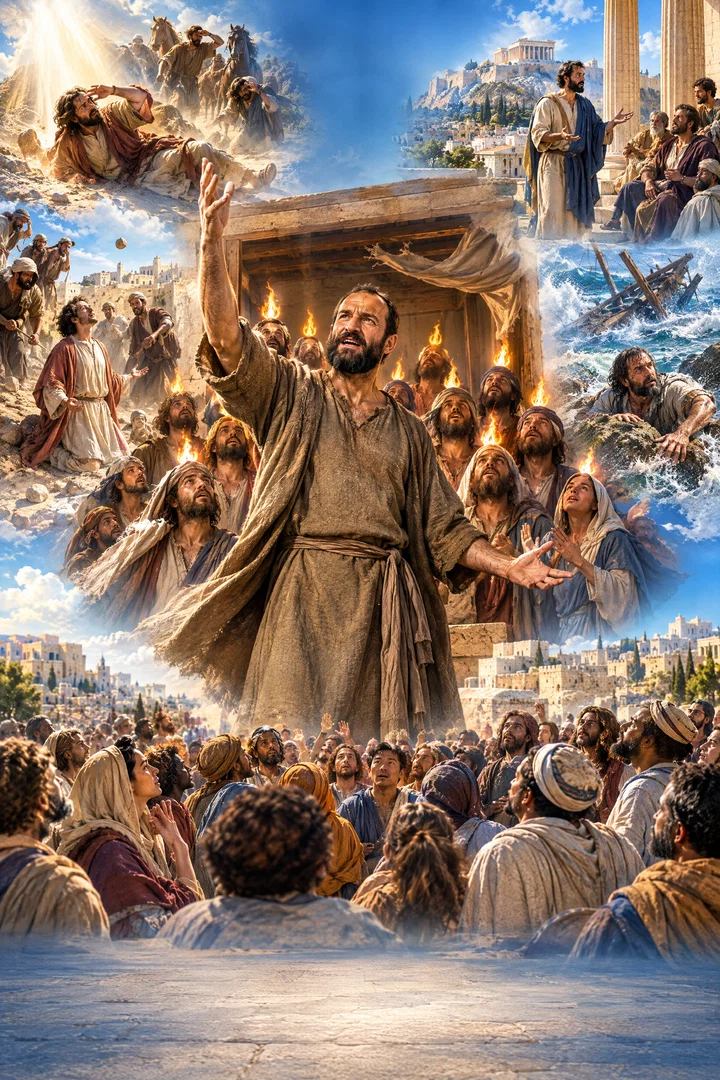
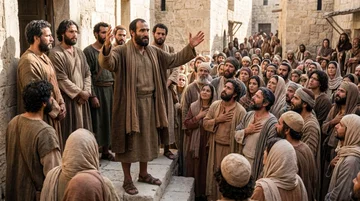
But Peter, standing up with the eleven, lifted up his voice, and said unto them, Ye men of Judæa, and all ye that dwell at Jerusalem, be this known unto you, and hearken to my words:
Translations
But Peter, standing up with the eleven, lifted up his voice, and said to them, You men of Judaea, and all you that dwell at Jerusalem, be this known to you, and listen to my words:
But Peter, standing up with the eleven, lifted up his voice, and said unto them, Ye men of Judæa, and all ye that dwell at Jerusalem, be this known unto you, and hearken to my words:
But Peter, standing up with the eleven, lift up his voice, and said unto them, Ye men of Judea, and all ye that dwell at Jerusalem, be this known unto you, and hearken to my words:
But Peter standing up with the eleven, lifted up his voice, and said to them, Ye men of Judea, and all ye that dwell at Jerusalem, be this known to you, and hearken to my words:
But Peter, standing up with the eleven, lifted up his voice, and spake forth unto them, saying, Ye men of Judaea, and all ye that dwell at Jerusalem, be this known unto you, and give ear unto my words.
But Peter, standing up with the eleven, lifted up his voice, and spake forth unto them, saying, Ye men of Judæa, and all ye that dwell at Jerusalem, be this known unto you, and give ear unto my words.
and Peter having stood up with the eleven, lifted up his voice and declared to them, 'Men, Jews! and all those dwelling in Jerusalem, let this be known to you, and harken to my sayings,
But Peter, standing up with the eleven, lifted up his voice and spoke forth to them, Men of Judaea, and all ye inhabitants of Jerusalem, let this be known to you, and give heed to my words:
But, taking his stand, Peter with the eleven lifted up his voice, and sounded out unto them—Ye men of Judaea, and all ye who are sojourning in Jerusalem! Let, this, unto you be known, and give ear unto my declarations;—
Berean Standard Bible, Majority Standard Bible
Then Peter stood up with the Eleven, lifted up his voice, and addressed the crowd: “ Men of Judea and all who dwell in Jerusalem, let this be known to you, and listen carefully to my words.
But Peter, standing up with the eleven, lifted up his voice and spoke out to them, “ You men of Judea and all you who dwell at Jerusalem, let this be known to you, and listen to my words.
But Peter, getting up, with the eleven, said in a loud voice, O men of Judaea, and all you who are living in Jerusalem, take note of this and give ear to my words.
But Peter standing with ye Eleuen, lift vp his voice, and said vnto them, Ye men of Iudea, and ye all that inhabite Hierusalem, be this knowen vnto you, and hearken vnto my woordes.
Douay-Rheims (Challoner revision)
But Peter standing up with the eleven, lifted up his voice, and spoke to them: Ye men of Judea, and all you that dwell in Jerusalem, be this known to you, and with your ears receive my words.
Pictures
Cross-references 20 of 28
- Joel 2:28-32
And it shall come to pass afterward, that I will pour out my spirit upon all flesh; and your sons and your daughters shall prophesy, your old men shall dream dreams, your young men shall see visions:
Peter quotes Joel’s prophecy of the Spirit’s outpouring and accompanying signs.
- Acts 2:1-4
And when the day of Pentecost was fully come, they were all with one accord in one place.
The Spirit’s coming and the disciples’ speech prompt Peter’s address.
- Acts 2:41
Then they that gladly received his word were baptized: and the same day there were added unto them about three thousand souls.
Peter’s Pentecost preaching led thousands to accept the message and be baptized.
- Acts 1:8
But ye shall receive power, after that the Holy Ghost is come upon you: and ye shall be witnesses unto me both in Jerusalem, and in all Judæa, and in Samaria, and unto the uttermost part of the earth.
Jesus promised Spirit-empowered witness, fulfilled when Peter preached at Pentecost.
- Leviticus 23:15-21
And ye shall count unto you from the morrow after the sabbath, from the day that ye brought the sheaf of the wave offering; seven sabbaths shall be complete:
The feast of weeks is fulfilled at Pentecost.
- Luke 24:49
And, behold, I send the promise of my Father upon you: but tarry ye in the city of Jerusalem, until ye be endued with power from on high.
Jesus promised power from on high, fulfilled when Peter preached.
- Acts 2:22-24
Ye men of Israel, hear these words; Jesus of Nazareth, a man approved of God among you by miracles and wonders and signs, which God did by him in the midst of you, as ye yourselves also know:
Peter’s sermon identifies Jesus and proclaims that God raised him from the dead.
- Psalms 16:10
For thou wilt not leave my soul in hell; neither wilt thou suffer thine Holy One to see corruption.
Peter identifies the promise that God would not abandon Christ in death as fulfilled in his resurrection.
- Acts 2:32-33
This Jesus hath God raised up, whereof we all are witnesses.
Relates the Spirit’s outpouring to the events of Pentecost.
- Acts 2:36-38
Therefore let all the house of Israel know assuredly, that God hath made that same Jesus, whom ye have crucified, both Lord and Christ.
Peter’s preaching exposes the crowd’s guilt, and they respond as he calls them to repent and be baptized.
- Acts 2:1
And when the day of Pentecost was fully come, they were all with one accord in one place.
The Spirit’s coming at Pentecost precedes Peter’s sermon.
- Acts 1:4-5
And, being assembled together with them, commanded them that they should not depart from Jerusalem, but wait for the promise of the Father, which, saith he, ye have heard of me.
The promised baptism of the Holy Spirit is fulfilled at Pentecost, when Peter speaks.
- Acts 1:14
These all continued with one accord in prayer and supplication, with the women, and Mary the mother of Jesus, and with his brethren.
The disciples gather in prayer before the apostles’ witness at Pentecost.
- Luke 24:47
And that repentance and remission of sins should be preached in his name among all nations, beginning at Jerusalem.
Jesus commissions preaching repentance and forgiveness, beginning at Jerusalem.
- Acts 15:7
And when there had been much disputing, Peter rose up, and said unto them, Men and brethren, ye know how that a good while ago God made choice among us, that the Gentiles by my mouth should hear the word of the gospel, and believe.
Peter later proclaimed the gospel to Gentiles, counterpart to his Jewish address at Pentecost.
- Acts 2:5
And there were dwelling at Jerusalem Jews, devout men, out of every nation under heaven.
hearers from every nation spread the news
- Acts 2:7-8
And they were all amazed and marvelled, saying one to another, Behold, are not all these which speak Galilæans?
The crowd’s amazement at hearing its own languages prompts Peter’s explanation.
- Acts 4:8
Then Peter, filled with the Holy Ghost, said unto them, Ye rulers of the people, and elders of Israel,
Peter speaks while filled with the Holy Ghost.
- Acts 10:44-46
While Peter yet spake these words, the Holy Ghost fell on all them which heard the word.
Peter’s experience at Cornelius’s home corroborates the account of the Spirit’s coming in Acts 2.
- John 14:16-17
And I will pray the Father, and he shall give you another Comforter, that he may abide with you for ever;
Christ’s promise of the Spirit is fulfilled in the Pentecost setting.
Commentary
Each commentary is drawn from primary sources: the writings of Ellen G. White and Adventist pioneers and periodicals. Each commentary is separate. Its own words are not a quotation; follow the references to read the source passages.
Ellen G. White
30 sources
Peter stands up together with the eleven and lifts his voice to speak publicly to the men of Judea and all dwelling at Jerusalem, calling them to know and hearken to his words about what they have witnessed.Ms 49, 1908, par. 5–6Ms 7, 1909, par. 4–5Lt 32, 1910, par. 8 This takes place at Pentecost in Jerusalem during the festival gathering, when the believers are together in one place in one accord in harmonious unity and the Spirit comes with rushing wind, tongues of fire, and speaking in other tongues.Ms 74, 1911, par. 1Ms 91, 1909, par. 16–219T 196.5STB 197.5RH Jul 28, 1903 He answers both those who wonder and those who mock the Spirit-filled disciples as drunk by denying drunkenness since it is only the third hour of the day, and declares that what is seen fulfills what was spoken by Joel about God pouring out His Spirit upon all flesh in the last days.Ms 49, 1908, par. 5–6Ms 7, 1909, par. 4–5RH Apr 30, 1908Ms 91, 1909, par. 16–21 His sermon lifts up Jesus glorified and exalted by God to be a Prince and a Saviour to give repentance and forgiveness of sins, and preached in the demonstration of the Spirit with holy boldness it brings three thousand souls to repentance in one day.Ms 12, 1902, par. 24–27Lt 49, 1892, par. 4–5ST May 17, 18995RED 88.2–89.1 The same promised power of the Holy Spirit received by the apostles is for believers now, providing the pattern for God’s work today so that sinners will be converted as thousands were converted in a day.RH Oct 21, 1909Ms 115, 1908Ms 180, 1907, par. 39–40Lt 170, 1907, par. 9
Setting and Address at Pentecost
Acts 2:14 belongs to the Pentecost account in Acts 2:1-47, when the believers were together in one place in one accord in harmonious unity and the Spirit of God wrought mightily through the united church.Ms 74, 1911, par. 19T 196.5STB 197.5 The scene is Jerusalem, a major center of influence where the gospel was to be proclaimed powerfully.RH Jul 28, 1903Lt 133, 1903, par. 10 The disciples were gathered there for a religious festival, with devout Jews from every nation present.Ms 91, 1909, par. 16–21Ms 49, 1908, par. 1–4
The coming of the Spirit was marked by the sound of a rushing mighty wind, cloven tongues of fire, filling with the Holy Ghost, and speaking in other tongues heard by the assembled people.Ms 91, 1909, par. 16–21PP xiv.4–xvi.1 God used the disciples to proclaim the message of the risen Saviour to that multitude.Ms 49, 1908, par. 1–4 After this, Peter stood up with the eleven, lifted up his voice, and addressed the men of Judea and all dwelling at Jerusalem.Ms 91, 1909, par. 16–21Lt 133, 1903, par. 10Ms 49, 1908, par. 1–4PP xiv.4–xvi.1
He called them to have this known unto them and to hearken to his words, beginning his public address and testimony about what they had witnessed.Ms 49, 1908, par. 5–6Ms 7, 1909, par. 4–5Ms 121, 1909, par. 5Ms 12, 1902, par. 24–27 His speech bore witness to the risen Saviour and called for the salvation of souls.Ms 12, 1902, par. 24–27 In standing publicly to speak, the disciples gave a public testimony about what had happened.Ms 121, 1909, par. 5
The address answered those in the multitude who wondered what it meant and those who mocked the Spirit-filled disciples as full of new wine.RH Apr 30, 1908Ms 91, 1909, par. 16–21ST Sep 20, 1899AC1 7.2 The mockers did not recognize the work of the Holy Spirit, and to those who did not come under its influence the Spirit-filled disciples seemed like drunken men.Lt 38, 1896, par. 14–16 Peter denied drunkenness, seeing it was but the third hour of the day.Ms 91, 1909, par. 16–21Lt 38, 1896, par. 14–16ST Sep 20, 1899AC1 7.2
Prophecy and Gospel Witness
Peter stood with the eleven, lifted his voice to the men of Judea and all dwelling at Jerusalem, and called them to know and hearken to his words in answer to those who wondered and those who mocked the Spirit-filled disciples as full of new wine.Ms 49, 1908, par. 5–6Ms 7, 1909, par. 4–5RH Apr 30, 1908Ms 91, 1909, par. 16–21ST Sep 20, 1899 He denied drunkenness, since it was only the third hour of the day, and declared that what was seen and heard fulfills what was spoken by the prophet Joel about God pouring out His Spirit upon all flesh in the last days.Ms 7, 1909, par. 4–5RH Apr 30, 1908Ms 91, 1909, par. 16–21RH Apr 1, 1909ST Sep 20, 1899 In that outpouring sons and daughters prophesy, young men see visions, old men dream dreams, and servants and handmaidens prophesy, with wonders in heaven above and signs in the earth beneath, including blood and fire and vapor of smoke, the sun turned to darkness and the moon to blood before the great and notable day of the Lord comes, and whosoever shall call on the name of the Lord shall be saved.Ms 49, 1908, par. 5–6Ms 7, 1909, par. 4–5RH Apr 30, 1908Ms 91, 1909, par. 16–21RH Apr 1, 1909 The manifestation was heaven's communication that Christ had been received in the heavenly courts with the angels and that His inauguration and coronation service was complete.RH Apr 30, 1908 The disciples' preaching in other tongues, heard by listeners in their own tongue under the Spirit's power, fulfills Joel by equipping God's people for a special work.Ms 180, 1907, par. 24–263SP 267.2–268.3
The sermon bears witness to the risen Saviour, with Jesus unfolded and glorified by the Spirit before eyes that before saw no beauty in Him to desire Him.Ms 12, 1902, par. 24–27Lt 49, 1892, par. 4–5 It lifts Him up as exalted by God to be a Prince and a Saviour to give repentance and forgiveness of sins, explaining the cross and the Messiah and answering false reports by proclaiming the truth witnessed, including Christ's resurrection.Ms 12, 1902, par. 24–27Lt 49, 1892, par. 4–55RED 88.2–89.1Ms 95, 1907, par. 5–7 Preached in the demonstration of the Spirit and with power and holy boldness, the witness boldly begun in Jerusalem brought thousands to repentance, with three thousand souls converted in one day, including people who had witnessed the crucifixion and recognized He was no pretender.Lt 49, 1892, par. 4–5ST May 17, 18995RED 88.2–89.1Ms 180, 1907, par. 39–40Ms 95, 1907, par. 5–7 Under that Spirit the disciples went out and preached the Word everywhere, and the message of repentance and forgiveness in His name then spread through people who carried it to their homes.Ms 180, 1907, par. 39–40Ms 95, 1907, par. 5–7Ms 109, 1898, par. 12–13
The verse means the Lord was at work in His own way through the baptism of the Holy Spirit, moving in an unexpected way unknown to those who did not come under the Spirit's influence, so that to them the Spirit-filled disciples seemed like drunken men.Lt 38, 1896, par. 14–16 Peter standing before thousands and speaking with holy boldness under the influence of the Holy Spirit showed he had been restored and was no longer morally insensible, even charging the rulers with the sin he himself had committed.Ms 109, 1898, par. 12–13 His example proves that restoration is not complete unless the Holy Spirit transforms the deepest parts of the soul.Ms 109, 1898, par. 12–13
Pattern and Call Today
Peter's standing with the eleven to lift his voice to the men of Judea and all dwelling at Jerusalem begins the public address given after the Holy Spirit came at Pentecost and introduces a model of Spirit-guided preaching.Lt 32a, 1910, par. 7Lt 32, 1910, par. 8 That model, with the whole second chapter of Acts and the whole book of Acts, is to be read, received, and presented to others.Lt 32a, 1910, par. 7Lt 32, 1910, par. 8 It teaches deeper piety and the sincere meekness of the Great Teacher through humbling the individual heart and being converted daily.Lt 32a, 1910, par. 7Lt 32, 1910, par. 8
The opening chapters of Acts are a model for carrying forward God's work, in which laborers receive and proclaim the light God gives them.RH Oct 21, 1909Lt 170, 1907, par. 9 Each person bears individual responsibility before God rather than submitting blindly to human direction.RH Oct 21, 1909 That early history provides a pattern for experiences God's people must pass through in their own day.RH Oct 21, 1909Lt 170, 1907, par. 9 The same promised power of the Holy Spirit received by the apostles is applied to believers who receive that blessing, including speaking in other languages as the Spirit gives utterance.Ms 115, 1908Ms 180, 1907, par. 39–40
The same Spirit under which the disciples went out and preached the Word everywhere with thousands converted in a day is needed now so that sinners will be converted.Ms 180, 1907, par. 24–26Ms 180, 1907, par. 39–40 Readiness for the wonders pointed to in Acts 2:14-17 requires getting ready now by denying self as Christ denied Himself and by studying the Scriptures with all might lest there be failure to carry out the work.Ms 180, 1907, par. 24–26Ms 180, 1907, par. 39–40 It requires putting away self, because as long as self prevails among church members there will be a backward movement in place of a forward one.Ms 180, 1907, par. 24–26 Believers have something to do in that work and must get the self-denying life of Christ, taking the Bible from house to house and reading it to people, which brings many souls to the knowledge of the truth.Ms 180, 1907, par. 39–40 The call is to wake from stupor and indifference because there is a world to save and a message to be given to the world, and no one is to sleep in this judgment hour.Ms 180, 1907, par. 39–40
Peter's words begin a public explanation of the events the people had witnessed, showing that the disciples were to give a public testimony about what had happened, and that public testimony calls for a public witness now.RH Jul 28, 1903Ms 121, 1909, par. 5Lt 133, 1903, par. 10 The proclamation was made powerfully in Jerusalem as a major center of influence, and its example calls for presenting present truth by special public effort in the nation's capital.RH Jul 28, 1903Lt 133, 1903, par. 10 The verse has special bearing on God's people at this time, reminding that salvation was purchased at infinite cost and solemn responsibilities rest upon them.Ms 91, 1909, par. 16–21Lt 38, 1896, par. 14–16 What was met with wondering and with mocking that the men were full of new wine, answered by denying drunkenness since it is only the third hour of the day and by declaring the fulfillment of what was spoken by Joel about God pouring out His Spirit upon all flesh with prophesying, visions, dreams, and wonders in heaven and signs in earth before the great and notable day of the Lord comes, shows the Lord at work in His own way through the baptism of the Holy Spirit in an unexpected way unknown to those not under its influence, and the same mocking will meet such a manifestation upon those on whom the ends of the world are come.Ms 91, 1909, par. 16–21Lt 38, 1896, par. 14–16
Sources
Pioneers and periodicals
123 sources
Peter stood up together with the eleven, lifted his voice to gain the crowd's attention, and called upon the men of Judaea and all dwelling at Jerusalem to know and hearken to his explanation of what they saw and heard.RH Oct 16, 1855RH Jul 21, 1903RH Nov 16, 1916ST Sep 5, 1911ST Dec 3, 1894 He spoke at Pentecost in Jerusalem when the outpoured Holy Spirit caused the disciples to speak with other tongues, while some wondered and others mocked that they were full of new wine.RH Apr 30, 1908RH Aug 14, 1913ST Dec 21, 1888RH Oct 14, 1862 He answered the charge by denying drunkenness because it was only the third hour of the day, and declared that what was seen and heard came from the Holy Spirit in fulfillment of Joel's prophecy of God pouring out His Spirit upon all flesh in the last days.RH Oct 16, 1855RH Jul 21, 1903RH Aug 14, 1913ST Mar 11, 1875ST Aug 29, 1895 Transformed about fifty days after denying Jesus from fearful cowardice into boldness by the pentecostal baptism of the Spirit, he reasoned from the Old Testament Scriptures that the crucified, risen, and ascended Jesus is the Christ, and the Spirit pricked hearts, convicted of killing the Messiah, and converted three thousand in one day.RH Jan 20, 1910ST Jan 16, 1893ST Dec 21, 1888RH Sep 28, 1869 His address began the apostles' public preaching under the great commission and his first use of the keys of the kingdom to open salvation to the Jews, calling them to repent and be baptized in Jesus Christ's name for remission of sin and the gift of the Holy Ghost, thereby raising up the first Spirit-filled church as the former rain and pattern for the more abundant latter rain and loud cry before the harvest.RH Sep 2, 1851ST Jul 22, 1913ST Jan 20, 1898ST Oct 11, 1883
Words and Setting
Peter stood up with the eleven, lifted up his voice, and called upon the men of Judaea and all dwelling at Jerusalem to have the matter made known to them and to hearken to his words.RH Oct 16, 1855RH Jul 21, 1903RH Nov 16, 1916ST Sep 5, 1911 He was the principal speaker at Pentecost, delivering a public address after the Holy Spirit was poured out that began the disciples' work of proclaiming the gospel and the apostles' public preaching at the Jerusalem gathering.RH Jul 21, 1903RH Nov 16, 1916ST Sep 5, 1911ST Jan 9, 1912 That message was salvation from sin through faith in Jesus Christ, and the chapter containing the address goes on to include Peter's discourse and the formation of the early church.RH Nov 16, 1916ST Sep 5, 1911 His opening words answered those who mocked the manifestation of the Spirit as drunkenness, declaring that what was seen and heard came from the Holy Spirit and fulfilled Joel's prophecy of the Spirit poured out in the last days.RH Oct 16, 1855RH Jul 21, 1903ST Sep 5, 1911
Peter is presented as the spokesman and leading speaker on the day of Pentecost, standing in harmony with the eleven and with his Master to open the truths of the gospel to the people.ST Sep 5, 1911ST Dec 3, 1894RH Mar 18, 1915 He was the first speaker that day, gaining the crowd's attention before explaining Old Testament prophecies of Christ's incarnation and resurrection and the outpouring of the Spirit.ST Dec 3, 1894ST Dec 21, 1888ST Mar 27, 1893 As chief spokesman at Jerusalem he did an important work where the first church after the crucifixion was raised up, bringing the gospel of salvation first in privilege to both Jews and Gentiles.ST Dec 3, 1894ST Mar 27, 1893ST Jan 9, 1907 His bold sermon proclaimed the resurrection, convicted hearts, confronted the hearers with responsibility for crucifying Jesus, and brought three thousand into the community of believers after his earlier fall and recovery from pride.ST Dec 21, 1888ST Mar 27, 1893RH Mar 18, 1915
The setting is the outpouring of the Holy Spirit at Pentecost in Jerusalem, when the disciples spoke with other tongues and the multitude heard them.RH Apr 30, 1908RH Aug 14, 1913RH Aug 11, 1904 Some wondered what it meant and others mocked that the men were full of new wine, but the manifestation was heaven's communication of the power of the Holy Spirit and that Christ had been received in the heavenly courts with the angels with his inauguration and coronation complete.RH Apr 30, 1908RH Apr 1, 1909ST Sep 20, 1899 The miraculous gift of tongues helped proclaim the gospel to people of different nations and languages, convincing unbelievers and leading many to conversion.RH Aug 14, 1913RH Aug 11, 1904 Peter's sermon relied heavily on Scripture rather than the preacher's oratory, and the word of God convicted the hearers of sin and of guilt in killing the promised Messiah until they asked what they should do and he pointed them to the Saviour.RH Apr 1, 1909ST Sep 20, 1899
His opening answers the drunkenness charge by denying it because it was only the third hour of the day and by declaring that what was witnessed was not caused by new wine but was that spoken by the prophet Joel.RH Oct 16, 1855RH Aug 14, 1913ST Mar 11, 1875ST Dec 24, 1896RH Nov 22, 1906 What the people saw and heard came from the Holy Spirit, not wine, for God in the last days would pour out His Spirit upon all flesh so that sons and daughters and servants and handmaidens would prophesy.RH Oct 16, 1855RH Aug 14, 1913ST Mar 11, 1875 Becoming intoxicated early in the day was not a common practice among the ancients, and the hour was too early for drunkenness.RH Aug 14, 1913ST Nov 20, 1901RH Nov 22, 1906 Peter then identified Jesus as the one foretold by the prophets and used David's words to establish that Christ rose from the dead.ST Mar 11, 1875ST Dec 24, 1896
The verse stands in the opening chapters of Acts that tell of the early church and the outpouring of the Spirit of God with mighty power attending it.ST Oct 24, 1911 The book was written by Luke the beloved physician as a companion to his Gospel, addressed to Theophilus and written very few years after the Gospel.ST Oct 24, 1911 It does not cover the lives of the apostles, but after those early chapters deals almost wholly with the work of the apostle Paul.ST Oct 24, 1911
Luke's account is circumstantial, giving the setting and the crowd's response including Peter's explanation of the apostles speaking in other languages.RH Feb 4, 1862 It was the kind of public address to the people of Jerusalem after the events at Pentecost that could be checked by people who were present.RH Feb 4, 1862 The chapter recounts that day's events and the points of Peter's discourse in order, beginning with his standing with the eleven and calling them to listen.RH Feb 4, 1862
Feast Date and Day
The occasion is Pentecost, the Jewish Feast of Weeks also called the feast of first-fruits, counted as the fiftieth day from the second day of Passover and as the fiftieth day after Christ's resurrection, falling within ten days after His ascension.ST Apr 12, 1883ST Dec 2, 1889RH Jan 14, 1862RH May 27, 1915 The outpouring of the Holy Spirit in answer to Christ's prayer for the Comforter belongs to that day and marks the beginning of His priesthood in the heavenly sanctuary, ministering then in the holy place, the first of its two rooms.ST Dec 2, 1889RH Jan 14, 1862 The descent of the Spirit is not presented as mentioning or honoring Sunday.RH Jul 29, 1873
It fulfilled the feast of weeks on the very day appointed in the type, with the type met in its antitype.RH Oct 30, 1855RH Dec 15, 1868 The antitype began on that day and continued afterward, as the Spirit remained with the church and continues to abide with it.RH Oct 30, 1855RH Dec 15, 1868
That Pentecost fell on the seventh-day Sabbath in the year Christ was crucified and rose, when Peter stood with the eleven and addressed the people of Judea and Jerusalem.RH Mar 1, 1906RH Feb 12, 1914 Those who held that Pentecost fell invariably on the first day of the week taught that it was counted fifty days from the morrow after the weekly Sabbath.RH Jul 8, 1873RH Jul 8, 1873 In that first-day reckoning it brought the promised baptism of the Holy Spirit never so given before, as first-fruits of the Spirit with the Spirit henceforth alongside and in the disciples, offering to Christ the first-fruits Christians in fulfillment of the type of the two Pentecostal wave-loaves.RH Jul 8, 1873RH Jul 8, 1873 That same day is thus set forth as marking the beginning in fact of the new dispensation, with the law going forth out of Zion and the word of the Lord from Jerusalem beginning at Jerusalem, when as soon as Zion travailed she brought forth her children and about three thousand souls were added as first-fruits to the Lord.RH Jul 8, 1873RH Jul 8, 1873
If a day were to be honored and perpetuated from the Spirit's descent it would be the annual fiftieth day, not a weekly observance, and the verse provides no example of keeping the first day.RH Jul 29, 1873ST Sep 15, 1887 No law was given at Pentecost.ST Sep 9, 1913 Peter's address explaining the outpouring as the fulfillment of Joel's prophecy does not announce that Pentecost sanctified the first day of the week or changed the Sabbath.ST Jun 1, 1882ST Sep 9, 1913
The crowd already kept the seventh-day Sabbath, being Jews and proselytes, Gentiles converted to Judaism, gathered from sixteen different countries and from about every nation under heaven.RH Apr 18, 1871RH Oct 21, 1873 Peter therefore did not need to preach the Sabbath to them, but confronted their great sin of killing Jesus and commanded them to repent of that.RH Apr 18, 1871RH Oct 21, 1873 Their scattering gave a providential and mighty influence in favor of the Sabbath in all those lands, giving the Sabbath a broad influence.RH Apr 18, 1871RH Oct 21, 1873
Prophecy Fulfilled at Pentecost
Peter stood to explain the outpouring by declaring that what the crowd saw and heard was that spoken by the prophet Joel, that in the last days God would pour out His Spirit upon all flesh so that sons and daughters and servants and handmaidens would prophesy, with visions and dreams, wonders in heaven and signs in earth, and salvation to whosoever shall call on the name of the Lord.RH Apr 30, 1908RH Jul 21, 1903RH Aug 14, 1913ST Mar 11, 1875ST Jun 1, 1882 He spoke to answer those who heard the speaking with other tongues and mocked that the men were full of new wine, denying drunkenness because it was only the third hour of the day and identifying the manifestation as the power of the Holy Spirit.RH Apr 30, 1908RH Jul 21, 1903RH Aug 14, 1913ST Mar 11, 1875 His address links the outpouring to Joel's prophecy and to the expectation of spiritual gifts in a living pure church in the last days, while saying nothing to sanctify the first day of the week or change the Sabbath.ST Jun 1, 1882RH Feb 7, 1856 The Day of Pentecost was in this way a definite and literal fulfillment of prophecy, proving that a mighty worldwide Spirit-filled movement must be appointed of Heaven through the spirit of prophecy.RH Aug 14, 1913 It fulfilled the Father's promise and Christ's promise that His church would receive power when the Holy Spirit came upon them to be His witnesses, giving the church His Spirit to fully represent Him and fitting each member with divine endowment for useful service beyond mere infilling of divine life.RH Aug 14, 1913ST Aug 29, 1895ST Aug 17, 1904
Joel's prophecy began to be fulfilled at Pentecost but was not wholly or finally fulfilled then.RH Feb 28, 1856RH Apr 21, 1851RH Mar 13, 1879RH Oct 16, 1855 The prophesied dreams and visions and the signs and wonders in heaven and on earth were not recorded as occurring that day, and the period of the last days extends through to the Second Advent, so its full fulfillment cannot be placed wholly in the past.RH Feb 28, 1856RH Oct 3, 1854RH Apr 21, 1851RH Mar 13, 1879RH Oct 16, 1855 Peter's words connect the gifts of prophecy, dreams, and visions with the signs of the Second Advent, classing them alongside wonders in heaven and on earth as part of Joel's truth.RH Jun 9, 1853RH Oct 3, 1854 The signs in the sun and moon and the wonders in heaven and earth belong to the prophecy's later complete fulfillment, which is especially for God's remnant to strengthen the meek to endure the final time of trouble so that those who seek meekness and righteousness will be hidden in the day of the Lord's anger.RH Oct 3, 1854RH Apr 21, 1851 The darkening of the sun on May 19, 1780 and the darkening of the moon that night are identified as fulfillments of those signs foretold before the day of the Lord in connection with Christ's coming.ST Apr 26, 1905
The outpouring at Pentecost was the former rain and early rain of this dispensation.RH Sep 2, 1851ST Dec 3, 1902ST Apr 26, 1905 It fell in copious showers bringing forth an abundance of souls, with thousands in a single day opening their hearts to receive the life-giving rain, setting the gifts of the Spirit in the church and producing the fruit of the Spirit on every side.ST Dec 3, 1902 The seed sown by John the Baptist and by Christ and His disciples was reaped then and in the following days, when thousands yielded to the pleading of the Spirit in the preaching of the gospel, so that more souls were saved in a few weeks than in the preceding four years of labor.ST Oct 30, 1907RH Nov 22, 1906 That outpouring became the early rain of the Christian dispensation, with the Spirit poured out upon all flesh to convict of sin and righteousness and judgment through Spirit-baptized heralds proclaiming a living personal Saviour who had conquered death and the grave.ST Oct 30, 1907RH Nov 22, 1906 Yet it was only the former rain and the pattern for a later more abundant latter rain, as it were a doubling of the showers, to be experienced by God's people just before Christ's second coming to complete the work before the harvest.RH Sep 2, 1851ST Dec 3, 1902ST Apr 26, 1905
The outpouring was the announcement on earth that Jesus as the crucified and risen Saviour had triumphed over sin, Satan, and death.RH Aug 28, 1913 Having ascended, He had reached the Father's throne to sit at the right hand of the Majesty in the heavens, with Satan cast out of heaven.RH Aug 28, 1913 The manifestation was heaven's communication that Christ had been received in the heavenly courts with the angels and that His inauguration and coronation service was complete.RH Apr 30, 1908 Within ten days after the ascension the Father answered Christ's prayer for the Comforter by sending the Holy Spirit, marking the beginning of Christ's priesthood in the heavenly sanctuary in the holy place, the first of its two rooms, where as great High Priest He ministers the blessing received that day.RH Apr 30, 1908RH Aug 28, 1913ST Dec 2, 1889 Clothed with power by the Spirit sent from the exalted Christ, the apostles were enabled to proclaim these facts to the world.RH Aug 28, 1913
Spirit Empowered Preaching
Peter stood to speak in the power of the pentecostal filling and baptism of the Holy Spirit for service, which is beyond receiving and yielding to the Spirit in regeneration and conversion and being sent to preach, and beyond Christ breathing on the disciples to receive the Holy Ghost after the resurrection, and which came because the disciples were at last entirely empty of self and self-seeking and were of one accord.RH Jan 20, 1910ST Oct 25, 1899 The Spirit was poured out and shed forth and filled the whole room where they were, so that they were entirely surrounded, submerged and immersed in the Spirit, and the pouring language does not prove baptism by pouring, for the Spirit is spoken of with ekcheo, meaning poured out, which is never used for the ordinance of water baptism, while persons are spoken of with baptizo, meaning immerse.ST May 13, 1880 The disciples thus received the Holy Spirit for service so they could do greater work for God through divine power, and this reception does not prove that sanctification is instantaneous, for the outpouring gave the church His Spirit so it could fully represent Him and was more than mere infilling of divine life, a fitting for service bestowing upon each member of Christ's body just such divine endowment of power as would make each one a useful, necessary member.ST Nov 11, 1930ST Aug 17, 1904 The same Spirit who worked then abides forever as a heavenly Visitor continuously in each believer, giving power in the spiritual life, enlightenment, comfort, presence, help and encouragement, and though the world cannot receive Him His constant calling turns the sinner toward God, and when the door of the heart is opened His presence is enjoyed within.ST Apr 3, 1928
The verse exemplifies the boldness that trust in God's word gives despite threatened persecution, and belongs to New Testament reading highlighting the power of God in the apostolic church.ST Sep 23, 1908 It shows what Spirit-filled men can do as God works through them to carry out His purposes, speaking boldly. When the church is endowed with power from on high its actions become something the world cannot explain, as that Pentecost was strange to the people of Jerusalem.ST Jan 15, 1902 The message going forth here brought abundant spiritual fruit, and that fruit did not require great numbers or prolonged effort, but came through the Spirit's power.RH May 10, 1906
About fifty days after denying Jesus under pressure, Peter was transformed from fearful denial, lies, profanity, cowardice and pride into a bold moral giant standing with the eleven and publicly declaring that they had murdered the Prince of Life.ST Dec 21, 1888RH Sep 28, 1869 He now knew Christ after the Spirit as a living Saviour through the change wrought by regeneration, unlike his earlier fleshly view, and his recovery from pride and his repentance over denial prepared him for witnessing power.ST Jan 16, 1893ST Oct 25, 1899 His courage after conversion was not self-confidence or a bid for worldly honor, but courage grounded in the Lord and directed to God's glory, showing that courage in witness comes from conversion and trust in God rather than confidence in oneself.RH Sep 28, 1869RH Nov 19, 1903 Now in harmony with the eleven and his Master he stood to speak boldly after the Spirit's power was given, proclaiming the resurrection, convicting hearts and bringing three thousand into the community of believers, so that thousands were converted to the Lord.RH Mar 18, 1915RH Nov 19, 1903 The impulsive disciple who had denied Jesus became the preacher of Pentecost, showing the power of God's word to renew and strengthen a person.RH Aug 7, 1913
Peter's address reasons with the people concerning Jesus out of the Old Testament Scriptures, proving that Jesus is indeed Christ, for the Old Testament was the only Scripture the apostles had and their sole source of appeal for the gospel.ST May 21, 1885ST Apr 16, 1896 He reasoned from Joel, David and the prophets that the people had killed their promised Messiah and King, and his sermon relied heavily on Scripture, with the word of God rather than the preacher's oratory convicting hearers of sin until they asked what they should do. It was a clear, sensible, straightforward and reasoned explanation of the prophets' words, followed by the conversion of thousands, rather than through uncontrolled shouting or bodily excitement.ST Apr 19, 1883ST Oct 1, 1885 Its force came from the Bible, not from oratorical tricks or appeals to emotion, and apostolic preaching grounded in the Scriptures is the example here.ST Apr 16, 1896 The apostles' mission was carried forward by plain preaching of the gospel, and Pentecost followed that preaching, with Peter making a simple, earnest and dignified appeal.ST Apr 9, 1894ST Jul 16, 1912 The great Pentecost sermon drawn from the word of God shows the true method of preaching that brings conscience and heart face to face with Scripture itself to instruct, confound error, convict, convert, comfort, cheer, and bring life and hope to the perishing by the power of the Holy Spirit pledged to God's words, and the account gives only the outline or skeleton of the discourse, yet still gives the pattern that power for conviction and conversion lies in the sword of the Spirit itself rather than in human thoughts about it.ST Dec 4, 1884 Peter's sermon exemplifies speech of pure language and beautiful simplicity, in which grand truths are expressed plainly in words listeners can readily grasp and cannot easily misunderstand, uneloquent by human standards yet carrying the Spirit's power.RH Dec 23, 1915
The Spirit worked through his words to show the Jews their sin in condemning Jesus and to convict them of killing the promised Messiah, pricking them in the heart and calling them toward repentance and the Saviour.RH Feb 17, 1916 Peter proclaimed the gospel about Jesus after the apostles received the Holy Spirit, and the Spirit's power enabled him to address the people with such force that thousands were converted, with three thousand people converted that day.RH Feb 17, 1916RH Feb 10, 1916 The opening work of the gospel after the Holy Ghost was sent from heaven, empowered by the Spirit and following largely from Jesus' own ministry, brought three thousand to conversion in one day.RH Feb 18, 1909 His preaching did not seek popularity or make becoming a Christian sound easy, but brought conviction of sin and called for prompt acceptance and confession of Jesus Christ, where thorough conviction led to thorough conversion, followed by gladness of heart and steadfastness in the apostles' teaching and fellowship.ST Nov 11, 1889 The miraculous gift of tongues at Pentecost helped the gospel be proclaimed to people of different nations and languages, convincing unbelievers and leading many to conversion.RH Aug 11, 1904 Standing with the eleven and publicly addressing the Jews and others gathered in Jerusalem, Peter openly proclaimed Jesus' resurrection rather than relying on a secret that guards could have concealed.RH Oct 14, 1862
Gospel Message and Church
Peter standing with the eleven opens the apostles' public preaching at the Jerusalem gathering under the great commission after tarrying for power from on high, and the gospel work is inaugurated there under the new order with Peter selected to preach it.ST Apr 29, 1875RH Oct 16, 1860ST May 31, 1905 Acts 2 is where Christ's promise to be with them to the end first commences fulfillment, with the evidence of His presence found in the signs of the Spirit's presence and power as the disciples preach to people representing every nation under heaven.RH Nov 4, 1902ST Apr 29, 1875 Their message is salvation from sin through faith in Jesus Christ, setting forth the crucified, risen and ascended Messiah in His incarnation, resurrection and heavenly ministry.RH Jul 10, 1855 He proclaims Jesus as Lord and Christ and the only Saviour, shows the Jews their sin in condemning Him, and confronts hearers hostile to Jesus with responsibility for crucifying their King and putting the Son of God to death, turning them into penitents and calling them to repent.RH Feb 17, 1916RH Feb 17, 1859RH May 10, 1906RH Oct 16, 1860RH Jul 10, 1855
Those who hear and believe are moved to ask what they should do, and Peter directs them to repent and be baptized in the name of Jesus Christ for remission of sins and the gift of the Holy Ghost.RH Oct 17, 1854RH Dec 10, 1901 Faith, repentance and baptism are thus presented as divinely appointed conditions for remission of the penalty for personal sin and the salvation that follows, with baptism given an important place and those who gladly receive the word baptized without undue delay.ST Oct 11, 1883RH Oct 17, 1854 Peter's command exactly parallels the commission, for as Christ commanded baptism of believers and said these signs shall follow them that believe, Peter commands repentance and baptism and promises the gift of the Holy Ghost as the exact equivalent of those signs.ST Apr 29, 1875 This proves the promised gift and signs were to follow believers even to the end of the gospel age, to as many as the Lord our God shall call.ST Apr 29, 1875
The verse begins Peter's first use of the keys of the kingdom, preaching the word of the gospel and proclaiming the principles of God's kingdom to the Jews at Pentecost to open the door of heaven and the way of salvation to them before later using the same key with the Gentiles.ST Jul 22, 1913ST Jul 24, 1907ST May 14, 1902ST Feb 28, 1911 Many Jews believe and enter the kingdom by faith through the gospel of Jesus Christ, being loosed and cleansed from sin, while rejecters remain bound and condemned, for the key that opens hearts is the gospel which every minister has.ST Jul 22, 1913ST Jul 24, 1907ST Feb 28, 1911 The binding and loosing is done not by Peter as a man, a poor fallible fellow who denied his Lord and dissembled before the Jews, but by the mighty living message he proclaims, which cleanses and looses or binds and condemns and which God approves because it is by His word.ST Jul 22, 1913ST Jul 24, 1907 His role is to make the message known as the first to confess Jesus as the Christ and Son of the living God, and it gives him no authority over the other apostles nor place above them as pope.ST May 14, 1902ST May 18, 1904ST Feb 28, 1911
The event is the first special manifestation of the Lord-founded church in power, raising up the first church after the crucifixion when the Christian church is united.ST Jan 20, 1898ST Jan 9, 1907RH Oct 2, 1913 After prayer and meditation Peter speaks persuasively, convinces hearers of the truth, and people who had been strangers from many nations become one through Christ's blood, forming a body of believers serving the Lord rather than an earthly state born again as a civil government.RH Jul 10, 1855ST Feb 11, 1897 The converts who follow show the success and blessing associated with the church's Pentecostal spirit, and some possibly help form the church at Rome.ST Jan 20, 1898RH Sep 18, 1855 The preaching belongs to the apostolic work for the Jews in the second half of Daniel's final week, confirming the covenant with the Jewish people in a period especially fruitful in blessings to Israel.ST Mar 26, 1912 The sermon is claimed to be the first occasion on which a Christian was made, yet Peter was already a follower of Christ while Christ was on earth, so it does not first make him a Christian.
Pattern for Later Church
Pentecost was an object-lesson and type for all days of all years of the present age, not an experience given once that God would not or could not maintain, and the same definite anointing and infilling of the Holy Spirit for service is equally for Christians now as for the first Christians.RH Jan 20, 1910 That bold witness begun when Peter stood up with the eleven is baptism with the Holy Ghost for the conversion of men, one thing beyond receiving and yielding to the Holy Spirit in regeneration and conversion and being sent forth to preach, and beyond Christ breathing on the disciples to receive the Holy Ghost after the resurrection, coming because the disciples were at last entirely empty, emptied of self and self-seeking, and of one accord.RH Jan 20, 1910 The seed sown by John the Baptist and by Christ and His disciples was reaped then and in the following days, when thousands yielded to the pleading of the Spirit in the preaching of the gospel and gave their hearts to God.ST Oct 30, 1907 That outpouring as the latter rain of that brief period saved more souls in a few weeks than the preceding four years of labor, while depending on that prior seed-sowing, and it became the early rain of the Christian dispensation, with the Spirit poured out upon all flesh to convict of sin and righteousness and judgment, and with Spirit-baptized and Spirit-filled heralds proclaiming a living personal Saviour who had conquered death and the grave, finding the influence of the Spirit before them everywhere so the gospel seed took root and spread mightily.ST Oct 30, 1907 The harvest of seed sown while Christ took His disciples from place to place to instruct them, while others listened, bore fruit on the day of Pentecost when Peter stood up with the eleven to preach, and that is the pattern for now, when bringing truth before others in an acceptable manner prepares the way for the outpouring of the Spirit of God in the closing scenes of this world's history.RH May 22, 1879
Joel's prophecy explained in Peter's address was not wholly or finally fulfilled at Pentecost but points also to later refreshings, for the Spirit's gifts including prophecy, visions, and dreams are not limited to Pentecost but are to be manifested again before Christ's second advent, extending to that event.RH Feb 7, 1856RH Oct 3, 1854 The outpouring at Pentecost was the former rain, while the latter rain is to be experienced by God's people just before Christ's second coming, and the signs Joel foretold before the day of the Lord belong to that later complete fulfillment, including the darkening of the sun on May 19, 1780 and the darkening of the moon that night.RH Oct 3, 1854ST Apr 26, 1905 That later outpouring is especially for God's remnant and will strengthen the meek to endure the final time of trouble, so that those who seek meekness and righteousness will be hidden in the day of the Lord's anger.RH Oct 3, 1854 The prophecy also points to distinct later outpourings on God's people: one to empower the loud cry of the third angel's message, another at the voice of God during the time of trouble, and a final one when the living saints are changed and the righteous dead are raised.RH Dec 10, 1867 The special outpouring of the Holy Spirit in the last days includes the development of spiritual gifts, and Peter's address at Pentecost is evidence that the prophecy was being fulfilled, supporting expectation that spiritual gifts would be present in the last days in a living pure church, with the final proclamation of the risen Saviour shining with still greater power.RH Feb 7, 1856RH Aug 7, 1866RH May 1, 1866
The disciples' earlier experience of waiting for the promised outpouring serves as a precedent for the church to wait for God's promised gifts and graces.RH Oct 28, 1858 Reception of the Holy Spirit for service, so disciples could do greater work for God through divine power given to them, is not evidence that sanctification is instantaneous.ST Nov 11, 1930 The coming of the Spirit at Pentecost as a religious revival issued in missionary endeavor.RH Jan 29, 1914 Peter publicly raising his voice to address the people at Pentecost is a model for God's servants who will proclaim the great sealing truths of the last warning message, with many joining the church and being saved.RH May 1, 1866 His sermon on the day of Pentecost was a single message spoken by a humble fisherman, which God by the power of His Spirit can carry swiftly and widely even to the remotest parts of the earth, moving hearers to take their stand in response to the message.RH Sep 16, 1915RH Jul 8, 1915
Jerusalem was a major center of influence where light from heaven was to shine in its most powerful rays upon the Lord's witnesses bearing the gospel message, and Peter standing up with the eleven and lifting up his voice in public proclamation there shows the importance of presenting the truth for the time in a nation's capital.RH Jul 28, 1903RH Mar 10, 1904RH Aug 4, 1903 Washington as the nation's capital is the parallel center of influence, and one of the first duties is to make there a special presentation of the truth for this time.RH Mar 10, 1904RH May 18, 1905 The opening chapters of Acts are a model for carrying forward God's work, in which laborers receive and proclaim the light God gives them while each person bears individual responsibility before God rather than submitting blindly to human direction.RH Oct 21, 1909 The primitive Pentecost stands in contrast with a modern gathering described as popular jollity called a modern Pentecost.RH Mar 15, 1864
The Pentecost preaching of which this address was part is an example of preaching associated with renewed conviction, conversions, and honor for the gospel when the moral law is brought into view.ST Aug 14, 1884 Amid great power and signs the disciples proclaimed the gospel and called the people to turn to God and walk in the light.ST Jan 10, 1906 The public proclamation of truth at Pentecost marked fuller shining of gospel light than before, with unfolding of truth continuing after Jesus' death though not all revealed during His life, reaching its climax in the glory revealed in the Apocalypse.ST Aug 4, 1909 Plain and fearless truth moved multitudes, yet did not win approval of the worldly wise and made its preachers enemies whose lives were endangered.RH Jun 12, 1913 The sermon beginning here is to be closely studied and compared with Paul's first reported missionary address to the Jews in Acts 13, because the comparison shows how Paul follows his usual custom of preaching first to the Jews and adapts himself to his surroundings and circumstances.ST Apr 22, 1897
The verse is included among Jesus' and the apostles' words about the condition of the church and the world in the last days.ST Oct 31, 1878 The baptism of the Holy Spirit at Pentecost was one in which the Spirit was poured out and shed forth and filled the whole room where the disciples were, so that they were entirely surrounded, submerged and immersed in the Spirit.ST May 13, 1880 That pouring out does not prove baptism by pouring, because when speaking of the Spirit the word is ekcheo, meaning poured out, which is never used for the ordinance of water baptism, while when speaking of the persons the word is baptizo, meaning immerse.ST May 13, 1880 The Spirit coming into the room and filling those present is later spoken of by Peter as the power Christ poured out. That Spirit who worked then abides forever as a heavenly Visitor continuously in each believer, giving power in the spiritual life, enlightenment, comfort, presence, help and encouragement, representing both God and Jesus Christ, and though the world is unable to receive Him, His constant calling turns the sinner toward God, with His presence enjoyed within when the door of the heart is opened.ST Apr 3, 1928
Peter reasoning with the Jews shows that faith and reasoning are not opposed.ST Apr 24, 1879 The Jewish dispersion in view at Pentecost, from whom the apostles would gather the first-generation church, included people of all twelve tribes, not merely two, with Israelites taken captive largely retaining identity and remaining within the region known to fellow Israelites.ST Feb 11, 1897 The outpouring of the Spirit and the gifts of prophecy, dreams, and visions are classed alongside wonders in heaven and on earth as part of the truth taught by Joel's prophecy and connected with signs of the Second Advent.RH Jun 9, 1853 Peter at Pentecost in a great public opportunity, preaching with power to multitudes, is the model of large-scale usefulness for God.ST May 17, 1905 The impulsive disciple who had denied Jesus became the preacher of Pentecost, showing the power of God's word to renew and strengthen a person.RH Aug 7, 1913
Filled with the Holy Spirit, Peter and the other apostles spoke with dignity and authority, rebuked the scoffers, and began explaining the prophecies without hesitation in response to the crowd's questions and ridicule after the events that drew attention.ST Apr 12, 1883ST Jan 21, 1889 His standing with the eleven and speaking aloud to the people of Judea and Jerusalem answered the charge that the disciples were drunk by explaining that people heard them speak in the languages they had grown up with, showing the Spirit-filled zeal with which the apostles carried on Christ's work.ST Feb 8, 1892 His sermon did not seek popularity or make becoming a Christian sound easy, but brought conviction of sin and called for prompt acceptance and confession of Jesus Christ, where thorough conviction led to thorough conversion, followed by gladness of heart and steadfastness in the apostles' teaching and fellowship.ST Nov 11, 1889 The chapter is devoted to Pentecost, and the verse belongs to the New Testament reading highlighting the power of God in the apostolic church and the boldness that trust in God's word gave the disciples despite threatened persecution.ST Sep 23, 1908ST Jun 2, 1898
Sources