Acts 21:10
And as we tarried there many days, there came down from Judæa a certain prophet, named Agabus.
Translations
American King James Version, Revised Version
And as we tarried there many days, there came down from Judaea a certain prophet, named Agabus.
And as we tarried there many days, there came down from Judæa a certain prophet, named Agabus.
KJV Cambridge Paragraph Bible, Webster Bible
And as we tarried there many days, there came down from Judea a certain prophet, named Agabus.
And as we tarried there some days, there came down from Judæa a certain prophet, named Agabus.
And we remaining many more days, there came down a certain one from Judea, a prophet, by name Agabus,
And as we stayed there many days, a certain man, by name Agabus, a prophet, came down from Judaea,
And, as we stayed on many days, there came down a certain man from Judaea, a prophet, by name Agabus;
Berean Standard Bible, Majority Standard Bible
After we had been there several days, a prophet named Agabus came down from Judea.
As we stayed there some days, a certain prophet named Agabus came down from Judea.
And while we were waiting there for some days, a certain prophet, named Agabus, came down from Judaea.
And as we taried there many dayes, there came a certaine Prophet from Iudea, named Agabus.
Douay-Rheims (Challoner revision)
And as we tarried there for some days, there came from Judea a certain prophet, named Agabus.
Pictures
Cross-references
- Acts 11:28
And there stood up one of them named Agabus, and signified by the Spirit that there should be great dearth throughout all the world: which came to pass in the days of Claudius Cæsar.
Agabus is identified as the prophet who foretold the famine under Claudius.
- Acts 21:4
And finding disciples, we tarried there seven days: who said to Paul through the Spirit, that he should not go up to Jerusalem.
Believers at Tyre warned Paul through the Spirit not to go to Jerusalem.
- Ephesians 4:11-13
And he gave some, apostles; and some, prophets; and some, evangelists; and some, pastors and teachers;
gifts placed in the church for all time
- Acts 21:21
And they are informed of thee, that thou teachest all the Jews which are among the Gentiles to forsake Moses, saying that they ought not to circumcise their children, neither to walk after the customs.
The accusations concerned circumcision, not a change of the sacred day.
- Acts 15:32
And Judas and Silas, being prophets also themselves, exhorted the brethren with many words, and confirmed them.
Judas and Silas are called prophets.
- 1 Corinthians 14:29-32
Let the prophets speak two or three, and let the other judge.
Describes prophetic activity in the apostolic church.
- Acts 26:28
Then Agrippa said unto Paul, Almost thou persuadest me to be a Christian.
Agrippa responds to Paul’s testimony about Christ.
- Acts 20:22-24
And now, behold, I go bound in the spirit unto Jerusalem, not knowing the things that shall befall me there:
Paul continues toward Jerusalem despite knowing suffering awaits him.
Commentary
Each commentary is drawn from primary sources: the writings of Ellen G. White and Adventist pioneers and periodicals. Each commentary is separate. Its own words are not a quotation; follow the references to read the source passages.
Ellen G. White
3 sources
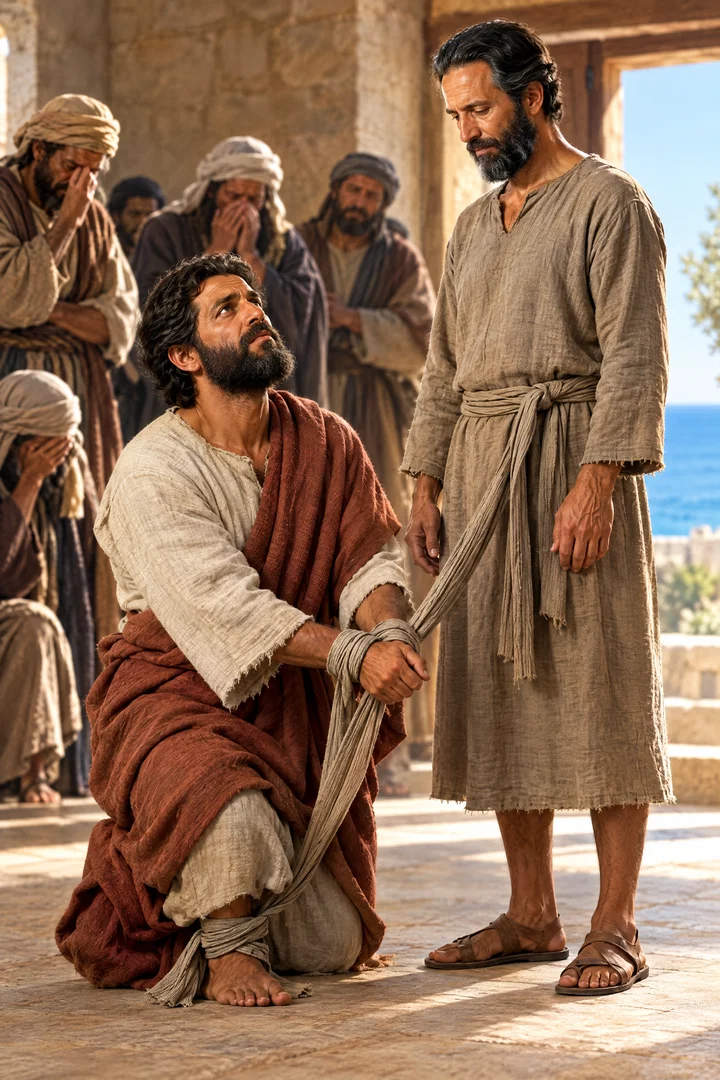
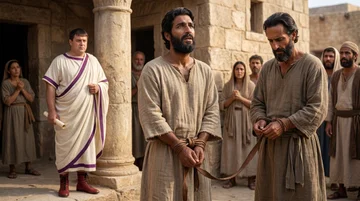
While Paul was tarrying at Caesarea with his company, Agabus, a prophet from Judea, came down to them soon after Paul arrived there.SLP 204.2AA 397.2–3 Warned by the Holy Spirit of the fate awaiting Paul, Agabus took Paul's girdle and, in the symbolic manner of the ancient prophets, bound his own hands and feet with it.SLP 204.2AA 397.2–3 By that sign he declared that the Jews at Jerusalem would so bind the owner of the girdle and deliver him into the hands of the Gentiles.SLP 204.2AA 397.2–3
The warning turned prior awareness that the visit to Jerusalem would bring great peril into certainty.SLP 204.2 It added the horrors of Roman imprisonment to the dangers from the Jews.SLP 204.2 When Paul's companions and the believers at Caesarea heard this they earnestly begged him with prayers, tears and weeping not to go up to Jerusalem but to stay where he was.SLP 204.2AA 397.2–3 They offered to carry the contributions from the Gentile churches to Jerusalem themselves.SLP 204.2 They raised whether going on after definite warning from the Spirit of God would be presumptuous and expose his precious life to the malice of the Jews.SLP 204.2
Paul would not swerve from the path of duty but would follow Christ to prison and to death.AA 397.2–3 He was ready not to be bound only but also to die at Jerusalem for the name of the Lord Jesus.AA 397.2–3 Their weeping broke his heart and caused him pain without changing his purpose.AA 397.2–3 The brethren then ceased pleading and yielded to the will of the Lord being done.AA 397.2–3 It was revealed that Paul must go to Jerusalem to be bound and suffer for Christ's name, and his imprisonment would advance Christ's work, for as he was taken from city to city for trial his testimony about Jesus and his conversion was carried to kings and governors, spreading the knowledge of Christ and glorifying God.EW 172.3
Sources
Pioneers and periodicals
34 sources
Paul and his company lodged in the house of Philip the evangelist and tarried many days at Caesarea when Agabus came down from Judea from Jerusalem.ST Apr 15, 1903ST Mar 17, 1898ST Dec 9, 1897ST Apr 15, 1903ST Dec 22, 1898 He came as a certain prophet and by the Holy Ghost foretold that the Jews at Jerusalem would bind Paul and deliver him to the Gentiles.ST Mar 18, 1875ST Sep 16, 1897ST Dec 22, 1898 His presence there, together with Philip's four virgin daughters who prophesied, shows that the gift of prophecy was present in the Christian church many years into the Christian age and beyond Pentecost, with no intimation that it should cease before the second appearing of Jesus.LS 331.3RH Jan 7, 1858ST Feb 5, 1880 The record of the daughters prophesying and of Agabus who was not one of the twelve proves that gifts and callings are given without respect of sex and not to apostles alone but to other believers.RH Jun 29, 1911ST Jan 16, 1901 The warning alarmed the companions and brethren who with tears begged Paul not to go up to Jerusalem, but he answered with steadfastness that he was ready not to be bound only but also to die at Jerusalem for the name of the Lord Jesus.PGGC 20.1ST Feb 4, 1889ST May 6, 1913ST Dec 22, 1898
Journey and Setting
Paul and his company tarried many days at Caesarea, lodging in the house of Philip the evangelist, and during that stay a certain prophet named Agabus came down from Judea to them.ST Apr 15, 1903ST Mar 17, 1898ST Jul 31, 1893 Paul was tarrying there with Philip on his voyage from Miletus to Jerusalem, after seven days at Tyre and one day at Ptolemais, before going on by land to Jerusalem.ST Mar 17, 1898ST Jul 31, 1893 His coming was connected with Paul's coming captivity, for he foretold Paul's imprisonment.ST Dec 9, 1897ST Jul 31, 1893 While Luke with Paul and others tarried many days in Philip's house, where Philip's four virgin daughters prophesied, Agabus came as a certain prophet.ST Feb 5, 1880
The stay belongs to Paul's last journey back to his old home at Jerusalem, to be traced on the map with attention to the places named.ST Sep 16, 1897 It was on his way from Greece to Jerusalem on his fifth and last visit to the Jewish capital, as a guest in the home of Philip the evangelist at Caesarea in Syria.ST Dec 22, 1898 During that stay Agabus came down to them from Judea, having just come from Jerusalem where he knew the feeling of the Jews toward Paul.ST Apr 15, 1903ST Dec 22, 1898 His knowledge of what would happen to Paul did not depend on what he knew from Jerusalem but came because he was a prophet.ST Apr 15, 1903
The word for day in the phrase for many days means a full period of twenty-four hours covering night and day.RH Dec 12, 1871 It belongs with other New Testament texts where a specified period of days or a succession of days is mentioned, in which day stands for the entire twenty-four hours, not for the daylight portion alone.RH Dec 12, 1871 Paul tarried many days at Caesarea, and with the seven days spent at Tyre still reached Jerusalem before the feast with ample time.ST Mar 30, 1882 This delay proves twelve hours more or less on his journey was immaterial and that urgent necessity to reach Jerusalem did not require him to travel on the first day of the week.
Continuing Gift of Prophecy
Agabus came down from Judea as a certain prophet, and through the Spirit by the Holy Ghost he foretold that the Jews at Jerusalem would bind Paul and deliver him to the Gentiles, giving important revelations to the church including to Paul himself.ST Mar 18, 1875ST Sep 16, 1897ST Dec 22, 1898RH Aug 10, 1916ST Sep 20, 1905 His coming took place while Paul and his company tarried many days at Caesarea in the house of Philip the evangelist.ST Mar 18, 1875ST Sep 16, 1897 He bound his own hands and feet with Paul's girdle as the sign of the bonds awaiting Paul in Jerusalem.ST Dec 22, 1898ST Sep 20, 1905
His presence proves the gift of prophecy existed in the Christian age and not only in Old Testament times.RH Jan 7, 1858 Many years into the Christian age, about a quarter of a century after its beginning, Agabus still came as a prophet while Paul's company stayed at Philip's house.LS 331.3ST Feb 5, 1880 With the outpouring of the Holy Spirit at the commencement of the Christian age various spiritual gifts including prophecy were manifested beyond Pentecost, and the New Testament record gives no intimation that they should cease before the day of glory ushered in by the second appearing of Jesus Christ. His appearance alongside Philip's four virgin daughters who prophesied shows prophecy was present in the Christian church well after its beginning, and he stands as an example of the prophetic gift present in the church after Christ's departure.ST Jun 7, 1905RH Apr 14, 1874
His ministry shows prophets continued after John, for Agabus came from Judea as a prophet in the time of the apostles, demonstrating that prophets existed after the time of John the Baptist and after Christ's death.ST Nov 11, 1897 Prophets foretold future events years after John's mission, so prophecy did not cease with John.RH May 21, 1861 The record where Paul found four daughters of one family who all prophesied among the men prophets and were counted worthy of mention in the sacred annals proves prophetesses extend throughout the Old Testament and continue in the New, and that God is no respecter of sex in gifts and callings but bestows them on those who will use them faithfully.RH Jun 29, 1911 Named in the same connection as Philip's four daughters who exercised the gift of prophecy, Agabus, who was not one of the twelve apostles, proves that miracle-working, healing, prophecy and the other signs promised to them that believe were not invested alone in the apostles but were given to other believers and placed in the church for all time, hindered only by unbelief.ST Jan 16, 1901 Visions and the gift of prophecy in the early church played an important role in instructing believers about their duties and preparing them for impending events.RH Apr 21, 1868
Agabus is the same prophet who at Antioch foretold the dearth in the days of Claudius, and that earlier prophecy was fulfilled in famines throughout all the then known world during the reign of Claudius, not in all parts at once, with Palestine afflicted first.ST Apr 23, 1902 His earlier prophecy of a great famine in Judea had been fulfilled, establishing the believers' confidence in him as a true prophet, so when he spoke about Paul they treated his prediction as certain and urged Paul not to go to Jerusalem.RH Aug 4, 1903PGGC 20.1 That famine that tried the saints in Judea under Claudius Caesar was foretold nineteen years before his prediction about Paul.RH Aug 4, 1903 It is also reckoned as seventeen years before at Antioch, and as fourteen years before at Antioch by those who add that, though he had just come from Jerusalem where he knew the feeling of the Jews toward Paul, his knowledge of what would happen to Paul did not depend on what he knew from Jerusalem but came because he was a prophet.ST Apr 15, 1903ST Dec 22, 1898 His prophetic ministry in giving such revelations did not make him equal in position to Paul, who was the leading prophet of that time.RH Aug 10, 1916
Warning Met with Courage
The verse opens the solemn warning that bonds awaited Paul at Jerusalem, the prophecy of his coming captivity given on his way to that city.ST Jun 9, 1898ST Dec 9, 1897ST Feb 4, 1889ST May 6, 1913 The warning declared trials and afflictions awaiting him in the city to which he was bound, delivered by taking Paul's girdle and binding his own hands and feet to show by the Holy Ghost that the Jews at Jerusalem would so bind its owner and deliver him into the hands of the Gentiles.ST Dec 22, 1898ST Sep 20, 1905 The forewarning did not turn Paul from his duty.ST Feb 4, 1889
Because his earlier prediction had been fulfilled, those present treated his word about Paul as certain.PGGC 20.1 The warning alarmed his companions and the brethren at Caesarea, who with tears and strong appeals begged him not to continue his journey to Jerusalem.ST Feb 4, 1889ST May 6, 1913ST Dec 22, 1898ST Sep 20, 1905 Their strong appeals touched his heart, but they did not change his resolution or turn him from duty.ST May 6, 1913
Paul answered with steadfastness that he was ready not to be bound only but also to die at Jerusalem for the name of the Lord Jesus.ST May 6, 1913ST Dec 22, 1898ST Sep 20, 1905 That answer revealed steadfastness of character and unwavering devotion to his appointed work no matter where the Spirit led, into what suffering, with what surrender of natural desires, will and plans.ST Dec 22, 1898 This is true courage and the loyalty of the true soldier of Christ in all conflict with the enemy and in all calls of duty, a faith and loyalty dominant in either life or death, set beside the loyalty of the three Hebrews before the fiery furnace, and demanded of the soldiers of Christ now.ST May 6, 1913
The passage belongs to Paul's last journey back to his old home at Jerusalem and stands with teaching on sympathy with God's workers and faithfulness to duty in the face of obstacles and dangers.ST Sep 16, 1897 Paul's arrival in Jerusalem illustrates a church seeking to preserve popular favor and avoid persecution by asking Paul to show that he still observed the ceremonial law.ST Oct 16, 1884 Even leading apostles and brethren could make a serious mistake in advising Paul to follow human policy, so that God's providence had to intervene to keep Paul from losing his life.RH Aug 10, 1916
Though Paul faced accusations about circumcision, there was no accusation that he taught the first day should be sanctified instead of the seventh, which shows that by the end of the chapter he had not taught first-day sanctification.ST Jul 13, 1882 The further trials Paul faced in the years afterward, especially at Jerusalem, Caesarea, and on the voyage to Rome, fulfilled the Lord's word that Paul would suffer for His name.ST Jan 24, 1884 That foreboding was rapidly fulfilled when Paul arrived in Caesarea chained to a Roman soldier and escorted by a large body of troops.ST Feb 12, 1885
Sources