Acts 22:30
On the morrow, because he would have known the certainty wherefore he was accused of the Jews, he loosed him from his bands, and commanded the chief priests and all their council to appear, and brought Paul down, and set him before them.
Translations
On the morrow, because he would have known the certainty why he was accused of the Jews, he loosed him from his bands, and commanded the chief priests and all their council to appear, and brought Paul down, and set him before them.
King James Version, KJV Cambridge Paragraph Bible
On the morrow, because he would have known the certainty wherefore he was accused of the Jews, he loosed him from his bands, and commanded the chief priests and all their council to appear, and brought Paul down, and set him before them.
On the morrow, because he would have known the certainty why he was accused by the Jews, he loosed him from his bands, and commanded the chief priests and all their council to appear, and brought Paul down, and set him before them.
But on the morrow, desiring to know the certainty, wherefore he was accused of the Jews, he loosed him, and commanded the chief priests and all the council to come together, and brought Paul down, and set him before them.
But on the morrow, desiring to know the certainty wherefore he was accused of the Jews, he loosed him, and commanded the chief priests and all the council to come together, and brought Paul down and set him before them.
and on the morrow, intending to know the certainty wherefore he is accused by the Jews, he did loose him from the bonds, and commanded the chief priests and all their sanhedrim to come, and having brought down Paul, he set [him] before them.
And on the morrow, desirous to know the certainty [ of the matter] why he was accused of the Jews, he loosed him, and commanded the chief priests and all the council to meet, and having brought Paul down set him before them.
But, on the morrow, being minded to get to know the certainty as to why he was being accused by the Jews, he released him, and ordered the High-priests and all the High-council to come together; and, bringing down Paul, set him before them.
The next day the commander, wanting to learn the real reason Paul was accused by the Jews, released him and ordered the chief priests and the whole Sanhedrin to assemble. Then he brought Paul down and had him stand before them.
The next day the commander, wanting to learn the real reason Paul was accused by the Jews, released him from the bonds and ordered the chief priests and their whole Sanhedrin to assemble. Then he brought Paul down and had him stand before them.
But on the next day, desiring to know the truth about why he was accused by the Jews, he freed him from the bonds and commanded the chief priests and all the council to come together, and brought Paul down and set him before them.
But on the day after, desiring to have certain knowledge of what the Jews had to say against him, he made him free, and gave orders for the chief priests and all the Sanhedrin to come together, and he took Paul and put him before them.
On the next day, because hee would haue knowen the certaintie wherefore he was accused of the Iewes, he loosed him from his bonds, and commanded the hie Priests and all their Councill to come together: and he brought Paul, and set him before them.
Douay-Rheims (Challoner revision)
But on the next day, meaning to know more diligently for what cause he was accused by the Jews, he loosed him, and commanded the priests to come together, and all the council: and bringing forth Paul, he set him before them.
Pictures
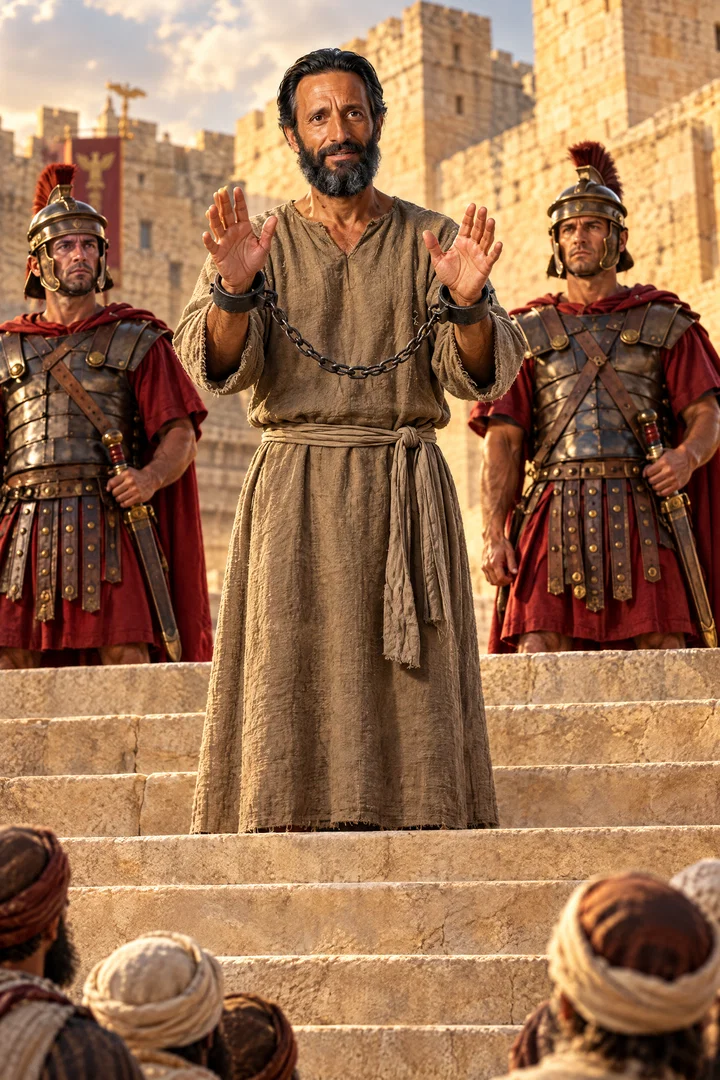
Cross-references
- Acts 23:1-10
And Paul, earnestly beholding the council, said, Men and brethren, I have lived in all good conscience before God until this day.
Paul is brought before the Jewish council for questioning.
- Acts 26:12-18
Whereupon as I went to Damascus with authority and commission from the chief priests,
Retells Paul’s encounter with Christ and his conversion.
- Acts 24:10-21
Then Paul, after that the governor had beckoned unto him to speak, answered, Forasmuch as I know that thou hast been of many years a judge unto this nation, I do the more cheerfully answer for myself:
Both texts are silent on first-day sanctification.
- Acts 26:21
For these causes the Jews caught me in the temple, and went about to kill me.
Both mention Jewish hostility toward Paul, without identifying its cause.
- Acts 7:54-60
When they heard these things, they were cut to the heart, and they gnashed on him with their teeth.
The council condemned Stephen, whose death Paul recalled.
- Acts 25:8
While he answered for himself, Neither against the law of the Jews, neither against the temple, nor yet against Cæsar, have I offended any thing at all.
Both describe Paul denying any offense against the law.
Commentary
Each commentary is drawn from primary sources: the writings of Ellen G. White and Adventist pioneers and periodicals. Each commentary is separate. Its own words are not a quotation; follow the references to read the source passages.
Pioneers and periodicals
8 sources
The verse stands in the last part of Acts 22, after the close of Paul's voyage to Jerusalem, his reception there, his arrest in the temple, and his defense before the Jews which occupies the chief part of the chapter.ST Jun 9, 1898 It opens the proceedings before the Sanhedrin whose scene and chief report belong to chapter 23.ST Jun 9, 1898 That hearing comes before his dispatch to Felix, his defense before Felix by preaching the Gospel, the succession of Festus to Felix in governing the province, and his appeal to Caesar rather than be tried by the Jews.
Its setting is Paul as a prisoner at Jerusalem after the attack in the temple and his rescue by the Romans.ST Dec 9, 1897 After he had made his defense by telling of the vision given him while praying in the temple and the Lord's command to leave Jerusalem and preach the Gospel to the Gentiles, the uproar of the Jews led to preparation for his scourging.ST Dec 9, 1897 His declaration of Roman citizenship saved him from being scourged, so his examination before the Jewish council followed his examination by the Roman centurion and he was held to be set before the Jewish leaders.ST Dec 9, 1897ST Aug 7, 1893
The verse means that on the morrow, the next day, the Roman commander and captain Lysias, seeking to know with certainty exactly why Paul was accused by the Jews, loosed and released him from his bands, bonds and restraints.ST Sep 23, 1897ST Jan 29, 1885 He commanded the chief priests and all their council to appear and meet, and brought Paul down from the castle and set him before them in order to determine the charge against him.ST Sep 23, 1897ST Jan 29, 1885 He was brought from the castle with enough guards to protect him from an attempt on his life.ST May 8, 1884 In ordering this hearing Lysias remained anxious about his unlawful treatment of Paul and sought to hand the matter over to the Sanhedrin.ST Jan 29, 1885
The council before which Paul was set included the high priest and men who had once been his associates in the school of Gamaliel and had joined him in persecuting the followers of Jesus.ST May 8, 1884 Paul recognized them as the council that had condemned Stephen and remembered his own part in seeking Stephen's condemnation.ST May 8, 1884 The verse belongs to Paul's defense before the multitude at Jerusalem in which he is not even accused of having made any change in the day of worship and has no occasion to defend himself concerning the sanctification of a new day, which shows he had not taught the sanctification of the first day in place of the seventh.ST Jul 13, 1882 As part of Paul's experience in Jerusalem, the verse illustrates that his strong desire to return to his people could influence his sense of duty even when the Lord had directed him otherwise, teaching that personal feelings and plans are not always a safe guide, that God's direction and timing are best, and that his people should follow his providence without complaint.ST Oct 7, 1897
Sources