Deuteronomy 21:8
Be merciful, O LORD, unto thy people Israel, whom thou hast redeemed, and lay not innocent blood unto thy people of Israel’s charge. And the blood shall be forgiven them.
Translations
Be merciful, O LORD, to your people Israel, whom you have redeemed, and lay not innocent blood to your people of Israel’s charge. And the blood shall be forgiven them.
Be merciful, O LORD, unto thy people Israel, whom thou hast redeemed, and lay not innocent blood unto thy people of Israel’s charge. And the blood shall be forgiven them.
Be merciful, O Lord, unto thy people Israel, whom thou hast redeemed, and lay not innocent blood unto thy people of Israel’s charge. And the blood shall be forgiven them.
Be merciful, O LORD, to thy people Israel, whom thou hast redeemed, and lay not innocent blood to the charge of thy people Israel. And the blood shall be forgiven them.
Forgive, O LORD, thy people Israel, whom thou hast redeemed, and suffer not innocent blood to remain in the midst of thy people Israel. And the blood shall be forgiven them.
Forgive, O Jehovah, thy people Israel, whom thou hast redeemed, and suffer not innocent blood to remain in the midst of thy people Israel. And the blood shall be forgiven them.
receive atonement for Thy people Israel, whom Thou hast ransomed, O Jehovah, and suffer not innocent blood in the midst of Thy people Israel; and the blood hath been pardoned to them,
Forgive thy people Israel, whom thou, Jehovah, hast redeemed, and lay not innocent blood to the charge of thy people Israel; and the blood shall be expiated for them.
Be propitious unto thy people Israel whom thou hast redeemed, O Yahweh, and do not impute innocent blood in the midst of thy people Israel. So shall they obtain propitiation for the guilt of shedding blood.
Berean Standard Bible, Majority Standard Bible
Accept this atonement, O LORD, for Your people Israel whom You have redeemed, and do not hold the shedding of innocent blood against them.”And the bloodshed will be atoned for.
Forgive, LORD, your people Israel, whom you have redeemed, and don’t allow innocent blood among your people Israel.” The blood shall be forgiven them.
Have mercy, O Lord, on your people Israel whom you have made free, and take away from your people the crime of a death without cause. Then they will no longer be responsible for the man's death.
O Lord, be mercifull vnto thy people Israel, whom thou hast redeemed, and lay no innocent blood to the charge of thy people Israel, and the blood shalbe forgiuen them.
Douay-Rheims (Challoner revision)
Be merciful to thy people Israel, whom thou hast redeemed, O Lord, and lay not innocent blood to their charge, in the midst of thy people Israel. And the guilt of blood shall be taken from them:
Pictures
Commentary
Each commentary is drawn from primary sources: the writings of Ellen G. White and Adventist pioneers and periodicals. Each commentary is separate. Its own words are not a quotation; follow the references to read the source passages.
Ellen G. White
1 source
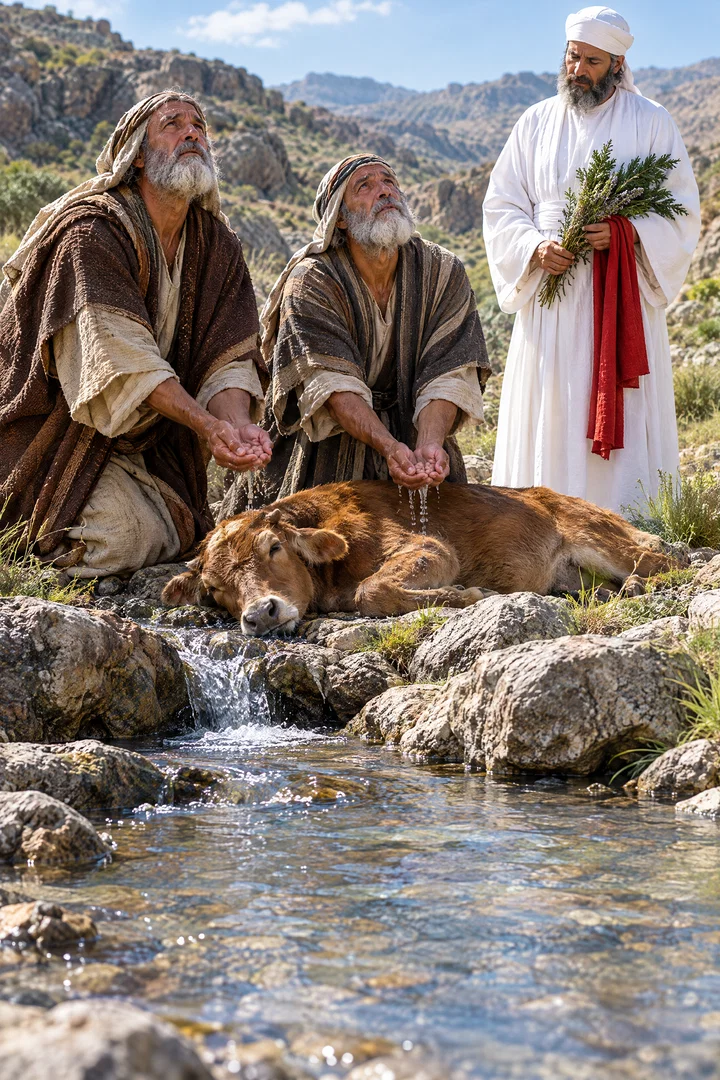
When the slayer of a murdered person could not be discovered, the elders of the city nearest to the place of the killing were required to make a solemn public declaration disavowing any share in the bloodshed.ST Jan 20, 1881 In that declaration they were to plead for mercy toward the redeemed people Israel and ask that innocent blood not be laid to their charge.ST Jan 20, 1881 When they thus did what was right, the guilt of the blood was forgiven them.ST Jan 20, 1881 The ceremony was a lesson that those in authority must never deal with murder in a careless or indifferent manner, but must search into the matter with diligence, openly condemn the crime, and exert every effort to bring the guilty to justice.ST Jan 20, 1881 Any neglect that sheltered the murderer would involve those answerable for justice in a share of his guilt.ST Jan 20, 1881
Sources
Pioneers and periodicals
5 sources
The prayer belongs to Moses's repetition of the law spoken before Israel crossed the Jordan into the promised land after forty years of wandering in the wilderness, rehearsing the wonderful things God had done for His people and the chief laws connected with Israel to bring lessons to remembrance and to impress the sacred import of God's holy law and the necessity of keeping it.ST Mar 1, 1910 It stands within Deuteronomy 3 to 22, where Moses recounts Israel's experiences and God's guidance in one constant appeal to serve the Lord, to turn away from the sins that wrecked the other nations, and to exemplify Him as the ground of their greatness and continuance, developing the precepts of the law together with God's gracious promises.ST Mar 3, 1909
When a murdered person was found and the killer could not be identified, the elders of the nearest city were to publicly disclaim responsibility for the bloodshed while washing their hands over the heifer's body, asking the Lord not to lay innocent blood to the charge of His redeemed people Israel.ST Jan 20, 1881RH May 16, 1912 Cities and towns were held responsible for crime committed near them.ST Mar 11, 1908
The ceremony teaches that rulers must not treat murder carelessly but must investigate diligently, condemn the crime, and make every effort to bring the guilty to justice, since negligence that shields a murderer makes those responsible share in the guilt.ST Jan 20, 1881 The innocent blood would be forgiven them when they did what was right before the Lord.ST Jan 20, 1881
Sources