Ecclesiastes 1:5
The sun also ariseth, and the sun goeth down, and hasteth to his place where he arose.
Translations
The sun also rises, and the sun goes down, and hastens to his place where he arose.
King James Version, KJV Cambridge Paragraph Bible
The sun also ariseth, and the sun goeth down, and hasteth to his place where he arose.
The sun also riseth, and the sun goeth down, and hasteth to his place where he arose.
The sun also ariseth, and the sun goeth down, and hasteth to his place where he ariseth.
The sun also ariseth, and the sun goeth down, and hasteth to its place where it ariseth.
Also, the sun hath risen, and the sun hath gone in, and unto its place panting it is rising there.
The sun also riseth, and the sun goeth down, and hasteth to its place where it ariseth.
And the sun, breaketh forth, and the sun, goeth in,—yea, unto his own place, he panteth, from whence he brake forth.
Berean Standard Bible, Majority Standard Bible
The sun rises and the sun sets;
it hurries back to where it rises.The sun also rises, and the sun goes down, and hurries to its place where it rises.
The sun comes up and the sun goes down, and goes quickly back to the place where he came up.
The sunne riseth, and ye sunne goeth downe, and draweth to his place, where he riseth.
Douay-Rheims (Challoner revision)
The sun riseth, and goeth down, and returneth to his place: and there rising again,
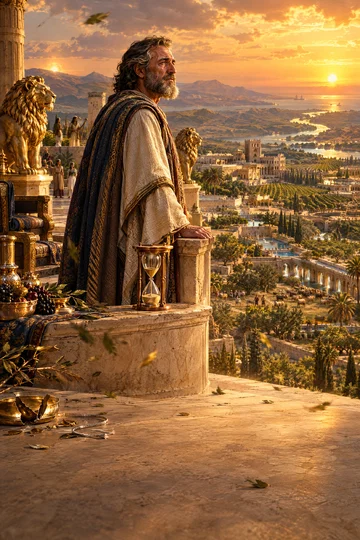
Pictures

Commentary
Each commentary is drawn from primary sources: the writings of Ellen G. White and Adventist pioneers and periodicals. Each commentary is separate. Its own words are not a quotation; follow the references to read the source passages.
Pioneers and periodicals
14 sources
The sun rises in the east, sets in the west, and hastens back to rise again in its regular, continual daily course as generations come and pass.ST Jul 3, 1893ST Sep 26, 1878 It speaks in the ordinary language of appearance as seen by an observer on earth, which needs no astronomical qualification and does not teach that the earth stands still while the sun moves around it.ST Jul 23, 1896RH Jul 3, 1866ST Dec 23, 1908 This wearisome repetition graphically shows the folly, nothingness, and utter uselessness of earthly pursuits and human life without hope in God.ST May 17, 1910ST Jul 15, 1913RH Jul 23, 1857 Its unceasing round pictures how quickly time passes and does not wait, while illustrating God's controlling power over nature and the conditions that produce rain.ST Jul 3, 1893 The only wise and blessed conclusion is that man's whole duty is to fear God and keep His commandments and trust Him.ST May 17, 1910ST Jul 15, 1913ST Sep 15, 1909
Wording and Background
The wording speaks in ordinary language of appearance, describing as seen by an observer on earth how the sun rises in the east, sets in the west, and returns to rise again.ST Jul 23, 1896RH Jul 3, 1866ST Dec 23, 1908ST Nov 27, 1901ST May 20, 1908 This everyday way of speaking is readily understood and needs no astronomical qualification to be true.RH Jul 3, 1866ST Dec 23, 1908ST Nov 27, 1901 It is still used even by practical astronomers when they speak of sunrise, sunset, and the sun's moving.ST Jul 23, 1896ST Nov 27, 1901 It does not attempt to correct astronomical ideas, and it does not conflict with later scientific discoveries.ST Jul 23, 1896RH Apr 12, 1860
It does not teach that the earth stands still while the sun moves around it or that the sun physically revolves around the earth.ST Jul 23, 1896RH Jul 3, 1866ST Dec 23, 1908ST Nov 27, 1901RH Feb 14, 1865 In reality the earth turns on its axis from west to east, which makes the sun appear to move from east to west while the earth seems still.RH Jul 3, 1866ST Dec 23, 1908ST Nov 27, 1901 Relatively, in their relation to each other, the sun stands still while the earth revolves around it.ST Jul 23, 1896 Both sun and earth with its attendant planets are moving on through space, a subject eternity will clarify where science still works with incomplete understanding, just as calling shaped dust man before it receives life does not make it a living being.ST Jul 23, 1896RH Feb 14, 1865
The verse belongs to the book of Ecclesiastes, written by Solomon the son of David when he was king in Jerusalem, about 977, in an earlier period and not in the second century B.C.ST May 17, 1910ST Aug 7, 1901ST Sep 15, 1909 It was written in his last days after tasting all pleasures and yielding to all desires of heart and flesh.ST May 17, 1910ST Jul 15, 1913 Those included luxury, power, feasting, wine, women, wealth, glory, popularity, and idolatry when his many wives turned away his heart.ST May 17, 1910ST Jul 15, 1913ST Sep 15, 1909 From hearty repentance and actual experience he learned that all his wisdom, glory, wealth, and popularity could not bring rest of soul.ST Jul 15, 1913
Meaning and Lessons
The sun follows a regular, continual daily course, rising and going down and hastening back to the place where it arose, as part of the repeated course of nature that continues while generations come and pass.ST Jul 3, 1893ST Sep 26, 1878
That cycle illustrates God's controlling power over nature and the conditions that produce rain.ST Jul 3, 1893
The sun's repeated rising and setting is placed within the description of life's vanity and wearisome repetition.ST May 17, 1910ST Jul 15, 1913RH Jul 23, 1857ST Sep 15, 1909
It graphically shows the folly, nothingness, and utter uselessness of earthly pursuits and of human life without hope in God.ST May 17, 1910ST Jul 15, 1913ST Sep 15, 1909
It is part of the evidence that the world and its creatures were subjected to sorrow and vanity after human sin.RH Jul 23, 1857
The regular movement pictures how quickly time passes and does not wait.
The Preacher's sermon interweaves excellent practical instruction, including a missionary chapter in chapter eleven and a graphic description of the decay of man in the last chapter.ST May 17, 1910
It ends with the only wise and blessed conclusion that man's whole duty is to fear God and keep His commandments and trust Him.ST May 17, 1910ST Jul 15, 1913ST Sep 15, 1909
Sources