Ecclesiastes 2:4
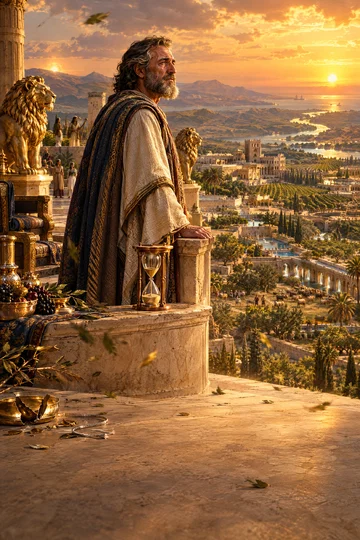
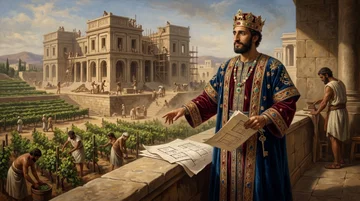
I made me great works; I builded me houses; I planted me vineyards:
Translations
American King James Version, Webster Bible
I made me great works; I built me houses; I planted me vineyards:
King James Version, KJV Cambridge Paragraph Bible
I made me great works; I builded me houses; I planted me vineyards:
Revised Version, American Standard Version, Darby Translation
I made me great works; I builded me houses; I planted me vineyards;
I made great my works, I builded for me houses, I planted for me vineyards.
I enlarged my works,—I built me houses, I planted me vineyards;
Berean Standard Bible, Majority Standard Bible
I expanded my pursuits. I built houses and planted vineyards for myself.
I made myself great works. I built myself houses. I planted myself vineyards.
I undertook great works, building myself houses and planting vine-gardens.
I haue made my great workes: I haue built me houses: I haue planted me vineyards.
Douay-Rheims (Challoner revision)
I made me great works, I built me houses, and planted vineyards,
Pictures

Cross-references
- 1 Kings 9:15-19
And this is the reason of the levy which king Solomon raised; for to build the house of the LORD, and his own house, and Millo, and the wall of Jerusalem, and Hazor, and Megiddo, and Gezer.
Lists Solomon’s cities and other building projects.
- Ecclesiastes 2:10-11
And whatsoever mine eyes desired I kept not from them, I withheld not my heart from any joy; for my heart rejoiced in all my labour: and this was my portion of all my labour.
Assesses Solomon’s unrestrained pursuits and the pleasure they brought.
- 1 Kings 7:1-7
But Solomon was building his own house thirteen years, and he finished all his house.
identifies the houses and their cedar construction
- Ecclesiastes 2:11
Then I looked on all the works that my hands had wrought, and on the labour that I had laboured to do: and, behold, all was vanity and vexation of spirit, and there was no profit under the sun.
Judges all the works and labor he had done as vanity.
- Ecclesiastes 2:17-18
Therefore I hated life; because the work that is wrought under the sun is grievous unto me: for all is vanity and vexation of spirit.
records hatred of life and labor from same experiment
Commentary
Each commentary is drawn from primary sources: the writings of Ellen G. White and Adventist pioneers and periodicals. Each commentary is separate. Its own words are not a quotation; follow the references to read the source passages.
Ellen G. White
5 sources
“I made me great works; I builded me houses; I planted me vineyards” records Solomon’s deliberate undertaking of great building projects and planting of vineyards as part of his search for satisfaction and his highest good in earthly pleasure, achievement, prosperity, and the pleasures of sense.PK 76.1ED 153.2–4RH Dec 28, 1905ED 153.1 Those great works included fortified cities, store cities, and other works throughout his kingdom.RH Jan 18, 1906 The houses and vineyards belonged to a larger pursuit of whatever his heart desired, with silver and gold, servants and singers and every desire indulged, by which he became great and increased beyond all before him in Jerusalem.RH Dec 28, 1905ED 153.1
His ambition to surpass other nations in grandeur led him to prize outward display over godly character and to sacrifice right principles.RH Jan 18, 1906 The pride of his prosperity separated him from God, turning him from the joy of divine communion to seek satisfaction elsewhere.RH Dec 28, 1905ED 153.1 The works brought no lasting profit or fulfillment, and he judged his labor to be vanity and vexation of spirit with no profit under the sun, until he hated his labor and hated life.PK 76.1ED 153.2–4RH Dec 28, 1905ED 153.1 His erecting of altars to heathen gods to find rest of soul proved equally vain in its promise.ED 153.2–4
The resulting wealth and power became a curse and burdened the poor with heavy taxes.RH Jan 18, 1906 Wearied and thirsting, he turned at last from earth’s broken cisterns to drink again at the fountain of life, and by inspiration recorded the history of his wasted years as a warning for later generations.ED 153.2–4 Although his people reaped harvests of evil from the seed he sowed, his life-work was not wholly lost because the discipline of suffering at last accomplished its work in him.ED 153.2–4
Sources
Pioneers and periodicals
17 sources
The great works were extensive fortified cities and public works throughout the dominion, the houses were large palaces in Jerusalem and Lebanon built of white stone and cedar and decked with gold and silver, and the planting was vineyards and pleasure parks with gardens and orchards of all kinds of fruit.RH Jan 18, 1906ST Nov 27, 1884ST Nov 27, 1884ST Nov 27, 1884 He undertook them as a deliberate test of worldly pleasure, better situated than any other to try whatever the heart desires with wealth and honor and power and wisdom at command.ST Mar 14, 1906ST Jun 22, 1904 They were sought as earthly pleasure and grandeur and achievement, yet they could not satisfy apart from God and hope in him, and ended in disappointment.RH Dec 28, 1905ST Sep 15, 1909ST May 17, 1910RH May 25, 1916 Though having all the earth could give of riches and honors and sovereign power, he had no real and undisturbed enjoyment in them, showing that greatness and happiness do not necessarily go together.RH Aug 26, 1875ST Oct 23, 1879 Even if a person exhausted every pleasure and fulfilled every ambition, worldly success could not satisfy the soul or make up for losing God's kingdom, for all such seeking apart from God is vanity and vexation of spirit.ST Feb 4, 1903ST Jun 21, 1899RH Sep 5, 1871
Solomon's Great Building Works
The great works are extensive fortified cities and public works built throughout the dominion, including Millo and the wall of Jerusalem, Hazor, Megiddo, Gezer, Beth-horon the nether, Baalath, Tadmor in the wilderness, store cities, chariot cities, cities for horsemen, and whatever was desired to be built in Jerusalem and in Lebanon and in all the dominion.RH Jan 18, 1906ST Nov 27, 1884 Millo was a strong fortification or tower protecting Jerusalem on the north, later renewed and about one hundred feet high, built of white marble with stones about thirty feet long by fifteen feet wide and seven and one-half thick.ST Nov 27, 1884 The wall began at Millo and extended around the city with sixty towers.ST Nov 27, 1884 Hazor was the principal city and stronghold of all North Palestine, Megiddo was a fortified city commanding a main pass from the north into the hill country, and Gezer was a fortified city commanding the Mediterranean coast road between Egypt and Jerusalem.ST Nov 27, 1884 The Beth-horons lay on the boundary of Ephraim and Benjamin and guarded a pass on the road from Gibeon to the Philistine plain, the main approach from the west and from the east.ST Nov 27, 1884 Tadmor was built in an oasis in the desert to control the great caravan trade from the East, days distant from surrounding regions, and even its ruins show former magnificence.ST Nov 27, 1884
The houses are extensive houses in Jerusalem and Lebanon.ST Nov 27, 1884 The chief house was 150 feet long, 75 feet broad, and 45 feet high in three stories, with a grand porch 75 feet long and 45 feet broad, with pillars, beams and floors of the finest cedar, called the House of the forest of Lebanon because its pillars were so many, costly and tall.ST Nov 27, 1884 Close to it stood an armory tower with a thousand bucklers hung on its walls.ST Nov 27, 1884 He also built a great Judgment Hall lined with cedar containing an ivory throne inlaid with gold with six steps and graven lions, a house for Pharaoh's daughter and houses for wives and concubines, with cloisters, reception rooms and a magnificent banqueting hall, all made with white stone walls and very long foundations, supported with cedar and fir pillars and beams decked with gold and silver, with roofs and walls ornamented with beautiful stones set with gold and silver, besides a summer palace in Lebanon.ST Nov 27, 1884
The planting is vineyards and paradises, beautiful parks for pleasure grounds with gardens and orchards planted with trees of all kinds of fruits.ST Nov 27, 1884 The principal paradise lay about six miles from Jerusalem, where he went in stately morning progress out of the city dressed in snow-white raiment, riding in a chariot of state made of the finest cedar decked with gold and silver and purple and carpeted with costly tapestry.ST Nov 27, 1884 He was attended by a body-guard of sixty valiant men of the tallest and handsomest young men arrayed in purple with long black hair freshly sprinkled with gold-dust glittering in the sun.ST Nov 27, 1884 The verse shows industrial activity and use of physical powers in undertaking major building projects, building houses, planting vineyards, making gardens and orchards, and creating pools to water trees.RH May 27, 1915 This example is linked to diligence and thrift, in contrast with laziness.RH May 27, 1915
Pleasure Tested and Found Vain
Solomon was better placed than any other man to try what the heart desires, having wealth and honor and power and wisdom at command with everything the heart could wish available, and he deliberately set himself to enjoy pleasure, seeking his great works and houses and vineyards as forms of that pleasure alongside mirth and folly and wine and gardens and orchards and pools of water and servants and possessions and silver and gold and singers and music, withholding nothing his eyes desired.ST Mar 14, 1906 The account is of giving himself to pleasure and enlarging Jerusalem, with the great building works bound to the pursuit of worldly grandeur.ST Jun 22, 1904
The building of great works and planting of vineyards belonged to the pursuit of earthly pleasure and achievement and wealth and luxury and worldly grandeur, including houses and vineyards sought in the search for pleasure, yet they could not satisfy apart from God and hope in him, and the experience ends in disappointment because earthly riches and pleasures cannot bring lasting happiness and human pursuits apart from God are vanity.ST Sep 15, 1909ST May 17, 1910RH May 25, 1916 The works and houses and vineyards belong to that pursuit of worldly pleasure and gain which is declared vanity and vexation of spirit, and they cannot compare with an everlasting inheritance.ST Feb 4, 1903 The great building and planting were part of the effort to find satisfaction in pleasure and prosperity and in whatever the heart desired, but the works brought no lasting fulfillment, being judged vanity and vexation of spirit, while prosperity drew him away from communion with God.RH Dec 28, 1905
The chapter presents the experience of one who tested greatness and pleasure, showing that greatness and happiness do not necessarily go together.RH Aug 26, 1875 Making great works and building houses and palaces was part of having all the earth could give — riches and honors and sovereign power with nothing seeming wanting to happiness — yet there was no real and undisturbed enjoyment in them, for worldly pleasure is poisoned by vexation and cannot be depended upon, leaving only a few truly happy days in a long reign because all is vanity.ST Oct 23, 1879 The undertaking of great building projects, including fortified cities and store cities and other works throughout the kingdom, came from ambition to surpass other nations in grandeur, prizing outward display over godly character and sacrificing right principles, so that the resulting wealth and power became a curse and burdened the poor with heavy taxes.RH Jan 18, 1906
The verse belongs to a personal trial of wealth and pleasure and fame and great undertakings as the greatest good in life, with the verdict that pleasure is empty and drear and vain and all such seeking is vanity.ST Jun 21, 1899 Riches and pleasure and fame cannot fill life with worth, and those who set their eyes on them as the supremest goal are losing endless treasure and will close their eyes in death having missed the good for which breath was given.ST Jun 21, 1899 The greatest good for which to live, which fills life with beauty, is to fear God and keep His law, because every secret thing will be brought into judgment, and he has lived best who lived for God and held His precepts fast.ST Jun 21, 1899 The great works and houses and vineyards represent the opportunities and possessions a person might gain, yet even if someone exhausted every pleasure and fulfilled every ambition, worldly success could not satisfy the soul or make up for losing God's kingdom, for without God all is vanity and vexation of spirit.RH Sep 5, 1871
The verse shows the first stage of the bondage of sin, which is selfish service for self, with selfish ideas and selfish work pervading the entire being.ST Sep 12, 1900 Sin in its essential and overruling principle is bondage to mind and body, and its essential working is to keep people forever in pursuit of happiness, always thinking the goal of joy and contentment and bliss is just ahead without ever reaching what is sought.ST Sep 12, 1900 This selfish pursuit of pleasure is a deceitful plan bringing unhappiness and continual discontent, soon involving people in entanglements that fill nights with sorrow and days with pain.ST Sep 12, 1900 Even when appearing pleasant and happy, it leaves a lurking load of sadness that puts pain in every joy and leaves people without the desired contentment.ST Sep 12, 1900
Sources