Esther 2:17
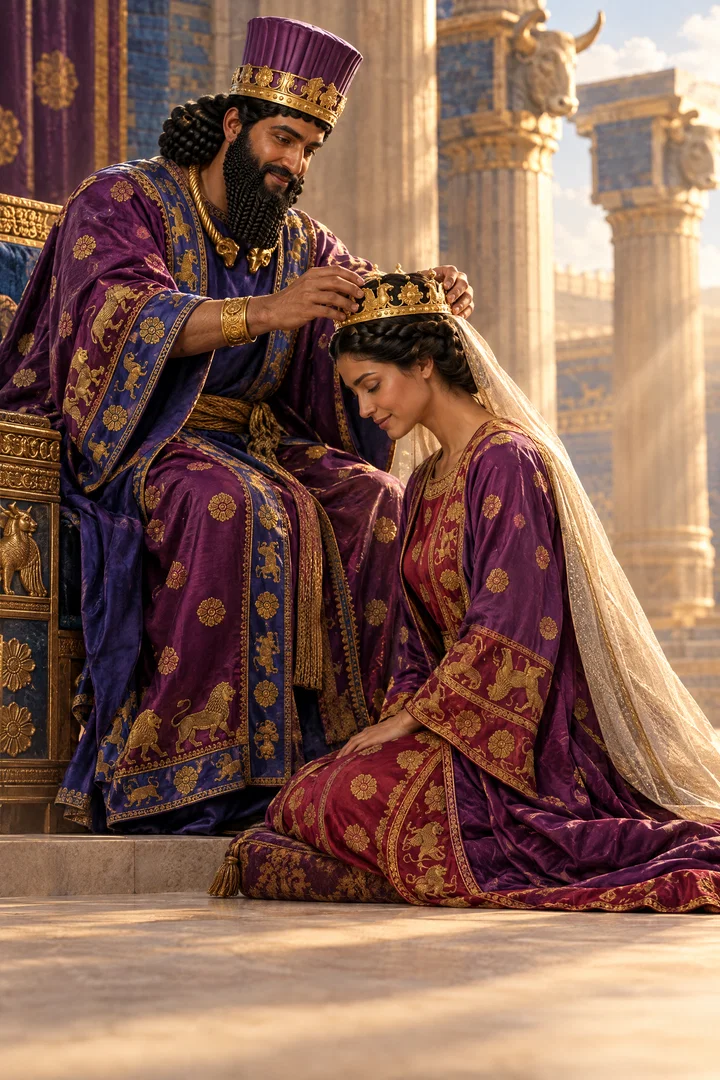
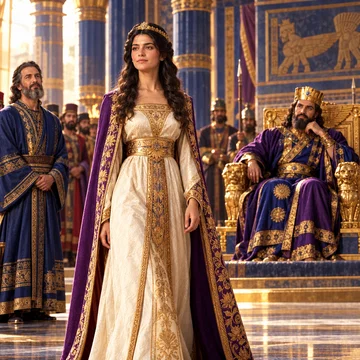
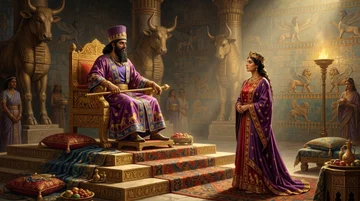
And the king loved Esther above all the women, and she obtained grace and favour in his sight more than all the virgins; so that he set the royal crown upon her head, and made her queen instead of Vashti.
Translations
And the king loved Esther above all the women, and she obtained grace and favor in his sight more than all the virgins; so that he set the royal crown on her head, and made her queen instead of Vashti.
King James Version, KJV Cambridge Paragraph Bible, Revised Version
And the king loved Esther above all the women, and she obtained grace and favour in his sight more than all the virgins; so that he set the royal crown upon her head, and made her queen instead of Vashti.
And the king loved Esther above all the women, and she obtained grace and favor in his sight more than all the virgins; so that he set the royal crown upon her head, and made her queen instead of Vashti.
And the king loved Esther above all the women, and she obtained favor and kindness in his sight more than all the virgins; so that he set the royal crown upon her head, and made her queen instead of Vashti.
and the king loveth Esther above all the women, and she receiveth grace and kindness before him above all the virgins, and he setteth a royal crown on her head, and causeth her to reign instead of Vashti,
And the king loved Esther above all the women, and she obtained grace and favour in his sight more than all the virgins, and he set the royal crown upon her head, and made her queen instead of Vashti.
And the king loved Esther above all the women, and she obtained favour and lovingkindness before him, above all the virgins,—so that he set the royal crown upon her head, and made her queen, instead of Vashti.
Berean Standard Bible, Majority Standard Bible
And the king loved Esther more than all the other women, and she found grace and favor in his sight more than all of the other virgins. So he placed the royal crown upon her head and made her queen in place of Vashti.
The king loved Esther more than all the women, and she obtained favor and kindness in his sight more than all the virgins; so that he set the royal crown on her head, and made her queen instead of Vashti.
And Esther was more pleasing to the king than all the women, and to his eyes she was fairer and more full of grace than all the other virgins: so he put his crown on her head and made her queen in place of Vashti.
And the King loued Ester aboue all the women, and shee founde grace and fauour in his sight more then all the virgins: so that he set the crowne of the kingdome vpon her head, and made her Queene instead of Vashti.
Douay-Rheims (Challoner revision)
And the king loved her more than all the women, and she had favour and kindness before him above all the women, and he set the royal crown on her head, and made her queen instead of Vasthi.
Pictures


Cross-references
- Esther 4:14
For if thou altogether holdest thy peace at this time, then shall there enlargement and deliverance arise to the Jews from another place; but thou and thy father’s house shall be destroyed: and who knoweth whether thou art come to the kingdom for such a time as this?
Esther’s rise to the throne may serve the Jews’ deliverance.
- Esther 1:11-12
To bring Vashti the queen before the king with the crown royal, to shew the people and the princes her beauty: for she was fair to look on.
Vashti’s refusal and removal led to Esther replacing her as queen.
- Esther 1:19
If it please the king, let there go a royal commandment from him, and let it be written among the laws of the Persians and the Medes, that it be not altered, That Vashti come no more before king Ahasuerus; and let the king give her royal estate unto another that is better than she.
The decree against Vashti led to Esther becoming queen in her place.
- Esther 1:3-9
In the third year of his reign, he made a feast unto all his princes and his servants; the power of Persia and Media, the nobles and princes of the provinces, being before him:
Sets the royal court and feast before Esther became queen.
Commentary
Each commentary is drawn from primary sources: the writings of Ellen G. White and Adventist pioneers and periodicals. Each commentary is separate. Its own words are not a quotation; follow the references to read the source passages.
Pioneers and periodicals
10 sources
The king called Ahasuerus is the Persian king Xerxes, the difference in the names coming from pronunciation in different languages.ST Apr 23, 1902ST Jun 16, 1909ST Mar 16, 1915 After Vashti was deposed and put away under a Persian decree that could not be reversed, Esther became queen in her place in the seventh year of his reign.ST Apr 23, 1902ST Mar 4, 1886 Chosen from among the gathered beautiful maidens and virgins, Esther won the king's love above all the women and favor above all the virgins through her beauty, and he made her queen by setting the royal crown upon her head.ST Apr 23, 1902ST Jul 1, 1908ST Mar 4, 1886
Favor can mean mere leniency, while grace means giving an undeserved gift, as shown when the king gave Esther the royal crown.RH Jul 17, 1913 She did not choose the king herself but was chosen by him, having been his best-loved concubine before she became queen. In God's providence a Jewish maiden was advanced to the throne of Persia while the Jews were captives there.ST Jun 16, 1909RH Jul 18, 1871ST Jun 2, 1881
This placed a Jewish woman in the Persian court before the crisis so she could help save the Jews from a general massacre in Haman's plot.RH Jul 18, 1871ST Jun 2, 1881ST Jul 1, 1908 Her marriage was an exceptional case that God overruled for the good of His people. Her rise served God's purpose, though His work would not depend on her faithfulness.RH Jul 18, 1871
While still keeping her people and family background secret, she may have used the favor available to her at Mordecai's direction to obtain the king's support for Ezra's return and authority to restore Jerusalem and reform Jewish worship. Together with Vashti's life, her obtaining grace and favour above all the virgins and being crowned queen instead of Vashti teaches wives the evil consequences of disregarding what Paul directly teaches about wives, a lesson especially needed when female supremacy is preached.RH Mar 11, 1873 She illustrates that a woman from a lowly station and humble beginnings may later be recognized, honored, and made great as a queen.RH Nov 1, 1906
Sources