Esther 2:19
And when the virgins were gathered together the second time, then Mordecai sat in the king’s gate.
Translations
American King James Version, King James Version, KJV Cambridge Paragraph Bible, Revised Version
And when the virgins were gathered together the second time, then Mordecai sat in the king’s gate.
And when the virgins were assembled the second time, then Mordecai sat in the king's gate.
And when the virgins were gathered together the second time, then Mordecai was sitting in the king’s gate.
And in the virgins being gathered a second time, then Mordecai is sitting in the gate of the king;
And when the virgins were gathered together the second time, Mordecai sat in the king's gate.
Now, when virgins were gathered together second time, then, Mordecai, was sitting in the gate of the king.
Berean Standard Bible, Majority Standard Bible
When the virgins were assembled a second time, Mordecai was sitting at the king’s gate.
When the virgins were gathered together the second time, Mordecai was sitting in the king’s gate.
And when the virgins came together in the second house of the women, Mordecai took his seat in the doorway of the king's house.
And whe the virgins were gathered ye second time, then Mordecai sate in the Kings gate.
Douay-Rheims (Challoner revision)
And when the virgins were sought the second time, and gathered together, Mardochai stayed at the king’s gate,
Pictures
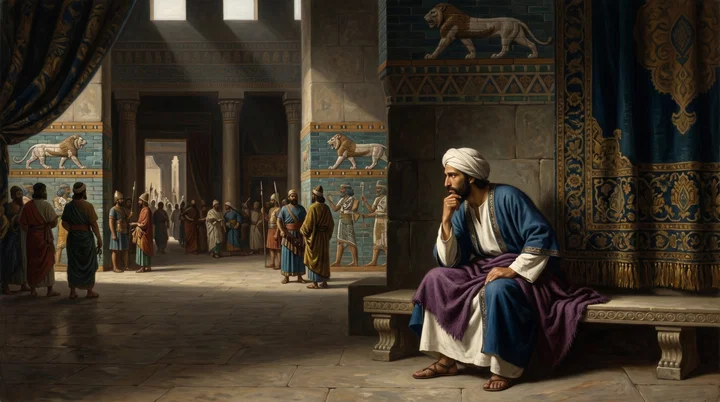
Cross-references
- Esther 3:2-6
And all the king’s servants, that were in the king’s gate, bowed, and reverenced Haman: for the king had so commanded concerning him. But Mordecai bowed not, nor did him reverence.
Mordecai’s refusal to bow to Haman leads to a plot against him and his people.
- Esther 3:8-15
And Haman said unto king Ahasuerus, There is a certain people scattered abroad and dispersed among the people in all the provinces of thy kingdom; and their laws are diverse from all people; neither keep they the king’s laws: therefore it is not for the king’s profit to suffer them.
The decree against the Jews follows from the court setting surrounding Mordecai and Esther.
Commentary
Each commentary is drawn from primary sources: the writings of Ellen G. White and Adventist pioneers and periodicals. Each commentary is separate. Its own words are not a quotation; follow the references to read the source passages.
Ellen G. White
1 source
Mordecai was seated at the king's gate at the time when the virgins were brought together for the second gathering.Ms 39, 1910, par. 25–27 His presence there coincided with Esther's elevation to the position of queen.Ms 39, 1910, par. 25–27 It stood before the arising of the danger that would later threaten the Jews.Ms 39, 1910, par. 25–27
Sources
Pioneers and periodicals
11 sources
The verse belongs to the history of Esther and Mordecai under the Persian king Xerxes, called Ahasuerus in the Bible, in which a Jewish maiden was brought to Persia's throne and God's providence ultimately saved the Jews from their enemies.ST Jun 16, 1909 It records that when the virgins were gathered together the second time, Mordecai sat in the king's gate.ST Oct 26, 1904RH Dec 7, 1905RH Oct 20, 1904RH Jan 18, 1906 In Mordecai's day God's people appointed a special season of prayer, all the people joined in it, and their cause was sustained.RH Dec 7, 1905
Mordecai sitting at the king's gate is a picture of the small company keeping the Sabbath in the last days, so that Sabbath-keeping people and Seventh-day Adventists are described as a Mordecai in the gate standing amid a crisis for God's people.ST Oct 26, 1904RH Dec 7, 1905RH Oct 20, 1904RH Jan 18, 1906 The same image of the small company keeping the Sabbath standing before the Protestant world is applied to Sabbath keepers as a small, conspicuous group whose presence is unwelcome to those opposing them.RH Jan 23, 1908 The verse's image became a familiar biblical figure of speech, "a Mordecai at the gate," used to describe a disagreeable person.ST Feb 18, 1886
Like Mordecai, the character, obedience, and faithfulness of Sabbath keepers to God's law rebukes those who disregard the Lord and violate or reject His law, making them targets of opposition.RH Jan 18, 1906RH Jan 16, 1908 Like Mordecai, they stand as a small, conspicuous, unwelcome presence before the Protestant world and those promoting Sunday laws, who regard them as an obstacle as Haman regarded Mordecai and seek to remove them.RH Jan 23, 1908RH Jan 16, 1908RH Mar 18, 1915 The verse is applied to Seventh-day Adventists standing in opposition to the Inter-Church Federation's Sunday-enforcement movement and to those seeking a Sunday law, in the coming conflict over loyalty to God's commandments and religious liberty.RH Jan 21, 1909
The verse portrays God's loyal, commandment-keeping people standing against compulsory religion and a future decree enforced by religious and civil powers, with threatened persecution for keeping the divine precepts.ST Jul 6, 1904RH Mar 18, 1915 The decree to come against God's people near the end will be like the decree Ahasuerus issued against the Jews in Esther's time, which arose from Haman's malice toward Mordecai.ST Oct 26, 1904RH Oct 20, 1904RH Mar 18, 1915
Sources