Esther 3:2
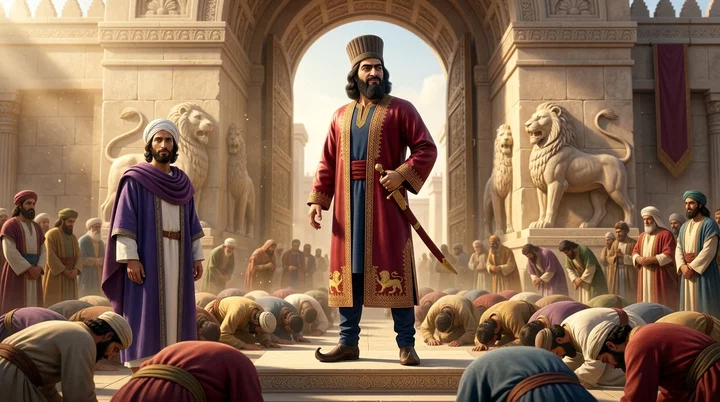
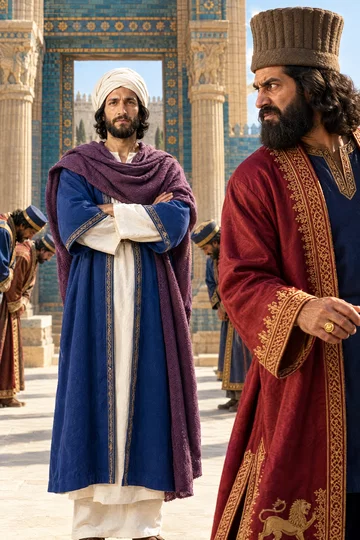
And all the king’s servants, that were in the king’s gate, bowed, and reverenced Haman: for the king had so commanded concerning him. But Mordecai bowed not, nor did him reverence.
Translations
American King James Version, King James Version, KJV Cambridge Paragraph Bible
And all the king’s servants, that were in the king’s gate, bowed, and reverenced Haman: for the king had so commanded concerning him. But Mordecai bowed not, nor did him reverence.
And all the king's servants that were in the king's gate, bowed, and reverenced Haman; for the king had so commanded concerning him. But Mordecai bowed not, nor did him reverence.
And all the king’s servants, that were in the king’s gate, bowed down, and did reverence to Haman: for the king had so commanded concerning him. But Mordecai bowed not down, nor did him reverence.
And all the king’s servants, that were in the king’s gate, bowed down, and did reverence to Haman; for the king had so commanded concerning him. But Mordecai bowed not down, nor did him reverence.
and all servants of the king, who [are] in the gate of the king, are bowing and doing obeisance to Haman, for so hath the king commanded for him; and Mordecai doth not bow nor do obeisance.
And all the king's servants that were in the king's gate bowed and did Haman reverence, for the king had so commanded concerning him. But Mordecai bowed not, nor did [ him] reverence.
And, all the kings servants who were in the kings gate, used to bend and bow themselves down unto Haman, for, so, had the king given command concerning him,—but, Mordecai, bent not nor bowed himself down.
Berean Standard Bible, Majority Standard Bible
All the royal servants at the king’s gate bowed down and paid homage to Haman, because the king had commanded that this be done for him. But Mordecai would not bow down or pay homage.
All the king’s servants who were in the king’s gate bowed down and paid homage to Haman, for the king had so commanded concerning him. But Mordecai didn’t bow down or pay him homage.
And all the king's servants who were in the king's house went down to the earth before Haman and gave him honour: for so the king had given orders. But Mordecai did not go down before him or give him honour.
And all the Kings seruants that were at the Kings gate, bowed their knees, and reuerenced Haman: for the King had so commanded concerning him: but Mordecai bowed not the knee, neither did reuerence.
Douay-Rheims (Challoner revision)
And all the king’s servants, that were at the doors of the palace, bent their knees, and worshipped Aman: for so the emperor had commanded them, only Mardochai did not bend his knee, nor worship him.
Pictures
Cross-references
- Daniel 3:16-18
Shadrach, Meshach, and Abed-nego, answered and said to the king, O Nebuchadnezzar, we are not careful to answer thee in this matter.
The faithful refuse a ruler’s demand for forbidden worship.
- Acts 5:29
Then Peter and the other apostles answered and said, We ought to obey God rather than men.
It expresses the duty to obey God rather than human authority.
- Daniel 6:10
Now when Daniel knew that the writing was signed, he went into his house; and his windows being open in his chamber toward Jerusalem, he kneeled upon his knees three times a day, and prayed, and gave thanks before his God, as he did aforetime.
Daniel, like Mordecai, refuses a command that conflicts with faithfulness to God.
- Esther 5:9
Then went Haman forth that day joyful and with a glad heart: but when Haman saw Mordecai in the king’s gate, that he stood not up, nor moved for him, he was full of indignation against Mordecai.
cited together as same refusal by Mordecai
- Esther 4
When Mordecai perceived all that was done, Mordecai rent his clothes, and put on sackcloth with ashes, and went out into the midst of the city, and cried with a loud and a bitter cry;
The account describes Haman’s plot and the threatened deliverance of the Jews.
- Esther 6:4-13
And the king said, Who is in the court? Now Haman was come into the outward court of the king’s house, to speak unto the king to hang Mordecai on the gallows that he had prepared for him.
Haman’s plot against Mordecai is frustrated, and Mordecai is publicly honored.
- Esther 8
On that day did the king Ahasuerus give the house of Haman the Jews’ enemy unto Esther the queen. And Mordecai came before the king; for Esther had told what he was unto her.
Haman’s plot against the Jews is frustrated, and they are delivered.
- Esther 7:9-10
And Harbonah, one of the chamberlains, said before the king, Behold also, the gallows fifty cubits high, which Haman had made for Mordecai, who had spoken good for the king, standeth in the house of Haman. Then the king said, Hang him thereon.
Haman’s plot against Mordecai is frustrated when Haman is hanged on his own gallows.
- Deuteronomy 25:17-19
Remember what Amalek did unto thee by the way, when ye were come forth out of Egypt;
Amalek’s attack on Israel forms the background to the later conflict.
- Esther 9
Now in the twelfth month, that is, the month Adar, on the thirteenth day of the same, when the king’s commandment and his decree drew near to be put in execution, in the day that the enemies of the Jews hoped to have power over them, (though it was turned to the contrary, that the Jews had rule over them that hated them;)
The account describes Haman’s plot and its frustration.
- Acts 4:18-20
And they called them, and commanded them not to speak at all nor teach in the name of Jesus.
Both show refusal to obey a command that conflicts with allegiance to God.
Commentary
Each commentary is drawn from primary sources: the writings of Ellen G. White and Adventist pioneers and periodicals. Each commentary is separate. Its own words are not a quotation; follow the references to read the source passages.
Ellen G. White
4 sources
Although the king had commanded his servants at the gate to bow to Haman and show him reverence, Mordecai would neither bow nor show him reverence.PK 605.2 The reason was that the reverence Haman demanded belonged to God alone.5T 450.1ST Feb 22, 1910Ms 51, 1899, par. 25–26
His refusal did Haman no harm, yet it wounded Haman's pride and vanity.ST Feb 22, 1910Ms 51, 1899, par. 25–26 That refusal made Mordecai a target of Haman's malice and hostility and became the occasion for Haman's plot against Mordecai and the Jews.5T 450.1ST Feb 22, 1910Ms 51, 1899, par. 25–26 Mordecai's stand is a model and example of faithfulness under a human decree for those who remain loyal to God's law.ST Feb 22, 1910PK 605.2
Like Mordecai at the gate, Sabbath keepers by loyalty to God's law rebuke those who reject the fear of God and disregard and trample the Sabbath.5T 450.1PK 605.2 That faithful rebuke leads those who disregard God's law to seek the removal of the faithful minority.5T 450.1 The episode is a pattern for a future decree enforcing false worship, when God's people will likewise refuse to comply and will face persecution, but by trusting in God and His power will see their persecutors' schemes defeated as in Mordecai's time.ST Feb 22, 1910Ms 51, 1899, par. 25–26
Sources
Pioneers and periodicals
17 sources
Under Ahasuerus the king ordered his servants at the gate to bow down and give reverence to his favored minister Haman, and all obeyed except Mordecai.ST Apr 23, 1912ST Apr 23, 1902 Mordecai refused because as a Jew who worshiped God he could not give to a man the honor belonging to God alone, and when a human command stands against God's law disobedience becomes duty, for men must obey God rather than men.RH May 12, 1868ST Aug 20, 1896RH Mar 13, 1913ST Sep 20, 1899 Haman was an Amalekite heir of the enmity against God declared in Exodus 17 and left unfinished in 1 Samuel 15, and though Mordecai's stand did him no harm it wounded his pride and moved him to plot the destruction of all the Jews under Ahasuerus's rule.ST Feb 22, 1910RH Mar 13, 1913ST Sep 20, 1899ST Apr 23, 1902 That plot was Satan's effort to thwart the coming of the Man-child, but God overruled it to the salvation of His people though His name is not mentioned in the book.ST Nov 19, 1896ST Jun 27, 1911ST Jun 16, 1909ST Aug 20, 1896 Mordecai's stand remains the pattern for God's people in a coming test over false worship, especially in keeping the Sabbath and refusing enforced Sunday observance against conscience, when they will stand as a Mordecai in the gate against a religious-political program to compel worship by law.ST Feb 22, 1910RH Mar 13, 1913ST Jul 14, 1881RH Jan 23, 1908ST Nov 14, 1895
Context and Refusal
The scene belongs to the court of Ahasuerus, that is Xerxes, in the days of Medo-Persian rule, when Haman had been lifted up to stand as the king's favored prime minister while remaining an enemy of the Jews and plotting their destruction.ST Jun 27, 1911ST Jun 16, 1909 The king had laid a command upon his servants who sat in the king's gate that they should bow down to Haman and give him reverence, and all of them did so except Mordecai, who would neither bow nor show him reverence.ST Apr 23, 1912ST Apr 23, 1902 His refusal did not pass unnoticed, for his fellow servants saw it and challenged him for transgressing the king's command, and when he still persisted they reported him to Haman and made known that he was a Jew.ST Apr 23, 1902
Haman was an Amalekite descended from King Agag himself, in whom the Amalekites appeared again with their old bitterness against the Lord and His throne as declared in Exodus 17, the same wicked power that Saul had been charged to destroy in 1 Samuel 15 but failed to destroy.ST Sep 20, 1899 Mordecai refused because as a Jew who feared and worshiped God he could not honor a man as God, since the reverence Haman demanded belonged to God alone and obedience to God's way in worship takes precedence over a human command about worship.ST Feb 22, 1910ST Aug 20, 1896RH Mar 13, 1913ST Sep 20, 1899ST Mar 4, 1886 When a law of men requires anything contrary to the laws of God, disobedience to the human ordinance becomes duty, for men ought to obey God rather than men, and to obey the civil ruler in such a case is sin.RH May 12, 1868
The same bowing at the king's command took place under a tribute-laden monarchy whose business is raising taxes and exacting money to pay foreign tribute and whose glory lies in its temples and public edifices, which are then despoiled to meet the demand.ST Apr 23, 1912 So Seleucus Philopator sent his treasurer Heliodorus to rob the temple at Jerusalem, but God prevented it by supernatural means, with a horseman in golden armor upon a fierce charger riding him down and two others in shining apparel scourging him until he desisted and would not attempt it again.ST Apr 23, 1912 After that Seleucus lived only a few days before that same Heliodorus treacherously slew him to obtain the kingdom, neither in anger nor in battle.ST Apr 23, 1912
Plot and Divine Deliverance
Mordecai's refusal did Haman himself no harm, yet it wounded Haman's pride and provoked his malice and anger.ST Feb 22, 1910RH Mar 13, 1913ST Apr 23, 1902ST Mar 4, 1886 It stood out because all the rest obeyed, and it became the occasion for Haman's anger and his plan against the Jews.ST Feb 22, 1910ST Apr 23, 1902ST Mar 4, 1886 That refusal prompted Haman's revengeful plot to destroy the Jews under the rule of Ahasuerus.ST Dec 20, 1899 Lots were cast for twelve months to find a favorable time, and the king eventually consented to the decree for their destruction.ST Dec 20, 1899
Haman's attempt to destroy all the people of God was an effort by Satan to thwart the coming of the Man-child.ST Nov 19, 1896 The conflict over the refusal, rooted in obedience to God's way taking precedence over a human command about worship, led to a threat against God's people, while the later chapters of Esther show their deliverance.ST Aug 20, 1896 In this way the episode illustrates the continuing conflict between God's way and man's way.ST Aug 20, 1896 God frustrated that satanic purpose.ST Nov 19, 1896ST Jun 27, 1911
God frustrated and overruled Haman's plotting to the salvation of the Jews.ST Nov 19, 1896ST Jun 27, 1911ST Jun 16, 1909 Haman had risen as the favored prime minister and enemy of the Jews, yet the account shows God overruling his plot to save them.ST Jun 27, 1911ST Jun 16, 1909 Mordecai's position among the Medo-Persian rulers made him a means through whom God proclaimed His saving power to them.ST Oct 27, 1898 This overruling was by God's wonderful providence, though the name of God is not mentioned in the book, because of the position of the Jews so as not to offend the Persians.
Faithful Witness Today
Mordecai would not bow to Haman because the reverence demanded belonged to God alone, and though his refusal did Haman no harm it wounded pride and provoked malice and became the occasion for the plot against the Jews.ST Feb 22, 1910RH Mar 13, 1913 His stand is faithfulness under a human decree and a precedent for a future test in which God's people will refuse false worship, trusting in God to see the plans of persecutors defeated.ST Feb 22, 1910 It is a pattern for God's people in faithfulness to God's law, especially in keeping the Sabbath, whose obedience rebukes those who disregard it and can make the faithful targets of opposition.RH Mar 13, 1913
Refusal to bow despite the king's command is the model for resisting human laws that impose religious conformity, illustrating the conflict between faithfulness and state-imposed religion.ST Jul 14, 1881ST Nov 14, 1895 It is the model for those who refuse enforced Sunday observance against conscience in order to keep the Sabbath according to conscience.ST Jul 14, 1881ST Nov 14, 1895 Mordecai at the gate is thus the image of those who resist religious demands backed by civil power and who for that reason are treated as obstacles to be removed.ST Nov 14, 1895
Sabbath-keeping people are a Mordecai in the gate, unlike the king's other servants who bowed and gave reverence.RH Jan 23, 1908 They are regarded as an unwelcome intruder to be put out of the way by the Protestant world joined with worldly and papal power.RH Jan 23, 1908 They are the conscientious minority who will not comply with compulsory religion and who refuse to join in fastening the Sunday sabbath upon all people by force of law, and so become a hindrance to a powerful religious-political program.RH Mar 18, 1915 Because they will not comply they are looked upon by Sunday-law organizations as foes of the country and troublers endangering success.RH Mar 18, 1915 Against them decrees will be leveled in the culminating struggle over compulsory worship.RH Mar 18, 1915
Sources