Esther 5:9
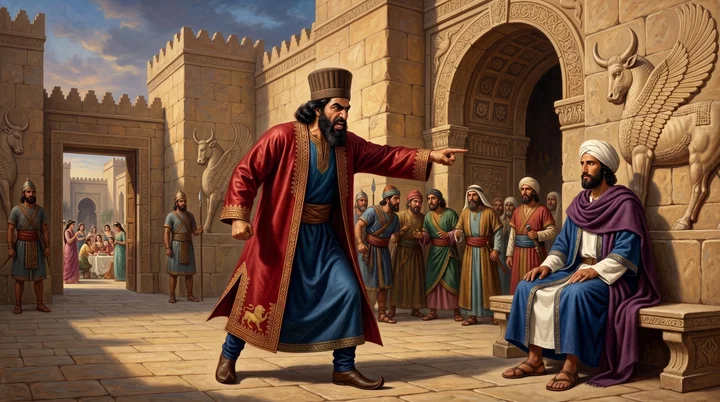
Then went Haman forth that day joyful and with a glad heart: but when Haman saw Mordecai in the king’s gate, that he stood not up, nor moved for him, he was full of indignation against Mordecai.
Translations
American King James Version, King James Version, KJV Cambridge Paragraph Bible
Then went Haman forth that day joyful and with a glad heart: but when Haman saw Mordecai in the king’s gate, that he stood not up, nor moved for him, he was full of indignation against Mordecai.
Then went Haman forth that day joyful and with a glad heart: but when Haman saw Mordecai in the king's gate, that he stood not up, nor moved for him, he was full of indignation against Mordecai.
Revised Version, American Standard Version
Then went Haman forth that day joyful and glad of heart: but when Haman saw Mordecai in the king’s gate, that he stood not up nor moved for him, he was filled with wrath against Mordecai.
And Haman goeth forth on that day rejoicing and glad in heart, and at Haman's seeing Mordecai in the gate of the king, and he hath not risen nor moved for him, then is Haman full of fury against Mordecai.
And Haman went forth that day joyful and glad of heart; but when Haman saw Mordecai in the king's gate, that he stood not up nor moved for him, he was full of fury against Mordecai.
Then went Haman forth on that day, joyful and of a merry heart,—but, when Haman saw Mordecai in the gate of the king, that he rose not up nor moved because of him, then was Haman filled with wrath against Mordecai.
Berean Standard Bible, Majority Standard Bible
That day Haman went out full of joy and glad of heart. At the king’s gate, however, he saw Mordecai, who did not rise or tremble in fear at his presence. And Haman was filled with rage toward Mordecai.
Then Haman went out that day joyful and glad of heart, but when Haman saw Mordecai in the king’s gate, that he didn’t stand up nor move for him, he was filled with wrath against Mordecai.
Then on that day Haman went out full of joy and glad in heart; but when he saw Mordecai in the king's doorway, and he did not get to his feet or give any sign of fear before him, Haman was full of wrath against Mordecai.
Then went Haman forth the same day ioyfull and with a glad heart. But when Haman sawe Mordecai in the Kings gate, that he stoode not vp, nor moued for him, then was Haman full of indignation at Mordecai.
Douay-Rheims (Challoner revision)
So Aman went out that day joyful and merry. And when he saw Mardochai sitting before the gate of the palace, and that he not only did not rise up to honour him, but did not so much as move from the place where he sat, he was exceedingly angry:
Pictures
Cross-references
- Esther 3:2
And all the king’s servants, that were in the king’s gate, bowed, and reverenced Haman: for the king had so commanded concerning him. But Mordecai bowed not, nor did him reverence.
Mordecai refuses the commanded deference to Haman.
- Esther 5:13
Yet all this availeth me nothing, so long as I see Mordecai the Jew sitting at the king’s gate.
Haman says Mordecai’s refusal makes all his honors worthless.
Commentary
Each commentary is drawn from primary sources: the writings of Ellen G. White and Adventist pioneers and periodicals. Each commentary is separate. Its own words are not a quotation; follow the references to read the source passages.
Pioneers and periodicals
6 sources
The verse belongs to the Medo-Persian period in the reign of Ahasuerus, when Haman plotted to destroy all of God's people, a purpose that God frustrated.ST Jun 27, 1911 At that time Medo-Persia was the second head of the Satan-controlled beast system of government, and Haman's indignation against Mordecai was Satan working through Haman to destroy God's people, the woman through whom the Man-child should come.ST Nov 19, 1896
Haman went forth that day joyful and elated by the honor of dining alone with the king and queen at the royal banquet.ST Apr 30, 1902 When he saw Mordecai in the king's gate, Mordecai stood not up nor moved to honor or defer to him, and Haman was full of indignation at the refusal.RH May 12, 1868ST Sep 28, 1904ST Apr 30, 1902RH Dec 22, 1910 He restrained his indignation at that moment because of what he had planned for Mordecai and his people.ST Apr 30, 1902
His jealousy over this one slight outweighed his great wealth, royal favor, and public honors, and that jealousy was the force that ruined him.ST Sep 28, 1904 Mordecai's refusal to rise or move for Haman is an example of refusing to obey or defer to human authority when doing so conflicts with obedience to God.RH May 12, 1868 Haman's conduct exposes worldly politeness as self-serving, for before the king and queen he bowed and scraped while expecting a favor in return, but at the gate the polish slipped into indignation and murderous scheming toward the humble Mordecai.RH Dec 22, 1910 This proves the difference from true Christian courtesy, which like charity is not puffed up and seeks not her own and is kind to friend and enemy alike, while worldly politeness is kind only to friends or to one from whom a favor is expected.RH Dec 22, 1910
Sources