Ezekiel 24:17
Forbear to cry, make no mourning for the dead, bind the tire of thine head upon thee, and put on thy shoes upon thy feet, and cover not thy lips, and eat not the bread of men.
Translations
Forbear to cry, make no mourning for the dead, bind the tire of your head on you, and put on your shoes on your feet, and cover not your lips, and eat not the bread of men.
King James Version, KJV Cambridge Paragraph Bible
Forbear to cry, make no mourning for the dead, bind the tire of thine head upon thee, and put on thy shoes upon thy feet, and cover not thy lips, and eat not the bread of men.
Forbear to cry, make no mourning for the dead, bind the tire of thy head upon thee, and put on thy shoes upon thy feet, and cover not thy lips, and eat not the bread of men.
Sigh, but not aloud; make no mourning for the dead, bind thy headtire upon thee, and put thy shoes upon thy feet, and cover not thy lips, and eat not the bread of men.
Sigh, but not aloud, make no mourning for the dead; bind thy headtire upon thee, and put thy shoes upon thy feet, and cover not thy lips, and eat not the bread of men.
Cease to groan, [for] the dead thou dost make no mourning, thy bonnet bind on thee, and thy shoes thou dost put on thy feet, and thou dost not cover over the upper lip, and bread of men thou dost not eat.'
Sigh in silence, make no mourning for the dead; bind thy turban upon thee, and put thy sandals upon thy feet, and cover not the beard, and eat not the bread of men.
To groan, forbear, Over the dead—no mourning, shalt thou make Thy chaplet, bind thou on thee And thy sandals:, put thou on thy feet, And thou shalt not cover thy beard, And the bread of other men, shalt thou not eat.
Berean Standard Bible, Majority Standard Bible
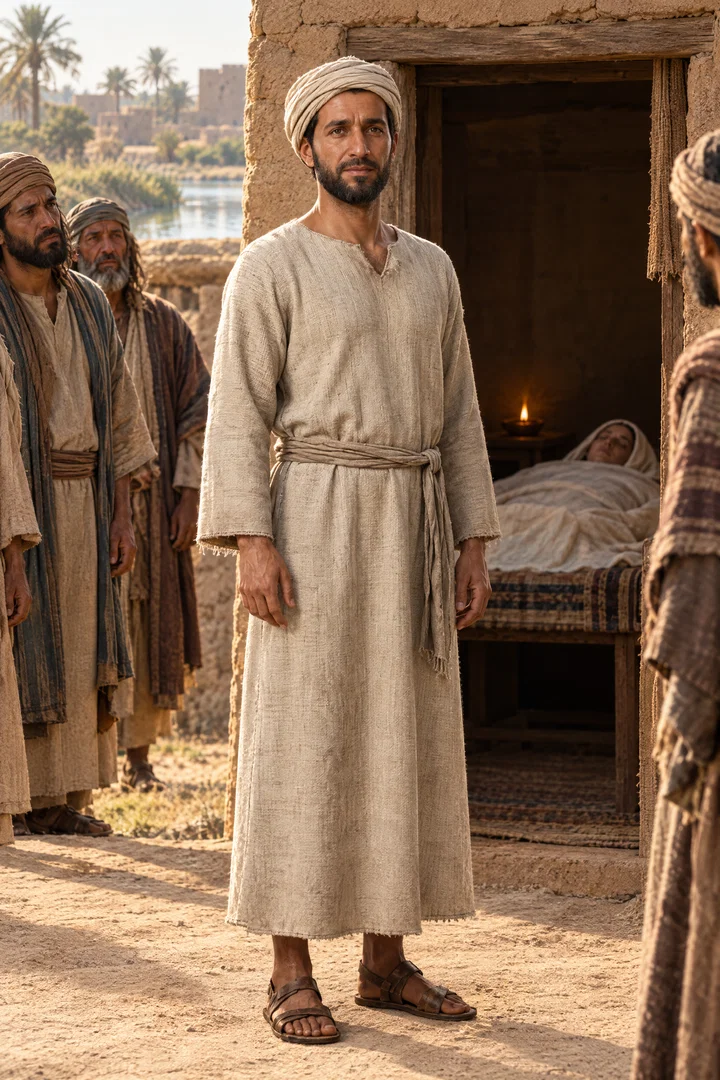
Groan quietly; do not mourn for the dead. Put on your turban and strap your sandals on your feet; do not cover your lips or eat the bread of mourners.”
Sigh, but not aloud. Make no mourning for the dead. Bind your headdress on you, and put your sandals on your feet. Don’t cover your lips, and don’t eat mourner’s bread.”
Let there be no sound of sorrow; make no weeping for your dead, put on your head-dress and your shoes on your feet, let not your lips be covered, and do not take the food of those in grief.
Cease from sighing: make no mourning for the dead, and binde the tyre of thine head vpon thee, and put on thy shooes vpon thy feete, and couer not thy lips, and eate not the bread of men.
Douay-Rheims (Challoner revision)
Sigh in silence, make no mourning for the dead: let the tire of thy head be upon thee, and thy shoes on thy feet, and cover not thy face, nor eat the meat of mourners.
Pictures
Commentary
Each commentary is drawn from primary sources: the writings of Ellen G. White and Adventist pioneers and periodicals. Each commentary is separate. Its own words are not a quotation; follow the references to read the source passages.
Ellen G. White
1 source
God laid on Ezekiel a command to hold back all outward crying when his wife was taken from him.Ms 125, 1907, par. 5–8 He was to leave the covering bound upon his head and keep his shoes upon his feet, as in ordinary life rather than in mourning dress.Ms 125, 1907, par. 5–8 He was to leave his lips uncovered and to refuse the bread customarily brought to comfort mourners.Ms 125, 1907, par. 5–8
His checked and quiet grief was set as a living sign to the people.Ms 125, 1907, par. 5–8 When Jerusalem fell, its inhabitants likewise would be unable to carry out the usual rites of mourning over their dead.Ms 125, 1907, par. 5–8 Instead of lamentation they would waste away under the weight of their own iniquities.Ms 125, 1907, par. 5–8
The direction stands within the prophecy that Jerusalem would be visited with death and captivity.Ms 125, 1907, par. 5–8 No lot would be cast to determine who should be spared from that judgment.Ms 125, 1907, par. 5–8
Sources
Pioneers and periodicals
4 sources
Ezekiel 24:17 belongs to the warnings given before Jerusalem's destruction.RH Aug 17, 1916 It reflects that Ezekiel was married and lived in a house in the place of his captivity.RH Aug 10, 1916 His wife died suddenly while he was in exile.RH Aug 10, 1916
After his wife's death he was commanded to forgo the customary signs of mourning.RH May 14, 1914ST Aug 2, 1910 He was to make no sighing, crying, or wailing aloud, to cover not the lips, and to eat not the bread of mourners.RH May 14, 1914ST Aug 2, 1910 He was instead to continue his prescribed dress and actions, with the head covering bound on and shoes on the feet.RH May 14, 1914
His personal loss and withheld grief were made a prophetic sign.RH May 14, 1914ST Aug 2, 1910 His silent obedience showed the people the grief and suffering that would come upon Israel.ST Aug 2, 1910 It showed them the ominous doom of the coming calamity upon them.RH May 14, 1914 His obedience under anguish stands as an example of faith.RH May 14, 1914
Sources