Ezekiel 24:16
Son of man, behold, I take away from thee the desire of thine eyes with a stroke: yet neither shalt thou mourn nor weep, neither shall thy tears run down.
Translations
Son of man, behold, I take away from you the desire of your eyes with a stroke: yet neither shall you mourn nor weep, neither shall your tears run down.
King James Version, KJV Cambridge Paragraph Bible, Revised Version
Son of man, behold, I take away from thee the desire of thine eyes with a stroke: yet neither shalt thou mourn nor weep, neither shall thy tears run down.
Son of man, behold, I take away from thee the desire of thy eyes with a stroke: yet neither shalt thou mourn nor weep, neither shall thy tears run down.
Son of man, behold, I take away from thee the desire of thine eyes with a stroke: yet thou shalt neither mourn nor weep, neither shall thy tears run down.
'Son of man, lo, I am taking from thee the desire of thine eyes by a stroke, and thou dost not mourn, nor weep, nor let thy tear come.
Son of man, behold, I take away from thee the desire of thine eyes with a stroke; yet thou shalt not mourn nor weep, neither shall thy tears run down.
Son of Man Behold me! taking away from thee the delight of thine eyes, with a stroke,- But thou shall not lament Neither shalt thou weep, Neither shall come—thy tears:
Berean Standard Bible, Majority Standard Bible
“ Son of man, behold, I am about to take away the desire of your eyes with a fatal blow. But you must not mourn or weep or let your tears flow.
“ Son of man, behold, I will take away from you the desire of your eyes with one stroke; yet you shall neither mourn nor weep, neither shall your tears run down.
Son of man, see, I am taking away the desire of your eyes by disease: but let there be no sorrow or weeping or drops running from your eyes.
Sonne of man beholde, I take away from thee the pleasure of thine eyes with a plague: yet shalt thou neither mourne nor weepe, neither shall thy teares runne downe.
Douay-Rheims (Challoner revision)
Son of man, behold I take from thee the desire of thy eyes with a stroke: and thou shalt not lament, nor weep: neither shall thy tears run down.
Pictures
Cross-references
- Ezekiel 24:21-24
Speak unto the house of Israel, Thus saith the Lord GOD; Behold, I will profane my sanctuary, the excellency of your strength, the desire of your eyes, and that which your soul pitieth; and your sons and your daughters whom ye have left shall fall by the sword.
Ezekiel’s response to loss foretells how the people will respond to Jerusalem’s fall.
Commentary
Each commentary is drawn from primary sources: the writings of Ellen G. White and Adventist pioneers and periodicals. Each commentary is separate. Its own words are not a quotation; follow the references to read the source passages.
Ellen G. White
1 source
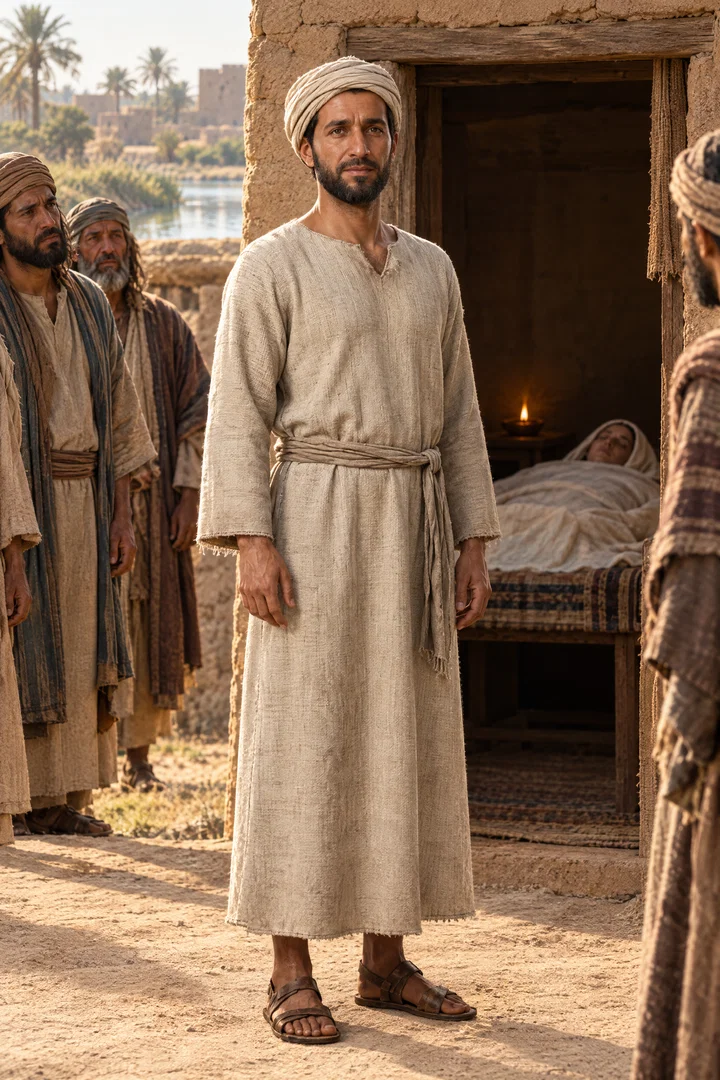
God takes Ezekiel's wife from him by sudden death as a commanded sign of Jerusalem's coming destruction.Ms 125, 1907, par. 5–8 She is precious to his sight, and in that cherished place she represents the sanctuary beloved by the people and everything they held dear.Ms 125, 1907, par. 5–8 As he is forbidden to show outward grief, neither mourning nor weeping nor letting tears flow, so the people are to refrain from the usual signs of mourning when Jerusalem falls and their sons and daughters die.Ms 125, 1907, par. 5–8 That restrained grief signifies the severity of the judgment upon them and their sorrow over their own iniquities.Ms 125, 1907, par. 5–8
Sources
Pioneers and periodicals
5 sources
The verse belongs to warnings given before the destruction of Jerusalem.RH Aug 17, 1916 The desire of the eyes is Ezekiel's wife, whom he loved as the delight of his eyes.RH May 14, 1914ST Aug 2, 1910RH Aug 10, 1916 Being taken away with a stroke is her sudden and unforeseen death, which occurred that evening.RH May 14, 1914ST Aug 2, 1910RH Aug 10, 1916 The verse commands him not to mourn aloud or weep or let tears run down, and he obeyed and remained dry-eyed.RH May 14, 1914ST Aug 2, 1910RH Aug 10, 1916 Her death and his restrained grief were a sign of coming disaster and doom for his people: as Ezekiel lost his beloved wife, they would lose the temple, their pride and joy, and face suffering and captivity.RH May 14, 1914ST Aug 2, 1910
More generally, the verse pictures the sudden loss of someone dearly loved, or of whatever a person loves most.RH May 6, 1858 Such loss should not make Christians sink into despair or complaint, but they are to keep a hopeful, patient, loving and cheerful spirit because of the promise of life now and in the life to come.RH May 6, 1858 Not mourning or letting tears run down also describes a grief so deep that tears do not come, as exemplified when Clara was unable to weep.
Sources