Ezekiel 44:3
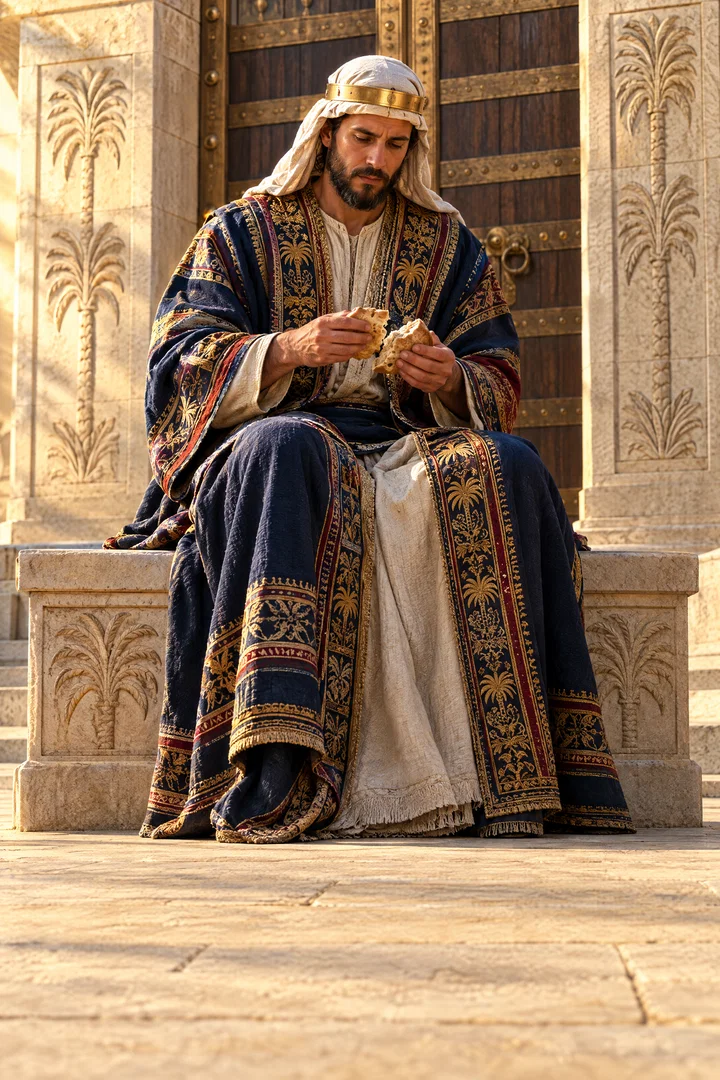
It is for the prince; the prince, he shall sit in it to eat bread before the LORD; he shall enter by the way of the porch of that gate, and shall go out by the way of the same.
Translations
American King James Version, King James Version, Webster Bible
It is for the prince; the prince, he shall sit in it to eat bread before the LORD; he shall enter by the way of the porch of that gate, and shall go out by the way of the same.
It is for the prince; the prince, he shall sit in it to eat bread before the Lord; he shall enter by the way of the porch of that gate, and shall go out by the way of the same.
As for the prince, he shall sit therein as prince to eat bread before the LORD; he shall enter by the way of the porch of the gate, and shall go out by the way of the same.
As for the prince, he shall sit therein as prince to eat bread before Jehovah; he shall enter by the way of the porch of the gate, and shall go out by the way of the same.
The prince, who [is] prince, he sitteth by it to eat bread before Jehovah, by the way of the porch of the gate he cometh in, and by its way he goeth out.'
As for the prince, he, the prince, shall sit in it to eat bread before Jehovah: he shall enter by the way of the porch of the gate, and shall go out by the way of the same.
The prince! as prince, he, shall sit therein, To eat food before Yahweh,— By way of the porch of the gate, shall he go in, and By way thereof, shall he come out.
Berean Standard Bible, Majority Standard Bible
Only the prince himself may sit inside the gateway to eat in the presence of the LORD. He must enter by way of the portico of the gateway and go out the same way.”
As for the prince, he shall sit in it as prince to eat bread before the LORD. He shall enter by the way of the porch of the gate, and shall go out the same way.”
But the ruler will be seated there to take his food before the Lord; he will go in by the covered way to the door, and will come out by the same way.
It appertaineth to the Prince: the Prince himselfe shall sit in it to eate bread before the Lord: he shall enter by the way of the porche of that gate, and shall go out by the way of the same.
Douay-Rheims (Challoner revision)
For the prince. The prince himself shall sit in it, to eat bread before the Lord: he shall enter in by the way of the porch of the gate, and shall go out by the same way.
Pictures
Cross-references
- Ezekiel 43:7-11
And he said unto me, Son of man, the place of my throne, and the place of the soles of my feet, where I will dwell in the midst of the children of Israel for ever, and my holy name, shall the house of Israel no more defile, neither they, nor their kings, by their whoredom, nor by the carcases of their kings in their high places.
The sanctuary vision includes the prince’s gate and sets conditions for restoration.
- Ezekiel 46:1-2
Thus saith the Lord GOD; The gate of the inner court that looketh toward the east shall be shut the six working days; but on the sabbath it shall be opened, and in the day of the new moon it shall be opened.
The prince enters through the east gate to worship and offer sacrifices.
- Ezekiel 40
In the five and twentieth year of our captivity, in the beginning of the year, in the tenth day of the month, in the fourteenth year after that the city was smitten, in the selfsame day the hand of the LORD was upon me, and brought me thither.
The sanctuary vision includes the gate and prince described in Ezekiel 44:3.
- Ezekiel 45:22
And upon that day shall the prince prepare for himself and for all the people of the land a bullock for a sin offering.
The prince offers a sin offering for himself, indicating he is mortal.
- Ezekiel 46:18
Moreover the prince shall not take of the people’s inheritance by oppression, to thrust them out of their possession; but he shall give his sons inheritance out of his own possession: that my people be not scattered every man from his possession.
The prince must not oppress the people by taking their inheritance.
- Ezekiel 46:12
Now when the prince shall prepare a voluntary burnt offering or peace offerings voluntarily unto the LORD, one shall then open him the gate that looketh toward the east, and he shall prepare his burnt offering and his peace offerings, as he did on the sabbath day: then he shall go forth; and after his going forth one shall shut the gate.
Sabbath allusion in same restoration offer
- Ezekiel 46:3-4
Likewise the people of the land shall worship at the door of this gate before the LORD in the sabbaths and in the new moons.
Sabbath allusions in same restoration offer
- Ezekiel 48
Now these are the names of the tribes. From the north end to the coast of the way of Hethlon, as one goeth to Hamath, Hazar-enan, the border of Damascus northward, to the coast of Hamath; for these are his sides east and west; a portion for Dan.
The sanctuary prophecy includes the gate and prince described in Ezekiel 44:3.
- Ezekiel 45:17
And it shall be the prince’s part to give burnt offerings, and meat offerings, and drink offerings, in the feasts, and in the new moons, and in the sabbaths, in all solemnities of the house of Israel: he shall prepare the sin offering, and the meat offering, and the burnt offering, and the peace offerings, to make reconciliation for the house of Israel.
festival allusion in same restoration offer
- Ezekiel 46:16-17
Thus saith the Lord GOD; If the prince give a gift unto any of his sons, the inheritance thereof shall be his sons’; it shall be their possession by inheritance.
prince has sons and servants receiving inheritance
- Ezekiel 43:1-5
Afterward he brought me to the gate, even the gate that looketh toward the east:
The passage says Ezekiel’s temple was to contain the Shekinah, God’s presence.
- Luke 1:32-33
He shall be great, and shall be called the Son of the Highest: and the Lord God shall give unto him the throne of his father David:
only Jesus reigns as Prince in glory
- Ezekiel 41
Afterward he brought me to the temple, and measured the posts, six cubits broad on the one side, and six cubits broad on the other side, which was the breadth of the tabernacle.
The sanctuary vision includes the gate and prince described in Ezekiel 44:3.
- Ezekiel 47:1-2
Afterward he brought me again unto the door of the house; and, behold, waters issued out from under the threshold of the house eastward: for the forefront of the house stood toward the east, and the waters came down from under from the right side of the house, at the south side of the altar.
The sanctuary vision includes the gate and prince described here.
Commentary
Each commentary is drawn from primary sources: the writings of Ellen G. White and Adventist pioneers and periodicals. Each commentary is separate. Its own words are not a quotation; follow the references to read the source passages.
Ellen G. White
1 source
The gate by which the Lord Himself has entered is to stay shut and is not to be opened for common use, because it is set apart and reserved for the prince.Ms 81, 1906, par. 35–38 The prince, and he alone, is granted the right to sit in that gate to eat bread before the Lord, coming in by the way of the porch of the gate and going out again by that same way.Ms 81, 1906, par. 35–38 The arrangement declares the Lord's supreme authority over the ordering of His own house, that its places and privileges are His to assign.Ms 81, 1906, par. 35–38 It further shows that when men pervert and misuse the wisdom He has entrusted to them, He will rise to assert and vindicate His rights.Ms 81, 1906, par. 35–38
Sources
Pioneers and periodicals
27 sources
The verse gives the prince alone a special right to sit in the eastern gate to eat bread before the Lord, entering and leaving by the way of its porch to perform his services.RH Jan 20, 1853RH Sep 4, 1856ST Aug 2, 1910 It belongs to the temple vision of Ezekiel 40-48, a sanctuary, city and land held out to captive Israel in Babylon to show what God would restore.RH May 25, 1876RH Sep 11, 1856RH Jan 21, 1862 The prince is a mortal ruler distinct from Christ, since he must offer a sin offering for himself, is warned not to oppress the people, and has sons and servants to receive inheritance.RH Jan 19, 1860RH Sep 11, 1856 Everything in that vision was a conditional promise to be possessed only if Israel repented and yielded fully to God, which Israel according to the flesh did not do, so the sanctuary and city as shown were never built.RH May 25, 1876ST Aug 12, 1875RH Sep 4, 1856ST Feb 22, 1910ST Dec 1, 1914 Its sacrifices and ordinances belonged to the past Mosaic dispensation and will never be fulfilled literally, for they only shadowed the one offering of Christ, while in its spiritual aspect the prophecy stands as a type of greater things God would do through Christ and restore in the new heavens and new earth.RH May 25, 1876ST Aug 12, 1875ST Oct 1, 1896ST Feb 27, 1907ST Oct 21, 1908
Vision Setting and Prince
Ezekiel 44:3 belongs to the temple vision in Ezekiel 40-48, a remarkable sanctuary with city and land offered to captive Israel in Babylon.RH May 25, 1876RH Sep 11, 1856RH Jan 21, 1862ST Aug 30, 1905 It was given in B.C. 574, fourteen years after Jerusalem, the temple and the sanctuary were destroyed in the eleventh year of Zedekiah in B.C. 588, to show to the house of Israel what God would restore.RH May 25, 1876RH Sep 11, 1856 The vision described a new sanctuary with its offerings, its glory and the division of the land, together with the Sabbaths and festivals of the Hebrews.ST Oct 1, 1896RH Jan 21, 1862 It set forth a restored Jerusalem with a grand temple, finer than Solomon's, that would become a house of prayer for all nations, with the Shekinah glory of God's presence restored.ST Sep 3, 1902ST Aug 2, 1910
Its center taught that Jehovah is there, with His glory resting on the city as never before and its worship blessed.ST Sep 3, 1902ST Apr 20, 1915 His presence would heal all barren land, salt marshes, deserts, marshes and salt lands, and all impure waters by the water of life, giving life to all and making wild beasts mild under righteousness.ST Sep 3, 1902ST May 21, 1902 This would have been built on this present earth as part of the gradual establishment of the Messiah's peaceful kingdom, with the life and healing power of God upon Palestine and the earth, including the raising of the righteous dead and the subjection of enemies far and near.ST Sep 20, 1910ST May 21, 1902 In that restoration only a temple with a shadow of its greatness was erected by Zerubbabel, which fell far short of the pattern and never saw the glory of Solomon's temple except in the person of Jesus Christ, whom the temple-keepers rejected.ST Sep 3, 1902ST Sep 20, 1910
The verse gives the prince a special privilege and his own designated gate, for he alone may sit in the gate, especially the east gate, to eat bread before the Lord.RH Sep 11, 1856RH Jan 20, 1853RH Sep 4, 1856 He shall enter by the way of the porch of that gate and shall go out by the way of the same, with services to perform before the Lord.RH Jan 20, 1853RH Sep 4, 1856ST Aug 2, 1910 In the conditional promise of a new city grander than old Jerusalem, there was to be such a prince with his own gate of entrance and certain services to perform.ST Aug 2, 1910ST Aug 2, 1910 The prince is a mortal ruler distinct from Christ and not Jesus in His future glorified reign over Israel, when He alone shall be King.RH Jan 19, 1860RH Sep 11, 1856
He must offer a sin offering and all kinds of offerings for himself, and is commanded with the other princes to take away exactions.RH Jan 19, 1860RH Sep 11, 1856 He has sons and servants to whom he may give an inheritance, must not take the people's property for his sons, and must be forbidden to oppress the people.RH Jan 19, 1860RH Sep 11, 1856 Such frailty proves him a poor frail mortal, and cannot be applied to Christ without blasphemy, since Christ Himself was the great Sacrifice who caused all other sacrifices to cease at His cross, and when He reigns officers will be peace and exactors righteousness with no oppression.RH Sep 11, 1856 With its sacrifices, oblations and priesthood, the provision of the prince belongs to the time before Messiah came.ST Aug 2, 1910ST Aug 2, 1910
He was to stand before Israel until the Prince, the Messiah, came.ST Aug 2, 1910ST Aug 2, 1910 The provision of the prince and his gate depended on God's people putting away their sins and being ashamed of all they had done, and it was forfeited with the rest of the rebuilding when they failed.ST Aug 2, 1910 That failure was followed by more than four hundred years with no prophetic voice until John and the light of the gospel of the Son of God.ST Aug 2, 1910
Conditional Promise and Fulfillment
Everything in Ezekiel 36 to 48, including this verse, was a conditional promise offered to Israel at and after the seventy years of captivity in Babylon, to be possessed only if Israel was ashamed of iniquities, put them away, repented, reformed, returned wholeheartedly and yielded fully to God, as stated in Ezekiel 43:7-11 and Ezekiel 43:10-11, and answered the calls to leave Babylon.ST Aug 12, 1875ST Feb 22, 1910ST Oct 21, 1908ST Mar 3, 1909ST Oct 26, 1904 Israel according to the flesh did not meet those conditions, did not repent and return wholeheartedly, did not turn from sins and did not accept the blessing offered, and only about forty thousand returned.RH Sep 4, 1856ST Feb 27, 1907ST Oct 21, 1908ST Oct 26, 1904 Without that thorough repentance and obedience the promise was not binding, though it would have been fulfilled literally during the Mosaic dispensation and its worship blessed and their house would have stood to this day if they had complied and been obedient.ST Aug 12, 1875RH Sep 4, 1856ST Feb 22, 1910
The sanctuary, city and restoration so described were never built as shown, Jerusalem was never thus restored, and that temple never will be built to fulfill the purpose God intended for it.RH May 25, 1876ST Dec 1, 1914ST Sep 3, 1902RH Feb 7, 1907ST May 9, 1878 That sanctuary was offered to captive Israel in B.C. 574, fourteen years after Jerusalem, the temple and the sanctuary were destroyed in the eleventh year of Zedekiah in B.C. 588, to be possessed if Israel complied with certain conditions, and the specifications show it was designed to be fulfilled in the past dispensation, not in the present dispensation and not in the future immortal state.RH May 25, 1876 The vision of Jerusalem shown to Ezekiel was the city that could have been built if Israel had answered the calls to leave Babylon and had yielded all to God for Him to come in and dwell among them, but that city was never built because Israel failed to do its part and would not yield all, and He could not build a temple for His name for a half-hearted people to dishonor.ST Sep 3, 1902RH Feb 7, 1907
What was erected after the captivity by Zerubbabel was only a lesser shadow and feeble realization of the pattern, falling far short of its greatness and glory and realized only in a small measure.ST Nov 24, 1909ST Dec 1, 1914ST Sep 20, 1910ST Aug 2, 1910 The temple built at the restoration from Babylon fell far short of Ezekiel's pattern and never saw the glory of Solomon's temple except in the person of Jesus Christ, whom the temple-keepers rejected.ST Sep 3, 1902 Because the people did not repent, forsake sin and return to God, the sanctuary and its promises were only feebly realized, and only a temple with a shadow of its greatness was erected by Zerubbabel.ST Nov 24, 1909ST Sep 20, 1910
The detail will never be fulfilled literally, for no such city or sanctuary stands today so the vision is unfulfilled, and the specifications show it was designed for the past Mosaic dispensation, not the present dispensation, the future age or the future immortal state.RH May 25, 1876ST Aug 12, 1875ST Oct 1, 1896 Its thousands of sheep and oxen sacrifices belonged to the time then present and only shadowed the one effectual offering of Jesus Christ, and its prescribed sacrifices show that the sanctuary was not a future temple, since offering sacrifices now would annul Christ's offering.ST Oct 1, 1896ST Nov 24, 1909 To renew them now would make Christ's once-for-all offering of no effect, build again what was destroyed, go back from sunlight to shadow and from the more excellent ministry and better covenant now mediated by Christ to the ordinances of the first covenant which pointed to Christ the great sin-offering.ST Oct 1, 1896RH Sep 4, 1856 Reviving those sacrifices offered year by year would demand a second Messiah at the end of the thousand years, for the law having a shadow of good things to come can never with those sacrifices make the comers perfect, while Christ by means of death redeemed transgressions under the first testament and by one offering for sins forever perfected them that are sanctified and sat down on the right hand of God till His enemies are made His footstool.RH Sep 4, 1856 That temple never will be built literally because it provided for sacrifices to be offered, and Jesus Christ fulfilled all sacrifices by His death on the cross.ST Sep 20, 1910
In its spiritual aspect the prophecy stands as a type, but not in every detail, of greater things God would do for His people through Christ and faintly of what He will restore in the new heavens and new earth by His mighty power.ST Oct 21, 1908ST Mar 3, 1909ST Sep 20, 1910 The future glory belongs to the true Israel and will come to the faithful in fullest measure as the immortal inheritance, not according to those details but according to later revelations.ST Oct 26, 1904 The prophecies will receive a greater fulfillment in the glory of Christ's second coming and related events, but not under the local conditions of Ezekiel's time. God will fulfill His promises to His people in Christ, and though that city was never built because Israel failed to do its part, God's purpose did not change, and the holy city will instead descend from heaven.ST Feb 27, 1907RH Feb 7, 1907
The verse does not require a literal city to be built on this sin-cursed earth during Christ's thousand-year reign to supersede the heavenly Jerusalem John saw coming down from God out of heaven.RH Sep 4, 1856 Nor does it teach a special future work for the Jews in the Christian dispensation, the return-of-the-Jews theory, the reign of Christ on earth as taught by age-to-come advocates, or the inheritance of the saints on those terms.RH Sep 4, 1856ST Sep 9, 1889 Its explanation must harmonize with the whole Bible, especially that Gentiles share God's promise through the gospel and that the saints are taken to heaven at the second coming of Christ when the earth is desolated, which overthrows the return-of-the-Jews theory built upon the last nineteen chapters of Ezekiel.ST May 16, 1911ST Sep 9, 1889 God is not bound to fulfill in the future what Israel could have received in the past, and though Ezekiel 44 seems to predict the building of a greater temple, it does not reveal the process by which the work would be done, whose circumstances are secondary to the prophecy.RH Sep 4, 1856
Sources