Translations
American King James Version, King James Version, KJV Cambridge Paragraph Bible, Webster Bible, Revised Version, American Standard Version
And Cush begat Nimrod: he began to be a mighty one in the earth.
And Cush hath begotten Nimrod;
And Cush begot Nimrod: he began to be mighty on the earth.
And, Cush begat Nimrod.—he, became a hero in the earth;
Berean Standard Bible, Majority Standard Bible
Cush was the father of Nimrod, who began to be a mighty one on the earth.
Cush became the father of Nimrod. He began to be a mighty one on the earth.
And Cush was the father of Nimrod, who was the first of the great men of the earth.
And Cush begate Nimrod, who began to be mightie in the earth.
Douay-Rheims (Challoner revision)
Now Chus begot Nemrod: he began to be mighty on the earth.
Pictures
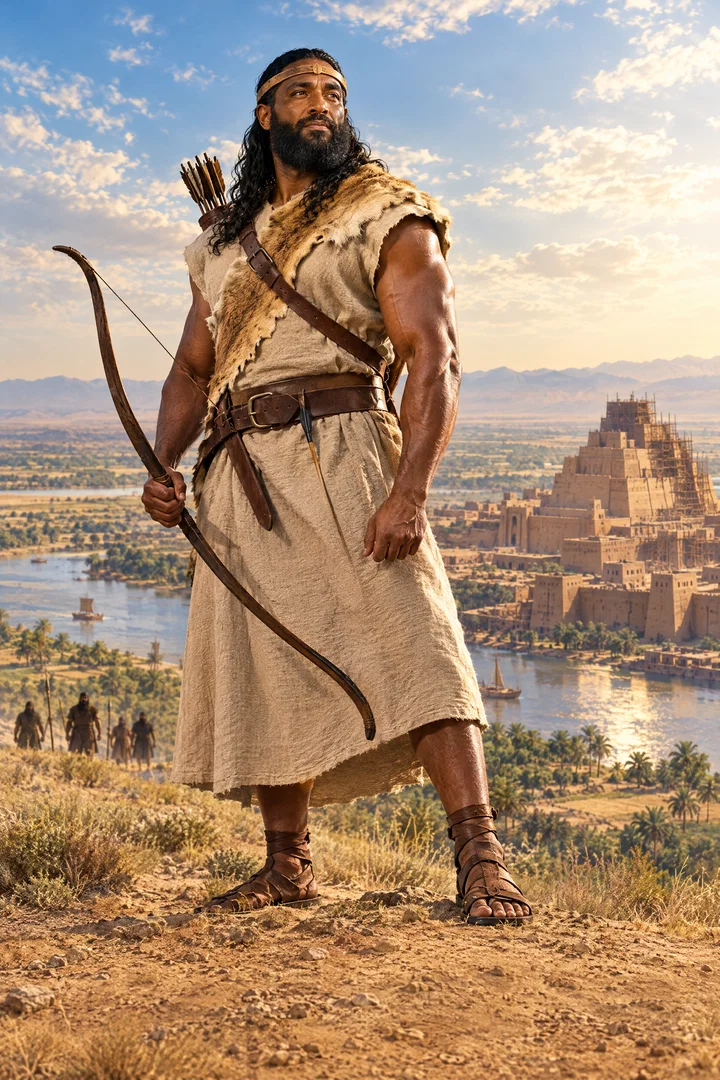
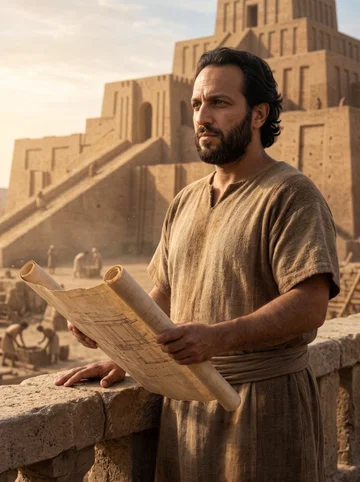
Cross-references
- Genesis 11:1-9
And the whole earth was of one language, and of one speech.
Describes the builders and the tower associated with Nimrod.
- Genesis 9:18-19
And the sons of Noah, that went forth of the ark, were Shem, and Ham, and Japheth: and Ham is the father of Canaan.
Names Noah’s three sons as ancestors of the people who spread across the earth.
- Genesis 11:4
And they said, Go to, let us build us a city and a tower, whose top may reach unto heaven; and let us make us a name, lest we be scattered abroad upon the face of the whole earth.
Describes the city and tower built in Nimrod’s rebellious movement.
- Genesis 10:2
The sons of Japheth; Gomer, and Magog, and Madai, and Javan, and Tubal, and Meshech, and Tiras.
Identifies Magog, Meshech, and Tubal as sons of Japheth.
- Genesis 14:4
Twelve years they served Chedorlaomer, and in the thirteenth year they rebelled.
The revolt against Chedorlaomer illustrates resistance to would-be emperors.
- Genesis 9:25-27
And he said, Cursed be Canaan; a servant of servants shall he be unto his brethren.
Noah’s curse on Canaan concerns the later Hamitic family branches.
Commentary
Each commentary is drawn from primary sources: the writings of Ellen G. White and Adventist pioneers and periodicals. Each commentary is separate. Its own words are not a quotation; follow the references to read the source passages.
Ellen G. White
1 source
Genesis 10:8 stands within the most ancient history ever recorded, and the most comprehensive.ED 173.1 That history came fresh from the fountain of eternal truth with its purity preserved, and it lights up the far-distant past where human research cannot penetrate.ED 173.1 It alone beholds the power that laid the foundations of the earth and stretched out the heavens.ED 173.1 It alone gives an authentic account of the origin of nations and a history of the human race unsullied by human pride or prejudice.ED 173.1
Sources
Pioneers and periodicals
94 sources
Cush fathered Nimrod, the grandson of Ham and great-grandson of Noah in the spreading of the nations after the Flood.ST Sep 4, 1907ST Dec 17, 1912 He began to be a mighty one by becoming the first mighty despot on earth, turning prowess as a hunter into violence against men to subdue them under his dominion.RH Aug 4, 1904ST Dec 16, 1903RH Dec 11, 1916 He founded the first earthly kingdom and universal empire after the Flood, beginning at Babel, Erech, Accad and Calneh in Shinar and extending afterward into Assyria.ST Jul 26, 1905ST Jul 26, 1905RH Apr 9, 1857 He led the world's first organized apostasy at Babel, uniting men in defiance of God to make a name, keep from scattering, and exalt the creature above the Creator, until God brought confusion of language and dispersion.ST Nov 25, 1930ST Feb 15, 1883ST Jan 23, 1879RH Feb 4, 1909 That rebellious beginning at Babylon started the kingdom of man and its coercive union of political and religious rule, continuing through Nebuchadnezzar as head of gold until its termination recorded in Daniel 5.ST Jan 2, 1912RH Sep 22, 1874ST Oct 23, 1901
Lineage and Post-Flood Setting
Nimrod was the son of Cush, the grandson of Ham, and the great-grandson of Noah.ST Sep 4, 1907ST Dec 17, 1912RH Apr 9, 1857ST May 3, 1877 The verse places him among Cush's descendants and identifies him as the first to become mighty on earth and the beginning of the mighty ones, introducing the beginnings of his kingdom at Babel and the other cities in Shinar.ST Dec 29, 1887RH Apr 9, 1857 In its genealogical context it belongs to the account of how Noah's descendants spread out and became the families and tribes of the earth, and to the genealogical outline of the origins and descent of the nations.ST Dec 17, 1912ST Dec 29, 1887 He stands within the Hamitic line through Cush, and that genealogy places the darker races, including Africans, the Negro, Ethiopians or Cushites, among the descendants of Ham.ST Jul 5, 1910ST Sep 4, 1907ST Mar 23, 1904ST Jul 26, 1905 The Hamitic branches spread south and inhabited Africa, pushing on into Canaan, Arabia, Africa, and Egypt, with Mizraim founding Egypt.ST Mar 23, 1904ST Apr 3, 1901
The chapter traces the origin, descent, and spreading of the principal nations, families, and tribes of the earth through Noah's three sons Shem, Ham, and Japheth after the Flood.ST Jul 26, 1905ST Jan 13, 1888ST Apr 3, 1901 As they multiplied near where the ark rested, colonies pushed out, and strong and intellectual men founded cities, tribes, kingdoms, and empires and populated the earth.ST Apr 3, 1901 The verse belongs to a new beginning after the Flood leading to Babel and the scattering of the people, tracing the family line toward God's chosen family.RH Dec 28, 1916ST God overruled the effort to overthrow His plan that Noah's descendants should multiply and people the whole earth with holy beings and made it the origin of all the nations that would people the earth till the end of time, whose one purpose is that a holy people be gathered out to finally fill the world.RH Oct 8, 1903
The record traces one line of generations down through time and then returns to take up other events from an earlier point, and a record of generations necessarily involves length of time because several generations are given.RH Sep 10, 1872 The confusion of tongues occurred but a little more than one hundred years after the Flood, so there is no disarrangement of chronological order, and the word translated Gentiles simply means nations.RH Sep 10, 1872 Babel and the other cities named existed before Nineveh, Assyria was colonized from Babylonia, and Cush, a descendant of Ham who was not a Semite, was the founder of Babylonian civilization.RH Nov 9, 1916 Inscriptions are presented as confirming that the country was occupied early by two distinct peoples, one Semitic through Shem and Asshur and one older, darker, non-Semitic people with different language and appearance corresponding to the Hamite line.ST Nov 20, 1884
The beginnings of his kingdom were at Babel and Erech and Accad and Calneh in the land of Shinar, extending afterward out of that land into Assyria to Nineveh and Rehoboth-Ir and Calah and Resen.ST Apr 3, 1901 He first secured a following at Babel and entered upon a career of conquest, building a city at Calneh and making it for a time the seat of his government while by war he subdued the other districts of his kingdom.RH Dec 11, 1916 The account is cited as part of the biblical record mentioning the people associated with the region around Mount Ararat and placing the history of the Caucasus back to the time after the Flood, and East Indian history is traced back to his descendants.RH Sep 21, 1911ST Feb 27, 1893 It harmonizes with Hebron in Palestine being built seven years before Zoan in Egypt, with one company going westward and southward to found Hebron and a later colony seven years afterward passing on by Hebron to found Zoan in Egypt, showing Egypt had no independent oldest civilization separate from the eastern peoples but came from the same parent stock.ST Apr 3, 1901
Sense of Mighty One
He was the first to become mighty on earth, the beginning of the mighty ones and of a line of mighty rulers reaching through the founder of the old Assyrian empire that governed Asia nearly thirteen hundred years and gathered its wealth in Nineveh until broken under God's indignation, and through the founder of Babylon as the beginning of the persecuting church-and-state system.RH Aug 4, 1904RH Apr 22, 1862RH Nov 21, 1854ST Jul 4, 1899 This beginning of mighty rulers belongs to the genealogical outline of the origin and descent of the nations.ST Dec 29, 1887
He was the greatest of the sons of Cush and the first man described as successful and mighty, yet that reputation does not mean the Lord favored his course.ST Dec 16, 1903ST Jul 26, 1905 His might lay in gaining ascendancy over other people, founding a kingdom, organizing the first earthly government, and building cities, so that mighty hunter means warrior and hunter of men.ST Dec 16, 1903ST Jul 26, 1905
Mighty describes a despot and overbearing tyrant whose prowess as a hunter developed into violence against people, hunting and subduing men to reduce them under his dominion, using the chase to train followers in arms and establish dominion.RH Aug 4, 1904ST Dec 16, 1903 He began to be mighty by becoming the first to monopolize power on earth, securing a following at Babel, entering a career of conquest, subduing by war the other districts of his kingdom, building a city at Calneh and making it for a time the seat of government.RH Dec 11, 1916 That lust of conquest and dominion reappeared soon after the Flood as Noah's descendants grew into tribes and nations, driven by pride and ambition and greed and love of conquest, the same spirit that actuated Satan in his original warfare against God and was stirred up by Satan among the nations.RH Dec 11, 1916 He was a mighty hunter of men, a leader and beginner of organized rebellion against God, builder of the city and tower of Babel to make a name and keep from being scattered, and founder of the kingdom of Babylon centered at Babylon as the antitype of the great apostate powers afterward existing with Nebuchadnezzar as representative of that golden kingdom reaching back to him.ST May 20, 1897
His name itself signifies rebellion and supercilious contempt, equivalent to the extremely impious rebel, and the building of the great cities on the plain of Shinar, Babylon and Nineveh, is linked with that departure from God's original plan into apostasy where the devil entrenched himself.RH Sep 21, 1916 To begin to be a mighty one means to be the first despot and overbearing tyrant who claimed supreme authority belonging to God and recognized no superior.ST Jan 20, 1904 He was the first man bold enough to take to himself the title and prerogatives of king over men while the lingering knowledge of God as king and only rightful ruler still remained, taking that title from the idols upon which idol-makers had placed what belonged to God, at a time when earlier rulers had not dared take the title of king but called themselves only viceroy, vicegerent, or substitute of the idol god held to be truly king. Beginning his rule at Babel and extending it over the cities of Shinar and into Assyria, he asserted power without restraint in a territorial kingdom expanding into empire, marking the change from societies based on family and tribal ties to a political state governing people as inhabitants of its territory.ST Jan 20, 1904
First Kingdom and State
Nimrod founded and organized the first earthly government after the Flood, beginning at Babel and establishing the capital of that first government, and that Babylon was the first kingdom to hold universal empire whose history runs from Nimrod onward.ST Jul 26, 1905ST Jul 26, 1905RH Apr 9, 1857RH Dec 23, 1852RH Oct 31, 1854 His beginning at Babylon connects directly with the beginnings of that kingdom, so its date is reckoned from him.RH Sep 15, 1863
His rise marked the end of tribes and enlarged families as the sole order and the beginning of the nation and political community, for he asserted sovereignty over territory and its inhabitants apart from kindred and parental rule.ST Jan 20, 1904RH Aug 4, 1904 Whereas authority had rested in kinship, family, and tribal ties, with him rule shifted to territorial sovereignty over the people living within a domain, introducing the political state distinct from earlier society.ST Jan 20, 1904RH Aug 4, 1904 In taking to himself the title and prerogatives of king while the lingering knowledge of God as King and only rightful ruler still remained, he established the might, power, and authority of human government in the form of an organized State. That State was the result of apostasy from God, for he claimed supreme authority belonging to God and recognized no superior, beginning his rule at Babel and extending it over the cities of Shinar and into Assyria to found a territorial kingdom expanding into empire.ST Jan 20, 1904
He was the first man to wear a kingly crown and establish monarchical authority, which is rulership of man over man and subjection of man to man instead of self-government and subjection to God only, and in so doing he was the first to monopolize power on earth.RH Dec 11, 1916ST Aug 9, 1899 His might as a hunter was not only hunting wild beasts but hunting and subduing men to reduce them under his dominion, and beginning with a following secured at Babel he entered upon a career of conquest and by war subdued the other districts of his kingdom.RH Dec 11, 1916 He built a city at Calneh and made it for a time the seat of his government, driven by pride, ambition, greed, and love of conquest stirred up among the nations.RH Dec 11, 1916 What he began was not kingship over a single city or territory only but kingship over kings, sovereignty over separate peoples and territories expanding into empire, beginning at Babel and Erech and Accad and Calneh in the land of Shinar and going forth out of that land into Assyria to build Nineveh and Rehoboth-Ir and Calah and Resen. He sought to unite peoples under one government with himself at its head in a kingdom covering the world, reaching for the further prerogatives and power of king of kings, or imperial absolutism.ST Oct 28, 1930ST Jan 27, 1904
To uphold that claim he separated himself as far as possible from the people, surrounded himself with exclusiveness and false divinity, and personally claimed to be divine, manifesting the imperial spirit that later world-kings imitated.ST Feb 10, 1904 He used reverence for divine authority, strengthened by the recent Flood, to support his own despotic rule, and idolatry became characteristic of his age and bound up with national power, with the tower of Babel in Shinar made a substitute for God's protection and supposed safeguard against another flood.RH Jan 18, 1870ST Jul 9, 1874ST Aug 9, 1899 His kingship came by the course in which men at first knew the one true God as their only King and Ruler, then did not retain God in knowledge, went into idolatry, and from idolatry into monarchy, carried in Egypt to the greatest lengths where the king claimed to be the very embodiment of the god itself, giver of life from whom the people receive breath.ST Aug 9, 1899 In both his divine pretension and his imperial spirit he set the pattern of exalting kingship into idolatrous majesty with claims of divine status and universal dominion, as afterward seen in Egypt and Assyria.ST Feb 10, 1904ST Feb 10, 1904
His monarchy came from apostasy away from true and original government, self-government with God, into confusion, turbulence, and violence where only power of force could prevail, yet even such government was better than no government at all but only anarchy. His rule is the example of government becoming necessary in a fallen world as society's apostasy from God deepened, while without apostasy no State or human government would have arisen. His example set the course followed through the rise and expansion into empire of Elam, Egypt, Assyria, Babylon, Medo-Persia, Grecia, and early Rome to 1901, beginning the whole history of the world from his day as kingships expanding into empire.ST Feb 17, 1904ST Jan 27, 1904ST Jan 20, 1904 That succession was interrupted only when Rome repudiated kingship for government of the people, by the people, and for the people that itself expanded into empire and went to ruin, and when the United States repudiated kingship for government of the people, by the people, and for the people that has itself expanded into empire.ST Jul 10, 1901 From him the kingdoms of the earth are traced with Rome counted as the fourth kingdom.RH Jun 20, 1854
From Nimrod forward for 1,700 years every imitator had to conquer his way to imperial dominion and then exercise constant watchfulness to hold it against kings and peoples disposed to break the yoke and enjoy native freedom and against rival aspirants ready to sweep him aside, so that imperialism required 1,700 years to establish itself in recognized authority, since no king and no people would consent to submit to any one man as king of kings though heads of tribes took the title of king.ST Jan 27, 1904 Those who hold the Assyrian reckoning identify him as founder of the old Assyrian empire which arose about 3,000 years before Christ and governed Asia for nearly 1,300 years, growing in strength and grandeur, gathering its wealth in Nineveh, and eventually broken under God's indignation.RH Apr 22, 1862ST May 3, 1877RH Nov 21, 1854 Those who hold the Babylonian reckoning teach that the kingdom he founded as Babylon, the first kingdom of universal empire, lasted nearly seventeen hundred years from Nimrod to Belshazzar its last king under the different names Babylon, Assyria, and Chaldea, afterward holding universal dominion under Nebuchadnezzar as head of gold in Daniel's image until overthrown in Belshazzar's days.RH Feb 1, 1870ST Jun 25, 1874RH Sep 22, 1874 In another reckoning he is Belus who founded Babylon about 2,232 years before Christ, with the tower of Babel built by his successors about sixteen years after the founding of the city.RH Apr 18, 1871
The Hamitic endeavor centered in Babylon and begun in his mighty effort to rule the world molded the world for fifteen centuries or more by religion, education, and influence, bringing under its spell civilizations Hamitic and Semitic, friend and foe, conqueror and conquered, until Babylon with her mighty walls fell to the clearer-thinking, hardier, more frugal Medes and Persians, after which the children of Shem were dominant for many centuries and then the children of Japheth in Media and Persia were given the throne.ST Oct 30, 1901 His rule was one-man power and the combine, the first mighty despotism since the Flood, pursuing and compelling men to recognize his authority in all things including worship, with power religious as well as civil usurping God's place over minds, rights, persons, and property and forcing things contrary to righteousness.ST Apr 8, 1903 That despotism established the unvarying pattern followed by Pharaoh, Nebuchadnezzar, Darius, the Caesars, and the popes, and Abraham disregarded and was called out of the combine he established.
Rebellion at Babel
Nimrod led a confederacy against God at the beginning of Babylon's history, heading a rebellious movement driven by ambition for greatness, power, and independence from God.ST Nov 25, 1930RH Feb 4, 1909 His rise marked the world's first organized apostasy and humanity's organized attempt to exalt the creature above the Creator.ST Nov 25, 1930RH Feb 4, 1909ST Babylon's name and later symbolic use are traced to this rebellious beginning.RH Feb 4, 1909ST
Satan set up his own organized government in the earth through Nimrod's mighty rule, with the avowed object of overthrowing God's plan that Noah's descendants should multiply and people the whole earth with holy and righteous beings.RH Oct 8, 1903 God overruled that effort and made it the origin of all the nations that would people the earth till the end of time.RH Oct 8, 1903 God's one eternal purpose in the existence of all the nations is that out of them might be gathered a holy and righteous people to finally fill the whole world.RH Oct 8, 1903
When men began again to multiply after the Flood they did not like to retain God in their knowledge, but forgot God, plunged into sin, and united under Nimrod to build Babel in defiance of God.ST Feb 15, 1883ST Jan 23, 1879 He became a mighty hunter of men and the beginner of organized rebellion against God, building the city and tower of Babel to make a name for themselves and keep from being scattered abroad upon the earth. He said he would build a tower beyond the reach of floodwaters and thereby defy God for destroying his forefathers in the Flood.RH Jul 26, 1864 They sought to save themselves from a possible flood, to save themselves by their own power, to claim authority as gatekeepers of heaven, to reach heaven, to withstand a flood, and to exalt their city above the world, substituting the tower for God's protection and promoting reliance on human deeds for salvation and image worship.ST Nov 8, 1905RH Jul 3, 1913 Their self-salvation teaching opposed God and produced confusion and disobedience, and by the fourth century after the Flood only a handful of godly persons remained, making necessary God's adoption of Abraham's faithful family to preserve true piety and worship in the earth.ST Jan 23, 1879ST Nov 8, 1905RH Jul 3, 1913
That deliberate defiance ignored God's word and exalted human wisdom in its place, and it brought God's judgment and curse in the confusion of language and dispersion.ST Feb 15, 1883ST May 20, 1913ST Jan 23, 1879 This illustrates that ignoring God's word brings confusion and final destruction.ST May 20, 1913
Babylon's founding represents Lucifer's ambition to rival God and draw to himself the loyalty and obedience due to God.RH Aug 4, 1904 Nimrod continued the effort begun at Babel to establish a kingdom on earth with himself as absolute ruler, recognizing no authority above his own, giving earthly expression to Satan's principles of rebellion against God's authority and the enslavement of its subjects.RH Aug 4, 1904 Babylon thus becomes a symbol of rebellion against God's law and of the confusion that follows rejection of heaven's counsel.RH Aug 4, 1904
His kingdom established at Babel, which is Babylon, shortly after the Flood took the side of the Babel-builders, rejecting God's way and holding firmly to its own way.ST May 5, 1898 It honored the first rebellious work by naming the site of the tower Bab-il, which in Chaldean means the gate of god.ST May 5, 1898 It was the first great apostasy from God after the Deluge, fittingly designated Babylon, meaning Confusion, because God's way is for harmony and union and rejection of it brings confusion.ST May 5, 1898
The Tower of Babel is described as six hundred feet high, with a gold image valued at $15,575,000 standing on its top in Nebuchadnezzar's time.RH Jul 26, 1864 Nimrod is the founder of Babylon and the first king of a human kingdom established in rebellion against God.RH Jun 20, 1907 After his death, his wife and political followers reputedly deified him, claiming he could still act through communication with spirits.RH Jun 20, 1907
History Proven Reliable
Genesis 10 belongs to the first ten chapters of Genesis as reliable history and true history of the origin of nations, not myth, late tradition, or invented material.RH Aug 23, 1906ST May 20, 1913 Its historic character stands as revelation, and evolutionary explanations are incompatible with accepting that record.RH Aug 23, 1906 The biblical account of the early peoples accords with humanity's recent origin from a small stock and the gradual peopling of the earth, so the Babylonian empire was not as old as some had asserted.RH Oct 29, 1861
Nimrod and the early cities of Genesis 10:8-12 are historical, with Babel and the other cities named existing before Nineveh.RH Nov 9, 1916 Assyria was colonized from Babylonia.RH Nov 9, 1916 Cush, a descendant of Ham and not a Semite, was the founder of Babylonian civilization, and archaeological and Assyrian monuments confirmed these claims.RH Nov 9, 1916
The verse places a Hamite line among the early peoples of Babylonia through Nimrod as a descendant of Ham, while the chapter also traces another line there through Shem and Asshur.ST Nov 20, 1884 Inscriptions show the country occupied from an early time by two distinct peoples, one Semitic and one older, darker, non-Semitic people with different language and appearance, corresponding to the descendants of Ham.ST Nov 20, 1884 The tenth chapter records that unto Eber were born two sons, Peleg the ancestor of the Hebrews and Joktan the ancestor of the tribes of South Arabia.ST May 20, 1913 That record is completely confirmed by the discovery that a dynasty with Hebrew and South Arabian names was ruling in Babylonia when Abraham was born in Ur of the Chaldees and that a Hebrew-speaking population of the same character was living there under them, an agreement showing intimate acquaintance with that early time and making it impossible that the account was compiled in Palestine at a late date when all recollection of the facts would have passed away.ST May 20, 1913
Babylon and Erech were cities at the beginning of his kingdom as Cush's son and the beginning of a mighty power on earth. Nippur lay between them. Babylon's advanced civilization connects with its prophetic designation as the head of gold, above the kingdoms that followed. His name as a mighty man continued to live in the traditions of the country, though it had not been found on its monuments.RH Sep 21, 1905
Babylon in Prophecy
Nimrod, the great-grandson of Noah and son of Cush, was the founder and builder of Babylon, which was perhaps the earliest organized kingdom after the Flood and the center of the oldest world civilization since the Deluge.ST Jan 2, 1912ST Apr 2, 1894 That founding was the beginning of the kingdom of man upon earth, which continues through many vicissitudes to Nebuchadnezzar as the head of gold and later became the world's leading kingdom under him.ST Jan 2, 1912ST Apr 2, 1894 The empire he founded molded the world to a greater or less extent from its beginning until its termination recorded in Daniel 5.ST Oct 23, 1901
His history supplies the historical setting needed to understand later prophecies and symbols concerning Babylon.RH Jul 30, 1908 That literal kingdom afterward held universal dominion with Nebuchadnezzar as king, continued nearly seventeen hundred years under different names, and was overthrown in the days of Belshazzar its last king as the head of gold of Daniel's image.RH Sep 22, 1874 As a mighty hunter of men, a leader in rebellion against God, the builder of the tower of Babel, and the founder of the kingdom centered at the city of Babylon, he stands as the antitype of the great apostate powers that would afterward exist on earth, with Nebuchadnezzar standing as representative of that golden kingdom reaching back to him.ST May 20, 1897
Babylon founded by him later symbolized apostasy through the mingling of error with truth, and its name and symbolic use are traced to this rebellious beginning.RH Feb 4, 1909ST Jul 6, 1915 He headed a rebellious movement whose ambition for greatness, power, and independence from God led to the building of Babel, founding the city that became the center of a pagan system of worship.RH Feb 4, 1909ST Jul 6, 1915 His rise marks the origin of the dream of a world empire that would unite political and religious rule, a dream traceable even to Eden that has recurred through history from that beginning of ambition for earthly might and dominion.ST Jan 2, 1912 His plan was to establish one universal head over the nations, a plan God broke up because it would hinder the spread of the gospel.RH Sep 25, 1900
Babylon marks the start of a coercive, persecuting church-and-state system that continued in successive forms through history until Christ's second coming.ST Jul 4, 1905ST Jul 4, 1899ST Jan 23, 1907 As a mighty hunter and mighty one he is a type of tyrannical power, and his kingdom and his scheme at Babel for universal dominion are compared and applied to the papacy and the Roman Church's ambition for a universal church and universal religious rule to destroy souls.ST Oct 31, 1916ST Oct 31, 1916 The verse belongs in the setting of Babylon's pride and eventual fall.ST Aug 24, 1904 Because its principles were born in the heart of Lucifer, because of its connection with the people and work of God, and because of its strong molding influence upon the world religiously, educationally, and politically as the city and empire started by Nimrod together with Semiramis, Babylon is a subject of divine prophecy given large mention in God's revelation.ST Aug 1, 1911 From him the kingdoms of the earth are traced, with the Roman government counted as the fourth kingdom.RH Jun 20, 1854
Idolatry and False Worship
After death he, or his successor, was deified and worshiped under the name Bel, Baal, or Belus, reported to have become a demon god.ST Oct 22, 1894 His death marks the formal beginning of demonism, and in old Babylon was laid the foundation of the mysteries of Satan, the foundation of the mystery of Bel or Babylon, and the beginning of Baalism.ST Oct 22, 1894 All demons were called Baalim from this deified king, who was regarded as chief among all who were deified.ST Oct 22, 1894 Those great men who were deified in time became gods and were regarded as natural deities represented in the sun, moon, and stars, with Bel or Baal becoming the chief god of the sun and others of royalty ruling among the planets.ST Oct 22, 1894 Genesis 10:8 introduces him as the husband of Semiramis and the builder of Babylon, the same as Ninus, who married Semiramis and was afterward put to death by her after placing sovereign power in her hands for five days.ST Mar 4, 1913
Semiramis was among the goddesses early worshiped, and the nature of her worship identifies her with the queen of heaven, Venus, Diana of the Ephesians, and other goddesses of the same cult.ST Mar 4, 1913 What joins her to him is that tradition makes each of them the builder of Babylon, with Semiramis beginning the building of the great city, while Babylon was later brought to its highest state of beauty and glory by Nebuchadnezzar.ST Mar 4, 1913 The beginning of Babylon, the city and empire started by him together with Semiramis, carried principles born in the heart of Lucifer.ST Aug 1, 1911 Because of its origin, its connection with the people and work of God, and its strong molding influence upon the world religiously, educationally, and politically, Babylon is a subject of divine prophecy and is given large mention in revelation.ST Aug 1, 1911
He founded the first earthly kingdom, and following his days idolatry began as hero worship.ST Mar 4, 1897 The god of that worship was called the child of the sun, and Sun's day was set apart for his worship.ST Mar 4, 1897 That Sunday with its idolatrous worship is what God's people espoused whenever they left the true worship of God and his Sabbath, and it remains the distinct day and badge of authority of the modern Babylon.ST Mar 4, 1897 In the age associated with him, idolatry became characteristic and became bound up with national power.RH Jan 18, 1870ST Jul 9, 1874 He is a mighty man on earth, a mighty hunter of the East, who used respect and reverence for divine authority, strengthened by the recent Flood, to support his own despotic rule.RH Jan 18, 1870ST Jul 9, 1874
He caused the tower of Babel to be built in Shinar as a substitute for God and a supposed safeguard and protection against another flood, and God confounded the builders' language in response to their impiety.RH Jan 18, 1870ST Jul 9, 1874 He established the capital of the first earthly government after Babel, patterned after Lucifer's rule, and this kingdom later reached its height under Nebuchadnezzar.RH May 9, 1907 Babylon became a center of education, but its education did not reveal the true God and bore the marks of apostasy.RH May 9, 1907 Earlier Babylonian rulers had already joined religion to the state, taking the title not of king but viceroy of Ridu, their god, using religion to strengthen and support political rule.ST Apr 24, 1901
His kingdom therefore continued an idea as old as political history, the same use of religion to uphold the state later seen in Jeroboam's worship at Bethel and Dan and still pressed in Sunday-law claims that religion and the sabbath must be protected by law to preserve government.ST Apr 24, 1901
Warnings for Later Generations
The lust of conquest and dominion reappeared soon after the Flood as the descendants of Noah grew into tribes and nations.RH Dec 11, 1916 He became the first to monopolize power on the earth, and his might as a hunter was not only hunting wild beasts but hunting and subduing men to reduce them under his dominion, beginning with a following secured at Babel and entering upon a career of conquest by which he subdued the other districts of his kingdom, built a city at Calneh and made it for a time the seat of his government.RH Dec 11, 1916 That course was driven by pride and ambition and greed and love of conquest, the same spirit that actuated Satan in his original warfare against God and that Satan stirred up among the nations, and from that day onward war continued from generation to generation.RH Dec 11, 1916 He established a kingdom by violence on the banks of the Euphrates, beginning wars and political disturbances that have existed ever since, with a history bringing bloodshed, grief, desolation, and death.RH Jun 7, 1870ST Aug 17, 1876ST Nov 29, 1899 Because war has existed continuously from that beginning, ordinary wars by themselves carry no particular significance as signs of the end unless something connected with them marks them as unusual in frequency and wide extent.RH Jun 7, 1870ST Aug 17, 1876
His beginning to be a mighty one in the earth means men beginning to lord it over men, making the demands of the state more sacred than individual rights, enthroning self in the place of God, and claiming freedom to murder and plunder and ravish in the name of king or state.ST Jul 24, 1901 From his days onward peoples have struggled against peoples and nations against nations, wandering and dispossessing neighboring families, tribes, and nations, and leaving fire, famine, pestilence, ruined homes, desolation, and death in a continuous story of humanity heaping sorrow, misery, and death upon itself down to the present.ST Jul 24, 1901 He stands with Cain as one of the first men of war at the beginning of humanity wasting itself and slaying its own household, the Babylonian hunter of men and an early example of the war-making rulers who mark human history.ST Aug 25, 1914ST Jul 24, 1901 His age marks the start of a long history in which supposed civilization can conceal the same ancient barbarism.RH Dec 11, 1900
His rise is linked with the offer of earthly dominion and glory that Satan later made to Christ and continues to make to people in positions of power, showing that worldly greatness can be gained by yielding to Satan, but Christ rejected that offer and chose the way of obedience and suffering.ST Oct 29, 1912 He was the first king of Babylon and one of the earliest kings on earth, to whom the lesson of Daniel 4 that the Most High God rules and His kingdom is everlasting applied first, and had he learned that God is the ruler the history of the earth would have been far different. He stands among those who opposed the word of God, whose name and fate are remembered in infamy while the word he opposed endures.ST Jul 15, 1908 Those who set aside Moses and the prophets, claim God is failing, and force their own wisdom on Him to save man are rebellious Nimrods doing the same thing, saying let us make us a name, seeking to make a name for themselves, and their work and their name is Babylon.ST Mar 30, 1904
Sources