Genesis 26:18
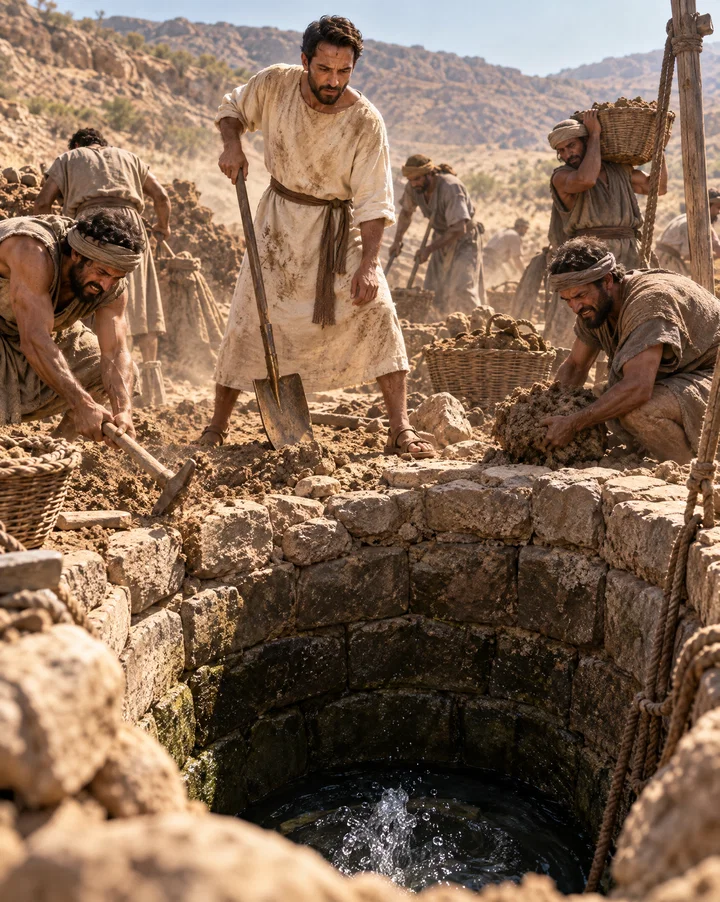
And Isaac digged again the wells of water, which they had digged in the days of Abraham his father; for the Philistines had stopped them after the death of Abraham: and he called their names after the names by which his father had called them.
Translations
And Isaac dig again the wells of water, which they had dig in the days of Abraham his father; for the Philistines had stopped them after the death of Abraham: and he called their names after the names by which his father had called them.
King James Version, Revised Version, American Standard Version
And Isaac digged again the wells of water, which they had digged in the days of Abraham his father; for the Philistines had stopped them after the death of Abraham: and he called their names after the names by which his father had called them.
And Isaac digged again the wells of water, which they had digged in the days of Abraham his father; for the Philistims had stopped them after the death of Abraham: and he called their names after the names by which his father had called them.
And Isaac digged again the wells of water which they had digged in the days of Abraham his father; for the Philistines had stopped them after the death of Abraham: and he called their names after the names by which his father had called them.
and Isaac turneth back, and diggeth the wells of water which they digged in the days of Abraham his father, which the Philistines do stop after the death of Abraham, and he calleth to them names according to the names which his father called them.
And Isaac dug again the wells of water that they had dug in the days of Abraham his father, and that the Philistines had stopped after the death of Abraham; and he called their names after the names by which his father had called them.
And Isaac again digged the wells of water which they had digged in the days of Abraham his father, and which the Philistines stopped up after the death of Abraham,—and he called their names, after the names which his father called them.
Berean Standard Bible, Majority Standard Bible
Isaac reopened the wells that had been dug in the days of his father Abraham, which the Philistines had stopped up after Abraham died. And he gave these wells the same names his father had given them.
Isaac dug again the wells of water, which they had dug in the days of Abraham his father, for the Philistines had stopped them after the death of Abraham. He called their names after the names by which his father had called them.
And he made again the water-holes which had been made in the days of Abraham his father, and which had been stopped up by the Philistines; and he gave them the names which his father had given them.
And Izhak returning, digged the welles of water, which they had digged in the dayes of Abraham his father: for the Philistims had stopped them after the death of Abraham, and hee gaue them the same names, which his father gaue them.
Douay-Rheims (Challoner revision)
And he digged again other wells, which the servants of his father Abraham had digged, and which, after his death, the Palestines had of old stopped up: and he called them by the same names by which his father before had called them.
Pictures
Cross-references
- Genesis 21:25-31
And Abraham reproved Abimelech because of a well of water, which Abimelech’s servants had violently taken away.
Abraham’s agreement with Abimelech concerned a well at Beer-sheba.
- Genesis 26:5
Because that Abraham obeyed my voice, and kept my charge, my commandments, my statutes, and my laws.
Abraham’s obedience is given as the reason for Isaac’s blessing.
- Genesis 12:1-3
Now the LORD had said unto Abram, Get thee out of thy country, and from thy kindred, and from thy father’s house, unto a land that I will shew thee:
Both accounts concern Abraham’s example and the inheritance of his household.
- Genesis 26:14
For he had possession of flocks, and possession of herds, and great store of servants: and the Philistines envied him.
His prosperity leads the Philistines to envy him.
- Genesis 18:19
For I know him, that he will command his children and his household after him, and they shall keep the way of the LORD, to do justice and judgment; that the LORD may bring upon Abraham that which he hath spoken of him.
Abraham instructs his household to follow the Lord’s way.
Commentary
Each commentary is drawn from primary sources: the writings of Ellen G. White and Adventist pioneers and periodicals. Each commentary is separate. Its own words are not a quotation; follow the references to read the source passages.
Pioneers and periodicals
11 sources
Famine carried Isaac into the land of the Philistines, where he received abundant blessing in that land, had differences with the Philistines, willingly yielded more than justice required, and received God's blessing in consequence.ST Jan 3, 1911 He dug again the wells that had been dug in the days of Abraham his father and had been stopped by the Philistines after Abraham's death, and he called them after the names by which his father had called them.ST Aug 28, 1901ST Sep 25, 1901RH Jun 19, 1900ST Aug 28, 1901ST Aug 28, 1901 In this he followed in the way of his father Abraham.ST Sep 22, 1898 The wells were his both by inheritance from his father and by his own labor in digging them open again.RH Jun 19, 1900
The Philistines' jealousy of Abraham and Isaac explains why they had filled the wells, and Isaac's reopening them and restoring his father's names could further aggravate them.ST Aug 28, 1901ST Aug 28, 1901 Though powerful and acknowledged by the king to be strong, Isaac chose peace over holding his position and refused to contend for his rights when the wells were disputed.ST Aug 28, 1901ST Jan 9, 1912ST Aug 28, 1901 Rather than fighting for the water, he withdrew at material cost and yielded, even at great inconvenience and apparent loss and beyond what justice required.ST Sep 25, 1901RH Jun 19, 1900ST Jan 3, 1911ST Aug 28, 1901ST Aug 28, 1901 His response to the claim on their water — letting them have it rather than fighting — illustrates a disposition of yielding rather than striving.RH Jun 19, 1900
By yielding for peace and committing his cause to God instead of striving, Isaac found room and prospered away from his tormentors.ST Jan 9, 1912ST Aug 28, 1901 His meekness let the Lord guide his judgment, and God worked for him because of it.ST Jan 9, 1912ST Jan 9, 1912ST Aug 28, 1901 God rewarded that self-sacrifice for peace with encouragement, blessing, and peace with his enemies.ST Sep 25, 1901ST Jan 3, 1911 His life and work in Philistia exemplify living out God's instruction through practical work and faithful conduct that made God's presence evident to neighbors and rulers.RH Jul 5, 1906 His course reflects the disposition of Christ and a believer's trust in God's promises.ST Aug 28, 1901
Sources