Genesis 26:20
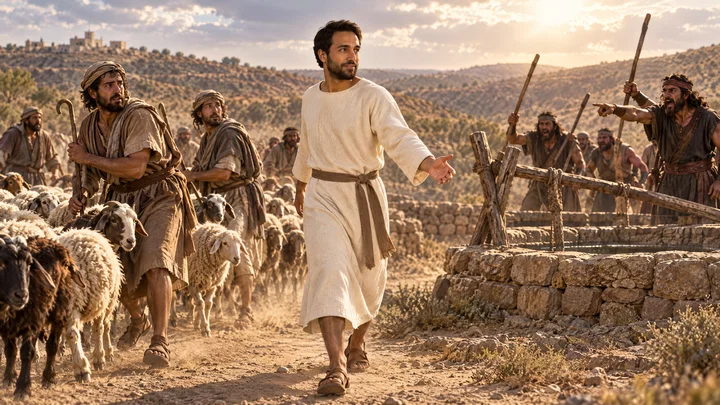
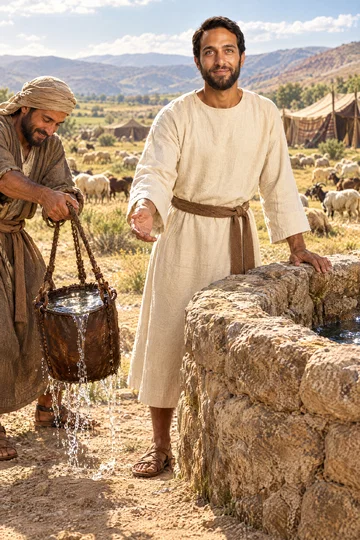
And the herdmen of Gerar did strive with Isaac’s herdmen, saying, The water is ours: and he called the name of the well Esek; because they strove with him.
Translations
And the herdsmen of Gerar did strive with Isaac’s herdsmen, saying, The water is ours: and he called the name of the well Esek; because they strove with him.
King James Version, KJV Cambridge Paragraph Bible
And the herdmen of Gerar did strive with Isaac’s herdmen, saying, The water is ours: and he called the name of the well Esek; because they strove with him.
And the herdmen of Gerar contended with Isaac's herdmen, saying, The water is ours: and he called the name of the well Esek; because they strove with him.
And the herdmen of Gerar strove with Isaac’s herdmen, saying, The water is ours: and he called the name of the well Esek; because they contended with him.
And the herdsmen of Gerar strove with Isaac’s herdsmen, saying, The water is ours: and he called the name of the well Esek, because they contended with him.
and shepherds of Gerar strive with shepherds of Isaac, saying, 'The water [is] ours;' and he calleth the name of the well 'Strife,' because they have striven habitually with him;
But the shepherds of Gerar strove with Isaac's shepherds, saying, The water is ours. And he called the name of the well Esek, because they had quarrelled with him.
And the herdmen of Gerar disputed with the herdmen of Isaac saying, Ours, is the, water! So he called the name of the well Esek, because they had stirred up a quarrel with him.
Berean Standard Bible, Majority Standard Bible
But the herdsmen of Gerar quarreled with Isaac’s herdsmen and said, “ The water is ours!” So he named the well Esek, because they contended with him.
The herdsmen of Gerar argued with Isaac’s herdsmen, saying, “ The water is ours.” So he called the name of the well Esek, because they contended with him.
But the herdmen of Gerar had a fight with Isaac's herdmen, for they said, The spring is ours: so he gave the spring the name of Esek, because there was a fight about it.
But the herdmen of Gerar did striue with Izhaks herdmen, saying, The water is ours: therefore called he the name of the well Esek, because they were at strife with him.
Douay-Rheims (Challoner revision)
But there also the herdsmen of Gerara strove against the herdsmen of Isaac, saying: It is our water. Wherefore he called the name of the well, on occasion of that which had happened, Calumny.
Pictures
Commentary
Each commentary is drawn from primary sources: the writings of Ellen G. White and Adventist pioneers and periodicals. Each commentary is separate. Its own words are not a quotation; follow the references to read the source passages.
Pioneers and periodicals
11 sources
Famine brought Isaac into Philistia, where his farming and keeping of livestock prospered under divine instruction and abundant blessing, so that neighbors and rulers recognized that God was with him.RH Jul 5, 1906ST Jan 3, 1911 The well in dispute was a newly dug well opened by his servants in the valley of Gerar, yielding springing water, after they had redug the wells of Abraham that the Philistines had stopped with earth.ST Aug 28, 1901ST Aug 28, 1901RH Jun 19, 1900 The herdsmen of Gerar strove with Isaac's herdsmen and disputed his claim, saying the water was theirs.ST Aug 28, 1901ST Aug 28, 1901ST Sep 25, 1901ST Sep 22, 1898ST Jan 9, 1912 The same strife arose between herdmen on both sides over the well, the men of Gerar claiming its water as their own.ST Aug 28, 1901
He called the name of the well Esek, meaning contention or strife, because they strove and quarreled with him over it.ST Aug 28, 1901ST Aug 28, 1901ST Sep 25, 1901ST Sep 22, 1898ST Aug 28, 1901 The name marked it as contention because Gerar's herdsmen disputed with Isaac's herdsmen over whose water it was.ST Aug 28, 1901
He did not strive for his rights but yielded the well and committed his cause to God, yielding more than justice required even at inconvenience and apparent loss.ST Sep 25, 1901ST Jan 3, 1911ST Jan 9, 1912ST Aug 28, 1901ST Jan 9, 1912 The Philistines' claim was unjust because the wells were doubly his by inheritance from Abraham and by digging them again, and triply his because by filling them the Philistines had shown they did not want them, yet he let them have the well without striving.RH Jun 19, 1900 Such submissive, lamb-like disposition was the opposite of what Ishmael would have done, setting before the reader the choice of which of Abraham's two sons to be like, for these are the two covenants.RH Jun 19, 1900
In this conduct he was following in his father's way and illustrating willingness to yield to persecutors for the sake of peace.ST Sep 25, 1901ST Sep 22, 1898 God rewarded and encouraged his self-sacrifice, worked for him and blessed him in consequence, giving him room and prosperity elsewhere and ultimately peace with his enemies.ST Sep 25, 1901ST Jan 3, 1911ST Jan 9, 1912ST Jan 9, 1912ST Aug 28, 1901
Sources