Genesis 26:21
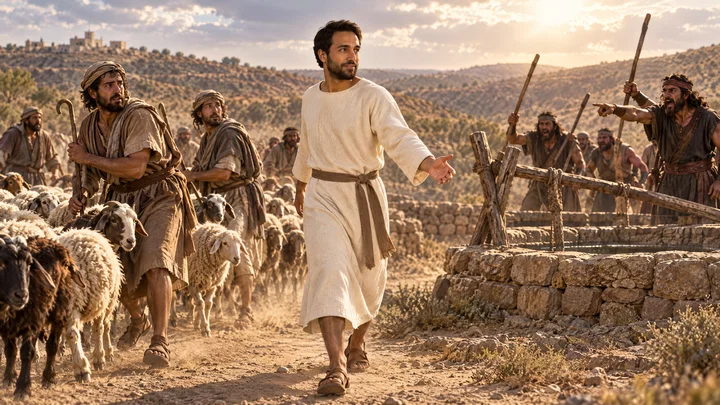
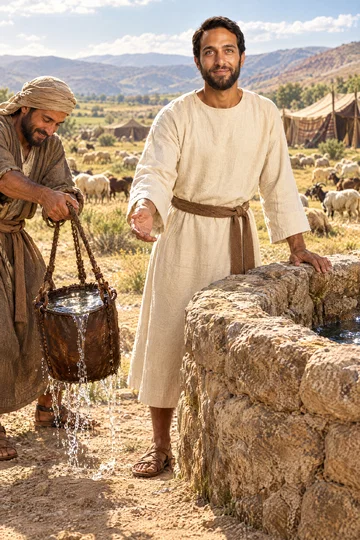
And they digged another well, and strove for that also: and he called the name of it Sitnah.
Translations
And they dig another well, and strove for that also: and he called the name of it Sitnah.
King James Version, KJV Cambridge Paragraph Bible
And they digged another well, and strove for that also: and he called the name of it Sitnah.
And they digged another well, and contended for that also: and he called the name of it Sitnah.
Revised Version, American Standard Version
And they digged another well, and they strove for that also: and he called the name of it Sitnah.
and they dig another well, and they strive also for it, and he calleth its name 'Hatred.'
And they dug another well, and they strove for that also; and he called the name of it Sitnah.
And they digged another well, and they disputed over that also,—so he called the name thereof Sitnah.
Berean Standard Bible, Majority Standard Bible
Then they dug another well and quarreled over that one also; so he named it Sitnah.
They dug another well, and they argued over that, also. So he called its name Sitnah.
Then they made another water-hole, and there was a fight about that, so he gave it the name of Sitnah.
Afterwarde they digged another well, and stroue for that also, and he called the name of it Sitnah.
Douay-Rheims (Challoner revision)
And they digged also another; and for that they quarrelled likewise, and he called the name of it, Enmity.
Pictures
Commentary
Each commentary is drawn from primary sources: the writings of Ellen G. White and Adventist pioneers and periodicals. Each commentary is separate. Its own words are not a quotation; follow the references to read the source passages.
Pioneers and periodicals
8 sources
Famine took Isaac into the land of the Philistines where he was abundantly blessed, and after giving up the well called Esek his servants dug another well which his neighbors disputed too, and he named it Sitnah.RH Jul 5, 1906ST Jan 3, 1911ST Aug 28, 1901ST Aug 28, 1901 The name Sitnah means hatred or spite, from the same root as Satan, meaning an adversary or hater.ST Aug 28, 1901ST Aug 28, 1901 The verse belongs to the account of God's special providence over Isaac as a progenitor of the promised Seed.ST Jan 9, 1912
The verse presents part of Isaac's experience in Philistia as an example of living out God's instruction through practical work and faithfulness.RH Jul 5, 1906 Though the well was rightfully his, Isaac yielded more than justice required rather than contend, preserving his peacemaking course even at apparent loss and moving away to dig another well, giving up material gain rather than resist or repay hostility.ST Sep 25, 1901ST Jan 3, 1911ST Aug 28, 1901RH Jun 19, 1900 By refusing to contend for his rights and committing his cause to God rather than fighting for himself, God worked for him, and blessing followed his yielding in consequence.ST Jan 3, 1911ST Jan 9, 1912
His peaceable disposition belongs to Isaac and the covenant of promise, in contrast with the contentious response associated with Ishmael and the other covenant.RH Jun 19, 1900
Sources