Genesis 26:22
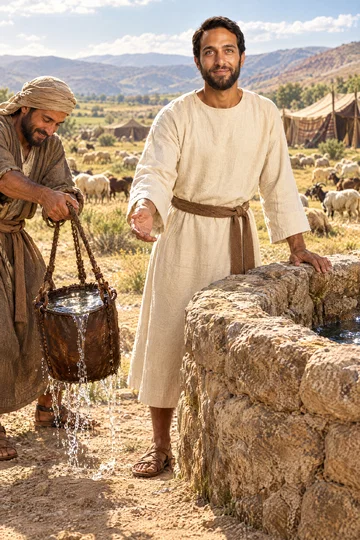
And he removed from thence, and digged another well; and for that they strove not: and he called the name of it Rehoboth; and he said, For now the LORD hath made room for us, and we shall be fruitful in the land.
Translations
And he removed from there, and dig another well; and for that they strove not: and he called the name of it Rehoboth; and he said, For now the LORD has made room for us, and we shall be fruitful in the land.
King James Version, Revised Version
And he removed from thence, and digged another well; and for that they strove not: and he called the name of it Rehoboth; and he said, For now the LORD hath made room for us, and we shall be fruitful in the land.
And he removed from thence, and digged another well; and for that they strove not: and he called the name of it Rehoboth; and he said, For now the Lord hath made room for us, and we shall be fruitful in the land.
And he removed from thence, and digged another well; and for that they did not contend: and he called the name of it Rehoboth; and he said, For now the LORD hath made room for us, and we shall be fruitful in the land.
And he removed from thence, and digged another well; and for that they strove not: and he called the name of it Rehoboth; and he said, For now Jehovah hath made room for us, and we shall be fruitful in the land.
And he removeth from thence, and diggeth another well, and they have not striven for it, and he calleth its name Enlargements, and saith, 'For — now hath Jehovah given enlargement to us, and we have been fruitful in the land.'
And he removed thence and dug another well; and they did not strive for that. And he called the name of it Rehoboth, and said, For now Jehovah has made room for us, and we shall be fruitful in the land.
And he moved on from thence and digged another well, and they disputed not for it,—so he called the name thereof. Rehoboth, and said, For, now, hath Yahweh made room for us, and we shall be fruitful in the land.
Berean Standard Bible, Majority Standard Bible
He moved on from there and dug another well, and they did not quarrel over it. He named it Rehoboth and said, “ At last the LORD has made room for us, and we will be fruitful in the land.”
He left that place, and dug another well. They didn’t argue over that one. So he called it Rehoboth. He said, “ For now the LORD has made room for us, and we will be fruitful in the land.”
Then he went away from there, and made another water-hole, about which there was no fighting: so he gave it the name of Rehoboth, for he said, Now the Lord has made room for us, and we will have fruit in this land.
Then he remoued thence, and digged an other well, for the which they stroue not: therefore called hee the name of it Rehoboth, and sayde, Because the Lord hath nowe made vs roome, we shall increase vpon the earth.
Douay-Rheims (Challoner revision)
Going forward from thence, he digged another well, for which they contended not: therefore he called the name thereof, Latitude, saying: Now hath the Lord given us room, and made us to increase upon the earth.
Pictures

Cross-references
- Genesis 26:28-29
And they said, We saw certainly that the LORD was with thee: and we said, Let there be now an oath betwixt us, even betwixt us and thee, and let us make a covenant with thee;
The Philistine rulers acknowledge the Lord’s favor toward Isaac.
- Genesis 26:12
Then Isaac sowed in that land, and received in the same year an hundredfold: and the LORD blessed him.
Isaac’s crops yield abundantly.
- Proverbs 16:7
When a man’s ways please the LORD, he maketh even his enemies to be at peace with him.
Isaac’s yielding for peace is linked to the Lord granting peace with his enemies.
Commentary
Each commentary is drawn from primary sources: the writings of Ellen G. White and Adventist pioneers and periodicals. Each commentary is separate. Its own words are not a quotation; follow the references to read the source passages.
Pioneers and periodicals
14 sources
In a time of famine Isaac sojourned among the Philistines, where he lived and farmed as God directed him and received great prosperity from the Lord.RH Jul 5, 1906ST Jan 3, 1911 After strife over earlier wells he moved away and dug another well over which no one quarreled, naming it Rehoboth, meaning wide room, in confession that the Lord had now made room for him and his household to prosper and be fruitful in the land.ST Aug 28, 1901ST Aug 28, 1901 His course was willing and meek yielding for the sake of peace, leaving what others contended for rather than prolonging dispute, even yielding more than justice required at cost and apparent loss instead of seeking gain at the expense of others.ST Sep 25, 1901ST Jan 3, 1911ST Aug 28, 1901 He would not strive or fight for his rights even over wells that were his by inheritance from Abraham and by his own labor in digging them again, but committed his cause to God.RH Jun 19, 1900ST Jan 9, 1912 God rewarded that yielding by making room for him and making him fruitful, giving him peace with his enemies and openly showing that the Lord was with him as the blessed of the Lord.ST Sep 25, 1901ST Jan 3, 1911RH Jun 19, 1900
Context and Meaning
In a time of famine Isaac sojourned in the land of the Philistines.ST Jan 3, 1911 There he followed divine instruction in farming, making his life an example of faithful work.RH Jul 5, 1906 God gave him abundant blessing and prosperity.RH Jul 5, 1906ST Jan 3, 1911 His prosperity led his neighbors and their rulers to recognize that the Lord was with him and had blessed him.RH Jul 5, 1906
After disputes over earlier wells he removed and dug another well.ST Aug 28, 1901ST Aug 28, 1901ST Jan 6, 1909RH Sep 3, 1903 For that well they strove not, and no one contended or quarreled with him over it.ST Aug 28, 1901ST Aug 28, 1901ST Jan 6, 1909RH Mar 25, 1858 He called its name Rehoboth, meaning room, or wide, broad, roomy space, a broad or roomy place.ST Aug 28, 1901ST Aug 28, 1901ST Jan 6, 1909RH Mar 25, 1858 In so naming it he confessed that now the Lord had made room, or space, for him and his household to prosper, flourish and be fruitful in the land.ST Aug 28, 1901ST Aug 28, 1901ST Jan 6, 1909RH Mar 25, 1858
The account belongs to God's providential dealings with Abraham's family as the chosen line through which the promised Seed would come.ST In it is seen God's special providence over Isaac as one of the progenitors of the promised Seed.ST Jan 9, 1912
Peaceful Yielding and Application
Isaac's course at Rehoboth was willing, meek yielding for the sake of peace, moving on and digging another well rather than continuing dispute over what others fought over.ST Sep 25, 1901ST Jan 3, 1911ST Aug 28, 1901ST Aug 28, 1901 He yielded more than justice required, at inconvenience and apparent loss, as self-sacrifice for peace and as a peaceful alternative to gaining prosperity at others' expense.ST Sep 25, 1901ST Jan 3, 1911ST Aug 28, 1901 His meekness in leaving what was contested to find room and prosperity away from those who troubled him was guided by the Lord.ST Aug 28, 1901ST Aug 28, 1901
He refused to strive or fight for his rights even over wells that were his by every possible right, by inheritance from Abraham and by digging them again after the Philistines had stopped them, and even after the Philistines had rejected them yet still claimed them.RH Jun 19, 1900 Rather than contend for his rights, he yielded to them all that they claimed and committed his cause to God.RH Jun 19, 1900ST Jan 9, 1912
That continual non-striving, yielding disposition is what distinguishes Isaac the child of promise from Ishmael, marking the free covenant against the covenant of bondage.RH Jun 19, 1900 It shows that there is room for all, with no need to quarrel over particular places.ST Aug 28, 1901 Only by that continual yielding did he give his opposers opportunity to see that the Lord was with him and that he was the blessed of the Lord.RH Jun 19, 1900
God blessed and rewarded that yielding in consequence by making room for him and his household and making him fruitful in the land.ST Sep 25, 1901ST Jan 3, 1911RH Jun 19, 1900ST Jan 9, 1912 The Lord encouraged him by giving him peace with his enemies.ST Sep 25, 1901 Soon afterward God appeared to him and promised to be with him and bless him.ST Aug 28, 1901
The same pattern applies to pioneering work that meets obstacles: without depending on influential support and without shrinking from opposition, patient effort in moving on and digging again can open room for a work to take root and prosper.
Sources