Genesis 30:22
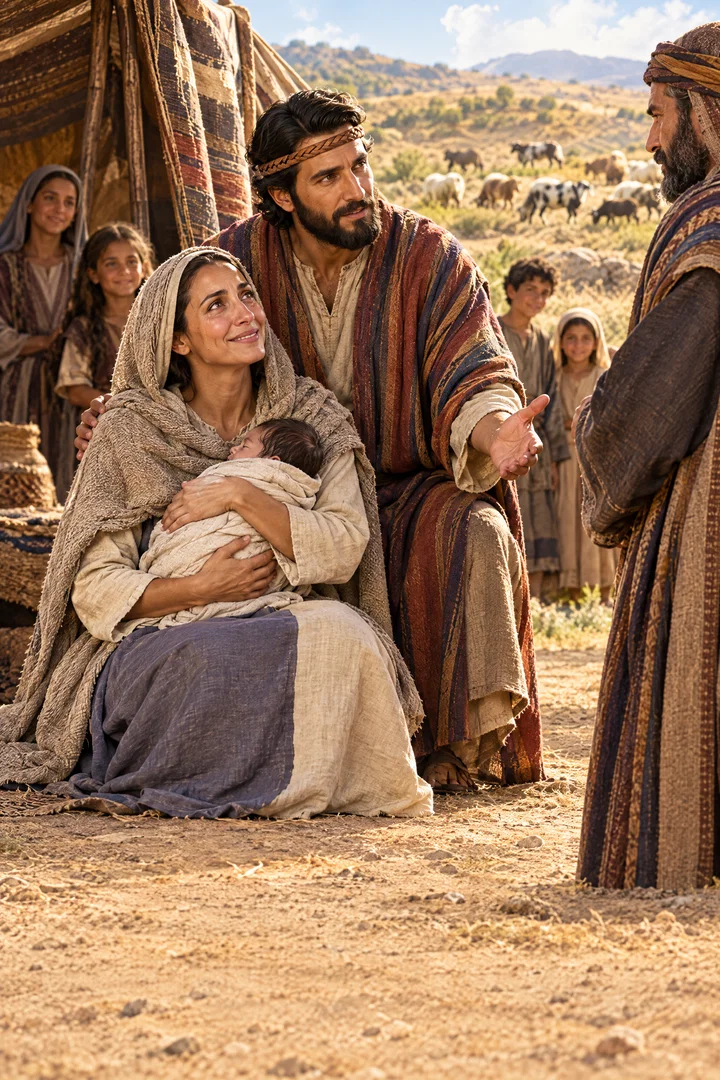
And God remembered Rachel, and God hearkened to her, and opened her womb.
Translations
American King James Version, Darby Translation
And God remembered Rachel, and God listened to her, and opened her womb.
King James Version, KJV Cambridge Paragraph Bible, Revised Version, American Standard Version
And God remembered Rachel, and God hearkened to her, and opened her womb.
And God remembered Rachel, and God hearkened to her, and rendered her fruitful.
And God remembereth Rachel, and God hearkeneth unto her, and openeth her womb,
Then God remembered Rachel,—and God hearkened unto her, and granted her to bear.
Berean Standard Bible, Majority Standard Bible
Then God remembered Rachel. He listened to her and opened her womb,
God remembered Rachel, and God listened to her, and opened her womb.
Then God gave thought to Rachel, and hearing her prayer he made her fertile.
And God remembred Rahel, and God heard her, and opened her wombe.
Douay-Rheims (Challoner revision)
The Lord also remembering Rachel, heard her, and opened her womb.
Pictures
Cross-references
- Malachi 3:16
Then they that feared the LORD spake often one to another: and the LORD hearkened, and heard it, and a book of remembrance was written before him for them that feared the LORD, and that thought upon his name.
God hearkens to those who fear him and remembers them.
- Genesis 29
Then Jacob went on his journey, and came into the land of the people of the east.
Cited with Genesis 30 as a patriarchal marriage example.
Commentary
Each commentary is drawn from primary sources: the writings of Ellen G. White and Adventist pioneers and periodicals. Each commentary is separate. Its own words are not a quotation; follow the references to read the source passages.
Pioneers and periodicals
8 sources
Genesis 30 belongs to the portion of Genesis that tells the story of Jacob.ST Aug 9, 1905 The verse belongs to the account of Jacob's years of sojourn with Laban, his marriages to Leah and Rachel, and his eventual departure for Palestine.ST Jan 3, 1911ST Jan 3, 1911 More precisely, it belongs to the account of the sons born to Jacob while he was in the land of the children of the East, serving Laban fourteen years for his two daughters, after Bethel and before his departure from Haran to return to Canaan.ST Mar 19, 1894
It falls within Jacob's checkered and unsatisfactory experiences, marked by selfish plotting and the suffering that followed.ST Jan 9, 1912 The narrative shows God's care over Jacob despite his selfishness and unfaithfulness.ST Jan 3, 1911ST Jan 3, 1911 It is part of a narrative in which God's providence may seem slow, but retribution comes sooner or later.ST Jan 9, 1912
The chapter belongs to the history of Jacob's family, which proves that polygamy was never anything but evil and wrong and caused very great unhappiness in every family where it entered.RH Mar 1, 1870 Together with Genesis 16, Genesis 25:6, and Genesis 29, it records plain violation of the marriage institution by the patriarchs.ST Jun 10, 1875 Such violation does not destroy the sacred character of marriage, just as violation of the Sabbath would not destroy the sacred character of the Sabbath.ST Jun 10, 1875 Marriage was made for man before the fall, its sanctity is not derived from the Decalogue, and the seventh commandment guards its sacredness as the fourth commandment guards the Sabbath.ST Jun 10, 1875
In the verse God gives Rachel her son Joseph, giving Joseph twelve or fifteen years of his mother's counsel and training.ST Sep 2, 1889 When a mother is named in the brief record of the early life of a distinguished person in Scripture, it means she had great influence in forming that child's character.ST Sep 2, 1889 Rachel's influence helped form Joseph's character.ST Sep 2, 1889
Sources