Genesis 33:6
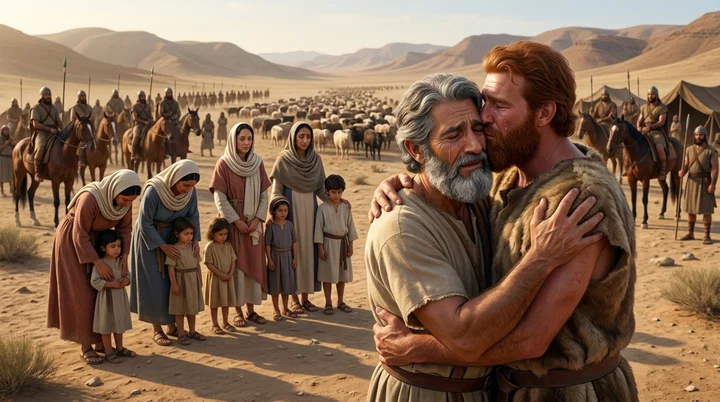
Then the handmaidens came near, they and their children, and they bowed themselves.
Translations
American King James Version, King James Version, KJV Cambridge Paragraph Bible, Webster Bible
Then the handmaidens came near, they and their children, and they bowed themselves.
Revised Version, American Standard Version
Then the handmaids came near, they and their children, and they bowed themselves.
And the maid-servants draw nigh, they and their children, and bow themselves;
And the maidservants drew near, they and their children, and they bowed.
Then came near the handmaids, they—and their children,—and bowed themselves.
Berean Standard Bible, Majority Standard Bible
Then the maidservants and their children approached and bowed down.
Then the servants came near with their children, and they bowed themselves.
Then the servants and their children came near, and went down on their faces.
Then came the maides neere, they, and their children, and bowed themselues.
Douay-Rheims (Challoner revision)
Then the handmaids and their children came near, and bowed themselves.
Pictures
Cross-references
- Genesis 32:28
And he said, Thy name shall be called no more Jacob, but Israel: for as a prince hast thou power with God and with men, and hast prevailed.
Jacob’s new name Israel explains his peaceful meeting with Esau.
- Genesis 33:2
And he put the handmaids and their children foremost, and Leah and her children after, and Rachel and Joseph hindermost.
puts handmaids first in order
- Genesis 32:6
And the messengers returned to Jacob, saying, We came to thy brother Esau, and also he cometh to meet thee, and four hundred men with him.
400 armed men contrast with friendly meeting
- Genesis 27:41
And Esau hated Jacob because of the blessing wherewith his father blessed him: and Esau said in his heart, The days of mourning for my father are at hand; then will I slay my brother Jacob.
Esau’s planned revenge over the stolen blessing was given up.
Commentary
Each commentary is drawn from primary sources: the writings of Ellen G. White and Adventist pioneers and periodicals. Each commentary is separate. Its own words are not a quotation; follow the references to read the source passages.
Ellen G. White
1 source
The bowing of the handmaids and their children took place at the meeting where Jacob and Esau were no longer separated by enmity, jealousy, and hatred.ST Dec 4, 1879 Esau had once waited for his father's death to take revenge on Jacob for taking his blessing, but by this meeting his feelings had greatly changed.ST Dec 4, 1879 Jacob came to that reconciliation now wealthy, and he returned to Esau the material blessing of possession that Esau had recklessly sold for a single meal of pottage.ST Dec 4, 1879
Jacob's character had been greatly modified and refined by the blessing he received from the angel in the night of terrible conflict.ST Dec 4, 1879 Thereafter he was reverenced by all who knew him.ST Dec 4, 1879 Afterward the two brothers parted because their possessions required it, and because Jacob knew their religious faith was so unlike that it was better to live apart.ST Dec 4, 1879
Sources
Pioneers and periodicals
8 sources
At the meeting Jacob himself passed before his family and bowed seven times, Esau ran to meet and embrace him, and then the two handmaids with their children came near first and bowed themselves before Esau, followed by Leah with her children and then by Joseph and Rachel.ST Oct 20, 1898RH Oct 2, 1900 That meeting was Jacob's miraculous deliverance from Esau, achieved without the use of the sword.RH Oct 2, 1900 It is also set forth as the handmaidens approaching Jacob with their children and bowing before him.ST
The chapter belongs to the wider account of the painful consequences of Jacob's having more than one wife, including partiality, jealousy, envy, low moral standards, and crime.ST It belongs to Jacob's return to Palestine, the crisis through which he becomes Israel, God's intervention in changing Esau's purpose, and the dedication of Jacob's household to God.ST Jan 3, 1911 The verse takes place after Jacob's blessing at Peniel, where he was met by angels and received a changed heart and a changed name, about ten or eleven years before Joseph was seventeen, and the meeting leads to Jacob coming in peace to the city of Shechem.ST Mar 26, 1894
Jacob had power with men because he had power with God through full surrender and change of heart in the night of wrestling, when he clung to the Angel for the blessing God alone could give and received the new name Israel, a prince of God, instead of Jacob the supplanter.ST Dec 4, 1879ST Jul 31, 1901 The rough and cunning supplanter was gone and a humble, kind, truly noble prince filled with the persuasive power of love stood in his place, his character greatly modified and refined, and he was ever after reverenced by all who knew him.ST Dec 4, 1879ST Jul 31, 1901 Esau had once waited for his father's death to take revenge on Jacob for stealing his blessing, and came with four hundred armed men determined to kill, but his feelings were greatly changed from murderous anger to tender love and friendliness, so that Jacob had no use for an army to meet his brother's army.ST Dec 4, 1879ST Jul 31, 1901
Jacob was now wealthy and returned to Esau the blessing of possession that Esau had recklessly sold for a mess of pottage, and Jacob's humble attitude in the meeting shows his mind with reference to his former course concerning the birthright.ST Dec 4, 1879ST Oct 20, 1898 That transformation took away all ground for Esau's quarrel.ST Jul 31, 1901 The bowing belongs to a humble, peaceful, reconciling meeting in which the brothers were no longer separated by enmity, jealousy, and hatred, showing the power of the Lord to change men's hearts, and it calls for the spirit of forgiveness in the heart.ST Dec 4, 1879ST Mar 26, 1894ST Jul 31, 1901 The two brothers afterward parted from each other because their possessions required it, and because Jacob knew their religious faith was so unlike that it was better to live apart.ST Dec 4, 1879
Sources