Habakkuk 1:2
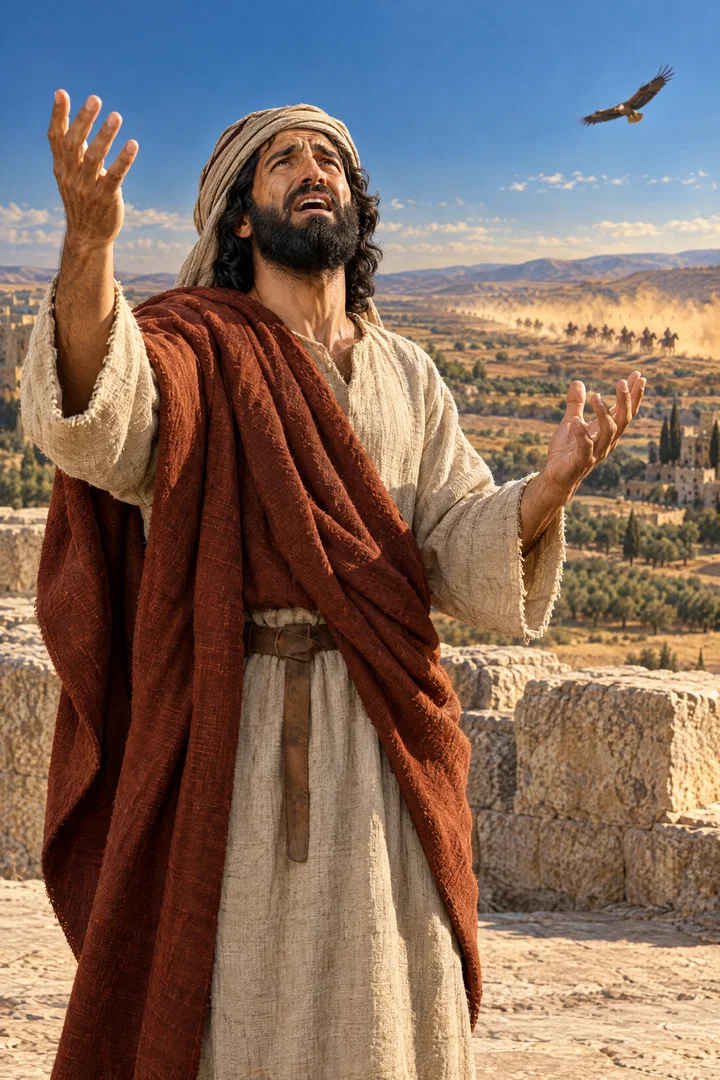
O LORD, how long shall I cry, and thou wilt not hear! even cry out unto thee of violence, and thou wilt not save!
Translations
O LORD, how long shall I cry, and you will not hear! even cry out to you of violence, and you will not save!
O LORD, how long shall I cry, and thou wilt not hear! even cry out unto thee of violence, and thou wilt not save!
O Lord, how long shall I cry, and thou wilt not hear?
Even cry out unto thee of violence, and thou wilt not save?O LORD, how long shall I cry, and thou wilt not hear! even cry out to thee of violence, and thou wilt not save!
O LORD, how long shall I cry, and thou wilt not hear? I cry out unto thee of violence, and thou wilt not save.
O Jehovah, how long shall I cry, and thou wilt not hear? I cry out unto thee of violence, and thou wilt not save.
Till when, O Jehovah, have I cried, And Thou dost not hear? I cry unto Thee — 'Violence,' and Thou dost not save.
Jehovah, how long shall I cry and thou wilt not hear? I cry out unto thee, Violence! and thou dost not save.
How long, O Yahweh, have I called out, and thou wouldst not hear me? Have I kept crying unto thee of violence, and thou wouldst not save?
Berean Standard Bible, Majority Standard Bible
How long, O LORD, must I call for help
but You do not hear,
or cry out to You, “ Violence!”
but You do not save?LORD, how long will I cry, and you will not hear? I cry out to you “ Violence!” and will you not save?
How long, O Lord, will your ears be shut to my voice? I make an outcry to you about violent behaviour, but you do not send salvation.
O Lord, howe long shall I crye, and thou wilt not heare! euen crye out vnto thee for violence, and thou wilt not helpe!
Douay-Rheims (Challoner revision)
How long, O Lord, shall I cry, and thou wilt not hear? shall I cry out to thee suffering violence, and thou wilt not save?
Pictures
Cross-references
- Habakkuk 1:13
Thou art of purer eyes than to behold evil, and canst not look on iniquity: wherefore lookest thou upon them that deal treacherously, and holdest thy tongue when the wicked devoureth the man that is more righteous than he?
It continues the prophet’s question about God’s response to evil and treachery.
- Isaiah 59:6-7
Their webs shall not become garments, neither shall they cover themselves with their works: their works are works of iniquity, and the act of violence is in their hands.
Both texts describe violence and wickedness.
- Habakkuk 2:1-4
I will stand upon my watch, and set me upon the tower, and will watch to see what he will say unto me, and what I shall answer when I am reproved.
God answers Habakkuk’s complaint with a vision for an appointed time and the call for the just to live by faith.
- Genesis 6:11
The earth also was corrupt before God, and the earth was filled with violence.
Both describe violence prevailing on the earth.
- Hebrews 10:36-38
For ye have need of patience, that, after ye have done the will of God, ye might receive the promise.
Habakkuk’s words are applied to patiently awaiting the coming Lord.
- James 5:4
Behold, the hire of the labourers who have reaped down your fields, which is of you kept back by fraud, crieth: and the cries of them which have reaped are entered into the ears of the Lord of sabaoth.
The cries of the oppressed reach the Lord.
Commentary
Each commentary is drawn from primary sources: the writings of Ellen G. White and Adventist pioneers and periodicals. Each commentary is separate. Its own words are not a quotation; follow the references to read the source passages.
Ellen G. White
2 sources
The cry goes up from Judah in a time of violence and injustice, when persecution of the faithful has long continued.RH Jul 8, 1915PK 384.2–385.1 It is uttered while the wicked appear to prosper and the righteous suffer, with no relief in sight.RH Jul 8, 1915PK 384.2–385.1 The nation around them is sinking into moral and national ruin.PK 384.2–385.1
It is the voice of the faithful prophet joined with God's loyal people, lifted to God for help in their distress.RH Jul 8, 1915PK 384.2–385.1 They plead to know how long they must keep crying out before He hears and saves them.RH Jul 8, 1915PK 384.2–385.1 Yet as they cry out about violence, they see no answer and no deliverance.RH Jul 8, 1915PK 384.2–385.1 Their anguish deepens into questioning whether God's promises of deliverance can still be fulfilled.PK 384.2–385.1
Sources
Pioneers and periodicals
23 sources
Habakkuk's cry is the anguished prayer of a faithful prophet surrounded by violence, asking how long he must call for help without being heard or delivered.RH Jul 8, 1915ST Feb 3, 1887ST Jul 22, 1908 It expresses the distress of God's loyal people when the wicked prosper and devour those more righteous than themselves, while justice fails and the strong oppress the weak.RH Jul 8, 1915ST Feb 7, 1900ST Feb 7, 1906 Habakkuk 1 and 2 portray those conditions of injustice, iniquity, violence, greed and strife as belonging to the last days leading up to the Lord's coming.ST Feb 3, 1887ST Jul 22, 1908 The cry therefore applies to exploitative wealth in which the powerful oppress the poor, consume others and gather riches without satisfaction amid luxury and need.ST Feb 7, 1900ST Oct 31, 1900ST Sep 29, 1898 God's seeming delay does not leave injustice unaddressed, for He regards the cry of the oppressed, calls them to patient trust rather than answering violence with violence until He delivers in His good time, and holds wealth and power accountable for relieving suffering under coming judgment.ST Sep 29, 1898STST Sep 17, 1902
Cry and Ancient Setting
Habakkuk's opening is the anguished cry of the faithful prophet over the violence before him, calling to the Lord for help yet finding no answer or deliverance.RH Jul 8, 1915ST Feb 3, 1887ST Jul 22, 1908RH Feb 18, 1904ST Nov 29, 1899 He asks how long he must keep crying without being heard and crying out over violence without being saved.ST Feb 3, 1887ST Jul 22, 1908ST Jul 31, 1901RH Feb 18, 1904ST Nov 29, 1899 His complaint rises from the injustice and iniquity he sees, from increasing sin, violence, greed and conflict, and from the apparent failure of his cries to bring rescue.ST Feb 3, 1887ST Jul 22, 1908ST Jul 31, 1901RH Feb 18, 1904ST Nov 29, 1899 It begins a dialogue in which God answers that the Chaldeans will overthrow Jerusalem.RH Feb 18, 1904
The cry voices the distress of God's loyal people when the wicked prosper and the righteous suffer.RH Jul 8, 1915 It belongs to a picture of violent oppression in which selfish people consume others and gather power and riches without satisfaction, and in which the powerful succeed at the expense of those poorer and more righteous than themselves.ST Feb 7, 1900ST Feb 7, 1906 It is part of a complaint that the wicked devour those more righteous, that the strong oppress the weak, and that violence, strife and contention prevail while justice fails.ST Feb 7, 1900ST Feb 7, 1906ST Jul 31, 1901RH Aug 15, 1907ST Sep 9, 1913 In that setting the cries of the oppressed seem unanswered with deliverance, and injustice and oppression call forth a plea for God to act.ST Feb 7, 1906ST Jul 31, 1901 That crisis in Judah under Babylonian captivity also serves as a prophetic lesson for finding the way out of spiritual Babylon.RH Aug 15, 1907
The prophecy was given about 604 B.C. during Jehoiakim's reign, in Jeremiah's middle period and contemporary with him.ST Dec 15, 1909 It is directed largely against the Chaldeans, a furious nation who would sweep over the land because of its wickedness, and concerns their work and fate.ST Dec 15, 1909 It reproves the oppressive and wealthy in Israel for violence and warns them of the coming of the Chaldeans. His times are a type of the present time, because human nature and oppression remain the same.ST Sep 9, 1913
Prophecy for the Last Days
Habakkuk 1 and 2 depict conditions of the last days, placing injustice and iniquity in the times leading up to the Lord's coming.ST Feb 3, 1887 The cry over violence without seeming to be heard or saved belongs to that vision of evil, presented in connection with increasing sin, violence, greed and conflict before the Lord comes.ST Feb 3, 1887ST Jul 22, 1908 The prophecy was directed largely against the Chaldeans who would sweep over the land because of its wickedness, and it also portrays evil among God's people, especially the strong oppressing the weak.ST Sep 9, 1913 That oppression gives a striking picture of the last days, since human nature and oppression remain the same.ST Sep 9, 1913
Habakkuk's times are a type of the present time. His reproof against the oppressive and wealthy in Israel for violence, given in his day contemporary with Jeremiah with warning of the coming of the Chaldeans, belongs to a crisis in Judah in which violence, strife and contention prevail and justice fails.RH Aug 15, 1907 That experience under Babylonian captivity also serves as a prophetic lesson for the last days, helping God's people find their way out of spiritual Babylon.RH Aug 15, 1907
The oppression lamented in the cry over violence and lack of deliverance points to the evil and suffering provoked among the poor and oppressed by wealth gathering.ST Oct 31, 1900ST Sep 29, 1898 God's apparent delay in answering does not leave the injustice unaddressed, for those who enrich themselves by spoiling others will face revolt and judgment as the oppressed rise against their oppressors.ST Sep 29, 1898 This oppression is a warning of judgment and, to Christians, an omen of the better day when Christ comes.ST Oct 31, 1900ST Sep 29, 1898
Oppression and Present Duty
Habakkuk's cry over violence and unanswered appeal for deliverance applies to exploitative wealth by which the powerful and wealthy oppress the poor and enrich themselves by spoiling others.ST Feb 7, 1900ST Sep 29, 1898 It belongs to a picture of selfish people consuming others and gathering power and riches without satisfaction, provoking evil and suffering among the poor and oppressed.ST Feb 7, 1900ST Oct 31, 1900 It is connected with concentrated wealth, luxury, wealth-worship and wealth gathering set alongside poverty and need.ST Oct 31, 1900ST Jul 19, 1905ST Oct 4, 1905 Those who so gather riches will face revolt and judgment, as the oppressed rise against their oppressors, a warning of judgment and to Christians an omen of the better day when Christ comes.ST Oct 31, 1900ST Sep 29, 1898
Its setting points to discontent, social unrest and a coming social storm and conflict between capital and labor.ST Jul 19, 1905ST Oct 4, 1905ST That includes conflict between capitalists and labor unions arising from concentrated wealth, luxury and poverty.ST Jul 19, 1905 The fatal danger, injury and hardship imposed on poor workers in coal mining are an instance of the oppression addressed in Habakkuk 1 and 2.ST Oct 23, 1901 The suffering voiced in the great coal strike is the cry of people suffering violence who call to God for help and see no immediate answer or deliverance.ST Sep 17, 1902
God's apparent delay in answering does not leave the injustice unaddressed, for He regards the cry of the oppressed.ST Sep 29, 1898ST Sep 17, 1902 The poor are to be patient and trust Him rather than answer injustice with violence, trusting He will deliver them in His good time.STST Sep 17, 1902 Those with wealth and power remain responsible to use their opportunities rightly to relieve suffering, and God will hold them accountable for failing to do justly.ST Sep 17, 1902 Oppression and violence that provoke cries for help will meet revolt and judgment upon those who enrich themselves at others' expense.ST Sep 29, 1898
The cry How long, O Lord fits the sight of poor people starving, dying in the cold and struggling for food while relief seems absent.ST May 7, 1894 It voices distress over the tolerated killing of unborn children, the failure to prosecute those responsible, and the church's silence in the face of wrongdoing.ST Sep 10, 1885 It is the cry of a faithful minority when truth is decided by majority vote, so that one representing a lean minority cannot be heard even in defense of ecclesiastical life, is denounced and is practically denied the right of vindication from the Scriptures.RH Nov 1, 1853 It applies to the burden of many foreign-speaking people in Chicago without workers to share the message though many might accept it if given opportunity, and to longing for the promised day when the message will again go forth powerfully in the Eastern cities.RH Oct 28, 1915RH Aug 28, 1913
Sources