Habakkuk 1:3
Why dost thou shew me iniquity, and cause me to behold grievance? for spoiling and violence are before me: and there are that raise up strife and contention.
Translations
Why do you show me iniquity, and cause me to behold grievance? for spoiling and violence are before me: and there are that raise up strife and contention.
Why dost thou shew me iniquity, and cause me to behold grievance? for spoiling and violence are before me: and there are that raise up strife and contention.
Why dost thou shew me iniquity, and cause me to behold grievance?
For spoiling and violence are before me:
And there are that raise up strife and contention.Why dost thou show me iniquity, and cause me to behold grievance? for devastation and violence are before me: and there are that raise strife and contention.
Why dost thou shew me iniquity, and look upon perverseness? for spoiling and violence are before me: and there is strife, and contention riseth up.
Why dost thou show me iniquity, and look upon perverseness? for destruction and violence are before me; and there is strife, and contention riseth up.
Why dost Thou shew me iniquity, And perversity dost cause to behold? And spoiling and violence [are] before me, And there is strife, and contention doth lift [itself] up,
Why dost thou cause me to see iniquity, and lookest thou upon grievance? For spoiling and violence are before me; and there is strife, and contention riseth up.
Wherefore shouldst thou let me see iniquity, and, wrong, shouldst let me behold, and, force and violence, be straight before me,—and there should have ever been someone who, contention and strife, would uphold?
Berean Standard Bible, Majority Standard Bible
Why do You make me see iniquity?
Why do You tolerate wrongdoing?
Destruction and violence are before me.
Strife is ongoing, and conflict abounds.Why do you show me iniquity, and look at perversity? For destruction and violence are before me. There is strife, and contention rises up.
Why do you make me see evil-doing, and why are my eyes fixed on wrong? for wasting and violent acts are before me: and there is fighting and bitter argument.
Why doest thou shewe mee iniquitie, and cause me to beholde sorowe? for spoyling, and violence are before me: and there are that rayse vp strife and contention.
Douay-Rheims (Challoner revision)
Why hast thou shewn me iniquity and grievance, to see rapine and injustice before me? and there is a judgment, but opposition is more powerful.
Pictures
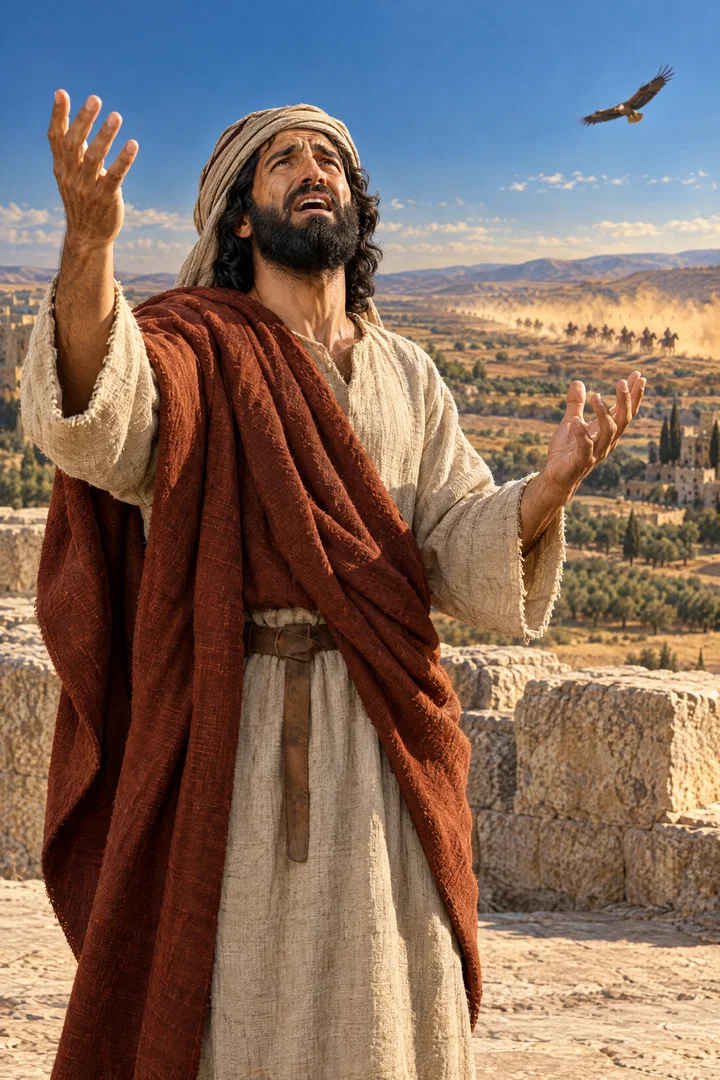
Cross-references
- Habakkuk 1:13
Thou art of purer eyes than to behold evil, and canst not look on iniquity: wherefore lookest thou upon them that deal treacherously, and holdest thy tongue when the wicked devoureth the man that is more righteous than he?
Habakkuk questions God’s silence as the wicked devour those more righteous than themselves.
- Habakkuk 1:7
They are terrible and dreadful: their judgment and their dignity shall proceed of themselves.
The Chaldeans are named as God’s instrument of judgment against Judah’s violence and corruption.
- Habakkuk 2:3-4
For the vision is yet for an appointed time, but at the end it shall speak, and not lie: though it tarry, wait for it; because it will surely come, it will not tarry.
The answer promises justice at the appointed time and says the just live by faith.
- Genesis 6:11
The earth also was corrupt before God, and the earth was filled with violence.
Both describe violence and brutality.
- Isaiah 59:6-7
Their webs shall not become garments, neither shall they cover themselves with their works: their works are works of iniquity, and the act of violence is in their hands.
Both describe iniquity expressed through violence and destruction.
- Habakkuk 2:8
Because thou hast spoiled many nations, all the remnant of the people shall spoil thee; because of men’s blood, and for the violence of the land, of the city, and of all that dwell therein.
Those who spoil others will themselves be plundered for their violence.
Commentary
Each commentary is drawn from primary sources: the writings of Ellen G. White and Adventist pioneers and periodicals. Each commentary is separate. Its own words are not a quotation; follow the references to read the source passages.
Ellen G. White
2 sources
The question is the cry of the faithful prophet, burdened by being made to look upon wrongdoing and misery without apparent divine action.RH Jul 8, 1915 What troubles him is the full scene before him — iniquity, grievance, violence, plunder, and those stirring up strife and contention.RH Jul 8, 1915 His complaint is set where the wicked hem in and oppress the righteous, so that the law is slackened of its force and justice comes forth perverted.RH Jul 8, 1915
It is also the voice of the faithful among the people, who beheld the same iniquity and oppression and were weighed down by unceasing violence, strife, and contention.PK 384.2–385.1 They suffered the perplexity of seeing evildoers prosper while those who sought to do right were made to suffer.PK 384.2–385.1 From that place they asked whether better days could still be hoped for.PK 384.2–385.1
The complaint belongs to Judah in moral and national ruin, when departure from right had brought the nation low.RH Jul 8, 1915PK 384.2–385.1 Then the wicked oppressed the righteous, the law lost its restraining power, and judgment was turned aside from equity.RH Jul 8, 1915PK 384.2–385.1 It was out of that darkness that the faithful raised the inquiry if hope of restoration remained.RH Jul 8, 1915PK 384.2–385.1
Sources
Pioneers and periodicals
19 sources
Habakkuk cries out in anguish over why a just God who hates evil shows him unchecked iniquity, grievance, spoiling, violence, strife and contention without appearing to intervene.RH Jul 8, 1915ST Feb 3, 1887ST Dec 15, 1909 He sees the wicked surrounding and consuming the righteous like defenseless sea creatures, the powerful pursuing selfish gain at others' expense, until law loses force, judgment fails and justice is perverted.RH Jul 8, 1915ST Feb 7, 1900ST Feb 3, 1887ST Sep 29, 1898ST Jul 31, 1901 The complaint was given about 604 B.C. in Jehoiakim's reign concerning the Chaldeans sweeping over the land to bring Jerusalem's destruction and the captivity because of its wickedness.RH Nov 23, 1905ST Dec 15, 1909 Because human nature and oppression do not change, those same conditions are a type of the present time and stand as foretold signs of the last days amid concentrated wealth, luxury, poverty and conflict between capital and labor before the Lord's coming at the appointed time.ST Feb 3, 1887ST Jul 19, 1905ST Oct 4, 1905 It is therefore a prophetic rebuke of greedy exploiters who prey on the poor and devour the just, warning that their spoiling breeds anger and social violence and that those who enrich themselves by spoiling others will in turn be spoiled, for God sees these wrongs and calls all to suffer wrong rather than do wrong and trust His righteous judgment.ST Sep 29, 1898ST Feb 7, 1906ST
Prophet's Complaint and Setting
The verse is the cry of a faithful prophet in distress, asking why he is made to see wrongdoing and misery while no intervention appears to come.RH Jul 8, 1915ST Dec 15, 1909RH Aug 15, 1907 It presses the problem of how a God who hates evil and is just can look on such conditions of iniquity and injustice.ST Feb 3, 1887 The complaint around it shows the wicked hemming in and oppressing the righteous, so that law slackens and loses force, judgment does not go forth, justice is twisted, and wrong decisions prevail.RH Jul 8, 1915ST Feb 3, 1887
What lies before his eyes on every side is iniquity and grievance, plunder and violence, with strife stirred up and contention rising.RH Jul 8, 1915ST Feb 7, 1900ST Feb 3, 1887 It is a society marked by wrongdoing and oppression, where violence and conflict are visible all around.ST Feb 7, 1900ST Sep 29, 1898ST Feb 7, 1906 The powerful pursue selfish gain at the expense of others, enriching themselves by plunder.ST Feb 7, 1900ST Sep 29, 1898
The wicked are described as surrounding the righteous and consuming those more righteous than themselves.ST Feb 3, 1887ST Jul 31, 1901ST Nov 29, 1899 They treat men like fish of the sea and like creeping things that have no ruler over them, to be caught and devoured.ST Jul 31, 1901 In that setting the sight of wrongdoing, violence and conflict is bound up with exploitation of the poor and devouring of the just, with law made ineffective and judgment failing.ST Feb 3, 1887ST Nov 29, 1899
The prophecy was given about 604 B.C., in the reign of Jehoiakim, when Habakkuk was contemporary with the ministry of Jeremiah.ST Dec 15, 1909 It was spoken as reproof against the oppressive and wealthy in Israel. Its first two chapters concern the work and fate of the Chaldeans, who would sweep over the land because of its wickedness.ST Dec 15, 1909 The violence, oppression, strife and contention witnessed by the prophet stood before Jerusalem's impending destruction by the Chaldeans, foretold to come in his own days, belonging to the crisis of Babylon and the captivity of the Jews.RH Nov 23, 1905ST Dec 15, 1909RH Aug 15, 1907
Last Days Foreshadowed
Habakkuk's first two chapters portray the conditions of the last days, and the time of oppression and violence they describe serves as a type of the present time.ST Sep 9, 1913 Human nature and oppression do not change, so the strong oppressing the weak among God's people then remains a living picture of evil now.ST Sep 9, 1913 What the prophet saw around him — widespread iniquity and injustice made visible, violence and destruction before him, men stirring up strife and contention, the law made ineffective, judgment failing as the wicked surround the righteous and wrong decisions prevail — is the same violence, injustice, strife and contention foretold as signs of the last days.ST Feb 3, 1887ST Jul 22, 1908RH Nov 23, 1905 They accompany the impending destruction of the world and of sinners at the Lord's coming, which will occur at the appointed time.ST Feb 3, 1887RH Nov 23, 1905 That coming answers the distressed question of how a God who hates evil and is just can witness such conditions without intervening.ST Feb 3, 1887
The prophecy belonged to a reproof of the oppressive and wealthy in Israel, spoken when Habakkuk was contemporary with Jeremiah, warning that the Chaldeans would sweep over the land because of its wickedness. In that typical sense it is linked with extravagant living, amassed wealth, and conflict between labor and capital.ST Jul 22, 1908 The evils confronting the prophet — wrongdoing, oppression, violence and conflict — describe modern social unrest amid concentrated wealth, luxury and poverty.ST Jul 19, 1905ST Oct 4, 1905 They include strife between capitalists and labor unions, with the growth of socialism arising from those unjust divisions.ST Jul 19, 1905ST Oct 4, 1905
Under unjust social conditions the strife between labor and capital is to worsen, with the poor rising against the wealthy.ST That violence is condemned, for it is better to suffer wrong than to do wrong and to trust God who judges righteously.ST
Greed Rebuked and Applied
The complaint stands as part of a prophetic warning against the greedy who exploit and prey upon the poor and devour the just.ST Feb 7, 1906ST Nov 29, 1899 It belongs to a rebuke of iniquity, violence, strife and contention that condemns the abuse of the rights of others and the selfishness and indifference that accompany great wealth.ST Feb 7, 1906 It was a reproof directed against the oppressive and wealthy in Israel when Habakkuk was contemporary with Jeremiah, warning of the coming of the Chaldeans, and the time it describes serves as a type of the present time.
Exploitation by the powerful and the misery it produces among the poor breed anger and social violence.ST Sep 29, 1898 The oppressor who enriches himself by spoiling others will in turn be spoiled.ST Sep 29, 1898 The violence arising from such conditions is condemned, for it is better to suffer wrong than to do wrong and to trust God who judges righteously.ST It is connected with predictions of worsening strife between labor and capital and of the poor rising against the wealthy under unjust social conditions.ST
The same oppression is seen where coal miners face deadly and injurious conditions and many earn less because work is irregular.ST Oct 23, 1901 God sees these wrongs and holds responsible those who could have helped make matters better but failed to do so in times of oppression, violence, strife and contention such as great labor strife.STST Sep 17, 1902 The verse also illustrates the discouragement of builders who might conclude that the promised work is not yet to be done, a discouragement needing encouragement and assurance to prompt united effort.ST Jun 13, 1878
Sources