Habakkuk 1:9
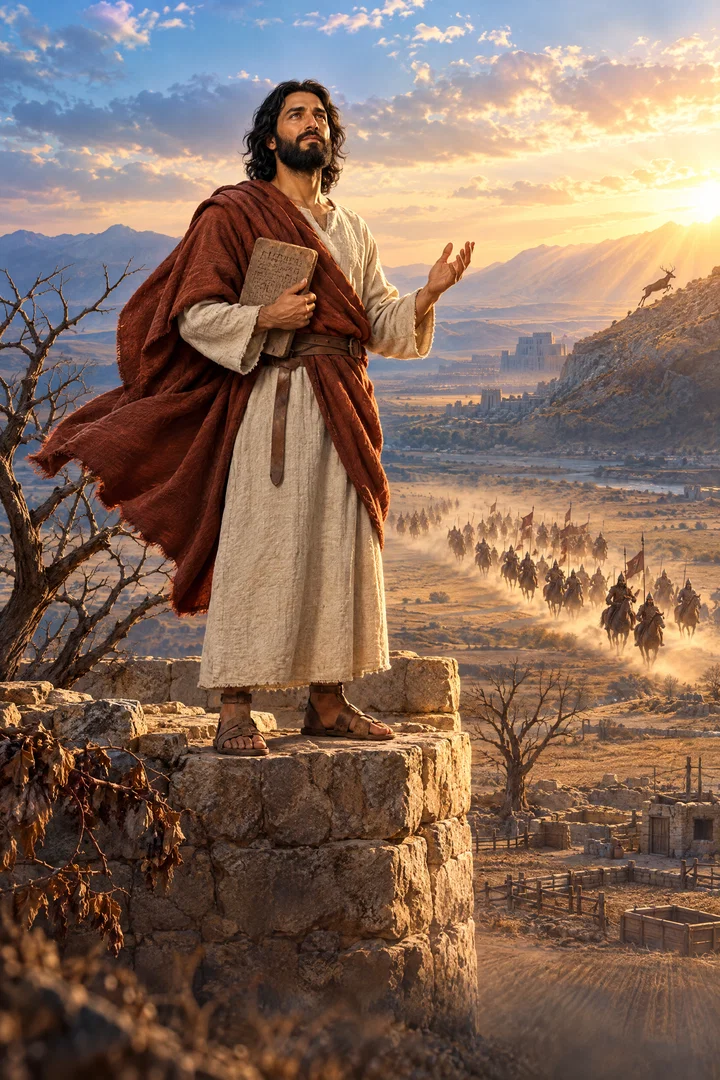
They shall come all for violence: their faces shall sup up as the east wind, and they shall gather the captivity as the sand.
Translations
American King James Version, King James Version, Webster Bible
They shall come all for violence: their faces shall sup up as the east wind, and they shall gather the captivity as the sand.
They shall come all for violence:
Their faces shall sup up as the east wind,
And they shall gather the captivity as the sand.They come all of them for violence; their faces are set eagerly as the east wind; and they gather captives as the sand.
They come all of them for violence; the set of their faces is forwards; and they gather captives as the sand.
Wholly for violence it doth come in, Their faces swallowing up the east wind, And it doth gather as the sand a captivity.
They come all of them for violence: the crowd of their faces is forwards, and they gather captives as the sand.
Solely for violence, will he come, the intent of their faces, is—To the east! And he hath gathered, as the sand, a captive host;
Berean Standard Bible, Majority Standard Bible
All of them come bent on violence;
their hordes advance like the east wind;
they gather prisoners like sand.All of them come for violence. Their hordes face forward. They gather prisoners like sand.
They are coming all of them with force; the direction of their faces is forward, the number of their prisoners is like the sands of the sea.
They come all to spoyle: before their faces shalbe an Eastwinde, and they shall gather the captiuitie, as the sand.
Douay-Rheims (Challoner revision)
They shall all come to the prey, their face is like a burning wind: and they shall gather together captives as the sand.
Pictures
Cross-references
- Habakkuk 1:13-15
Thou art of purer eyes than to behold evil, and canst not look on iniquity: wherefore lookest thou upon them that deal treacherously, and holdest thy tongue when the wicked devoureth the man that is more righteous than he?
Continues the description of the wicked devouring and capturing people.
- Habakkuk 2:7-8
Shall they not rise up suddenly that shall bite thee, and awake that shall vex thee, and thou shalt be for booties unto them?
The oppressor who spoils others becomes prey to those he has wronged.
- 2 Kings 24:14-16
And he carried away all Jerusalem, and all the princes, and all the mighty men of valour, even ten thousand captives, and all the craftsmen and smiths: none remained, save the poorest sort of the people of the land.
Records the Babylonian invasion and deportation of Judah.
Commentary
Each commentary is drawn from primary sources: the writings of Ellen G. White and Adventist pioneers and periodicals. Each commentary is separate. Its own words are not a quotation; follow the references to read the source passages.
Pioneers and periodicals
14 sources
The verse describes the Chaldeans as a furious people coming wholly for violence, sweeping forward with fierce determination and gathering captives in vast numbers as the sand.ST Feb 7, 1900ST Feb 7, 1906RH May 16, 1871 It is God's answer that He would raise up this fierce nation to bring impending judgment, destruction and captivity upon Jerusalem and Judah by overthrowing the city in the generation then living, just before the Babylonian captivity.RH Feb 18, 1904RH Sep 2, 1902RH Aug 15, 1907 That invasion came because of the wickedness of the land, after prolonged formalism and refusal to heed God's warnings, as reproof against the oppressive and wealthy in Israel.RH Jul 8, 1902 Chapters 1 and 2 depict last-day conditions, so the prophet's time serves as a type of the present time, and the picture of violent conquest and taking captives applies to greedy people and powerful rulers and businesses that exploit the poor and rise through the ruin of the weak.ST Feb 7, 1900ST Sep 29, 1898ST Jul 22, 1908 It warns that those who spoil others will themselves be spoiled, while the appetite for gain keeps growing and is never satisfied.ST Feb 7, 1900ST Sep 29, 1898
Violent Chaldean Invasion
The verse portrays the Chaldeans as a furious nation coming wholly for violence, sweeping forward with fierce determination and with faces set like the east wind to devour all before them.ST Feb 7, 1900ST Feb 7, 1906RH Feb 18, 1904RH Aug 15, 1907RH May 21, 1908 They advance violently and gather captives in vast numbers, as the sand, seizing people in great multitudes.RH May 16, 1871ST Dec 15, 1909ST Nov 29, 1899RH Sep 2, 1902RH Jul 8, 1902 The description belongs to the larger vision of an invading force in Habakkuk 1:6-11, in a chapter concerned with the work and fate of the Chaldeans.RH May 16, 1871ST Dec 15, 1909
It is part of God's answer that He would raise up this fierce nation to bring impending judgment, destruction, and captivity upon Jerusalem and Judah.RH Feb 18, 1904RH Sep 2, 1902RH Aug 15, 1907RH May 21, 1908RH Jul 8, 1902 They were to overthrow Jerusalem in the generation then living, just before the Babylonian captivity.RH Feb 18, 1904RH Sep 2, 1902RH May 21, 1908 Their advance brings the threatened destruction and captivity to Jerusalem as an instrument of judgment raised up against it.RH Aug 15, 1907RH Jul 8, 1902
The invasion came on account of the land's wickedness, after prolonged formalism and refusal to heed God's warnings.RH Jul 8, 1902 It was spoken as reproof against the oppressive and wealthy in Israel, warning them of the coming of the Chaldeans in judgment. With it stand woes against the covetous, cruel, and intemperate.
The prophecy was given in the time of Jeremiah, not far from the time of Nahum but a little later, as late as the middle of Jeremiah's prophecy. Its setting belongs to Habakkuk seeking hope of deliverance in God's everlasting existence.RH Sep 2, 1902 The surrounding context describes the wicked devouring those more righteous than themselves.ST Jul 31, 1901
Last-Day Warning Against Greed
Chapters 1 and 2 depict last-day conditions, and the verse belongs to that prophecy against the Chaldeans who would sweep over the land on account of its wickedness, with woes against the covetous, cruel and intemperate. It was given not far from the time of Nahum but a little later, as late as the middle of Jeremiah's prophecy, in the time of Jeremiah as reproof against the oppressive and wealthy in Israel warning them of the coming of the Chaldeans in judgment. The prophet's time serves as a type of the present time, so the verse is included among prophecies describing signs of the last days in its image of violent conquest, brutality, and warning about violence and oppression.ST Jul 22, 1908
The prophecy is used to address oppression and greed, describing a violent invading force sweeping forward and taking captives in vast numbers like sand.ST Feb 7, 1906ST Nov 29, 1899ST Sep 17, 1902 Its picture of taking captives is applied to greedy people who exploit and prey on the poor, and to selfish contests in which powerful rulers and businesses rise through the ruin of weaker states and traders.ST Feb 7, 1900ST Nov 29, 1899 In the same way the chapter is applied to the oppression of the poor and the responsibility of those whose actions could have made their circumstances better.ST Sep 17, 1902 Those who spoil others will themselves be spoiled, while the appetite for gain keeps growing and is never satisfied.ST Feb 7, 1900ST Sep 29, 1898
The vision of invasion in Habakkuk 1:6-11, to which the verse contributes its description of the invading force, was applied to a supposed invasion of the United States by Louis Napoleon dated February 24, 1870.RH May 16, 1871 That application stands as a failed prediction and not as a fulfilled prophecy.RH May 16, 1871
Sources