Hosea 5:8
Blow ye the cornet in Gibeah, and the trumpet in Ramah: cry aloud at Beth-aven, after thee, O Benjamin.
Translations
Blow you the cornet in Gibeah, and the trumpet in Ramah: cry aloud at Bethaven, after you, O Benjamin.
King James Version, Webster Bible
Blow ye the cornet in Gibeah, and the trumpet in Ramah: cry aloud at Beth-aven, after thee, O Benjamin.
Blow ye the cornet in Gibeah,
And the trumpet in Ramah:
Cry aloud at Beth-aven,
After thee, O Benjamin.Revised Version, American Standard Version
Blow ye the cornet in Gibeah, and the trumpet in Ramah: sound an alarm at Beth-aven; behind thee, O Benjamin.
Blow ye a cornet in Gibeah, a trumpet in Ramah, Shout, O Beth-Aven, after thee, O Benjamin.
Blow the horn in Gibeah, the trumpet in Ramah; cry aloud [ at] Beth-aven: behind thee, O Benjamin!
Blow ye a horn in Gibeah, a trumpet in Ramah,—sound an alarm at Beth-aven, behind thee, O Benjamin!
Berean Standard Bible, Majority Standard Bible
Blow the ram’s horn in Gibeah,
the trumpet in Ramah;
raise the battle cry in Beth-aven:
Lead on, O Benjamin!“ Blow the cornet in Gibeah,
and the trumpet in Ramah!
Sound a battle cry at Beth Aven, behind you, Benjamin!Let the horn be sounded in Gibeah and in Ramah; give a loud cry in Beth-aven, They are after you, O Benjamin.
Blowe ye the trumpet in Gibeah, and the shaume in Ramah: crie out at Beth-auen, after thee, O Beniamin.
Douay-Rheims (Challoner revision)
Blow ye the cornet in Gabaa, the trumpet in Rama: howl ye in Bethaven, behind thy back, O Benjamin.
Pictures
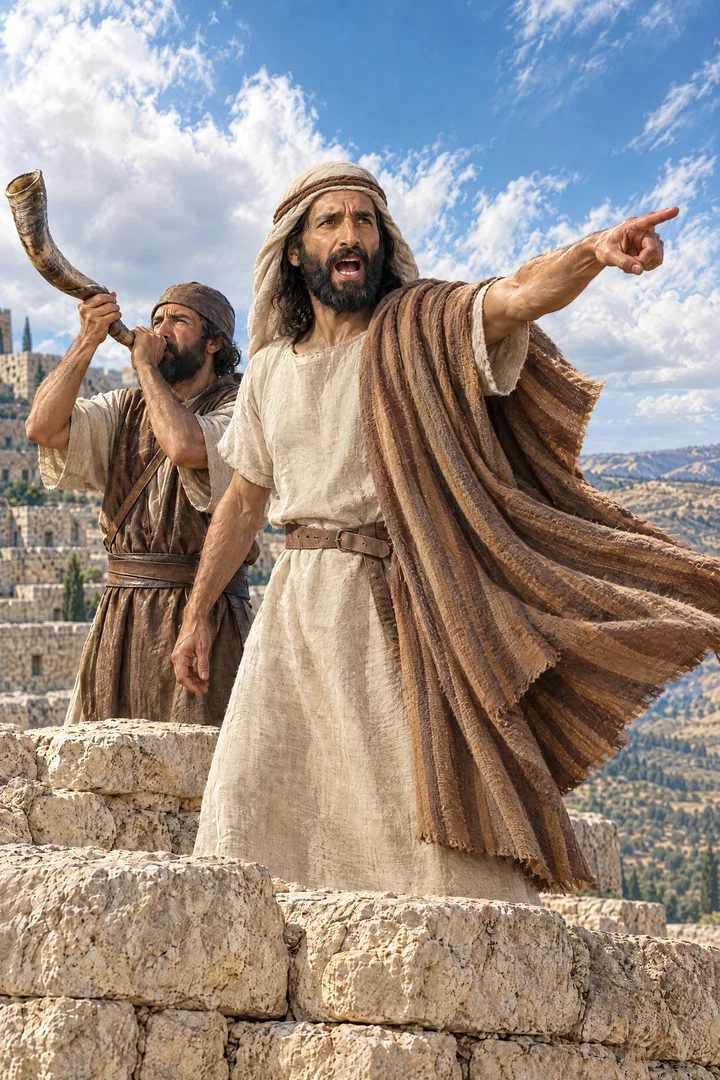
Commentary
Each commentary is drawn from primary sources: the writings of Ellen G. White and Adventist pioneers and periodicals. Each commentary is separate. Its own words are not a quotation; follow the references to read the source passages.
Pioneers and periodicals
2 sources
The verse stands in Hosea, the first of the minor prophets.ST Oct 28, 1908 Hosea's name means salvation.ST Oct 28, 1908 He was the last of the great prophets to the northern kingdom, contemporary with Isaiah and living about 200 years before Daniel, prophesying during the reigns of Uzziah, Jotham, Ahaz, and Hezekiah, kings of Judah, and of Jeroboam II in Israel.ST Oct 28, 1908 The prophecy was written about 750 B.C.ST Dec 1, 1909
It warns Israel against wicked alliances.ST Dec 1, 1909 It exposes the moral condition of the Israelites, in which people, priests, and princes are all guilty of gross iniquity.ST Oct 28, 1908 It predicts with great definiteness the coming captivity and certain desolation of the nation.ST Oct 28, 1908ST Dec 1, 1909 Beyond these apostasies and desolation, it looks forward to the time when the Lord shall restore His people, giving teaching about the future.ST Oct 28, 1908ST Dec 1, 1909
Sources