Isaiah 2:4
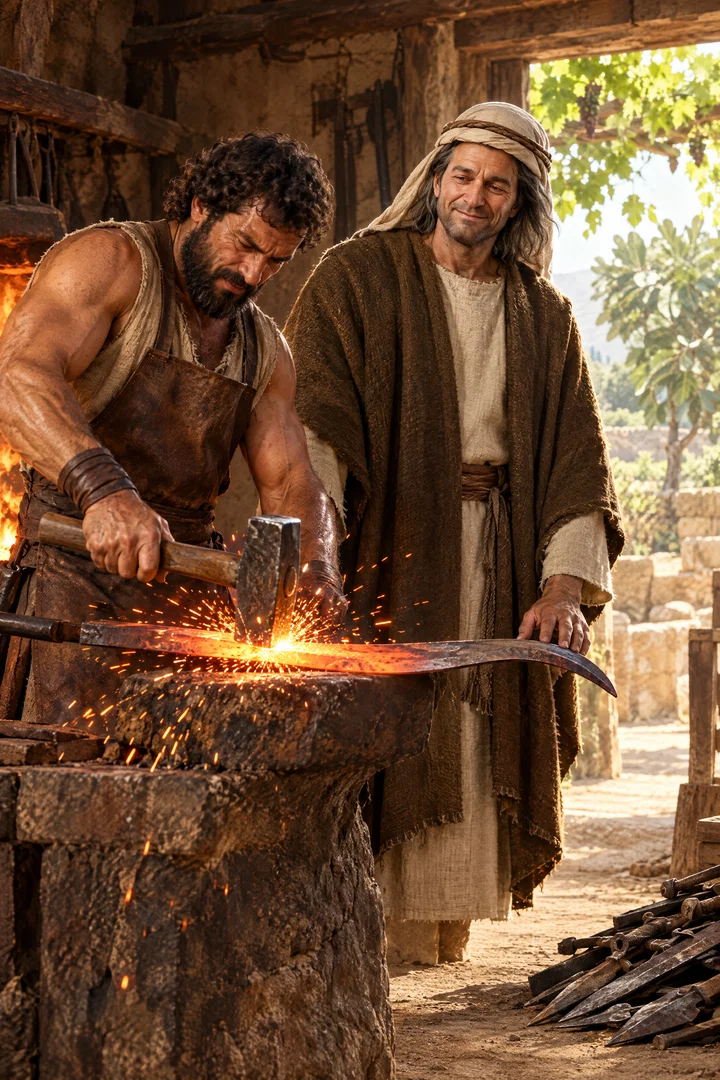
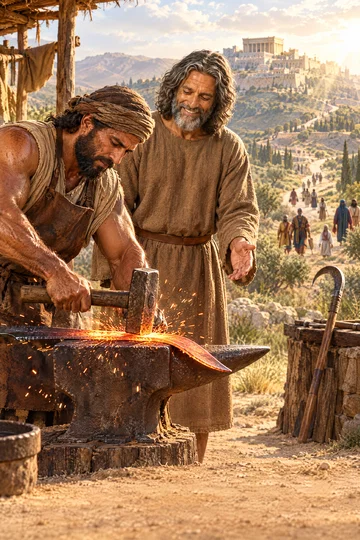
And he shall judge among the nations, and shall rebuke many people: and they shall beat their swords into plowshares, and their spears into pruninghooks: nation shall not lift up sword against nation, neither shall they learn war any more.
Translations
And he shall judge among the nations, and shall rebuke many people: and they shall beat their swords into plowshares, and their spears into pruning hooks: nation shall not lift up sword against nation, neither shall they learn war any more.
And he shall judge among the nations, and shall rebuke many people: and they shall beat their swords into plowshares, and their spears into pruninghooks: nation shall not lift up sword against nation, neither shall they learn war any more.
And he shall judge among the nations,
And shall rebuke many people:
And they shall beat their swords into plowshares,
And their spears into pruninghooks:
Nation shall not lift up sword against nation,
Neither shall they learn war any more.And he will judge among the nations, and will rebuke many people: and they shall beat their swords into plow-shares, and their spears into pruning-hooks: nation shall not lift up sword against nation, neither shall they learn war any more.
And he shall judge between the nations, and shall reprove many peoples: and they shall beat their swords into plowshares, and their spears into pruninghooks: nation shall not lift up sword against nation, neither shall they learn war any more.
And he will judge between the nations, and will decide concerning many peoples; and they shall beat their swords into plowshares, and their spears into pruning-hooks; nation shall not lift up sword against nation, neither shall they learn war any more.
And He hath judged between the nations, And hath given a decision to many peoples, And they have beat their swords to ploughshares, And their spears to pruning-hooks, Nation doth not lift up sword unto nation, Nor do they learn any more — war.
And he shall judge among the nations, and shall reprove many peoples; and they shall forge their swords into ploughshares, and their spears into pruning-knives: nation shall not lift up sword against nation, neither shall they learn war any more.
And he will judge between the nations, And be umpire to many peoples,—And they will beat their swords into ploughshares and their spears into pruning-hooks, Nation—against nation, shall not lift up sword, Neither shall they learn any more to make war,
Berean Standard Bible, Majority Standard Bible
Then He will judge between the nations
and arbitrate for many peoples.
They will beat their swords into plowshares
and their spears into pruning hooks.
Nation will no longer take up the sword against nation,
nor train anymore for war.He will judge between the nations,
and will decide concerning many peoples.
They shall beat their swords into plowshares,
and their spears into pruning hooks.
Nation shall not lift up sword against nation,
neither shall they learn war any more.And he will be the judge between the nations, and the peoples will be ruled by his decisions: and their swords will be turned into plough-blades, and their spears into vine-knives: no longer will the nations be turning their swords against one another, and the knowledge of war will be gone for ever.
And he shall iudge among the nations, and rebuke many people: they shall breake their swords also into mattocks, and their speares into siethes: nation shall not lift vp a sworde against nation, neither shall they learne to fight any more.
Douay-Rheims (Challoner revision)
And he shall judge the Gentiles, and rebuke many people: and they shall turn their swords into ploughshares, and their spears into sickles: nation shall not lift up sword against nation, neither shall they be exercised any more to war.
Pictures
Cross-references
- Joel 3:9-10
Proclaim ye this among the Gentiles; Prepare war, wake up the mighty men, let all the men of war draw near; let them come up:
Joel calls the nations to prepare for war, contrasting Isaiah’s promise that war will cease.
- Micah 4:3
And he shall judge among many people, and rebuke strong nations afar off; and they shall beat their swords into plowshares, and their spears into pruninghooks: nation shall not lift up a sword against nation, neither shall they learn war any more.
Both describe nations turning weapons into tools and no longer learning war.
- Isaiah 11:9
They shall not hurt nor destroy in all my holy mountain: for the earth shall be full of the knowledge of the LORD, as the waters cover the sea.
The earth is filled with knowledge of the Lord, and nothing hurts or destroys.
- Psalms 46:9
He maketh wars to cease unto the end of the earth; he breaketh the bow, and cutteth the spear in sunder; he burneth the chariot in the fire.
Both promise wars will end and weapons will be destroyed.
- Micah 4:2
And many nations shall come, and say, Come, and let us go up to the mountain of the LORD, and to the house of the God of Jacob; and he will teach us of his ways, and we will walk in his paths: for the law shall go forth of Zion, and the word of the LORD from Jerusalem.
gives the Jerusalem center of the cry
- Micah 4:4
But they shall sit every man under his vine and under his fig tree; and none shall make them afraid: for the mouth of the LORD of hosts hath spoken it.
Promises peaceful security without fear alongside the nations’ cessation of war.
- Micah 4:5
For all people will walk every one in the name of his god, and we will walk in the name of the LORD our God for ever and ever.
Peoples walk in their own gods’ names, contrasting with the LORD’s people.
- Isaiah 9:6-7
For unto us a child is born, unto us a son is given: and the government shall be upon his shoulder: and his name shall be called Wonderful, Counsellor, The mighty God, The everlasting Father, The Prince of Peace.
The Prince of Peace’s enduring reign brings an end to war.
- Micah 4:1
But in the last days it shall come to pass, that the mountain of the house of the LORD shall be established in the top of the mountains, and it shall be exalted above the hills; and people shall flow unto it.
Both describe the Lord’s mountain established and exalted in the latter days.
- Isaiah 11:6
The wolf also shall dwell with the lamb, and the leopard shall lie down with the kid; and the calf and the young lion and the fatling together; and a little child shall lead them.
The disarming promise is linked to peace between predators and prey.
- Joel 3:12
Let the heathen be wakened, and come up to the valley of Jehoshaphat: for there will I sit to judge all the heathen round about.
Both describe the Lord judging the nations.
- Micah 4:8
And thou, O tower of the flock, the strong hold of the daughter of Zion, unto thee shall it come, even the first dominion; the kingdom shall come to the daughter of Jerusalem.
The return of the first dominion marks the time of the promised peace.
- Isaiah 32:17
And the work of righteousness shall be peace; and the effect of righteousness quietness and assurance for ever.
Righteousness in the kingdom brings lasting peace.
- Psalms 72:7
In his days shall the righteous flourish; and abundance of peace so long as the moon endureth.
Both describe abundant peace under the king’s righteous rule.
- Psalms 110:6
He shall judge among the heathen, he shall fill the places with the dead bodies; he shall wound the heads over many countries.
The ruler judges the nations.
- Matthew 5:9
Blessed are the peacemakers: for they shall be called the children of God.
Peacemakers embody the righteous, blessed pursuit of peace.
- Matthew 5:39
But I say unto you, That ye resist not evil: but whosoever shall smite thee on thy right cheek, turn to him the other also.
Both teach against responding to conflict with violence.
- Micah 4:11-13
Now also many nations are gathered against thee, that say, Let her be defiled, and let our eye look upon Zion.
Nations gathered against Zion are judged and beaten in pieces.
Commentary part 1 of 3
Each commentary is drawn from primary sources: the writings of Ellen G. White and Adventist pioneers and periodicals. Each commentary is separate. Its own words are not a quotation; follow the references to read the source passages.
Ellen G. White
4 sources
The account of the Lord's house and mountain is to be taken in its plain sense as stated, not exchanged for symbolic meanings in which Jerusalem is made to mean the church and the Lord's coming is made to mean missionary work, nor whittled down to a Methodist class meeting.GC88 360.1 It will be fulfilled in the near future when Jesus takes the kingdoms and takes and possesses the kingdom under the whole heavens.1MR 61.3–62.1Ms 174, 1899, par. 5–73MR 313.1–314.2 At that time He will judge among the nations and correct and rebuke many peoples, and will cause wars to cease unto the ends of the earth.1MR 61.3–62.1Ms 174, 1899, par. 5–73MR 313.1–314.2 Until then war and bloodshed have existed, still exist, and will continue to exist.1MR 61.3–62.1Ms 174, 1899, par. 5–7 This is because war is popular, and to kill and destroy is counted brave and worthy of reward, while for six thousand years God has patiently borne with human ignorance and wickedness, testing people and entreating them to return to loyalty, to listen, and to be saved, but they refuse.1MR 61.3–62.1Ms 174, 1899, par. 5–7
Sources
Pioneers and periodicals
332 sources
In its plain wording the verse describes nations turning weapons of war into tools for peaceful work and cultivation, ceasing fighting and preparing for war.ST May 8, 1907ST Jul 12, 1899RH Dec 8, 1863RH Feb 4, 1862ST Aug 2, 1899
Those words about beating swords into plowshares and learning war no more are what many peoples and nations will say in the last days, not God's own promise or command that nations will actually disarm.ST Mar 21, 1911RH Aug 1, 1865ST Jan 20, 1887ST Aug 24, 1904
That promised peace is a false, delusive cry of peace and safety, spoken while conditions remain warlike and preparation for war continues, and it precedes sudden destruction and God's judgments.ST Mar 21, 1911ST Nov 29, 1899RH Apr 16, 1914RH Aug 22, 1907ST Jun 28, 1905
The verse stands opposite to Joel's last-days call to prepare war and beat plowshares into swords, for God proclaims war and judgment for the last days, not disarmament.ST Aug 25, 1914ST Aug 25, 1914ST Jan 26, 1915RH Nov 30, 1869
True and lasting peace with weapons turned to peaceful uses and war ended comes only in the future after Christ's second coming, when sin and sinners are destroyed and He establishes His glorious reign and eternal kingdom of peace.ST Nov 29, 1899ST Dec 12, 1916ST Oct 4, 1910ST Aug 24, 1888
Wording and Literary Setting
Pruning hooks are implements for reaping or mowing, such as sickles or scythes, and plowshares stand for industry and patience set against the horse as the emblem of war.RH Dec 6, 1864ST Aug 2, 1899 The call is for weapons of war to be turned into tools of peaceful industry.ST Aug 2, 1899
The passage is very closely like Micah 4:2-5, told twice by Isaiah and Micah, and Jeremiah may also have uttered the same prophecy though his writing of it has not survived.RH Oct 3, 1907ST Oct 25, 1910ST Jun 4, 1874ST Oct 23, 1901ST Sep 9, 1913 In that last-days setting many nations come saying let them go up to the house of the God of Jacob, God judges among the nations, and they beat swords into plowshares and spears into pruning-hooks and learn war no more.RH Oct 3, 1907ST Dec 15, 1909 The same prophecy appears almost word for word in Micah 4:3, corresponding to Micah 4 in a context of high moral teaching.ST Oct 23, 1901ST Sep 9, 1913ST Dec 15, 1909 Through Micah's parallel the rebuke of many people is identified as aimed at strong nations far away.ST Sep 19, 1900
The verse belongs to Isaiah's prophecies in chapters 2-12 and to Isaiah 2-5, which set forth the false and the true among God's people, the true church and the apostate church, in the last days.ST May 28, 1912ST Dec 30, 1903 It presents the culmination of the cry for peace in the future Messianic age and the vision of the future spiritual kingdom of God and its Messiah bringing deliverance from sin and error into view.RH Jul 6, 1916ST May 30, 1911 It is cited as part of the prophecy of the shaking of heaven and earth and the terror of earth's inhabitants in the day of the Lord, who seek refuge in the rocks from His majesty.ST Dec 18, 1879 It describes the exaltation of the professed church in the last days and its humbling in the day of the Lord immediately afterward, when He arises to shake terribly the earth.RH Mar 18, 1875
The chapter belongs to the last day, the terrible shaking of the earth and the coming of the Lord to judgment.RH Apr 4, 1871 It belongs to the day of the Lord, the judgment, the harvest which is the end of the world when the heavens pass away with great noise and new heavens and a new earth follow and the land is laid desolate and sinners destroyed out of it, at the same time as Joel's prophecy of that day.ST Nov 24, 1881 Its closing warning to cease from man whose breath is in his nostrils is greatly needed.RH Apr 4, 1871 The day of the Lord of hosts in Isaiah 2-3 is the present waiting, tarrying time when the Lord leads His people by His Spirit, causing light to shine on their path as they can bear it and leading them step by step in truth as fast as they are prepared to practice it.RH May 28, 1867 In that day He creates upon every dwelling place of Mount Zion and upon her assemblies a cloud and smoke by day and the shining of a flaming fire by night for a defense upon all the glory, as He led Israel by day with a cloud and by night with a pillar of fire, and they moved only as the cloud and pillar moved.RH May 28, 1867
The going forth of the law and the word of the Lord out of Zion and from Jerusalem took place at Pentecost after the resurrection of Jesus, marking the beginning in fact of the new dispensation in fulfillment of the command to begin at Jerusalem.RH Jul 8, 1873 Then Zion travailed and brought forth children and about three thousand souls were added as firstfruits to the Lord, in contrast to the giving of the old law when three thousand perished by the sword.RH Jul 8, 1873 The prophecy gives only a broad outline that nations will cease making war and does not reveal the detailed part that particular nations or agreements will play, so claims about exactly what nations will do are speculation known to God alone.ST Oct 7, 1930
In its plain wording the verse describes swords turned into tools of peace and weapons of war turned into farming tools and tools for cultivation and peaceful uses, with nations no longer preparing for war.ST Jul 12, 1899RH Dec 8, 1863RH Feb 4, 1862ST Aug 17, 1876ST Apr 30, 1912 Nation shall not lift up sword against nation and they shall not learn war anymore, describing a time when nations will no longer make war and will quit training for battle.RH Feb 4, 1862ST Nov 17, 1914 That announcement of peace and disarmament will not be fulfilled while nations are preparing for war, and the failed peace conference shows that this peace and disarmament have not yet been achieved.ST Jul 12, 1899RH Dec 8, 1863 The claim that nations were about to fulfill it and that war was a thing of the past with arbitration taking its place is a false expectation, contradicted by governments preparing for war, and the rising conflict instead signals the approach of the great day when God will end war and judge the nations.ST Aug 17, 1876ST Nov 17, 1914 The immense armies of the era show the expected millennial condition is not near.RH Feb 4, 1862
The verse expresses the prayer that God judge among the nations and rebuke many peoples, bringing an end to war and turning weapons into tools for cultivation.RH Nov 10, 1863 The sword's present work of tearing up the earth is preparation for the planting and harvest that precede the coming kingdom and the world's Sabbath.RH Nov 10, 1863 The prophet's vision foresees the plow replacing the sword and nations no longer learning war, in industrial life joined with economic independence and social cooperation, where individual freedom works through cooperation and God's just rule is established among people and nations.ST May 8, 1907 People live securely and freely without coveting one another's possessions, and all submit to the highest Judge, whose rule rests on justice and righteousness.ST May 8, 1907 The image of swords becoming ploughshares represents the end of military preparations and the redirection of their resources to peaceful uses.RH Jun 9, 1868
It is applied to the hope that international conferences will lead people to give up war and that nations will no longer learn it, and to the growing unity of Christians across denominations joining together in common service while retaining distinct beliefs.ST It pictures peace replacing war, with the ploughshare taking the place of the blade and tools of cultivation replacing weapons of destruction.ST Feb 10, 1904 Napoleon's career illustrates the contrast of abilities used for war rather than peaceful work, raising what might have been gained had Europe's soil been worked with ploughshare instead of sword.ST Feb 10, 1904 The same law holds for nations as for individuals that no quarrel can continue unless someone takes the opposite side, so there need never be another war with cannon and shell carrying death and destruction if rulers persistently gave soft answers that turn away wrath.ST Jun 15, 1904
When wars end and peace rests over the world, that peace should be preserved by turning weapons into farming tools so the earth blossoms and yields plenty again.RH Jun 27, 1865 Arms taken from fighters should be forged into plowshares and given to poor peasants for farming, and such turning of weapons into help for the poor belongs to latter-day predictions of peace.ST Dec 12, 1906 The image of swords turned into ploughshares is set against the cost of agricultural labor and the cost of naval and military establishments, as England spent more on its military establishments than on all its agricultural labor.RH Oct 9, 1856
Speakers Are Peoples Not God
The beating of swords into plowshares and spears into pruning-hooks and learning war no more are words that many peoples and many nations will speak in the latter days, not God's own promise, command, or declaration that the nations will actually disarm or cease learning war.ST Mar 21, 1911RH Aug 1, 1865RH Feb 11, 1915 Their claim is that He will judge between the nations and decide concerning many peoples, and that this will bring universal disarmament in which weapons become farming tools and war is learned no more. What they see is the outward spread and honored, nominal elevation of Jehovah's religion and the religion of the Bible among the nations and their nominal turning toward it, though its spirit is not accepted and they do not yield to God's righteousness and peace, and from that they raise the hope that its principles will triumph and the cry of coming peace.ST Mar 21, 1911 The words about going up to the Lord's mountain and the nations ending war are therefore spoken by "many people," not by the Lord, and are not necessarily a prediction that a time of peace and safety will take place.RH Aug 1, 1865RH Feb 11, 1915 The saying is echoed from many pulpits in the last days to support a temporal millennium and the world's conversion, but the surrounding setting of pride, idolatry, covetousness and lust for wealth, followed by hiding in fear when the Lord shakes the earth, rejects that peaceful expectation and points instead to nearness of destruction rather than conversion.RH Aug 1, 1865
The peaceful conditions are presented as what people proclaim about the last days rather than as the true warning of Scripture, and are therefore used to challenge claims of peace and prosperity for that time.RH Jun 12, 1866 They are not applied to Christians or to God's redeemed people, for Christians do not use carnal weapons but spiritual weapons, so they have no swords or spears to turn into implements of husbandry.RH Jun 12, 1866 The people making the claim will even assert that the Lord has spoken these words of peace, and will add that the mouth of the Lord of hosts has spoken it.ST Sep 19, 1900ST Sep 19, 1900ST Mar 24, 1887ST Oct 16, 1893ST May 28, 1902 That assertion itself belongs to what the people will say, not to a promise spoken by the Lord in this passage.ST Sep 19, 1900ST Mar 24, 1887ST May 28, 1902
Their disarmament claim follows God's rebuke of many people, identified through Micah's parallel prophecy as strong nations far away, and serves as a sign to watch for before the Lord comes.ST Sep 19, 1900 It is set forth as part of the last-days peace and safety cry of proud, wealthy, popular people, which precedes the Lord's wrath against the ungodly rather than describing a peaceful era brought about before His return.ST Oct 16, 1893 The many nations claim that God has promised universal peace when swords will become plowshares and war will cease, yet that claim is false, for in the parallel account all peoples still walk every one in the name of his god.ST May 28, 1902 At that same time Micah's prophecy says the Lord will gather only an afflicted, driven-out, halting remnant and reign over it in Zion, whose affliction and exclusion are incompatible with universal peace and safety, while His professed people are forsaken because filled with customs from the east, soothsaying like the Philistines, and striking hands with strangers.ST Mar 24, 1887ST May 28, 1902 The false cry of peace where there is no peace will thus be exposed by the opposite actual condition of unparalleled preparation for war, when implements of agriculture give place to implements of warfare and bloodshed.ST May 28, 1902
Their prediction itself is evidence that they live in the last days while mistakenly treating their own words as God's, and its repetition by peace societies, national alliances for mutual defense, and united Protestant efforts to bring the reign of peace was foretold long before. It is a false cry of peace and safety spoken by those in darkness while the din of war continues incessantly in every part of the globe with multiplied bloody wars since 1798, and instead of fulfilled peace perilous times full of danger have come. In contrast to this claim stands God's declaration that the nations will prepare for war as He prepares to judge them, for the Lord answers the nations with the opposite proclamation to prepare war and turn farming tools into weapons. The verse therefore represents the peace that many nations proclaim at the close of history, while Joel's prophecy is the Lord's testimony about what will happen.RH Nov 30, 1869 There the turning of weapons into farming tools and ceasing to learn war is contrasted with Joel's opposite picture of the nations preparing for war at the close of the world's history.RH Nov 30, 1869
The verse is not a prediction that the nations will actually end war but describes what people say when they urge waiting for a peaceful age before Westernizing China.RH Aug 19, 1909 Its fulfillment lies in the saying itself, when in the last days many peoples and delegates of the nations come together and say they will go up to the mountain of the Lord to be judged among the nations and that weapons will be turned into farming tools with nation no longer lifting sword against nation nor learning war, and when thousands of people and representatives of different nations publicly declare by word and by applause that there shall be war no more.RH May 2, 1907 Peace advocates use the statement that nations will learn war no more as their own declaration, not as God's prophecy.RH Aug 23, 1906RH Aug 23, 1906 Their expectation of universal peace before Christ returns is therefore false, and their human plan to bring about worldwide peace and disarmament through peace congresses is contrasted with the claim that lasting world peace comes only after Christ's return and the establishment of His kingdom.RH Aug 23, 1906RH Aug 23, 1906
The promise of nations ending war is presented as what people will say the Lord will do, not as the Lord's own declaration that He will command the nations to disarm.ST Aug 24, 1904 The verse does not promise that nations will stop warring while nations still exist, for their talk of peace does not change human hearts, which change only through the converting influence of God's Spirit.ST Aug 24, 1904 Isaiah 2:2-4 does not promise that the whole world will come in crowds to learn God's ways, and does not say that such universal peace will prevail over all the earth.ST Dec 5, 1911ST Dec 5, 1911ST Jun 20, 1900 What it shows is that many people will teach this doctrine of universal peace as a religious doctrine in the latter days, cited in connection with the expectation that the whole world will turn to God, which other scriptures identify as false.ST Dec 5, 1911ST Dec 5, 1911ST Jun 20, 1900
False Peace Before Destruction
The promised peace is a false, delusive cry of peace and safety, not real lasting peace.ST Mar 21, 1911ST Nov 29, 1899RH Apr 16, 1914ST People speak of disarmament and an end to war while preparing for war, and that cry precedes sudden destruction and God's judgments.ST Mar 21, 1911ST Nov 29, 1899RH Apr 16, 1914STST Dec 5, 1911 The prophecy describes many peoples in the latter days proclaiming peace and appealing to the nations to end warfare, but it does not say the nations will actually disarm or cease learning war.ST Mar 21, 1911STST Dec 5, 1911 It presents only a nominal elevation of true religion among the nations and a nominal turning toward it, which is not itself the light because the nations do not yield to righteousness and peace.ST Mar 21, 1911 The widespread claim that the world was entering a warless age fulfills the prophecy as a peace delusion, contradicted by the wars that followed, and the vision remains a dream of peace that will not be fulfilled amid closing-days preparations for war, for genuine peace comes when judgment and instruction bring the nations to peace under righteous reign.ST Nov 29, 1899RH Apr 16, 1914ST
The talk of universal peace and no more war is the false cry of peace and safety in the last days, spoken while conditions remain warlike and perilous.RH Aug 22, 1907ST Jun 28, 1905RH Mar 12, 1914RH Aug 26, 1915RH Mar 3, 1874 It is immediately followed by sudden destruction at the day of the Lord and Christ's sudden return, from which there is no escape.RH Aug 22, 1907ST Jun 28, 1905RH Mar 3, 1874 The expectation that peace will soon end war is not a prediction of lasting peace but a sign that sudden destruction is near, with the appearance of peace before the first dominion returns to its rightful ruler followed by sudden destruction.RH Aug 22, 1907ST Jun 28, 1905 The nations' talk of turning weapons into farming tools is a sign that the last days have come, not evidence that a lasting earthly millennium is beginning, for preparations for conflict continue.RH Mar 12, 1914RH Aug 26, 1915 The text does not specify when its peace will be fulfilled, but its language is linked to a false announcement of universal peace made just before Christ's return, while the world is preparing for war, and that message will lull many into carnal security.ST Sep 8, 1914
The last-day peace-and-safety cry belongs to the time of the end beginning in A.D. 1798 and stands as one of the special prominent signs that the world is living in the last days and that Christ's coming is nigh, even at the doors.ST Dec 14, 1904 Those who make the peace-and-safety claim are in darkness and will be overtaken as a thief in the night, while the brethren who are sons of light and know where they stand will not be overtaken. God foretold thousands of years ago the very words people would say at this time, and by calling them many people showed it would be the great popular cry that nations will end war and turn weapons into farming tools when peace and safety is claimed to have come. Those saying the promise that people will learn war no more are deceived, walking after their own desires, while the world faces harvest and judgment, and those who expect peace and safety while nations prepare for war are deceived, for the announcement of peace and disarmament will not be fulfilled then.RH Dec 8, 1863RH Mar 19, 1867 Their words do not describe genuine peace, and their expectation of universal peace before Christ returns is false, for peace advocates use the statement as their own declaration and not as God's prophecy, and lasting world peace comes only after Christ's return and his kingdom.ST Jan 20, 1887RH Aug 23, 1906
The verse is presented as part of a false prophecy of peace that deceives people, cited as a false claim while iniquity abounds with belief that the world has been converted and a temporal millennium has come.ST Jul 22, 1908ST Dec 16, 1889ST Jan 20, 1887ST Feb 8, 1905 It is used to promise peace and success and to soothe God's people with falsehood when ministers should be warning that the Lord's coming and judgments are near.ST Jul 22, 1908ST Dec 16, 1889 This apparent fulfillment is expected to be acted out through peace conferences and an international tribunal deciding disputes, possibly based in Jerusalem with the Pope as human head, and those who expose the deception will be persecuted.ST Feb 8, 1905 The promises of ended war with weapons turned into farm tools are only the words of lovers of pleasures more than lovers of God who have a form of godliness but deny its power and from whom all who fear God must turn away.ST Mar 24, 1887 When they claim war will cease, the opposite is declared for that time: prepare war, wake up the mighty men, turn farm tools into weapons, with fear and the pit and the snare and sudden destruction upon inhabitants because wickedness is great and evil men grow worse.ST Mar 24, 1887
Proclaiming peace and safety now merely postpones the promised change and leads people toward ruin, since this is not a peace the world can bring about while refusing God's plan.RH Mar 28, 1912 The verse does not mean the nations are now entering a time when war ends and peace and safety lie ahead, and to apply its promise of an end to war to the present is ignorant false assurance and dangerous delusion.ST Aug 22, 1916 God's word instead shows danger on every side and darker perils ahead, so the need now is to study the Bible and heed the alarm rather than trust assurances of peace.ST Aug 22, 1916 Claiming that the millennium of peace on earth with weapons turned into farm tools and warfare abandoned is now beginning to dawn is deception and false assurance, a peace and safety cry hiding approaching judgment and preluding bloody wars, as when the clergy of Paris and every pulpit in France declared on the eve of the most bloody war of the French Revolution that the millennium was dawning, as clergy did before other wars.ST Oct 10, 1906 The verse foretells that in the last days many people would proclaim a time of universal peace, and that expectation contrasted with the outbreak of devastating war shows human assurances do not establish the future while God's word reliably foretells it.ST Nov 2, 1915 The verse gives the peace talk the great mass of people will repeat in the last days that war will cease and weapons become farming tools, the exact opposite of what God teaches, for God tells the nations to turn farming tools into weapons and prepare for war, and the last days will be marked by terrible wars under demonic wrathful influence.ST
Opposite Testimony of Joel
Isaiah's promise of swords beaten into plowshares and spears into pruning-hooks with war learned no more stands opposite to and is reversed by Joel's last-days call to prepare war and beat plowshares into swords and pruning-hooks into spears.ST Aug 25, 1914ST Jan 26, 1915RH May 16, 1907ST Feb 8, 1905RH Apr 4, 1871 The reversal shows that God proclaims war, bloodshed and judgment for the last days, not disarmament and settled peace.ST Aug 25, 1914ST Aug 25, 1914ST Jan 26, 1915RH May 16, 1907RH Apr 4, 1871 The people's talk of God judging between the nations and deciding concerning many peoples as many peoples flow to the mountain of Jehovah's house to learn His ways and walk in His paths with law going forth from Zion is claimed as a declaration that the present war will lead to peace sooner or later.ST Aug 25, 1914ST Aug 25, 1914ST Jan 26, 1915 That expected peace would not be universal true Christianity, for all peoples still walk every one in the name of his god in a compromised union of all religions and systems in a federated arbitral court with the pope of Rome at its head as the voice through which the Lord is averred to speak in judging nations.ST Aug 25, 1914 It stands in direct contrast to the last-days prophecy of war that reverses its words until God's great judgment closes the scene.ST Aug 25, 1914RH May 16, 1907ST Feb 8, 1905
The declaration that God will settle disputes among nations and that weapons of war will be turned into tools for farming is the people's own saying, though they declare that Jehovah says it.ST Aug 25, 1914ST Jan 26, 1915RH May 16, 1907RH Apr 4, 1871 It is the great false cry of peace now raised in the world, and it will not issue in peace but in increasing armaments and preparations among the nations of the earth.ST Aug 25, 1914ST Jan 26, 1915RH May 16, 1907 To say it makes its speakers soothsayers, worthy to be forsaken.ST Aug 25, 1914 The chapter belongs to the last day, the terrible shaking of the earth and the coming of the Lord to judgment and harvest which is the end of the world, and must be read together with Joel 3 to see the difference, with its closing warning to cease from man whose breath is in his nostrils greatly needed.RH Apr 4, 1871ST Nov 24, 1881 The verse is raised as apparently conflicting with Joel's call, but the conflict is resolved when the one is seen as what men say and the other as what God commands.ST Feb 8, 1905RH Apr 4, 1871ST Nov 24, 1881
In contrast to what the people say in the verse, God's own testimony for the last days is the opposite proclamation through Joel to prepare war and to turn farming tools into weapons.RH Nov 30, 1869RH Aug 24, 1914RH Apr 4, 1871ST Nov 24, 1881 He calls the nations to prepare for battle and to gather to judgment in the valley of Jehoshaphat when the harvest is ripe and the day of the Lord is near.RH Nov 30, 1869RH Apr 4, 1871 While the heavenly judgment proceeds, the nations prepare for war, reversing the transformation of plowshares into swords.RH Nov 30, 1869RH Aug 24, 1914 Such talk of turning swords into plowshares and learning war no more does not mean lasting peace has arrived, and the prediction itself is evidence that men live in the last days while mistakenly treating their own words as God's.RH Aug 24, 1914 Instead of fulfilled peace, perilous times full of danger have come with the din of war continuing incessantly and multiplied bloody wars since 1798, and the Lord answers the nations with war rather than peace.
The verse is therefore not a prophecy that nations will disarm and cease learning war, but records what people will say, the false cry of the nations in the last days proclaiming coming universal peace and the end of war.ST Jan 26, 1915RH May 16, 1907RH Aug 19, 1909ST Apr 30, 1912 That claim of disarmament is false, and Joel 3 exposes it by reversing its language.RH May 16, 1907RH Apr 4, 1871ST Apr 30, 1912 The real last-day condition shown is preparation for war and the gathering of the nations for divine judgment in the valley of decision.RH Apr 4, 1871ST Apr 30, 1912 It is not a description of the new earth; the Lord's message about the nations' actual state and purpose in the last days is given in Joel 3:9-16.ST Apr 22, 1897ST Apr 30, 1912 Isaiah 2:4 describes nations turning weapons into farming tools and ceasing to learn war only as the peace that many nations proclaim at that time, while Joel's prophecy is the Lord's testimony about what will happen at the close of history.ST Apr 22, 1897RH Nov 30, 1869RH Aug 24, 1914
Modern Peace Movements as Sign
The talk of turning weapons into farm tools and learning war no more is fulfilled as a sign in modern peace congresses, peace societies, arbitration efforts, The Hague conventions, leagues and movements for world federation and outlawing war, showing the world is in the last days and Christ's coming is near.STST May 1, 1907ST Dec 12, 1916ST Aug 16, 1905 It records what many people will say in the last days on their own authority, not what God Himself declares, and its present proclamation by the peace movement proves the world is in the last days, while to take these human words as God's promise is a perversion.STST May 1, 1907 The widespread claim that the world was entering a warless age is a peace delusion contradicted by the wars that followed, and lasting peace will come only through Christ's second coming after He appears in the clouds and the sin-cursed earth with all its wickedness is given over to purifying flames.STST Dec 12, 1916 The text does not specify when this peace will be fulfilled, but its language is linked to a false announcement of universal peace made just before Christ's return, while the world is preparing for war, and that message will lull many into carnal security.ST Aug 16, 1905ST Sep 8, 1914
Peace proposals, congresses, conferences, arbitration, peace palaces, peace societies and disarmament talk fulfill the saying itself, but they cannot bring lasting peace, and continuing armaments, military buildup, guns, artillery, and new destructive weapons prove the promised era has not arrived and remains distant.ST Jun 29, 1904RH Jun 12, 1913RH Nov 27, 1913RH May 2, 1907RH Jun 26, 1860 The fulfillment lies in the saying itself, when thousands of people and representatives of different nations publicly declare by word and by applause that there shall be war no more.RH Jun 12, 1913RH Nov 27, 1913RH May 2, 1907 The promised future of abandoning warfare and turning weapons into tools for peaceful work is contrasted with armed nations, military preparations, expanding armies and weapons hastening the world toward the final conflict, showing lasting peace had not yet come.RH Nov 27, 1913RH Jun 26, 1860 In the present, peace societies and movements are a fulfillment of the prophecy even as expanding armies and weapons hasten the world toward the final conflict.RH Nov 27, 1913
People will expect war and bloodshed to bring world peace, presenting peace congresses and arbitration committees as steps toward that peace, and these claims are a sign of the end.ST Sep 19, 1900 The claim that the Lord has spoken this ending of war is part of what the people will say, not a promise spoken by the Lord in this passage.ST Sep 19, 1900 The verse is applied to international and local peace congresses and to arbitration between Chile and Argentina, which brought a period of peace and peaceful uses for military resources, but the renewed growth of war preparations shows that this peace was temporary.ST Apr 14, 1909 The promise of an end of war when nation shall not lift up sword against nation was claimed to mean war was a thing of the past and arbitration had taken its place.ST Nov 17, 1914
The Hague Peace Conference raises the question whether diplomacy and arbitration signal the beginning of the promised time when nations cease warfare, but the fulfillment is left uncertain.ST Jul 24, 1907 That hope was applied to the peace conference at The Hague, predicting war will be no more within a few years and that the Christian Endeavor movement will help bring about peace.ST The same hope is applied to international conferences leading people to give up war and to the growing unity of Christians across denominations joining in common service while retaining distinct beliefs, with the image of turning weapons into tools representing peace.ST
Modern peace advocates making miniature plowshares from swords illustrate men's talk with peace on their lips while war is in their hearts, and against this false hope God answers war, not because He wants war, but to expose that their hearts still seek war.RH May 10, 1915 Paperweights made from old swords in the shape of plowshares present the same conversion of weapons into tools of peace as a symbol of the peace movement. Peace advocates use the prophecy to mean a lesson in horrors of war, while peace congress declarations against war with continued discord and war preparation show declarations and organized efforts alone do not bring genuine peace.ST May 15, 1907
The cry of peace is spoken right while an awful spirit of war prevails and war preparations continue, so peace professions alongside actual war-making fulfill the picture of what the nations say versus what they do.ST Jul 31, 1901ST Dec 8, 1914ST Dec 1, 1914ST Oct 17, 1916 The conversion of agricultural factories to making weapons shows lasting international peace has not arrived, and the verse points instead to a future time of peace when the Prince of peace comes.ST Jul 31, 1901ST Dec 8, 1914ST Dec 1, 1914 This peace cannot be assumed to follow from a victorious nation exacting retribution to prevent another conflict, for the Bible determines what will actually occur.ST Oct 17, 1916ST Feb 24, 1914 Outward enthusiasm for peace occurs while nations prepare for war and precedes the sudden destruction of Armageddon, and does not mean war preparations have ended, though the hope of permanent peace when war ends forever is expressed even as people prepare for war.ST Feb 24, 1914
The world's costly armed peace is the opposite of the promised peace, with nations turning agricultural tools into weapons and preparing for a vast conflict, and these preparations cannot secure lasting peace and precede a crisis of war and destruction.ST Feb 6, 1907 While the heavenly judgment proceeds, nations prepare for war, reversing the transformation of plowshares into swords, and people's talk of turning swords into plowshares does not mean lasting peace has arrived.ST Feb 6, 1907RH Aug 24, 1914 The prophecy of worldwide peace is associated with last-day peace movements, including movements based on wrong principles that will end in disappointment, and such efforts may appear successful and provide time for the worldwide message of Christ's soon coming, but they do not bring lasting peace in a wicked world and the nations will again be angry.ST Aug 24, 1915
The time when nations cease making war and turn weapons into tools for peaceful work does not describe the peace conferences or military preparations of the present world, and claims that such efforts fulfill its promise conflict with continued preparations for war and do not prove the world is being converted.ST Jul 10, 1901 Turning weapons into farm tools and abolishing war forever gives no warrant for saying present war preparations will come to nothing and there will be no more war, and it is misused as proof that nations are becoming too civilized and Christianized to fight, with settlements between England and Russia and in Servo-Bulgarian matters cited as evidence, while all powers continually hold ready for war and increase their arms, making that present peace application a wild, unwarranted conclusion and cry of peace and safety.ST Apr 1, 1886 The promise that weapons will become farming tools and nations will learn war no more is not a prediction of a coming age of peace and plenty before the judgment and Christ's return, nor does it describe a peaceful prosperous society on earth during the day of the Lord, and to cite it in support of a thousand years of peace before Christ's advent or to prove social reform will bring Christ or establish God's kingdom is a misconception and deceptive misuse that will disappoint.ST May 18, 1915ST Aug 19, 1897RH Sep 13, 1870
The nations of this present world will not gradually stop war and turn weapons into farming tools through peace congresses and arbitration courts such as the Hague tribunal, for there will be no gradual coming of Christ into His kingdom through sinful ways slowly replaced by righteous ways and no gradual ending of war by human instrumentality.ST Apr 9, 1902ST Apr 9, 1902 Human selfishness will not yield its throne for the rights of a brother, international arbitration cannot bring it, nations will not lay aside sword, bayonet, and cannon for harvest and industry, wickedness will increase until Christ Himself comes to cut it short in destruction, and the hope otherwise is a delusive hope and plan of the deceiver to blind men to the hastening consummation.ST Apr 9, 1902ST Apr 9, 1902 World peace will not come now through human peace congresses and palaces, and those looking for fulfillment in present peace movements are mistaken, for the destruction of Cartago and the costly peace palace at the moment it was nearly completed shows sudden destruction with no escape falls when peace is expected.RH Dec 15, 1910 Before lasting peace comes utter destruction will overwhelm the world, so God's people must stay alert, watchful, and read the signs of the times in order to escape.RH Dec 15, 1910
The promised warless world where war ends for all time and nation no longer lifts sword against nation will not come from horror at slaughter driving nations to arbitration in the Peace Palace at The Hague, from peoples taking power from war lords, or from a solemn human decision after a great war that this shall be the last war.RH Oct 29, 1914 To claim a terrible war will drain desire for war and usher in permanent settlement is false prophecy and false hope ending in disappointment, because war leaves hatred, distrust, and desire for revenge that breed more war.RH Oct 29, 1914 The promise that war will be banished will not be fully realized in the present world, where war will continue.RH Feb 24, 1916RH Oct 29, 1914 The promise that weapons will become agricultural tools raises the question whether the experience of war will lead nations to abhor war, pointing instead to the approach of the day when the Prince of Peace begins His eternal reign, for war itself will not convert all people.ST Aug 8, 1916
The promise of swords turned into plowshares and rifles into farming tools with armies kept only for ceremony was declared to be arriving because the air-ship with dynamite had made battleships, coast defense guns, field guns, small arms and stored ammunition mere junk, since dynamite from the clouds could destroy a Dreadnought or wipe out a regiment.ST Nov 17, 1914 That declaration ignores that every nation was still feverishly preparing for strife and ignores the warning that when they say peace and safety sudden destruction comes.ST Nov 17, 1914 The idea that increasingly destructive weapons will bring peace is rejected, for instead their power points to a final clash among the nations before the Lord destroys them at His coming.ST Nov 17, 1914ST May 13, 1889 The statement that nations will learn war no more is the advocates' own declaration, not God's prophecy, and is contrasted with the peace congresses' human plan to bring worldwide peace and with the claim that lasting world peace comes only after Christ's return and the establishment of His kingdom.RH Aug 23, 1906RH Aug 23, 1906
Corrupt Speakers and Context
The peace claim is uttered by backslidden, hypocritical speakers exposed by the surrounding prophecy, who are marked by pride, covetousness and lust for wealth, by a land filled with silver and gold and treasure without end and with horses and chariots without end, by idols worshiped as the work of their own hands, by being replenished from the east, by soothsaying like the Philistines, by pleasing themselves in strangers and striking hands with strangers and the children of strangers, and by divided worship with the mean man bowing down and the great man humbling himself.RH Aug 1, 1865ST Nov 17, 1898ST May 27, 1913RH Sep 15, 1859 Because of that apostasy God forsakes the house of Jacob and says not to forgive them, the proud will be brought low and riches cannot deliver, and the people will hide in caves, clefts and rocks in fear when the Lord arises to shake terribly the earth in the day of the Lord.RH Aug 1, 1865ST Nov 17, 1898ST May 27, 1913RH Sep 15, 1859RH Jun 2, 1868 That setting rejects a peaceful temporal millennium, for the cry for peace is raised by the people and echoed from many pulpits in the last days, not by the Lord, and their claim of peace and safety is followed by sudden destruction.RH Aug 1, 1865ST Nov 17, 1898
Those who proclaim the peace are themselves apostate and corrupt, filled with customs from the east, soothsayers like the Philistines, strikers of hands with strangers, idolaters worshiping the work of their own hands which their own fingers have made, proud, and living in iniquity and material exaltation.ST Jan 24, 1906ST May 28, 1902ST Sep 22, 1909ST Dec 1, 1909ST Oct 23, 1901 Their promised peace has no true ground because those proclaiming it are themselves apostate, and Isaiah 2:6 identifies the proclaimers as deceivers under judgment for wickedness, whose peace cry accompanies warnings of judgment rather than the true arrival of lasting peace.ST Sep 22, 1909ST Jul 31, 1901ST Dec 1, 1909 The verse belongs to a last-days peace movement seeking to exalt the Lord's house among earthly governments and settle disputes without war, but that profession is contrasted with a world still marked by idolatry and pride, wealth, military power and worship of human works.ST Feb 17, 1914RH Jun 15, 1916RH Jun 15, 1916
The swords-to-plowshares promise is the people's hope that nations will cease fighting when they call for the Lord's house to be exalted among governments and for nations to learn God's ways, contrasted with surrounding idolatry and pride over which God's judgment will bring the haughty low.RH Jun 15, 1916RH Jun 15, 1916 The peace cry reflects only a nominal, outward exaltation of Jehovah's religion and the Bible among nations without yielding to God's righteousness; seeing its outward spread and honored position though its spirit is not accepted, they hope its principles will triumph and raise the cry of coming peace.ST Mar 21, 1911ST Oct 25, 1910 Hearts are unchanged by talk of turning weapons into farming tools and are changed only by the converting influence of God's Spirit, for the nations continue in jealousies and wars and do not actually disarm or cease learning war.ST Mar 21, 1911ST Aug 24, 1904ST Aug 24, 1904 Their nominal turn to Christianity is driven by worldly motives, not true righteousness, and precedes war and sudden destruction rather than bringing lasting peace.ST Mar 21, 1911ST Oct 25, 1910
Nations recognizing Christianity's superiority does not prove the world will be converted, since such recognition may be only outward form while rejecting self-denial, salvation through Christ, peace through his righteousness, and separation unto God.ST Feb 8, 1905 Isaiah 2:2-4 looks to the latter days at the end of the Christian age, and the picture of peoples flowing to the Lord's mountain describes Christianity widely acknowledged and often only nominally accepted, with many professing faith without heart and life, so the end of war belongs to a prophecy whose apparent acceptance is largely superficial, not proof of righteousness.ST Oct 23, 1901 The mountain of the Lord's house established in the top of the mountains means the professed church or Christian religion exalted through worldly policy above earthly civil governments, outwardly honored and professed by multitudes while inward life is lacking.RH Sep 23, 1862RH Jun 27, 1865RH Jan 1, 1875ST Aug 25, 1914 Mountains mean earthly governments, and in that exalted state multitudes of popular professors looking for the conversion of the world come saying the nations will beat weapons into farming tools and learn war no more, prophesying peace and safety, even setting up a reign of righteousness by religio-civil decree.RH Sep 23, 1862RH Jan 1, 1875
The passage is a prophecy of the last days showing that in an age of enlightenment the greatest darkness will cover the earth as Christendom is replenished from the East, with new and old commingling in the hypnotic spell of the final deception over the whole earth.RH Apr 21, 1904 The verse describes a political peace proclaimed by people who claim to represent God but are separated from him, not the lasting peace of a converted world or peace grounded in salvation through Jesus Christ, lasting only a little time while God exposes unfaithfulness and alone is exalted. The false cry is raised because nominal Christianity appears exalted, but it is led by a false representative of Jehovah who deceives the world, and God has forsaken His professed people for following foreign customs, practicing soothsaying and joining foreigners.ST Jan 9, 1907 Modern peace movements and councils present a false appearance of unity and peace while disregarding God's law, the law of peace.
The conversion of weapons into farming tools and the end of war is presented as a false claim when people who profess to seek God refuse to obey his law, including the Sabbath, and make excuses to avoid its claims.RH Sep 13, 1870 At the same time the nations prophesy peace and safety, God's true people are not a converted world but a halting, afflicted, driven-out remnant, a little flock oppressed by the nations, who keep God's commandments and have the testimony of Jesus, whom the Lord will gather, deliver, and reign over forever in Mount Zion.ST May 28, 1902ST Jan 29, 1880RH Dec 17, 1872ST Oct 23, 1901RH Jan 1, 1875 The surrounding prophecy describes the exalted state of the professed church, while the remnant is driven out and afflicted at that time, and God's own word calls the nations to prepare war.ST Jun 4, 1874ST Jan 29, 1880RH Dec 17, 1872 The parallel in Micah shows the promise does not mean a converted world: the nations still walk every one in the name of his god while God gathers an afflicted, driven-out remnant to reign over in Zion forever, and there would be no swords or spears to turn into tools in the eternal state.ST Mar 24, 1887RH Nov 30, 1869RH Oct 24, 1871
The latter-day worldwide call by many peoples to go to the mountain of Jehovah is a confederacy rather than gospel unity, whose members may keep walking each in the name of his god while professing Jehovah's name, with broad religious tolerance accepted so long as they join.ST Dec 5, 1911 The nations' words about learning God's ways do not mean the world will truly be converted.ST Oct 23, 1901 The saying about coming universal disarmament is a false peace and safety cry uttered while nations wake to the battle of the great day, spoken by soothsayers like the Philistines, when the truth of God is exalted and spread over the earth not for conversion of all but preached for a witness with the Bible placed before all nations in their own tongue so all are without excuse.ST Nov 24, 1881
Sources