Isaiah 6:5
Then said I, Woe is me! for I am undone; because I am a man of unclean lips, and I dwell in the midst of a people of unclean lips: for mine eyes have seen the King, the LORD of hosts.
Translations
Then said I, Woe is me! for I am undone; because I am a man of unclean lips, and I dwell in the middle of a people of unclean lips: for my eyes have seen the King, the LORD of hosts.
King James Version, Revised Version
Then said I, Woe is me! for I am undone; because I am a man of unclean lips, and I dwell in the midst of a people of unclean lips: for mine eyes have seen the King, the LORD of hosts.
Then said I, Woe is me! for I am undone; because I am a man of unclean lips, and I dwell in the midst of a people of unclean lips: for mine eyes have seen the King, the Lord of hosts.
Then said I, Woe is me! for I am undone; because I am a man of unclean lips, and I dwell in the midst of a people of unclean lips: for my eyes have seen the King, the LORD of hosts.
Then said I, Woe is me! for I am undone; because I am a man of unclean lips, and I dwell in the midst of a people of unclean lips: for mine eyes have seen the King, Jehovah of hosts.
And I say, 'Woe to me, for I have been silent, For a man — unclean of lips [am] I, And in midst of a people unclean of lips I am dwelling, Because the King, Jehovah of Hosts, have my eyes seen.'
And I said, Woe unto me! for I am undone; for I am a man of unclean lips, and I dwell in the midst of a people of unclean lips: for mine eyes have seen the King, Jehovah of hosts.
Then said I—Woe to me!—for I am undone, Because a man of unclean lips, am, I, And in the midst of a people of unclean lips, do I dwell,—For the King. Yahweh of hosts, have mine eyes seen!
Berean Standard Bible, Majority Standard Bible
Then I said:
“Woe is me,
for I am ruined,
because I am a man of unclean lips
dwelling among a people of unclean lips;
for my eyes have seen the King,
the LORD of Hosts.”Then I said, “Woe is me! For I am undone, because I am a man of unclean lips and I live among a people of unclean lips, for my eyes have seen the King, the LORD of Armies!”
Then I said, The curse is on me, and my fate is destruction; for I am a man of unclean lips, living among a people of unclean lips; for my eyes have seen the King, the Lord of armies.
Then I sayd, Wo is me: for I am vndone, because I am a man of polluted lips, and I dwell in the middes of a people of polluted lips: for mine eyes haue seene the King and Lord of hostes.
Douay-Rheims (Challoner revision)
And I said: Woe is me, because I have held my peace; because I am a man of unclean lips, and I dwell in the midst of a people that hath unclean lips, and I have seen with my eyes the King the Lord of hosts.
Pictures



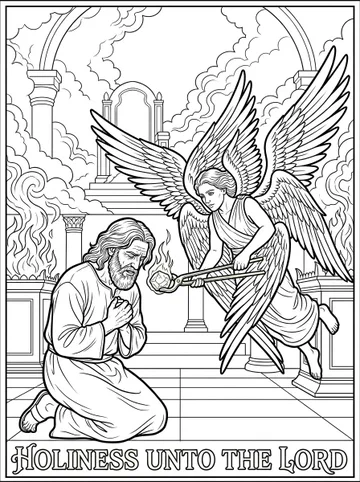
Cross-references 20 of 30
- Job 42:5-6
I have heard of thee by the hearing of the ear: but now mine eye seeth thee.
Seeing God leads both Job and Isaiah to recognize their sinfulness and respond with self-abasement.
- Daniel 10:8
Therefore I was left alone, and saw this great vision, and there remained no strength in me: for my comeliness was turned in me into corruption, and I retained no strength.
Daniel loses strength and is overwhelmed when confronted with divine glory.
- John 12:41
These things said Esaias, when he saw his glory, and spake of him.
Isaiah saw Christ’s glory, identifying him as the Lord Isaiah saw.
- Revelation 4:6-8
And before the throne there was a sea of glass like unto crystal: and in the midst of the throne, and round about the throne, were four beasts full of eyes before and behind.
The six-winged beings proclaim God’s holiness in a throne vision, as in Isaiah’s vision.
- Luke 5:8
When Simon Peter saw it, he fell down at Jesus’ knees, saying, Depart from me; for I am a sinful man, O Lord.
Peter confesses his sinfulness in Jesus’ presence, as Isaiah does before the Lord.
- Revelation 4:2
And immediately I was in the spirit: and, behold, a throne was set in heaven, and one sat on the throne.
John sees the throne also seen in Isaiah’s vision.
- Isaiah 33:17
Thine eyes shall see the king in his beauty: they shall behold the land that is very far off.
Both describe seeing the King; Isaiah 33 also asks who can dwell with Him.
- Exodus 33:20
And he said, Thou canst not see my face: for there shall no man see me, and live.
God says no one can see him and live.
- Exodus 3:5-6
And he said, Draw not nigh hither: put off thy shoes from off thy feet, for the place whereon thou standest is holy ground.
Both men respond with fear and humility when confronted with God's holy presence.
- Job 40:4
Behold, I am vile; what shall I answer thee? I will lay mine hand upon my mouth.
Job acknowledges his vileness and falls silent before God.
- Ezekiel 1:26-28
And above the firmament that was over their heads was the likeness of a throne, as the appearance of a sapphire stone: and upon the likeness of the throne was the likeness as the appearance of a man above upon it.
Both prophets behold the Lord’s glory enthroned and fall before the vision.
- Jeremiah 1:6-9
Then said I, Ah, Lord GOD! behold, I cannot speak: for I am a child.
Jeremiah’s reluctance was also answered as God equipped him to speak.
- Isaiah 6:1
In the year that king Uzziah died I saw also the Lord sitting upon a throne, high and lifted up, and his train filled the temple.
The vision of the Lord leads Isaiah to recognize his unworthiness.
- Revelation 1:17
And when I saw him, I fell at his feet as dead. And he laid his right hand upon me, saying unto me, Fear not; I am the first and the last:
John falls as dead before Christ’s majesty.
- Judges 13:22
And Manoah said unto his wife, We shall surely die, because we have seen God.
Both speakers fear death after seeing God.
- Isaiah 64:6
But we are all as an unclean thing, and all our righteousnesses are as filthy rags; and we all do fade as a leaf; and our iniquities, like the wind, have taken us away.
Filthy righteousness contrasts with true contrition.
- Matthew 5:8
Blessed are the pure in heart: for they shall see God.
Purity of heart is connected with seeing God.
- Genesis 32:30
And Jacob called the name of the place Peniel: for I have seen God face to face, and my life is preserved.
Both express awe at seeing God.
- Romans 3:13
Their throat is an open sepulchre; with their tongues they have used deceit; the poison of asps is under their lips:
Human speech is described as corrupt and poisonous.
- 1 John 1:7
But if we walk in the light, as he is in the light, we have fellowship one with another, and the blood of Jesus Christ his Son cleanseth us from all sin.
Christ’s blood cleanses from all sin.
Commentary
Each commentary is drawn from primary sources: the writings of Ellen G. White and Adventist pioneers and periodicals. Each commentary is separate. Its own words are not a quotation; follow the references to read the source passages.
Ellen G. White
54 sources
Isaiah beheld the King, the LORD of hosts, high and lifted up upon a throne with His glory filling the temple while angels veiled their faces and proclaimed His holiness, and the glory he saw was Christ the Son of God in His purity and loveliness.Ms 124, 1903, par. 28–30Ms 27, 1891, par. 12–13Ms 48, 1903, par. 4–6 In that light he felt ruined and undone, unholy and unfit in himself to speak for God or fulfill his mission, defiled in speech and sharing the uncleanness of a people who did not live by the light they had received.7T 153.3–154.1GW 21.1–2CT 374.2CEv 90.3MH 432.1–433.2 Beholding divine majesty, purity and glory exposes human sinfulness, weakness and inward defilement by contrast, sinking pride and self-righteousness into nothingness and bringing trembling, guilt, hatred of sin and deep sorrow for transgressing God's holy law.GW 21.1–2MH 432.1–433.28T 281.1–4Ms 64, 1895, par. 1–3Lt 71, 1895, par. 33–34 Conviction prepares for cleansing, as a seraph touches the unclean lips with a live coal from the altar and the heart is imbued with the Holy Spirit so iniquity is taken away and sin purged, making the lips able to bear a plain message of Bible truth in the power of God.7T 153.3–154.1MC 18.1–2Ms 27, 1891, par. 12–13FE 472.3Lt 31, 1892, par. 15–18 After cleansing the worker hears the call for one to send and answers with humble dependence on God rather than human power, and the memory of the King becomes lasting courage and reverence in approaching God, sustaining a long and arduous mission against prevailing evils.Ms 27, 1891, par. 12–13Lt 63, 1895, par. 34–38GW 22.4RH Mar 11, 1915PK 310.1
Vision of the Holy King
What Isaiah saw was the King, the LORD of hosts, sitting upon a throne high and lifted up, with the train of His glory filling the temple.Ms 124, 1903, par. 28–30Ms 48, 1903, par. 4–6Lt 31, 1892, par. 15–18 Around Him angels veiled their faces as they proclaimed His holiness, crying Holy, and the greatness of God was made known by the overwhelming effect of that presence.Ms 124, 1903, par. 28–30Ms 174, 1897, par. 25–26GC88 471.1 The glory Isaiah beheld was the glory of Christ, the Son of God in His purity and loveliness.Ms 27, 1891, par. 12–13 Hearing the cherubim proclaim that holiness and seeing the Lord's glory made him acutely aware of his own sinfulness and unfitness in the presence of the holy God.Ms 27, 1891, par. 12–13GC88 471.1
The vision came when Isaiah faced the plain duty to lift his voice in protest against the prevailing evils of erring Judah, yet dreaded to undertake the work without some assurance of hope.PK 308.2–3 His soul was burdened with the question whether none of God's chosen people would ever understand and repent and be healed.PK 308.2–3 What was revealed answered that dread by showing that heaven is closely connected with events on earth, that God cares for those loyal to Him, and that the Lord rules over coming events and holds the destiny of nations and the concerns of His church in His charge.5T 753.3
The chapter holds lessons for all who carry responsible work, showing that labor is done as a spectacle in full view of the whole universe of heaven.Lt 89, 1899, par. 8–10 That setting requires faithfulness, guarding the work from what is unsuitable for the time, and giving present truth in due season.Lt 89, 1899, par. 8–10 It calls for being hid in the cleft of the rock to see Jesus and to be quickened by His Holy Spirit, because important issues must soon be met and no moment is to be lost.Lt 89, 1899, par. 8–10 Contemplating this glory is the exclamation God's people should make when God impresses them with a view of His glory, arousing every church member and every youth to become one with Christ and to prepare to meet God.Ms 93, 1903, par. 21 That sight comes from contemplating wondrous themes connected with the great power promised under the proclamation of the third angel, when the earth is lighted with glory in the loud cry at the closing of the last message of mercy to a fallen world and the last call to fallen Babylon.Ms 93, 1903, par. 21
Undone and Unclean Lips
To cry woe is me for I am undone is to confess being ruined, perishing, deficient, unholy and unfit before the divine King.7T 153.3–154.1CT 374.2CEv 90.3MC 18.1–2RH Mar 11, 1915 The sight of the Lord's holiness, glory and majesty exposes inward defilement and unholiness by contrast, making a person acutely aware of personal sin and uncleanness.CT 374.2RH Mar 11, 1915Ms 22, 1895, par. 8–11GW 21.3–22.1GW 22.4 In that light Isaiah felt unworthy in his own imperfection and weakness to speak for God and to fulfill his mission.GW 21.1–2RH Mar 11, 1915Ms 22, 1895, par. 8–11GW 21.3–22.1GW 22.4
To be a man of unclean lips is to have defiled speech that needs cleansing and sanctifying by sacred fire so that only correct statements are made.Ms 27, 1891, par. 17GW 21.3–22.1GW 22.4Lt 55, 1903, par. 19JIOKP 11.2 It includes light and trifling conversation and talking and acting as a worldling talks and acts, which dishonors Christ and cannot continue when Christ abides in the heart to purpose, requiring daily conversion unto holy conversation.Ms 27, 1891, par. 17Lt 55, 1903, par. 19JIOKP 11.2 It also includes criticizing fellow workers instead of learning and speaking Christ's words, seeking pardon for defects and praying for blessing.Ms 27, 1891, par. 17Lt 55, 1903, par. 19JIOKP 11.2 Unclean lips further describes a people who do not practice what they say, whose failure to bring integrity, fairness, justice, mercy and compassion into business dealings shows they have not lived by received light.Ms 7, 1902, par. 4 Neglect of heaven-sent counsel is measured in the worth of words by obedience, and brings judicial blindness and hardness of heart.Ms 7, 1902, par. 4
To dwell in the midst of a people of unclean lips is to share the uncleanness of those around and to recognize both personal imperfection and the sinfulness of God's professed people.MC 18.1–2MH 432.1–433.28T 281.1–4Ms 9, 1894, par. 14–15Ms 7, 1902, par. 4 Isaiah saw that his own lips were unclean as were the lips of the people among whom he lived, and answered the vision of the King, the Lord of hosts, with a sense of guilt, unworthiness, trembling and fear.GW 21.1–2MH 432.1–433.28T 281.1–4Lt 71, 1895, par. 33–34Ms 9, 1894, par. 14–15 That recognition grieves over indifference to God in those around and over unclean speech among self and people.7T 153.3–154.1CEv 90.3Lt 71, 1895, par. 33–34RH Mar 11, 1915Ms 9, 1894, par. 14–15
Beholding Brings Conviction
Seeing the holiness, glory, majesty and purity of the Lord exposes by contrast human sinfulness, weakness and inward defilement.GW 21.1–2MH 432.1–433.2Ms 64, 1895, par. 1–3RH Mar 11, 1915PK 307.1–2 The vision of the King, the Lord of hosts, made Isaiah recognize his own sin and uncleanness of lips and his place among a people of unclean lips, feeling unworthy, undone, ruined and unable in his own imperfection and weakness to speak for God or fulfill his mission.GW 21.1–2MH 432.1–433.2Ms 64, 1895, par. 1–3RH Mar 11, 1915PK 307.1–2 Christ's purity reveals the deformity of the soul, making a person acutely aware of personal sin and of both personal imperfection and the sinfulness of God's professed people.Ms 64, 1895, par. 1–3RH Mar 11, 1915PK 307.1–2 Cleansing follows this exposure, for iniquity is taken away and sin purged.MH 432.1–433.2
Beholding God's majesty humbles self into nothingness and makes pride and self-righteousness sink away.Ms 64, 1895, par. 1–3Ms 22, 1895, par. 8–11Ms 9, 1894, par. 14–15STE 173.2–174.1Lt 71, 1895, par. 35 The closer and more continuously a person views Jesus, the less self is esteemed or lifted up for mastery and recognition.Ms 64, 1895, par. 1–3 Those who see God's purity clearly do not boast of being free from sin and do not exalt themselves as equal with God, but are humbled by the contrast into meekness, humility, contrition and meek, contrite speech rather than proud, overbearing force.Ms 64, 1895, par. 1–3Ms 22, 1895, par. 8–11Ms 9, 1894, par. 14–15GC 470.2–471.2Lt 71, 1895, par. 35 This humbling is especially needed by those carrying responsibilities in God's work.Ms 9, 1894, par. 14–15STE 173.2–174.1
The response is trembling and fear before God with a sense of guilt and unworthiness.8T 281.1–4Lt 71, 1895, par. 33–34 Seeing sin in its enormity brings recognition of being undone, hating sin, finding all selfishness distressing, abhorring self, and turning from evil with deep sorrow at the start of the Christian life.MYP 132.2STB 366.2 The words express grief over having transgressed God's holy, just and good law, grief over indifference to God in those around, and refusal to exalt self in duty, opposite to superficial Christians who exalt self by depreciating others.STB 366.2 The clearer the view of the character of Christ, the more humble the view of self becomes, until personal comeliness is felt to be turned into corruption. The sinner stops protecting dignity, admits wrongdoing, and chooses to repent while Christ is still pleading in heaven.STB 366.2
If the curtain were thrown back and God's unveiled wisdom and glory were revealed, finite people who measure God's Word by their limited minds and limited comprehension and criticize its validity would likewise shrink into nothingness and confess their own uncleanness of lips and that of the people among whom they live.Ms 16, 1888, par. 12–14
Cleansing Leads to Service
The cry of being ruined does not end in ruin but prepares for cleansing, for a seraph touches the unclean lips with a live coal from the divine altar, takes away iniquity and purges sin, purifies the lips and imbues the heart with the Holy Spirit.Ms 27, 1891, par. 12–13Lt 317a, 1904, par. 23–25Ms 48, 1903, par. 4–6 The sight of the holy King brings the conviction of being undone and defiled in speech and joined to a defiled people, and every worker chosen by God feels this same sense of unfitness to be sent.MC 18.1–2Ms 27, 1891, par. 12–13Ms 126, 1899, par. 32–35 This woe is the needed experience before iniquity is taken away and sin is purged by the refining Spirit, after which the worker can answer the call to go.7T 153.3–154.1MC 18.1–2Ms 27, 1891, par. 12–13 Confession of unclean lips expresses unfitness before God, and the cleansing that follows shows God removing iniquity and purging sin to prepare for service.Lt 317a, 1904, par. 23–25Ms 126, 1899, par. 32–35
Lips thus touched from the altar and imbued with the Holy Spirit are made able to speak for God and bear a plain, clear message of Bible truth.Ms 48, 1903, par. 4–6FE 472.3Lt 31, 1892, par. 15–18 No truth borne is greater or more precious than the doctrine of the cross and the imputed righteousness of Christ, coming not in word only but in the power of God to everyone who believes, making the bearer a co-laborer with Christ in representing God's character and bringing souls back to God.Lt 31, 1892, par. 15–183MR 15.1 Even lips that are unclean may be touched and purified, so those willing to serve can communicate light to others.FE 472.3 Those who receive light but fail to cherish or share it are accountable for the people left without that light.FE 472.3
This representation is acted over and over again when workers press close to the side of Christ, wear His yoke and daily learn of Him how to carry messages of peace and comfort to the sorrowing, disappointed, sad and brokenhearted.Lt 122, 1899, par. 8–10RH Nov 11, 1902 Christ the great Teacher imbues them with His own Spirit, touches the unclean lips as with the live coal from the altar, takes away iniquity and purges sin, and fits them to hear and answer the call.Lt 122, 1899, par. 8–10RH Nov 11, 1902 The lesson belongs to canvassers and to workers in God's institutions, who must stay connected to God, meet Christ in private communion, be sanctified through the truth and bring no human spirit into the work.7T 153.3–154.1Lt 31, 1892, par. 15–18 Otherwise they may lose their sense of the truth's power and their ability to distinguish the sacred from the common.7T 153.3–154.1 Recognition of need and unworthiness therefore belongs together with the cleansing and willingness to serve that follow, leading through confession and humility to readiness to answer God's call.CEv 90.3AAC 4.2Ms 37, 1902, par. 4–9CEv 90.4
After cleansing the worker hears the call, Whom shall I send, and answers, Here am I, send me, willing to go wherever sent.Ms 27, 1891, par. 12–13CEv 90.4RH Nov 11, 1902 The calling is approached with humility and earnest prayer, depending on God rather than human authority or power and trusting God to guide and order His work.Ms 27, 1891, par. 12–13Lt 63, 1895, par. 34–38 Cleansing leads to losing sight of self, recognizing the sacredness of the calling and rejecting anything that would dishonor God.GW 22.4 So fitted, the worker serves as a heaven-sent messenger whose work angels can join.GW 22.4RH Nov 11, 1902MH 150.2
Reverent Humble Christian Life
Seeing divine holiness exposes personal uncleanness and a place among an unclean people, and that sight teaches reverence for God and holy things.Ms 174, 1897, par. 25–26Lt 5, 1896, par. 7–8 Awareness of the great and holy God, high and exalted with glory filling the temple, before whom angels veil their faces and cry Holy, should shape approach to Him in prayer.Ms 174, 1897, par. 25–26Lt 5, 1896, par. 7–8 Those who handle sacred things must humble themselves continually, recognize need of forgiveness, grow in fear of offending Him, and have the heart prepared to receive His instruction.Lt 5, 1896, par. 7–8 Unclean lips and tongue must be sanctified to make only correct statements, and His work must be carried on only with the sacred fire of His own kindling.Lt 55, 1903, par. 19
The confession of undone and unclean lips belongs to many professing Christians whose enjoyment of light and trifling conversation and talking and acting as worldlings talk and act dishonors the Christ professed to be loved.Ms 27, 1891, par. 17 When Christ abides in the heart to some purpose such speech cannot continue, so daily conversion is needed that every word honor Christ and life be holy in all manner of conversation.Ms 27, 1891, par. 17 Lips are converted when personal defects are brought for pardon, blessing is sought in prayer, Christ's words are learned for speech, and criticizing fellow workers is put away, with cleansing accomplished by the Holy Spirit.JIOKP 11.2Ms 52, 1904, par. 31 Confession of uncleanness should be met with encouragement and care, never with pleasure at another's humiliation.Ms 52, 1904, par. 31
Peter should have made this confession when Christ searched his heart and revealed coming failure, instead of rejecting the truth about his weakness that was shown him.ST May 5, 1898ST Nov 4, 1897 He should have admitted that his own heart and speech were unclean and that he was undone, distrusted self, humbled his soul before God, and confessed personal weakness and ignorance of self.ST May 5, 1898Ms 38, 1897, par. 11–14ST Nov 4, 1897 He should have asked for special grace to keep from falling and sought deeper views of God with a deeper and broader knowledge of Jesus Christ and the help only Christ can give.Ms 38, 1897, par. 11–14 Such self-knowledge and humble dependence was what he needed when facing temptation.ST Nov 4, 1897
Beholding by faith the glory of Christ, the only-begotten Son of God, compels speech about what is seen and felt. Musing on the plan of redemption and the unfathomable love shown in Christ's death on the cross, that sinners might not perish but have everlasting life, leaves words to extol the Saviour's glory and His excellencies. Beholding His glory arouses every church member and every youth to become one with Christ and to prepare to meet God.Ms 93, 1903, par. 21 That sight of the divine King comes through contemplating wondrous themes connected with the great power promised under the proclamation of the third angel, when the earth is lighted with glory in the loud cry at the closing of the last message of mercy to a fallen world and the last call to fallen Babylon.Ms 93, 1903, par. 21
Courage for Lasting Mission
Seeing the King, the Lord of hosts, became a lasting source of courage that stayed with Isaiah through a long and arduous mission of more than sixty years.RH Mar 11, 1915PK 310.1 The memory of that sight nerved him for the work before him when earthly powers arrayed themselves against Judah and when opposition and resistance met the Lord's messenger.PK 310.1 That remembrance strengthened him to continue his difficult mission despite opposition and to speak with growing boldness about the future triumph of the church.RH Mar 11, 1915PK 310.1 Through those decades he stood before the children of Judah as a prophet of hope, growing bolder and still bolder in predicting that triumph.PK 310.1
He had faced the plain duty to lift his voice in protest against the prevailing evils of erring Judah, yet he dreaded to undertake the work without some assurance of hope.PK 308.2–3 His soul carried the burden of asking whether none of God's chosen people would ever understand and repent and be healed.PK 308.2–3 In the light of the divine presence, with the revelation of God's holiness and majesty, he recognized his own sinfulness and the sinfulness of the people among whom he lived, and his unclean lips marked personal imperfection and a place among a sinful people that left him unable by himself to fulfill his mission.PK 307.1–2DA 246.3 Seeing God's holiness made him recognize his own sin and unworthiness, and after that encounter he was entrusted with God's message.PK 307.1–2DA 246.3
Sources
Pioneers and periodicals
83 sources
Isaiah was given a view of God enthroned as King in His heavenly temple, with seraphim veiling their faces before His glory, and the sight overwhelmed him with fear that he was ruined and lost before such majesty.ST Oct 6, 1898RH Dec 25, 1913RH Jul 6, 1916RH Nov 17, 1863 The King he saw is Christ in His pre-existent divinity and glory, while those who distinguished the divine names held the LORD of hosts here to be Jehovah the Father, not the Son, and others held the one seen to be Adonai the Messiah.ST Apr 1, 1889ST Jun 21, 1883ST Jan 3, 1884RH Nov 3, 1863 Beholding that holiness makes a person feel his own corruption and unworthiness and that of the people around him, especially in defiled speech, with the nearer the approach to God the clearer the contrast of sin.RH Mar 11, 1915ST May 13, 1897ST Oct 6, 1898ST Jul 9, 1896ST Feb 19, 1902 That confession of ruin opens the way for cleansing, when a coal from the heavenly altar touches the lips and takes away iniquity, which is Jesus applied through His blood and the Holy Spirit as refining fire.ST Feb 12, 1880RH Dec 25, 1913 Only after being thus pardoned and purified is a person fitted to be sent, to answer willingly for service and speak God's message to others.ST Feb 12, 1880RH Dec 10, 1914ST May 31, 1910RH Aug 20, 1914
Vision Setting and Wording
Isaiah's cry belongs to his call to service in the vision given in the year King Uzziah died.ST Dec 8, 1898ST Jun 4, 1912 He lived in Jerusalem, his father's name was Amoz, and his prophecies were in the days of Uzziah, Jotham, Ahaz and Hezekiah, kings of Judah.ST Dec 8, 1898 Hosea in Israel and Nahum and Micah in Judah were his contemporaries, only a few years from the founding of Rome and the rise of Corinth.ST Dec 8, 1898
The vision came in the closing days of Uzziah, whose reign had generally been great and good but who finished his days as a leper for presumptuous sin.ST Jan 31, 1911 At that time God's judgments upon transgression were certain and cruel, and mighty Assyria was dominating or swallowing up all kingdoms not under God's special protection.ST Jan 31, 1911 To human view Judah would follow the ten-tribe kingdom and all would be lost, and God gave the devoted prophet the vision to assure him that the Most High ruled.ST Jan 31, 1911
The setting is the heavenly sanctuary, tabernacle and temple, not the temple at Jerusalem, the same place John saw in Revelation, disclosing God's throne in His temple.RH Nov 17, 1863ST Jun 24, 1880 There the Lord sits upon a throne high and lifted up, with His train filling the temple.RH Dec 25, 1913ST Jan 2, 1901 Above are seraphim covering face and feet and flying and crying Holy, holy, holy is the LORD of hosts and the whole earth is full of His glory.ST Jan 2, 1901
Seeing the holiness and glory of the Lord as King made Isaiah recognize his own sinfulness and the sinfulness of the people among whom he lived.ST Oct 6, 1898RH Jul 6, 1916 His cry of woe expresses his sense of being ruined or lost in the presence of the King, the LORD of hosts, with his unworthiness brought into view.ST Oct 6, 1898RH Jul 6, 1916 The sight of heaven's glory and throne with its attendant glory overwhelmed him with terror, awe and fear that he would die, leaving him as a dead man before God's majesty.ST Aug 13, 1874ST Sep 6, 1883ST May 18, 1915
The chapter distinguishes the divine names, with Jehovah in verses 3, 5 and 12 and Adonai in verses 1, 8 and 11.ST Jan 3, 1884RH Nov 3, 1863 Thus the LORD of hosts named in the verse is Jehovah, identified as the Father, not the Son.ST Jan 3, 1884RH Nov 3, 1863 The portrayal is dramatic and soul-shaking, revealing the glory, greatness, infinity and eternity of the divine nature.ST Mar 25, 1880
The King Isaiah Saw
The enthroned King, the LORD of hosts, whose glory filled the heavenly temple and before whom the seraphim covered their faces, is Christ, and the vision displays His divinity, majesty and pre-existent glory.ST Apr 1, 1889ST Jun 21, 1883RH Mar 15, 1870RH Feb 3, 1853 The overwhelming holiness and majesty of the Lord in that vision left the prophet confessing his own uncleanness of lips and his place among a people of unclean lips.ST Apr 1, 1889ST Jun 21, 1883RH Mar 15, 1870 The setting is the heavenly sanctuary, specifically the first apartment where throne and golden altar are seen, corresponding to John's vision and to the place where Christ began His ministry as High Priest, and the following appearance of the seraph and the altar confirms that location where Christ's glory was beheld.RH Mar 15, 1870RH Feb 3, 1853 The vision spoke both of Christ and of the people living when Christ was on earth, and the sight of Christ's glory and holiness moves the beholder to recognize lowliness, unworthiness and sinfulness and to cry out in humility and terror.RH Feb 3, 1853ST Nov 26, 1894 That glory foreshadowed the outshining of God's glory to be revealed in Christ.ST Jun 21, 1883
A distinct teaching distinguishes the divine names in the chapter, noting Jehovah in verses 3, 5 and 12 and Adonai in verses 1, 8 and 11, and on that ground identifies the LORD of hosts named in the verse as Jehovah, who is the Father and not the Son.ST Jan 3, 1884RH Nov 3, 1863 By the same distinction Jehovah is set apart from Adonai, with Adonai identified as the Son.RH Nov 3, 1863
Another distinction holds that the one Isaiah saw is Adonai, the Hebrew proper name of the Messiah, rather than Jehovah, the name of God the Father, and that John's application of the vision to Christ refers to Him under that Adonai name.ST Jun 21, 1883
Mine eyes have seen the King means Isaiah literally saw the Lord sitting upon a throne high and lifted up, with His train filling the temple and seraphim above Him.RH Sep 20, 1870 This proves God is a personal being of glorious form and terrible majesty with tangible infinite personality, and not without person or shape, having form and throne and local habitation while also everywhere present by the Holy Spirit.ST Feb 27, 1907 It shows the Son of God before He came to this earth, proving He then had a bodily form as the very image of the Father's substance.ST Feb 27, 1907 In this sense the word image means form and outline and not character or principle only, and the testimony supports the claim that God was seen.RH Sep 20, 1870
Conviction in Holy Presence
Beholding the Lord enthroned as King in His holiness, glory, majesty, wisdom, power, justice, love and pity makes a person recognize personal sin, corruption and unworthiness and the sinfulness of the people among whom he lives.RH Mar 11, 1915ST May 13, 1897ST Oct 6, 1898RH Jul 6, 1916ST Aug 5, 1875 The cry of being undone means being ruined or lost before the King, the Lord of hosts, overwhelmed, afraid and humbled with a sense of imperfection and weakness that leaves no ground for boasting or self-exaltation and no ability in oneself to carry out the mission.RH Mar 11, 1915ST Oct 6, 1898RH Jul 6, 1916ST Aug 5, 1875RH Jul 30, 1914 That encounter awakens a burden for souls and willingness to do God's will and offer self for service, and shows that purification of the lips must come before speaking acceptably for God.ST Aug 5, 1875RH Jul 30, 1914RH May 21, 1914
The uncleanness confessed is especially of the lips, shared by prophet and people, meaning lips defiled by evil speaking, complaining, murmuring, faultfinding, jesting, foolish talking, idle rumors and slander.ST Sep 8, 1898ST Jan 5, 1915 It shows personal guilt and corrupt character and the sin of unclean speech even when accusations against the speaker are false, and warns that many words can contain sin.ST Sep 8, 1898ST Jan 5, 1915 The call therefore is to practice, think about and speak what is true, honest, just, lovely and worthy of praise, with confession rising as a cry from a burdened heart that is met by assurance that sin can be taken away and the lips cleansed.RH May 21, 1914
The clearer the view of Christ's purity, holiness and character, the humbler the view of self, and the nearer a person draws to God the more clearly sin is seen by contrast, while the perfection of God exposes human corruption rather than giving grounds for self-approval.ST Aug 13, 1894ST Feb 19, 1902ST Mar 23, 1888 A lost, undone condition is not seen by turning the mind inward upon self, where blindness searching darkness leaves only uncertainty and despair, but by beholding God's glory, for seeing His greatness reveals human nothingness, seeing His purity reveals sin, seeing His goodness reveals badness, and seeing Christ's perfect work and God's gift of all in Christ reveals the undone condition.ST Jul 9, 1896 The one truly repentant and regenerated hates sin, finds all selfishness distressing, grieves over indifference to God in those around, refuses to exalt self in duty and abhors self, feeling personal comeliness turned into corruption, opposite to superficial Christians who exalt self by depreciating others. In that contrition of soul before God there is tasted healing, life-giving power.ST Jul 9, 1896
The law is a transcript of the righteous character of God defining righteousness, and the Holy Spirit uses it to reprove of sin and to make men know their own wretched, miserable, poor, blind, naked condition.ST Jul 9, 1896 So when a sinner sees God in contrast with His purity and holiness as set forth by the law, he confesses himself ruined and defiled and in need of confessing sin in order to be cleansed by the blood of Jesus Christ.ST Jul 9, 1896
The cry did not mean Isaiah was worse than those around him, but that God's purity and righteous judgments revealed his own weakness and errors.RH Feb 15, 1870 Though a good and beloved man and a special messenger of God, his confession of unclean lips warns against self-conceit and an unsupported estimate of one's own integrity, showing need for honest self-examination and humility to recognize faults and begin the path toward a better character.ST Feb 19, 1902RH Aug 14, 1860RH Feb 15, 1870 Even after a long life of Christian service, awareness of failures leaves no ground for boasting or trusting in one's own goodness, for those who will be in heaven confess sin and unworthiness, hate and forsake sin with sorrow and repentance, and give Christ the credit for salvation.RH Aug 12, 1915RH Feb 23, 1860
Sin is thereby shown to be a real offense against God, not merely an error, defect or sickness. Living in God's presence and receiving the fullness of His Spirit brings a person to recognize human corruption and dependence on God.ST Apr 22, 1903 Seeing the holiness and justice of God brings a person to feel the full weight of sin and recognize the danger of being lost, and that awareness drives the sinner to take refuge in Christ, in whom the sinner is complete.
This humbling recognition of uncleanness and helplessness, even by one who has regarded himself as good, is necessary for every person fitted for God's kingdom.ST Oct 8, 1902 It belongs especially to the remnant living in the antitypical day of atonement, when Jesus blots out sin.ST Oct 8, 1902 The sinner's recognition of need prepares him to receive by faith God's forgiveness and the change of raiment.ST Oct 8, 1902
Cleansing and Call to Service
Confession of being undone opens the way for relief, for seeing God as King brings conviction of ruin because of unclean lips shared with the whole people.ST Feb 12, 1880ST Jul 22, 1889ST Jul 15, 1880ST Aug 5, 1875 A ministering angel touches the lips with a live coal from the heavenly altar, and that touch instantly takes away iniquity and purges sin, proving its power for immediate forgiveness.RH Dec 25, 1913 The lips are thus cleansed before being sent to speak for God, for uncleanness must be purified before speaking acceptably for Him.ST Feb 12, 1880ST Jul 15, 1880ST Aug 5, 1875 Only after this conscious forgiveness and cleansing comes hearing whom shall I send, and then willingly answering Here am I, send me, followed by the commission Go and tell this people with instruction what to say and do.RH Dec 25, 1913ST Jul 22, 1889
The coal from the altar is Jesus, the only one who can purge iniquity and take away sin. It is applied through His shed blood which cleanses from sin and makes the worshiper clean, and through the Holy Spirit as fire in the heart consuming sin, illuminating and purifying the life and refining and testing like silver or gold unto blessed communion of the Spirit.RH Mar 13, 1913ST Mar 24, 1909 It is the only rescue from despair, the cleansing that makes recognition of sin bearable. Unclean lips means lips defiled by evil speaking, complaining, murmuring, faultfinding, jesting, foolish talking, idle rumors and the like. The remedy is zealous repentance told to the Lord and opening the door of the heart to let Jesus come in, and once purged the pardoned one hears the Lord directing where to go and what to do, and filled with the missionary spirit offers himself to be sent, receiving a message from the Lord with the promise of His presence, and by such willing workers the Lord will cut short His work in the earth.
Unclean lips must not speak God's words as though fit to do so.RH Aug 20, 1914 God must cleanse and ordain them, making them fit to speak in His name and bless others, and once cleansed they are to use their voices faithfully as His messengers.RH Aug 20, 1914 Cleansing is therefore the qualification for service, and holiness comes before being entrusted with a divine message, for seeing God's holiness makes a person recognize unfitness for service until the live coal fits him to proclaim Christ.RH Nov 12, 1914 God's saving work must first be experienced personally, with iniquity taken away, before a person can faithfully serve God and teach others how to gain the same change of heart and experience.RH Dec 10, 1914ST Aug 5, 1875 Those whom God sends on His mission are consecrated, and their lives are cleansed by God.ST May 31, 1910
This pattern is acted over and over again in canvassers who press close to the side of Christ, wear His yoke, daily learn of Him, and are imbued with His Spirit, so that Christ the great Teacher fits them to carry messages of peace and comfort to the sorrowing, disappointed, sad and broken-hearted.RH Nov 11, 1902 The humbled soul that confesses uncleanness of lips waits for cleansing from God pictured as a coal from the heavenly altar, and is then sent as a witness to the ends of the earth.RH Jan 17, 1907 The same vision belongs to publishing work, where seeing the Lord's glory brings recognition of sin and uncleanness of speech, followed by cleansing of iniquity, after which one is ready to answer God's call to serve.RH Jun 14, 1906 Daniel's experience represents God's people in the last days: as Isaiah's lips touched with a coal signified he had been given a message to speak, so their lips are to be touched that they may proclaim the message with power.RH Aug 20, 1903
Seeing the King, the LORD of hosts, became a lasting source of courage for Isaiah.RH Mar 11, 1915 The memory of the vision strengthened him to continue his difficult mission despite opposition, and to speak with growing boldness about the church's future triumph.RH Mar 11, 1915 Before undertaking the work he recognized his unworthiness and the difficulty of delivering God's message to a wicked people, and he with Jeremiah shrank back because they knew they would face denunciation, rejection and false accusations.RH Sep 9, 1862 God did not excuse them from their mission but promised to equip them with strength for it, and by His grace they gave fearless and unsparing rebukes of popular sin.RH Sep 9, 1862 The Lord promptly supplied what was needed and fitted Isaiah for the responsibility placed upon him.ST Dec 14, 1904
Sanctuary and Angelic Reality
The cry of uncleanness was uttered in a vision of the heavenly sanctuary, not the temple at Jerusalem.RH Feb 3, 1853RH Nov 17, 1863 It disclosed God enthroned as King in His real temple in heaven, with throne and golden altar seen there.RH Mar 15, 1870RH Feb 3, 1853ST Jun 24, 1880RH Aug 28, 1853 That place is the first apartment of the heavenly sanctuary, where Christ began His ministry as High Priest.RH Mar 15, 1870RH Feb 3, 1853 It is the same place John saw in Revelation.RH Mar 15, 1870ST Jun 24, 1880
The seraphim named in the vision are a distinct order of angels.ST Aug 13, 1874 They are God's angelic agencies appearing in forms of living creatures, which does not mean they always have that appearance.ST Jul 9, 1912 Angels so seen are real, personal, material beings, different in nature from humans, and humans are lower than angels.ST Aug 10, 1915
Prophecy and Scriptural Links
The glorious King seen enthroned in the heavenly temple, whose glory filled it while the seraphim covered their faces, is Christ. The vision spoke both of Christ and of the people living when Christ was on earth. It was fulfilled when Israel was cast off as a nation.ST Sep 22, 1909 Its brightness foreshadowed the outshining of God's glory to be revealed in Christ, whose full exhibition would blind eyes that had persistently refused light as it was gradually revealed as they were able to bear it, just as one persisting in living in a dark cave is blinded when bright light suddenly breaks upon his vision.ST Feb 4, 1897
Confrontation with supernatural holiness brings awareness of personal sin and unholiness.ST Mar 29, 1899 So the revelation in the miraculous catch exposed Peter's unbelief and unholiness and brought him to self-loathing.ST Mar 29, 1899 Facing God's searching knowledge brings humble recognition of sin and personal unworthiness.ST May 5, 1898ST Nov 4, 1897 Peter should therefore have admitted that his own heart and speech were unclean and that he was undone, stopped denying the truth about himself, distrusted himself, humbled his soul before God, and sought the grace he needed instead of rejecting what the Holy Spirit revealed about his weakness.ST May 5, 1898ST Nov 4, 1897
Seeing God's glory made Isaiah fear because he was sinful.ST Nov 29, 1910 Sinful people without the protection of Christ's righteousness cannot endure the King's presence when He comes in the glory of the Father and the angels, for His consuming glory will expose and destroy the wicked.ST Nov 29, 1910 Beholding the King in His glory and beauty and beholding the majesty of holiness causes self to be lost sight of and makes a person know himself to be powerless and unworthy.RH May 8, 1913 That beholding is communion with heaven through prayer as the breath of the soul, makes the face radiant with holy light from Jesus, and is the spiritual experience now calling all to do the work of John just before the second coming of Christ in the clouds of heaven.RH May 8, 1913
The sight of the King, the Lord of hosts, is echoed in seeing God's beauty and presence in the heavens, in nature, in human life, and in the hope of everlasting life.RH Sep 10, 1901 Seeing the Lord sitting upon a throne in the year King Uzziah died means the passing of mortal human kingly power revealed the immortal and real King who abides and rules forever.ST Jul 5, 1910 Amid the ever-changing things of earth there is need of a heavenly vision to behold the never-changing God.ST Jul 5, 1910 Just as falling autumn leaves reveal the enduring rock cliff where trees root, so the passing of the temporal and human causes the rock background of the enduring God and His unchangeable Word to stand out more clearly.ST Jul 5, 1910
Humility Worship and Obedience
Seeing the King high and lifted up in infinite wisdom and power and holiness and justice as well as love and pity, with His train filling the temple and seraphim above covering face and feet and flying and crying Holy, holy, holy, brings reverence and awe and self-abasement, and that same reverence belongs in worship.ST Jan 2, 1901 Confronted with the Lord's greatness and holiness and majesty, a person recognizes personal sin and unworthiness as one unclean sharing the condition of an unclean people, with no ground for self-exaltation or pride and self-conceit.RH Dec 3, 1901ST Jan 27, 1881RH Mar 19, 1861 This glimpse of self removes conceit and gives a deep sense of unworthiness and a low opinion of personal merit, warning even the good and beloved against an unsupported estimate of integrity and calling for honest self-examination and humility to recognize faults and begin a better character.ST Jan 27, 1881RH Aug 14, 1860ST Apr 2, 1902 God uses people who have been humbled rather than the proud, and in sacred service the sense of being unworthy to be used leads to humility rather than making self the center or gathering followers around self.RH Dec 3, 1901ST Jan 27, 1881
The sight of the King leads to deep self-abasement and confession of personal sinfulness including sinful speech and the sinfulness of the people among whom one lives.RH Jul 22, 1858 Awareness of God's purity in His presence brings recognition of sin and unworthiness as having unclean lips, leading to confession and seeking forgiveness and deliverance, mercy, cleansing from all unrighteousness, and the gift of the Holy Spirit.RH Feb 11, 1915ST Feb 10, 1904 Such confession is the cry of one brought to see need as undone and lost and helpless, bringing the miracle of conversion that must be wrought before restoring the moral image of God.ST Feb 10, 1904 Effectual fervent prayer is the source of power that brings true knowledge of self and need by exposing weakness and selfishness, a self-knowledge gained in God's presence that leads to works and fruitful intercession.RH Sep 23, 1902 Religious duty must not rest satisfied with outward performance but seek a heart truly attentive to God, for seeking the King is the fitting goal of duty, and care in keeping the heart with God is evidence of sincerity while neglect of the heart marks hypocritical empty duty.RH Dec 4, 1856
Unclean lips mean lips defiled by evil speaking, complaining, murmuring, faultfinding, jesting, foolish talking and the like, and the confession calls for cleansing by a coal from heaven's altar touching the lips. Many words can contain sin, so the warning calls for practicing and thinking about and speaking what is true and honest and just and lovely and worthy of praise. Unclean lips are a mark of personal guilt and corrupt character, exposing the speaker who spreads idle rumors or slanders others even when the accusations about the neighbor are false.ST Feb 1, 1883 The same uncleanness and ruin seen before God's holiness applies to those polluted by harmful habits and by living among others who are unclean, and to a tobacco-user beginning prayer, calling for cleansing before worship.ST Aug 28, 1898ST Sep 20, 1883
Beholding by faith the plan of redemption, the glory of the only-begotten Son of God, and the unfathomable love shown in Christ's death on the cross that sinners might not perish but have everlasting life, compels speech about what is seen and felt to extol the Saviour's glory and excellencies. Contemplation of Christ's glory and musing on the wondrous love of God not only beholds that glory but speaks of Him. The remedy for defiled lips is zealous repentance told to the Lord and opening the door of the heart to let Jesus come in, for Jesus is the live coal and the only one who can purge iniquity and take away sin. Once purged, the pardoned one hears the Lord directing where to go and what to do, and filled with the missionary spirit offers himself to be sent, receiving a message with the promise of His presence, and by such willing workers the Lord will cut short His work in the earth.
Sources