Jeremiah 22:14
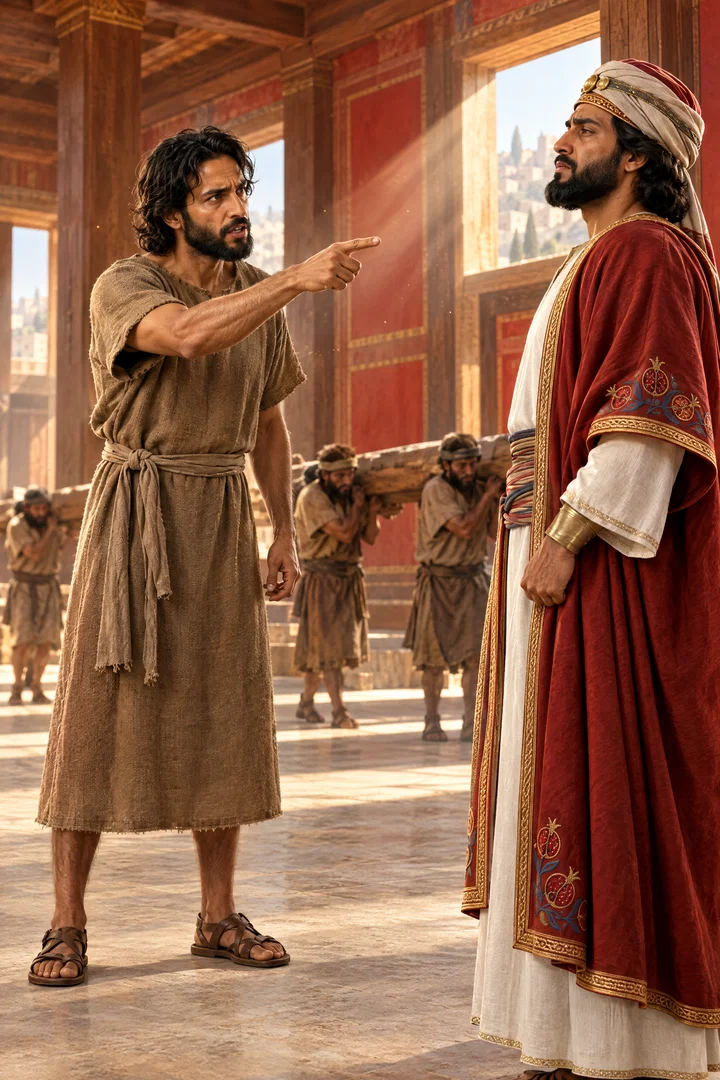
That saith, I will build me a wide house and large chambers, and cutteth him out windows; and it is cieled with cedar, and painted with vermilion.
Translations
That says, I will build me a wide house and large chambers, and cuts him out windows; and it is paneled with cedar, and painted with vermilion.
That saith, I will build me a wide house and large chambers, and cutteth him out windows; and it is cieled with cedar, and painted with vermilion.
That saith, I will build me a wide house and large chambers,
And cutteth him out windows;
And it is cieled with cedar, and painted with vermilion.That saith, I will build me a wide house and large chambers, and cutteth him out windows; and it is ceiled with cedar, and painted with vermilion.
that saith, I will build me a wide house and spacious chambers, and cutteth him out windows; and it is cieled with cedar, and painted with vermilion.
that saith, I will build me a wide house and spacious chambers, and cutteth him out windows; and it is ceiled with cedar, and painted with vermilion.
Who is saying, 'I build for myself a large house, And airy upper chambers,' And he hath cut out for himself its windows, Ceiled with cedar, and painted with vermilion.
that saith, I will build me a wide house, and spacious upper chambers; and he cutteth out for himself windows; and it is wainscoted with cedar, and painted with vermilion.
Who saith—I will build me a roomy house, with spacious roof-chambers,—So he cutteth him open its windows, And it is covered in with cedar, And he painteth it with vermilion.
Berean Standard Bible, Majority Standard Bible
who says, ‘ I will build myself a great palace,
with spacious upper rooms.’
So he cuts windows in it,
panels it with cedar,
and paints it with vermilion.who says, ‘ I will build myself a wide house and spacious rooms,’
and cuts out windows for himself,
with a cedar ceiling,
and painted with red.Who says, I will make a wide house for myself, and rooms of great size, and has windows cut out, and has it roofed with cedar and painted with bright red.
He saith, I will build me a wide house and large chambers: so he will make him selfe large windowes, and feeling with cedar, and paint them with vermilion.
Douay-Rheims (Challoner revision)
Who saith: I will build me a wide house and large chambers: who openeth to himself windows, and maketh roofs of cedar, and painteth them with vermilion.
Pictures
Commentary
Each commentary is drawn from primary sources: the writings of Ellen G. White and Adventist pioneers and periodicals. Each commentary is separate. Its own words are not a quotation; follow the references to read the source passages.
Ellen G. White
8 sources
The verse records the boastful plan of King Jehoiakim to build for himself a wide, spacious house with large chambers, cut-out windows, cedar paneling and ceiling, and decoration with red or vermilion paint.ST Oct 20, 1914PK 429.2–430.114MR 344.3–345.1MH 337.1Ms 73, 1901, par. 5–6 It was spoken at the very time messages of impending doom were being urged upon princes and people, when he should have been a wise spiritual leader foremost in confession of sin and in reformation and good works, but instead he spent his time in selfish pleasure.PK 429.2–430.1 The display is condemned because it was built through unrighteousness and wrong, by fraud and oppression, including using a neighbor's labor without pay and exploiting workers.ST Oct 20, 1914PK 429.2–430.114MR 344.3–345.1MH 337.1Ms 73, 1901, par. 5–6
The surrounding context identifies covetousness, oppression, violence and the shedding of innocent blood behind the luxury, in contrast to the judgment and justice that should mark a ruler, and outward splendor cannot make such unjust rule acceptable.ST Oct 20, 191414MR 344.3–345.1MH 337.1Ms 73, 1901, par. 5–6 The verse belongs to a plain warning that God lets judgments fall on His people when they walk contrary to Him and will not listen, so that the nations may know themselves to be but men.PK 429.1 That unfaithfulness in rule built on injustice rather than judgment and justice brought scattering among the heathen, desolate land and waste cities, and desolation upon the Jewish nation despite its great light, blessings and prosperity.14MR 344.3–345.1PK 429.1
Applied to the liquor traffic, the verse portrays manufacturers and sellers of intoxicating liquor who enrich themselves through others' misery and poverty.ST Oct 20, 1914ST Oct 20, 1914 Their business is robbery because buyers receive no equivalent or fair return for their money, and every dollar added to the sellers' gains brings a curse to the spender.ST Oct 20, 1914MH 337.2ST Oct 20, 1914 In that application the verse also shows how greed and appetite turn God's gifts of grain and fruit, given for nourishment, into poisons that cause misery and ruin.ST Oct 20, 1914
Sources
Pioneers and periodicals
10 sources
The verse belongs to God's woe against Jehoiakim son of Josiah during Jehoiakim's reign, and the chapter stands before later material in Jeremiah's chronological order.RH Sep 13, 1906ST Jul 12, 1910 It pictures him resolving to build himself a wide, spacious, impressive house with large chambers and rooms, cutting out windows for himself, with cedar ceiling and paneling and decoration painted with vermilion or red, a magnificent palace and elaborate display of wealth.ST Oct 20, 1914RH Sep 13, 1906ST Nov 25, 1908ST Nov 24, 1898 The building is condemned as built by unrighteousness and wrong, by injustice and oppression, specifically by using a neighbor's labor without pay, withholding wages, exploiting and defrauding workers, and building at the people's expense despite their poverty as a nation paying tribute.RH Jul 10, 1916RH Feb 24, 1863RH Sep 13, 1906ST Nov 25, 1908 The surrounding verses expose the wrongs behind the display as eyes and heart set only on covetousness, shedding innocent blood, oppression and violence, and selfish neglect of the justice and care God required.ST Oct 20, 1914STRH Jul 10, 1916RH Sep 13, 1906
Costly cedar and vermilion decoration does not excuse the wrongdoing, and enclosing oneself in cedar does not make one reign.RH Jul 10, 1916ST Nov 25, 1908 The verse warns against prideful ambition and luxury gained at others' expense.ST Nov 25, 1908 Jehoiakim is contrasted with his father Josiah, who ate and drank and did judgment and justice and defended the poor and needy and thereby knew God.RH Sep 13, 1906 Josiah is identified as the last king of Jerusalem who obeyed God's commandments and statutes, with the end of his reign placed in 607 B.C., after which the Jews could no longer keep the release years or jubilees because their kings, people, and land could not be redeemed.SMV 22.1–24.1
Jehoiakim's luxurious building is joined to his cutting up and burning Jeremiah's roll and showing no fear toward the warnings sent him.RH Sep 13, 1906 His self-indulgence and unwillingness to humble himself at reproof explain why he resisted the warning.RH Sep 13, 1906ST Nov 24, 1898 Because he so apostatized, God stopped sending messages to him and sent them directly to the people, decreed that none would lament him as brother or lord, and decreed for him a donkey's burial, dragged and thrown outside Jerusalem's gates.RH Sep 13, 1906 This warns people today who misuse God's messages that they will be passed by while the message goes to the church.RH Sep 13, 1906
Because slavery compels people to work without wages, it falls under the verse's prohibition of building a house and chambers through injustice.RH Feb 24, 1863 The picture of a ruler lavishly building and decorating a spacious house while acting unjustly applies to those who manufacture and sell intoxicating liquor, whose business enriches them through others' misery, poverty, harm and ruin, with the grand house representing wealth and luxury gained at others' expense.ST Oct 20, 1914STST Oct 20, 1914RH Jul 10, 1916 Applied to the liquor trade, the verse portrays a business that robs others, since the money gained brings no fair return and every dollar gained adds a curse to the spender.ST Oct 20, 1914 It shows how greed and appetite turn God's gifts of grain and fruit, given for nourishment, into poisons that cause misery and ruin.ST Oct 20, 1914
Sources