Jeremiah 24:2
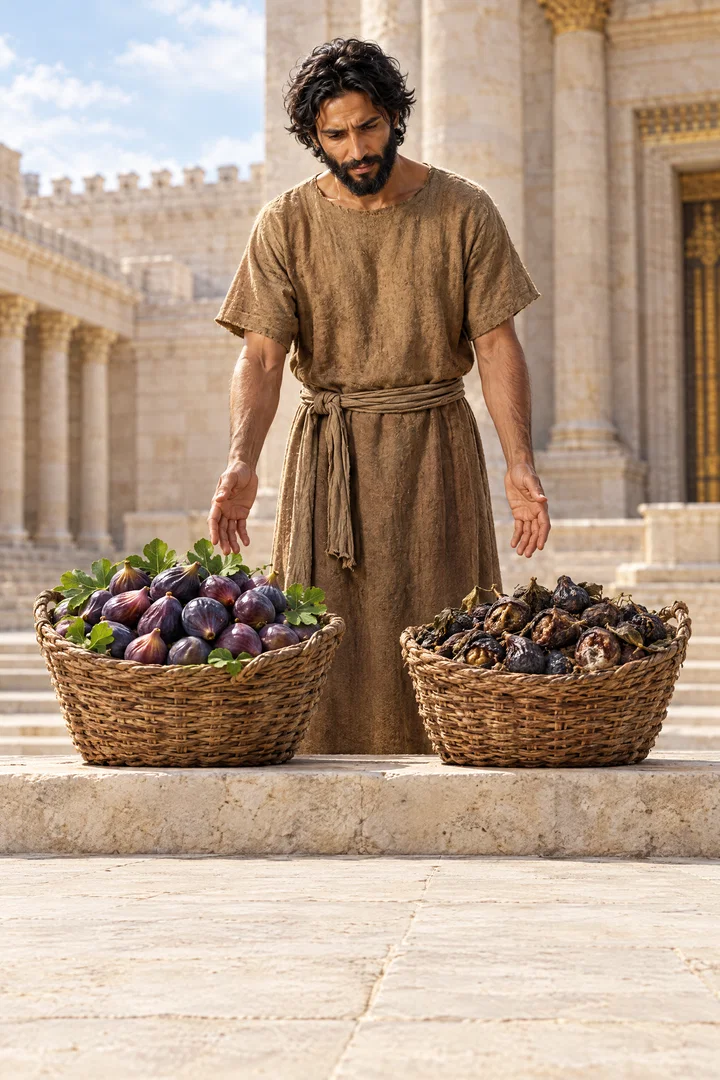
One basket had very good figs, even like the figs that are first ripe: and the other basket had very naughty figs, which could not be eaten, they were so bad.
Translations
American King James Version, King James Version, KJV Cambridge Paragraph Bible
One basket had very good figs, even like the figs that are first ripe: and the other basket had very naughty figs, which could not be eaten, they were so bad.
One basket had very good figs, even like the figs that are first ripe: and the other basket had very poor figs, which could not be eaten, they were so bad.
One basket had very good figs, like the figs that are first ripe: and the other basket had very bad figs, which could not be eaten, they were so bad.
American Standard Version, World English Bible
One basket had very good figs, like the figs that are first-ripe; and the other basket had very bad figs, which could not be eaten, they were so bad.
In the one basket [are] figs very good, like the first-ripe figs, and in the other basket [are] figs very bad, that are not eaten for badness.
One basket had very good figs, like the figs first ripe; and the other basket had very bad figs, which could not be eaten for badness.
the one basket, was of very good figs, like the first-ripe figs; and, the other basket, was of very bad figs, which could not be eaten for badness.
Berean Standard Bible, Majority Standard Bible
One basket had very good figs, like those that ripen early, but the other basket contained very poor figs, so bad they could not be eaten.
One basket had very good figs, like the figs which first come to growth: and the other basket had very bad figs, so bad that they were of no use for food.
One basket had verie good figges, euen like the figges that are first ripe: and the other basket had verie naughtie figges, which could not be eaten, they were so euill.
Douay-Rheims (Challoner revision)
One basket had very good figs, like the figs of the first season: and the other basket had very bad figs, which could not be eaten, because they were bad.
Pictures
Cross-references
- Jeremiah 24:8-10
And as the evil figs, which cannot be eaten, they are so evil; surely thus saith the LORD, So will I give Zedekiah the king of Judah, and his princes, and the residue of Jerusalem, that remain in this land, and them that dwell in the land of Egypt:
The evil figs represent those scattered and punished by judgment.
- Jeremiah 25:11
And this whole land shall be a desolation, and an astonishment; and these nations shall serve the king of Babylon seventy years.
Both describe Judah’s seventy-year servitude under Babylon.
Commentary
Each commentary is drawn from primary sources: the writings of Ellen G. White and Adventist pioneers and periodicals. Each commentary is separate. Its own words are not a quotation; follow the references to read the source passages.
Ellen G. White
1 source
The other basket contains figs that are so bad they cannot be eaten.Lt 34, 1899, par. 6–10 Those inedible figs represent people who are determined to do unrighteousness.Lt 34, 1899, par. 6–10 They are those whose hearts are estranged from God.Lt 34, 1899, par. 6–10
Sources
Pioneers and periodicals
5 sources
One basket held very good figs, like figs first ripe, and the other held very bad figs that could not be eaten because they were so bad, and the difference between them was used as a striking symbol in the warnings to the Jews given in Jeremiah 12 to 24.RH Jul 27, 1916RH Jul 27, 1916 It stands amid the sad conditions in Judah that caused weeping, including false prophets, utter repudiation of the law of God and principles of righteousness, and persecutions of Jeremiah himself, left on record to show the enormity of sin and its sure consequences.ST Jul 29, 1913 From Jeremiah 20 onward the chapters are not in chronological order because of disarrangement when the manuscript was put together in book form, and in chronological order chapter 24 comes after chapter 45 and before chapter 29 in the sequence 22, 23, 25, 26, 35, 36, 45, 24, 29, 30, 31, as part of the story of Jeremiah's experiences in Judah.ST Jul 29, 1913
The verse presents two classes of Judah's exiles and of God's people: the very good figs are those already taken captive to Babylon for their good, whom the Lord would watch over for good and bring back again, while the very bad figs are those remaining in Jerusalem and the land, including Zedekiah the king and his princes, who would be given up to become a reproach.RH Oct 22, 1861ST Jul 26, 1910 The good figs are to be restored and given a heart to know God, and the bad figs include those in Egypt who would be scattered for their hurt and become a reproach and a taunt, so that the distinction is between a class to be gathered and a class not to be gathered.RH Oct 22, 1861
The good figs were taken at the beginning of the seventy years and were treated like princes and given the best in the kingdom.ST Jul 26, 1910 The bad figs were to suffer because of continued obstinacy, with Nebuchadnezzar coming again as he had already come once and the whole land becoming a desolation.ST Jul 26, 1910 Its warning and appeal, with assurance of the heavenly Father's kindness and everlasting love, applies to the present day.RH Jul 27, 1916
Sources