Jeremiah 24:3
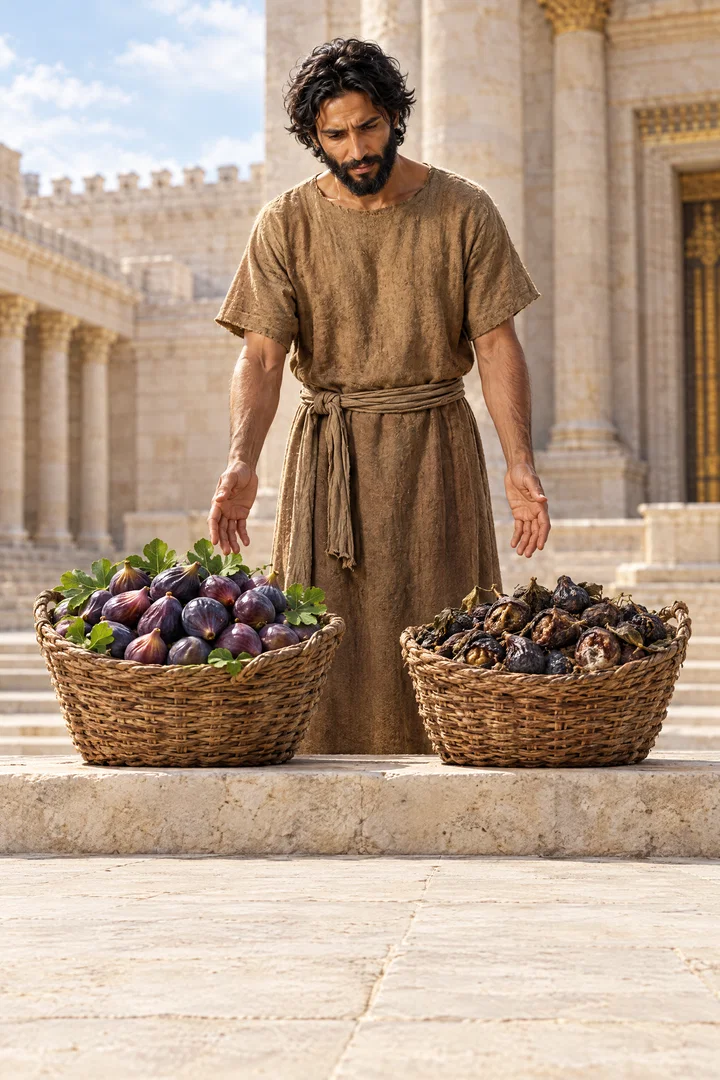
Then said the LORD unto me, What seest thou, Jeremiah? And I said, Figs; the good figs, very good; and the evil, very evil, that cannot be eaten, they are so evil.
Translations
Then said the LORD to me, What see you, Jeremiah? And I said, Figs; the good figs, very good; and the evil, very evil, that cannot be eaten, they are so evil.
Then said the LORD unto me, What seest thou, Jeremiah? And I said, Figs; the good figs, very good; and the evil, very evil, that cannot be eaten, they are so evil.
Then said the Lord unto me, What seest thou, Jeremiah? And I said, Figs; the good figs, very good; and the evil, very evil, that cannot be eaten, they are so evil.
Then said the LORD to me, What seest thou, Jeremiah? and I said, Figs; the good figs, very good; and the bad, very bad, that cannot be eaten, they are so bad.
Then said the LORD unto me, What seest thou, Jeremiah? And I said, Figs; the good figs, very good; and the bad, very bad, that cannot be eaten, they are so bad.
Then said Jehovah unto me, What seest thou, Jeremiah? And I said, Figs; the good figs, very good; and the bad, very bad, that cannot be eaten, they are so bad.
And Jehovah saith unto me, 'What art thou seeing, Jeremiah?' and I say, 'Figs, the good figs [are] very good, and the bad [are] very bad, that are not eaten for badness.'
And Jehovah said unto me, What seest thou, Jeremiah? And I said, Figs: the good figs very good; and the bad very bad, which cannot be eaten for badness.
Then said Yahweh unto me,—What canst thou see, Jeremiah? And I said, Figs: the good figs, very good; and the bad, very bad, which cannot be eaten, for badness.
Berean Standard Bible, Majority Standard Bible
“ Jeremiah,” the LORD asked, “ what do you see?”“ Figs!” I replied. “ The good figs are very good, but the bad figs are very bad, so bad they cannot be eaten.”
Then the LORD asked me, “ What do you see, Jeremiah?”I said, “ Figs. The good figs are very good, and the bad are very bad, so bad that they can’t be eaten.”
Then the Lord said to me, What do you see, Jeremiah? And I said, Figs; the good figs are very good, and the bad very bad, and of no use for food, they are so bad.
Then saide the Lord vnto mee, What seest thou, Ieremiah? And I said, Figges: ye good figges verie good, and the naughtie verie naughtie, which cannot be eaten, they are so euill.
Douay-Rheims (Challoner revision)
And the Lord said to me: What seest thou, Jeremias? And I said: Figs, the good figs, very good: and the bad figs, very bad, which cannot be eaten because they are bad.
Pictures
Commentary
Each commentary is drawn from primary sources: the writings of Ellen G. White and Adventist pioneers and periodicals. Each commentary is separate. Its own words are not a quotation; follow the references to read the source passages.
Ellen G. White
1 source
The two baskets show the people dwelling in Jerusalem divided into two distinct classes.Lt 34, 1899, par. 6–10 The difference between the very good figs and the very evil figs marks out those who have devoted themselves to unrighteousness.Lt 34, 1899, par. 6–10 They are persons determined to continue in wrongdoing, whose hearts have become estranged from God.Lt 34, 1899, par. 6–10
Sources
Pioneers and periodicals
3 sources
The vision belongs to Jeremiah's experiences in Judah amid false prophets, utter repudiation of the law of God and the principles of righteousness, and persecutions of Jeremiah himself, left to show the awful enormity of sin and its sure consequences.ST Jul 29, 1913 From Jeremiah 20 on the chapters are not in chronological order, and in chronological order Jeremiah 24 follows Jeremiah 45 and comes before Jeremiah 29, in the sequence 22, 23, 25, 26, 35, 36, 45, 24, 29, 30, 31.ST Jul 29, 1913
The question and answer identify the vision's two baskets as figs, one basket holding very good, early-ripe figs, and the other holding very evil figs that cannot be eaten, they are so evil.RH Oct 22, 1861ST Jul 26, 1910 The two kinds represent two classes of Judah's people, later distinguished by their different fates.RH Oct 22, 1861ST Jul 26, 1910
The very good figs are the captives already taken to Babylon at the beginning of the seventy years.RH Oct 22, 1861ST Jul 26, 1910 They were scattered for their good and will be gathered.RH Oct 22, 1861ST Jul 26, 1910 For God would set His eyes upon them for good, treat them like princes with the best in the kingdom, and bring them back again to Jerusalem at the end of the time if faithful.RH Oct 22, 1861ST Jul 26, 1910
The very evil figs that cannot be eaten are King Zedekiah and his princes with those left in Jerusalem, along with those in Egypt.RH Oct 22, 1861ST Jul 26, 1910 They were scattered for their hurt to become a reproach and taunt.RH Oct 22, 1861ST Jul 26, 1910 Because of continued obstinacy in refusing allegiance to Babylon, Nebuchadnezzar would come again as he had come before and the whole land would become a desolation.RH Oct 22, 1861ST Jul 26, 1910
Sources