Jeremiah 28:10
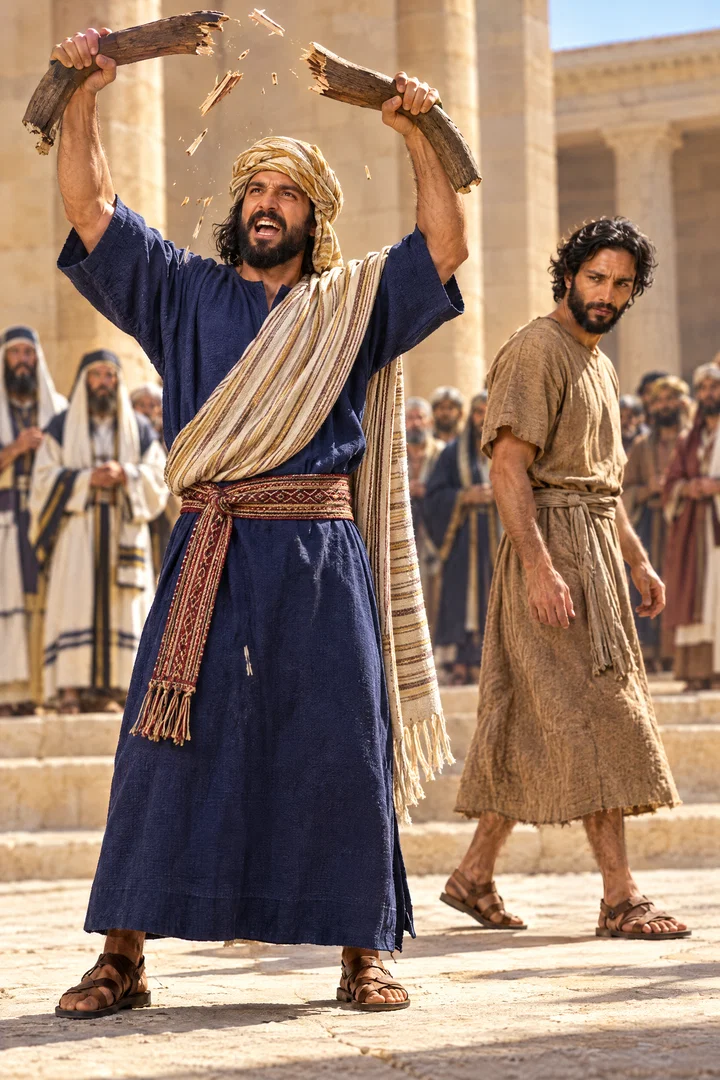
Then Hananiah the prophet took the yoke from off the prophet Jeremiah’s neck, and brake it.
Translations
Then Hananiah the prophet took the yoke from off the prophet Jeremiah’s neck, and broke it.
King James Version, KJV Cambridge Paragraph Bible
Then Hananiah the prophet took the yoke from off the prophet Jeremiah’s neck, and brake it.
Then Hananiah the prophet took the yoke from off the prophet Jeremiah's neck, and broke it.
Revised Version, American Standard Version
Then Hananiah the prophet took the bar from off the prophet Jeremiah’s neck, and brake it.
And Hananiah the prophet taketh the yoke from off the neck of Jeremiah the prophet, and breaketh it,
And the prophet Hananiah took the yoke from off the prophet Jeremiah's neck, and broke it.
Then Hananiah the prophet took the yoke from off the neck of Jeremiah the prophet,—and brake it.
Berean Standard Bible, Majority Standard Bible
Then the prophet Hananiah took the yoke off the neck of Jeremiah the prophet and broke it.
Then Hananiah the prophet took the bar from off the prophet Jeremiah’s neck, and broke it.
Then Hananiah the prophet took the yoke from the neck of the prophet Jeremiah and it was broken by his hands.
Then Hananiah the Prophet tooke the yoke from the Prophet Ieremiahs necke, and brake it.
Douay-Rheims (Challoner revision)
And Hananias the prophet took the chain from the neck of Jeremias the prophet, and broke it.
Pictures
Cross-references
- Jeremiah 27:2-11
Thus saith the LORD to me; Make thee bonds and yokes, and put them upon thy neck,
Jeremiah’s yoke symbolized submission to Babylon, which Hananiah opposed.
- Jeremiah 28:15-17
Then said the prophet Jeremiah unto Hananiah the prophet, Hear now, Hananiah; The LORD hath not sent thee; but thou makest this people to trust in a lie.
Hananiah’s death confirms that his prophecy was false.
Commentary
Each commentary is drawn from primary sources: the writings of Ellen G. White and Adventist pioneers and periodicals. Each commentary is separate. Its own words are not a quotation; follow the references to read the source passages.
Ellen G. White
4 sources
Then Hananiah the prophet taking the yoke from off the prophet Jeremiah's neck and breaking it belongs to the controversy between Jeremiah and the false prophet Hananiah over true and false prophecy during the Babylonian captivity.RH Mar 21, 1907GW92 87.1–2 The yoke involved was the wooden yoke Jeremiah wore as a sign of Judah's and the surrounding nations' subjection to Babylon under Nebuchadnezzar king of Babylon.ST Jun 1, 1876ST Feb 12, 1880 Provoked to anger by Jeremiah's test that a prophet of peace is proved only when his word comes to pass, Hananiah in the presence of all the people publicly took the yoke from Jeremiah's neck and broke it.RH Mar 21, 1907ST Jun 1, 1876ST Feb 12, 1880 By breaking it he signified the false claim that God would break the yoke of Nebuchadnezzar from the necks of all nations within two full years and soon end that rule, promising prosperity.ST Jun 1, 1876ST Feb 12, 1880GW92 87.1–2
The act opposed Jeremiah's severe warning that the people must submit to Babylon for the time God had appointed as the only course by which they could regain God's favor.ST Jun 1, 1876ST Feb 12, 1880GW92 87.1–2 By rejecting Jeremiah's message Hananiah encouraged the people to resist the true prophet's counsel and increased their hostility toward him, so they mocked his words and men in responsible positions denounced him and tried to have him put to death for faithfully delivering God's message to an unbelieving people.ST Feb 12, 1880GW92 87.1–2 After this breaking of the yoke Jeremiah went his way because his work of warning the people of their danger was done.ST Feb 12, 1880 God answered that the wooden yokes would become iron, and Hananiah's claim proved false when he died that year.ST Jun 1, 1876
Sources
Pioneers and periodicals
12 sources
The verse belongs to the prophecies on the fall of Jerusalem given in Jeremiah 25 to 28, and it is part of the account of the conflict between true and false prophecy during the Babylonian captivity.RH Mar 21, 1907RH Jul 27, 1916 The book of Jeremiah is not consistently arranged in chronological order, for up to chapter 20 the chapters are in fairly chronological order, but from chapter 20 to chapter 46 they are out of order.ST Jul 11, 1911ST Jul 29, 1913ST Jul 12, 1910 The present order came when the manuscripts of the different prophecies were gathered together by Ezra and others of the Great Synagogue and were not placed in chronological order, which takes nothing from the inspiration of the book or what it tells.ST Jul 11, 1911
In one proposed chronological ordering, chapter 28 belongs after chapter 27 and before chapter 21.ST Jul 29, 1913 In another statement of the chronology, the chronological place of chapter 28 is after chapters 30 and 31 and before chapter 21.ST Jul 12, 1910 In the fuller statement, its chronological place is after chapters 24, 29, 30, 31 and 27 and before chapter 21, belonging with chapters 28-30.ST Jul 11, 1911
Hananiah openly opposed Jeremiah's warning of the coming captivity, for while Jeremiah wore yokes as a sign of that captivity and of the subjection of Judah and the surrounding nations to Nebuchadnezzar king of Babylon, Hananiah in anger at Jeremiah's test that a prophet of peace is proved only when his word comes to pass took the wooden yoke of subjection from Jeremiah's neck and broke it in front of the people.ST Jun 1, 1876ST Feb 12, 1880RH Mar 11, 1875 He did this in the temple before the priests and the people, speaking in the name of Jehovah with eloquent speech and using the eloquent symbol of breaking the yoke to demonstrate that Jeremiah's prophecies were all wrong.ST Dec 23, 1886 By the act he dramatized his false claim that God would break the yoke of Nebuchadnezzar from the necks of all nations and soon end that rule within two full years, resisting the message God had given through Jeremiah that Judah and the nations around should submit to Babylon for the time God had appointed.ST Jun 1, 1876ST Feb 12, 1880RH Mar 11, 1875 This opposition by other prophets encouraged King Zedekiah and his officers to reject Jeremiah's prediction that Jerusalem would fall into the hands of Babylon.ST Aug 16, 1905 Hananiah's breaking of the yoke belongs to teaching what is not true, prophesying lies in God's name, and making the people trust in a lie, and such teachers may themselves be deceived, but the lies they tell still destroy the souls that believe them.RH Apr 27, 1916
God answered that the wooden yokes would become iron, and the bitter sequel proved Jeremiah right and Hananiah wrong when Hananiah's claim proved false and he died that year.ST Jun 1, 1876ST Dec 23, 1886ST Oct 29, 1885 After the act Jeremiah quietly went his way and left Hananiah to exult as victor, and his departure did not mean Hananiah had proved him wrong.ST Dec 23, 1886ST Oct 29, 1885 It showed that one who knows he is on the Lord's side and has spoken the Lord's truth can afford to be seemingly silenced, and that his work was done, having warned the people of their danger and pointed out the only course by which they could regain God's favor, though they mocked his words and men in responsible positions denounced him and tried to have him put to death.ST Feb 12, 1880ST Dec 23, 1886 The verse means that Christians in the midst of scoffers who claim there is no God, the Bible is a fiction, and immortality is a dream should, having once delivered testimony, quietly go their way rather than spend precious time in fruitless parleying, letting enemies of God's truth enjoy a cheap temporary triumph, knowing truth is sure beyond brilliant arguments, cutting sneers, and witty gibes and waiting quietly for the time that will justify all truth and shame all falsehood.ST Dec 23, 1886
Sources