Jeremiah 52:7
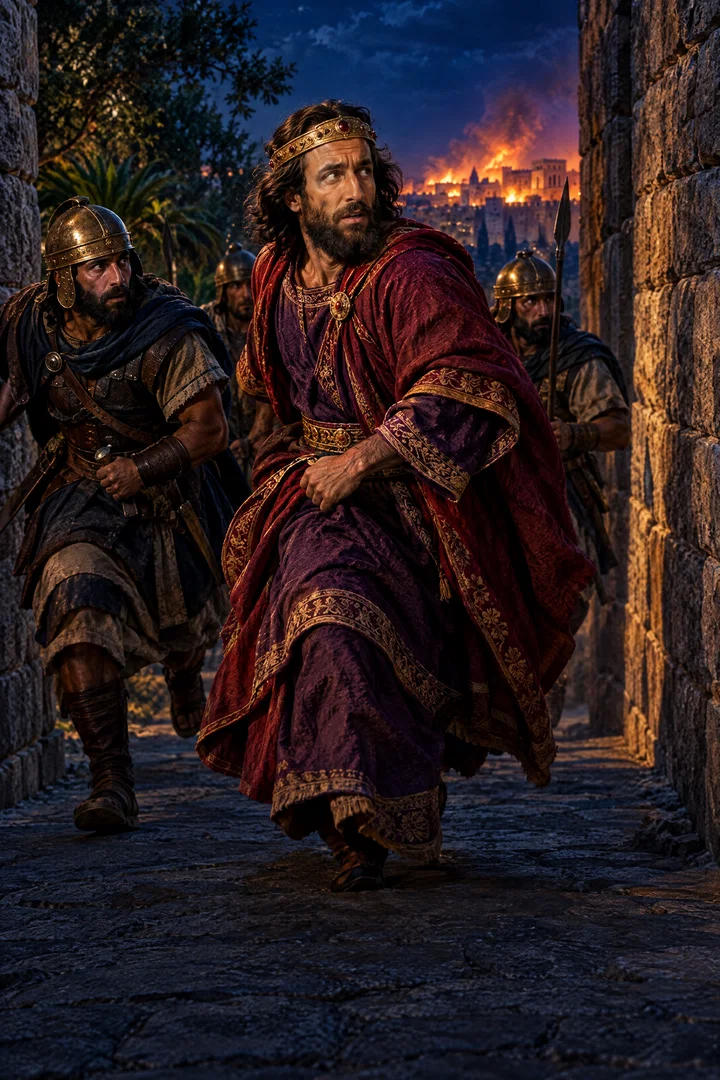
Then the city was broken up, and all the men of war fled, and went forth out of the city by night by the way of the gate between the two walls, which was by the king’s garden; (now the Chaldeans were by the city round about:) and they went by the way of the plain.
Translations
American King James Version, King James Version, KJV Cambridge Paragraph Bible
Then the city was broken up, and all the men of war fled, and went forth out of the city by night by the way of the gate between the two walls, which was by the king’s garden; (now the Chaldeans were by the city round about:) and they went by the way of the plain.
Then the city was broken up, and all the men of war fled, and went forth from the city by night by the way of the gate between the two walls, which was by the king's garden; (now the Chaldeans were by the city on all sides:) and they went by the way of the plain.
Then a breach was made in the city, and all the men of war fled, and went forth out of the city by night by the way of the gate between the two walls, which was by the king’s garden; ( now the Chaldeans were against the city round about:) and they went by the way of the Arabah.
Then a breach was made in the city, and all the men of war fled, and went forth out of the city by night by the way of the gate between the two walls, which was by the king’s garden ( now the Chaldeans were against the city round about); and they went toward the Arabah.
then is the city broken up, and all the men of war flee, and go forth from the city by night, the way of the gate between the two walls, that [is] by the king's garden — and the Chaldeans [are] by the city round about — and they go the way of the plain.
And the city was broken into: and all the men of war fled, and went forth out of the city by night, by the way of the gate between the two walls, which was by the king's garden (now the Chaldeans were near the city round about); and they went the way toward the plain.
then was the city broken up, and all the men of war, beginning to flee went forth out of the city by night, by way of the gate between the two walls which was by the garden of the king ()the Chaldeans being near the city round about),—and they went the way towards the Waste Plain.
Berean Standard Bible, Majority Standard Bible
Then the city was breached; and though the Chaldeans had surrounded the city, all the men of war fled the city by night by way of the gate between the two walls near the king’s garden.They headed toward the Arabah,
Then a breach was made in the city, and all the men of war fled, and went out of the city by night by the way of the gate between the two walls, which was by the king’s garden. Now the Chaldeans were against the city all around. The men of war went toward the Arabah,
Then an opening was made in the wall of the town, and all the men of war went in flight out of the town by night through the doorway between the two walls which was by the king's garden; (now the Chaldaeans were stationed round the town:) and they went by the way of the Arabah.
Then the citie was broken vp and all the men of warre fled, and went out of the citie by night, by the way of the gate betweene the two walles, which was by the kings garden: (now the Caldeans were by the citie round about) and they went by the way of the wildernes.
Douay-Rheims (Challoner revision)
And the city was broken up, and the men of war fled, and went out of the city in the night by the way of the gate that is between the two walls, and leadeth to the king’s garden, ( the Chaldeans besieging the city round about,) sad they went by the way that leadeth to the wilderness.
Pictures
Cross-references
- Jeremiah 39:2
And in the eleventh year of Zedekiah, in the fourth month, the ninth day of the month, the city was broken up.
Also records Jerusalem’s capture.
- 2 Kings 25:3
And on the ninth day of the fourth month the famine prevailed in the city, and there was no bread for the people of the land.
Also dates the city’s capture to the fourth month.
Commentary
Each commentary is drawn from primary sources: the writings of Ellen G. White and Adventist pioneers and periodicals. Each commentary is separate. Its own words are not a quotation; follow the references to read the source passages.
Pioneers and periodicals
11 sources
The city was broken up while the Chaldeans surrounded it, and all the men of war fled by night through the gate between the two walls by the king's garden and went by the way of the plain.ST May 2, 1906ST May 23, 1906ST Dec 8, 1898ST Jun 21, 1883ST Nov 19, 1902 The verse belongs to the account of Judah's captivity completed under Zedekiah, Jerusalem's last king, when the city was destroyed and Zedekiah was taken prisoner in Babylon.ST Dec 8, 1898 The fall came after a year and a half of renewed siege and blockade, and no further detail is given about the escape it describes.RH Apr 30, 1908
The capture happened in the fourth month, and that event was mourned with a fast in the fourth month during the captivity.ST Jun 21, 1883ST Nov 19, 1902 The nighttime is explicitly called night, with the Hebrew word lah-yil, rather than being called day.RH Dec 12, 1871 The destruction was God's judgment on Jerusalem because the people would not keep the Sabbath holy, fulfilling the prophecy that the city would stand forever if they bore no burdens on the Sabbath but would be destroyed if they refused to listen, which came to pass within a few years.RH Apr 7, 1851 The verse is part of the account of Babylon's fall and judgment.ST Jun 27, 1906ST May 23, 1906
The daughters of Babylon are part of Babylon itself, just as the daughters of Jerusalem are part of Jerusalem and the daughters of Rabbah are part of Rabbah, so the daughters of mystic Babylon are part of the great Babylon to be thrown down like a millstone cast into the sea.RH Sep 2, 1851 That great Babylon embraces all corrupt Christianity, which, having rejected the announcement that the hour of judgment is come, was left forever by the Spirit, after which God's people are called out and destruction immediately follows.RH Sep 2, 1851 The account serves as a lesson and warning of the judgment and doom that comes upon cities and places that forget and defy God.ST May 2, 1906ST May 23, 1906ST Jun 27, 1906ST May 23, 1906 The warning applies to cities and people who ignore repeated calls to turn from wickedness, whose warnings may go unheeded until their doom comes.ST Jun 27, 1906ST May 23, 1906
Sources