Job 31:20
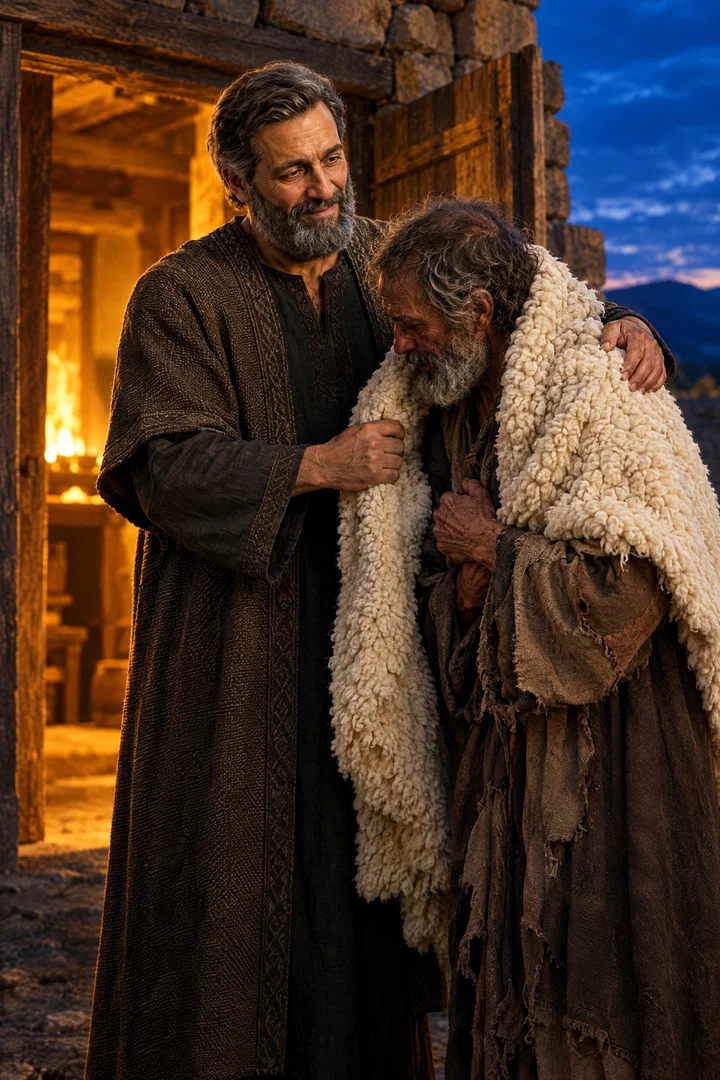
If his loins have not blessed me, and if he were not warmed with the fleece of my sheep;
Translations
American King James Version, King James Version, Revised Version
If his loins have not blessed me, and if he were not warmed with the fleece of my sheep;
If his loins have not blessed me,
And if he were not warmed with the fleece of my sheep;If his loins have not blessed me, and if he hath not been warmed with the fleece of my sheep;
If his loins have not blessed me,
And if he hath not been warmed with the fleece of my sheep;If his loins have not blessed me, And from the fleece of my sheep He doth not warm himself,
If his loins have not blessed me, and if he were not warmed with the fleece of my lambs;
If his loins did not bless me, or if, with the fleece of my lambs, he did not warm himself;
Berean Standard Bible, Majority Standard Bible
if his heart has not blessed me
for warming him with the fleece of my sheep,if his heart hasn’t blessed me,
if he hasn’t been warmed with my sheep’s fleece;If his back did not give me a blessing, and the wool of my sheep did not make him warm;
If his loynes haue not blessed me, because he was warmed with the fleece of my sheepe,
Douay-Rheims (Challoner revision)
If his sides have not blessed me, and if he were not warmed with the fleece of my sheep:
Pictures
Commentary
Each commentary is drawn from primary sources: the writings of Ellen G. White and Adventist pioneers and periodicals. Each commentary is separate. Its own words are not a quotation; follow the references to read the source passages.
Pioneers and periodicals
7 sources
The verse belongs to Job's appeal to his upright conduct, part of his challenge in Job 31:5-40 for anyone to find a stain in his moral character.RH Dec 22, 1868 He points to the needy being clothed and warmed with the wool or fleece of his sheep, so that their loins or bodies blessed him, as evidence that he had cared for people in need and had not neglected them.RH Jan 5, 1911RH Dec 22, 1868ST Mar 27, 1893RH Mar 28, 1912
Though one of the richest men of his day, he did not trust in his riches nor rejoice because his wealth was great, but trusted in the living God and remembered that it was He who gives power to get wealth.ST Jul 7, 1887 He measured the right use of wealth by whether the poor, the needy, the fatherless, and the widow were blessed, always viewing riches only as a means of caring for them rather than as an object of trust or pride.ST Jul 7, 1887ST Aug 18, 1887 The verse thus presents practical kindness and provision for people in need as evidence of an upright life.ST Mar 27, 1893
Honesty means more than being free from debt to fellow men, and Job's protestation of his integrity is stronger proof of what makes a man honest.ST Mar 2, 1882 While the verse illustrates his record of doing good, recounting such deeds to defend himself risks trusting in his own works and taking glory that belongs to God.RH Mar 28, 1912 Blessings are given so they can be passed on to others.RH Mar 28, 1912
Sources