Job 41:17
They are joined one to another, they stick together, that they cannot be sundered.
Translations
American King James Version, King James Version, Webster Bible
They are joined one to another, they stick together, that they cannot be sundered.
They are joined one to another,
They stick together, that they cannot be sundered.They are joined one to another; they stick together, that they cannot be sundered.
They are joined one to another;
They stick together, so that they cannot be sundered.One unto another they adhere, They stick together and are not separated.
They are joined each to its fellow; they stick together, and cannot be sundered.
Each to its fellow, they cleave, they grasp each other, and cannot be parted;
Berean Standard Bible, Majority Standard Bible
They are joined to one another;
they clasp and cannot be separated.They are joined to one another.
They stick together, so that they can’t be pulled apart.They take a grip of one another; they are joined together, so that they may not be parted.
When the sword doeth touch him, he will not rise vp, nor for the speare, dart nor habergeon.
Douay-Rheims (Challoner revision)
They stick one to another and they hold one another fast, and shall not be separated.
Pictures
Commentary
Each commentary is drawn from primary sources: the writings of Ellen G. White and Adventist pioneers and periodicals. Each commentary is separate. Its own words are not a quotation; follow the references to read the source passages.
Ellen G. White
1 source
This verse stands among God's inspired questions that no human intellect, however great, and no scholarship, however profound, can answer.MH 431.2–3 It was not posed in order to receive an answer, but to direct attention to the deep mysteries of God and to teach the limitation of human wisdom.MH 431.2–3 Even in the familiar surroundings of daily life there are many things that lie beyond the comprehension of finite beings.MH 431.2–3
It makes known the infinite power by which God reveals Himself, a power to be acknowledged as much in what He withholds from view as in what He opens to limited human comprehension.MH 431.2–3 In both divine revelation and in nature He thus sets forth mystery for the purpose of commanding faith.MH 431.2–3 Human beings may be ever searching, ever inquiring, and ever learning, and still an infinity remains beyond them.MH 431.2–3
Sources
Pioneers and periodicals
9 sources
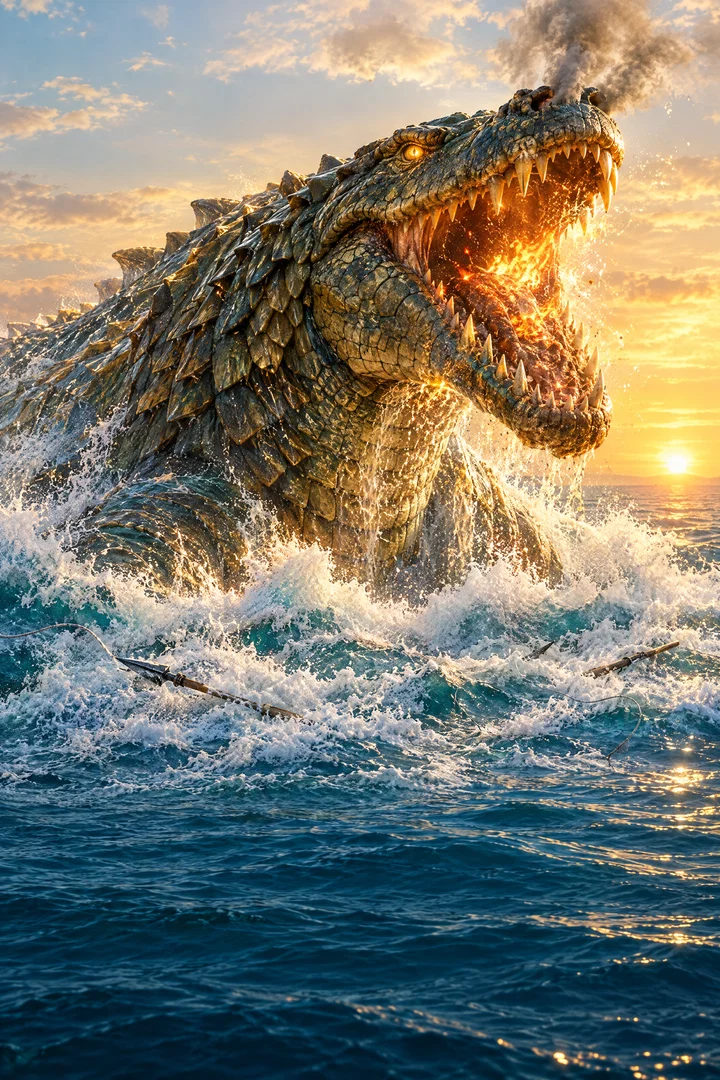
The verse describes the physical structure of Leviathan, generally identified as the crocodile, whose closely sticking joined parts are its joined scales.ST It belongs to God's speech to His servant Job in Job 38-41, given when Job had asked that the Almighty come and speak to him as a man.ST Jul 22, 1908 God condescended to set before him common things constantly before him which he could not understand, showing Job's folly in questioning God's providences while aiming at his understanding and disclosing wonderful revelations.ST Jul 22, 1908
The verse belongs to God's questions about the beasts and great creatures of the earth and sea, which show Job how small he is beside God and how little he knows and how great God's power is.ST Jun 24, 1913RH Apr 4, 1912 Those questions leave him unable to answer and teach him to trust God whatever may come.ST Jun 24, 1913RH Apr 4, 1912 The Lord's speech to which the verse belongs displays His power and wisdom, from which His goodness is known, and was spoken not only for Job's sake but for all who should come after.
Leviathan is one example of God's creative works in nature, and from the mighty creature in the water to the smallest thing, creation speaks of God's power.ST Jun 26, 1893 God's speech to Job does not directly reply to the arguments about suffering yet solves the problem by showing from all nature His goodness, love, and tender care for all His works.ST Apr 10, 1893 It exposes the littleness of human wisdom and shows that affliction is not punishment for sin but disciplinary, bringing Job to see God's care and to bow in sweet submission to the divine will, trusting God though he cannot understand.ST Apr 10, 1893
Leviathan is connected with the creatures and natural forces involved in the Flood catastrophe as described in the Enoch fragment.ST Jun 11, 1912 Leviathan is used as an image for a ponderous, heavily armored battleship which, like the whale and the sluggish ox, can be made helpless by a smaller, faster enemy able to strike a mortal blow.ST Oct 31, 1900 The verse describes things joined so firmly that they cannot be separated, and the image is applied to the Catholic Church and the United States as like barnacles clinging to Leviathan, with their destinies bound together so that they must sink or swim together.ST Sep 11, 1907
Sources