Joel 1:19
O LORD, to thee will I cry: for the fire hath devoured the pastures of the wilderness, and the flame hath burned all the trees of the field.
Translations
O LORD, to you will I cry: for the fire has devoured the pastures of the wilderness, and the flame has burned all the trees of the field.
King James Version, Webster Bible
O LORD, to thee will I cry: for the fire hath devoured the pastures of the wilderness, and the flame hath burned all the trees of the field.
O Lord, to thee will I cry:
For the fire hath devoured the pastures of the wilderness,
And the flame hath burnt all the trees of the field.O LORD, to thee do I cry: for the fire hath devoured the pastures of the wilderness, and the flame hath burned all the trees of the field.
O Jehovah, to thee do I cry; for the fire hath devoured the pastures of the wilderness, and the flame hath burned all the trees of the field.
Unto Thee, O Jehovah, I do call, For fire hath consumed comely places of a wilderness, And a flame hath set on fire all trees of the field.
To thee, Jehovah, do I cry; for the fire hath devoured the pastures of the wilderness, and the flame hath burned up all the trees of the field.
Unto thee, O Yahweh, will I cry,—for, a fire, hath consumed the pastures of the wilderness, and, a flame, hath set ablaze all the trees of the field.
Berean Standard Bible, Majority Standard Bible
To You, O LORD, I call,
for fire has consumed the open pastures
and flames have scorched all the trees of the field.LORD, I cry to you,
for the fire has devoured the pastures of the wilderness,
and the flame has burned all the trees of the field.O Lord, my cry goes up to you: for fire has put an end to the grass-lands of the waste, and all the trees of the field are burned with its flame.
O Lord, to thee will I crie: for the fire hath deuoured the pastures of the wildernesse, and the flame hath burnt vp all the trees of the fielde.
Douay-Rheims (Challoner revision)
To thee, O Lord, will I cry: because fire hath devoured the beautiful places of the wilderness, and the flame hath burnt all the trees of the country.
Pictures
Cross-references
- Joel 1:10-12
The field is wasted, the land mourneth; for the corn is wasted: the new wine is dried up, the oil languisheth.
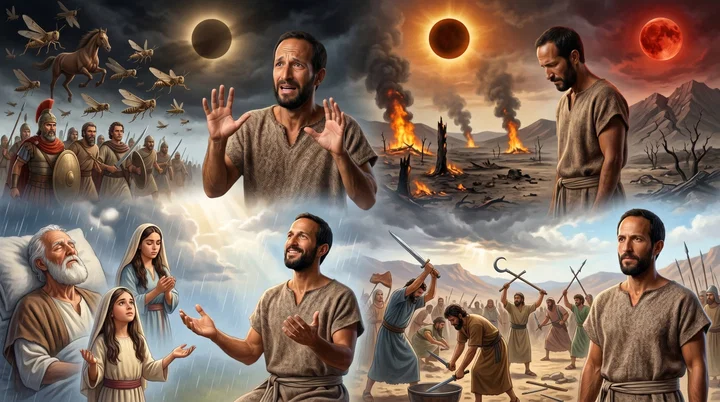
The ruined harvest and withered trees depict the land’s devastation.
- Joel 2:3
A fire devoureth before them; and behind them a flame burneth: the land is as the garden of Eden before them, and behind them a desolate wilderness; yea, and nothing shall escape them.
Both describe fire devouring the land as the approaching day brings destruction.
- Jeremiah 9:10
For the mountains will I take up a weeping and wailing, and for the habitations of the wilderness a lamentation, because they are burned up, so that none can pass through them; neither can men hear the voice of the cattle; both the fowl of the heavens and the beast are fled; they are gone.
Both describe wilderness and mountains burned by fire.
- Revelation 16:8-9
And the fourth angel poured out his vial upon the sun; and power was given unto him to scorch men with fire.
The fourth vial’s fierce heat echoes Joel’s burning desolation.
- Joel 2:20
But I will remove far off from you the northern army, and will drive him into a land barren and desolate, with his face toward the east sea, and his hinder part toward the utmost sea, and his stink shall come up, and his ill savour shall come up, because he hath done great things.
The northern army is identified with the devouring pests.
Commentary
Each commentary is drawn from primary sources: the writings of Ellen G. White and Adventist pioneers and periodicals. Each commentary is separate. Its own words are not a quotation; follow the references to read the source passages.
Ellen G. White
3 sources
The verse portrays fire devouring the pastures of the wilderness.Ms 110, 1893, par. 13GC 627.3–628.2GC88 627.2–628.2 Its flame burns all the trees of the field.Ms 110, 1893, par. 13GC88 627.2–628.2 Amid this devastation a cry is made to the Lord.Ms 110, 1893, par. 13 It is a prophecy of the condition of the world just before the second coming, describing the fearful condition of the earth under the final plagues.Ms 110, 1893, par. 13GC 627.3–628.2GC88 627.2–628.2
In that time drought leaves the rivers dry.GC 627.3–628.2 In that time the sun scorches people with great heat, and the vegetation and water of the land are devastated.GC88 627.2–628.2 This devastation occurs just before God's people are delivered.GC 627.3–628.2GC88 627.2–628.2
Sources
Pioneers and periodicals
42 sources
It is a cry to the Lord when fire has eaten up the wilderness pastures and flame has burned every tree of the field.ST Jul 30, 1885ST May 27, 1875RH Mar 23, 1852 The burning is terrible drought and famine, with scorching heat withering seed and crops, perplexing cattle, desolating sheep flocks, drying waters, and distressing land, animals and people.RH Feb 18, 1875RH Jan 29, 1857ST May 27, 1875ST Oct 17, 1878RH Aug 23, 1864 It belongs to the severe calamity just before the day of the Lord and Christ's second coming, when that day is near at hand as destruction from the Almighty.ST Jul 30, 1885RH Mar 23, 1852ST Nov 8, 1905 The fire is supernatural power given to the heat of the sun when the fourth of the seven last plagues is poured upon the sun to scorch men with fire, evaporating streams and rivers, withering forests, destroying vegetation, bringing famine, and leaving cattle and sheep without pasture.RH Feb 18, 1875ST Oct 17, 1878RH Feb 18, 1875RH Sep 2, 1852 The cry means He is the only source of hope, help and support in that time of trouble, and the righteous who take His shelter will witness the fire poured out on the wicked while being protected and provided for.ST May 27, 1875RH Feb 18, 1875ST Jan 20, 1887ST May 27, 1875ST Feb 13, 1901
Wording and Immediate Setting
The verse is a cry to the Lord in the midst of devastation, when fire has consumed the pastures of the wilderness and flame has burned all the trees of the field, leaving land and animals in distress.ST Jul 30, 1885ST May 27, 1875RH Mar 23, 1852ST Sep 26, 1911RH Apr 28, 1904 The burning belongs to the severe calamity just before the day of the Lord, and its picture of scorched land is made plain by severe dry-season conditions such as those in southern Jamaica.ST Jul 30, 1885RH Apr 28, 1904ST Dec 22, 1914 Fire and drought devastate the wilderness pastures and burn the field trees, bringing crop destruction and resulting suffering among people and animals.ST Dec 22, 1914
The surrounding scene is one of withered and unfruitful seed and failed crops, scarcity and failure of pasture, perplexed and groaning cattle without feed, desolate flocks of sheep, dried-up waters and rivers, and distress of land, animals, and people.RH Feb 18, 1875RH Jan 29, 1857RH Mar 31, 1868ST Feb 3, 1887ST May 27, 1875 The beasts cry to God because the pastures are consumed, and the picture is joined to the land mourning and its creatures languishing when the end of the world is impending.ST Feb 3, 1887ST May 27, 1875 This barrenness of pasture and food leaves animals groaning in distress and belongs with famine, death, and mourning among the final judgments.RH Feb 18, 1875ST May 27, 1875
The burning describes terrible drought and consequent famine, with scorching heat and fire consuming wilderness pastures and trees and bringing suffering and ruin upon the animal and vegetable kingdoms.ST May 27, 1875ST Oct 17, 1878RH Aug 23, 1864RH Jan 2, 1913RH Mar 12, 1867 The land becomes barren, crops fail, and cattle and sheep perish without pasture so that people are left without food, according to a prophecy of famine coming on the earth by the word of the Lord.ST Oct 17, 1878RH Aug 23, 1864 The same famine is applied to a future crisis when epidemics kill off cattle and eating flesh is unsafe.RH Mar 12, 1867 The devastation shows the land under the curse and the desolation and curses resting on the earth through sin.ST Sep 26, 1911RH Aug 17, 1876
The devouring is literal destruction by drought, heat, and pests, including destructive insects faced in the present and to be faced increasingly in the future, not a figure for an army of men.ST Sep 23, 1913 The fire is a partial and superficial surface burning belonging to a first conflagration near Christ's second coming, timed by the day of the Lord at hand as a destruction from the Almighty, perhaps brought about by natural causes such as continued drought.RH May 6, 1858RH May 6, 1858 It is distinct from the later universal melting of the elements into a lake of liquid fire after the thousand years, and as unfulfilled prophecy it gives a partial clue to events at and near the first conflagration.RH May 6, 1858RH May 6, 1858 It is joined with the drying up of rivers of water and the crying of the beasts of the field to God, with groaning and perplexity of herds of cattle and desolation of flocks of sheep for loss of pasture, matching the burning of the mountains and habitations of the wilderness that leaves none passing through and drives cattle, birds, and beasts away.RH May 6, 1858RH May 6, 1858 Its fiery effect resembles the work of locusts, whose devastation after stripping the land already looks like a conflagration, with scorching heat drying the land, withering forests, evaporating rivers and streams, drying the face of nature, and leaving cattle and sheep without pasture to groan in perplexity.ST May 27, 1875RH Feb 18, 1875ST May 27, 1875
Prophetic Time and Place
The cry amid burning pastures and burned trees belongs to the severe calamity just before the day of the Lord and Christ's second coming.ST Jul 30, 1885RH Mar 23, 1852ST Nov 8, 1905ST Jan 20, 1887RH Mar 31, 1868 That day is near and at hand as a destruction from the Almighty, bringing crop failure, scarcity of pasture, famine, dried waters, and distress of land, animals, and people.ST Jul 30, 1885RH Mar 31, 1868ST Feb 3, 1887 It is the time of trouble before the Lord's coming, described as the time of the plagues and vials before Christ comes to take vengeance.ST Jan 20, 1887RH Mar 31, 1868 Its fulfillment is at the commencement of the day of the Lord, before the thousand years begin at the resurrection of the just.RH Jan 29, 1857 That time of trouble comes just before the land is restored with its precious fruits for man and beast, Israel is gathered and delivered as God's people, and God's Spirit is poured out on all the living saints of every name.RH Jan 29, 1857
It is a typical work before the Lord comes, following after the third angel's message and connected with the day of atonement and the feast of tabernacles, not belonging to immortal saints.RH Sep 11, 1856 It portrays the devastation of the earth when Jesus comes, whose fearful marks remain on the earth's surface until a thousand years have passed.ST Oct 11, 1905ST Oct 11, 1905 Then the righteous have been taken away and the living wicked destroyed, so that no living human being remains on earth, with vegetation withered and streams dried up.ST Oct 11, 1905 The famine and burning belong with death and mourning among the last judgments upon great Babylon.RH Feb 18, 1875ST May 27, 1875 The same passage also points to the final battle to be fought at Jerusalem, when the heathen are wakened to come up to the valley of Jehoshaphat.RH Dec 2, 1862
The chapter foretells a general, worldwide, unaccountable wasting of crops, pastures, orchards, and trees, falling on whole fields at once and from every quarter.ST Nov 8, 1905RH Apr 16, 1861 Scientific men cannot explain or remedy it, leaving the potato crop uncertain and farmers obliged to buy seed, blighting apple trees, and bringing distress and famine.RH Apr 16, 1861 The potato blight and fruit blight are forerunners of its fulfillment, and its descriptions of ruined crops and withered plants are substantiated by crop-destroying insects and other agricultural disasters.ST Nov 8, 1905RH Apr 16, 1861 Destructive insects will accompany the plagues when God's restraining power is withdrawn, applying to pests faced in the present and increasingly in the future.ST Sep 23, 1913
Fourth Plague Fulfillment
The devouring of the wilderness pastures and the burning of all the trees of the field is supernatural power given to the heat of the sun when the fourth of the seven last plagues is poured upon the sun to scorch men with fire.RH Feb 18, 1875RH Feb 18, 1875RH Sep 2, 1852RH Dec 2, 1862 It comes in terrible drought and consequent famine just before the day of the Lord, consuming the land as if by conflagration, leaving seed unfruitful and withered, cattle perplexed without pasture, and waters dried up.RH Feb 18, 1875RH Feb 18, 1875 The locust devastation that precedes it already looks like a conflagration, and the cry to the Lord declares Him the only source of hope and help in that time, so that those with no interest in Him are without hope.RH Feb 18, 1875RH Feb 18, 1875 The scorching is literal heat that withers vegetation and brings famine, with its damage to trees predicting the destruction of the land under the fourth plague and fourth vial.RH Sep 2, 1852RH Dec 2, 1862
That scorching evaporates streams and rivers, withers forests, dries the face of nature, destroys vegetation, and brings famine and loss of food.RH Feb 18, 1875RH Feb 18, 1875RH Mar 19, 1901 The land becomes barren and crops fail, so that cattle and sheep perish without pasture and groan in perplexity.RH Feb 18, 1875ST Oct 17, 1878RH Feb 18, 1875 The crying to the Lord because fire has consumed the pastures and burned the trees depicts the severe loss of vegetation during the earth's scorching under the fourth plague.ST Oct 17, 1878RH Mar 19, 1901
The scene belongs to the future fourth plague, when fierce heat will scorch people, fields, and animals and worsen famine, including the burning of the trees of the field.ST May 27, 1875RH Jan 8, 1901RH Sep 2, 1852RH Apr 5, 1870ST Sep 4, 1879 The terrible drought and famine before the day of the Lord is the same time when the sun is given power to burn people, and the burning pastures are linked to the fourth vial when the sun scorches with great heat.ST May 27, 1875RH Apr 5, 1870ST Sep 4, 1879 Joel's vision of this desolation of the day of the Lord, with land and flocks in distress, is a warning meant to be passed down so future generations may heed it and escape.RH Jan 8, 1901
The verse stands in the description of the day of the Lord as the time of the plagues and vials before Christ's coming.RH Mar 31, 1868ST Aug 12, 1880RH Sep 29, 1868RH Apr 5, 1870 It shows that devastation with failed crops, famine, pestilence, and dried-up water, including the sun scorching the earth with great heat as one of the seven last plagues when Christ takes vengeance at the second advent.RH Mar 31, 1868ST Aug 12, 1880RH Sep 29, 1868 These are calamities for which God's people must prepare before the Lord's coming.RH Sep 29, 1868
One feature of that time is that the rivers of waters are dried up, and the Euphrates will be no exception, so that little will remain to be literally dried up afterward under the sixth vial.RH Dec 2, 1862
Doctrine and Related Scripture
The cry to the Lord in the midst of burning pastures and trees means He is the only source of hope, help and support in that time of trouble before the day of the Lord, when terrible drought brings famine, seed is unfruitful and withered, cattle are perplexed without pasture, waters are dried up, and scorching heat consumes the land as if by conflagration.ST May 27, 1875RH Feb 18, 1875ST May 27, 1875RH Feb 18, 1875 Those who have no interest in Him are without hope in that calamity, while the Lord is the hope and support of His people when famine accompanies death and mourning among the final judgments.RH Feb 18, 1875ST May 27, 1875 The fiery destruction resembles the effects of locusts, whose devastation already looks like a conflagration, and its prophetic fulfillment is linked to supernatural power given to the sun to scorch men, evaporate streams and rivers, wither forests, dry the face of nature, and leave cattle and sheep without pasture to groan in perplexity.ST May 27, 1875RH Feb 18, 1875RH Feb 18, 1875
The fire consuming the wilderness pastures and field trees is part of the destruction poured out on the wicked in the time of trouble before the Lord's coming, which the righteous witness but through which they are protected and provided for.ST Jan 20, 1887 Those who understand these conditions and take the Lord's shelter need not fall under the destruction, and Christ's servants can remain joyful and share that joy with others even when disease and pests destroy crops and pasture and death becomes widespread in the last days.ST Feb 13, 1901 Those who keep the Sabbath and trust God's creative power and word need not fear when the earth fails and the sun's heat scorches the land with crops and trees failing, because that word that created can supply what they need.RH May 8, 1900 The drying up of pastures, fruits and vegetation shows that those who endure the plagues may sometimes suffer severe scarcity and extreme hunger.ST Dec 2, 1886 The coming destruction of the earth's produce, when fire devours pastures and burns trees and the earth ceases to yield its increase, will leave people who depend on their craft's work without a livelihood.RH Dec 24, 1901
The drought and ruined pastures also picture the desolation faced by God's commandment keepers when persecution forces them to flee.ST Aug 20, 1885 The famine with suffering cattle and consumed pastures and trees applies to a future crisis when epidemics will kill off cattle and eating flesh will be unsafe.RH Mar 12, 1867 In that last-days devastation disease and pests destroy crops and pasture and death becomes widespread, with the prophet's cry to the Lord accompanying it.ST Feb 13, 1901 The burning of pastures with the beasts crying to God belongs to the day of the Lord near at hand with destruction, crop failure and scarcity of pasture, and is connected with the picture of the land mourning and its creatures languishing when the end of the world is impending.ST Feb 3, 1887 It is joined with the drying up of rivers of water and the crying of the beasts of the field to God, and matches the burning of the mountains and habitations of the wilderness that leaves none passing through and drives cattle, birds and beasts away, with loss of pasture bringing groaning and perplexity of herds and desolation of flocks.RH May 6, 1858
Warning and Practical Application
Joel's vision of desolation in the day of the Lord, when fire consumes the pastures of the wilderness and burns the trees of the field and leaves land and flocks in distress, is a warning meant to be passed down so that future generations may heed it and escape.RH Jan 8, 1901 It belongs to a public calamity so grave that it called for extraordinary measures, including a proclaimed fast, and it urges God's people to fast and pray to avert calamity.ST Dec 8, 1909ST Jul 14, 1898 By contrast, in Naboth's case the fast was a pious pretense used to conceal a wicked plot, with Naboth presented before the court as though he were responsible for an approaching calamity.ST Jul 14, 1898
Severe drought that destroys pastures and trees, ruins crops, threatens famine, and leaves cattle without feed and facing starvation calls for crying to the Lord by praying day after day in perplexity for needed rain. God hears and sends rain so that late plowing and planting can be finished with hope of a partial harvest and with feed provided so that livestock recover. The verse's picture of scorched land, with fire having consumed the wilderness pastures and burned the trees of the field amid a cry to God in devastation, is made understandable by severe dry-season conditions as seen in southern Jamaica.RH Apr 28, 1904
Sources