Joshua 10:7
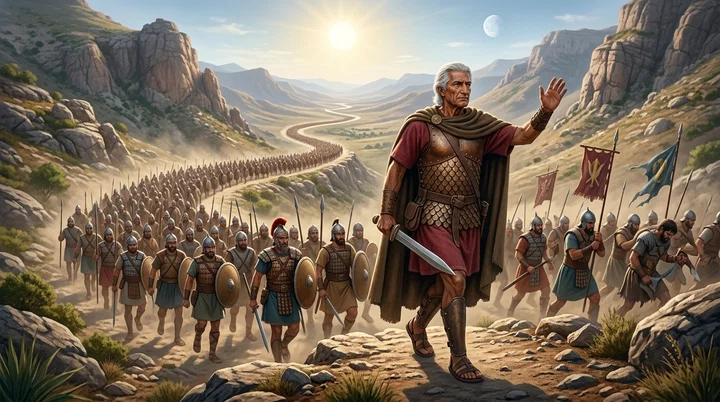
So Joshua ascended from Gilgal, he, and all the people of war with him, and all the mighty men of valour.
Translations
American King James Version, Webster Bible
So Joshua ascended from Gilgal, he, and all the people of war with him, and all the mighty men of valor.
King James Version, KJV Cambridge Paragraph Bible
So Joshua ascended from Gilgal, he, and all the people of war with him, and all the mighty men of valour.
So Joshua went up from Gilgal, he, and all the people of war with him, and all the mighty men of valour.
So Joshua went up from Gilgal, he, and all the people of war with him, and all the mighty men of valor.
And Joshua goeth up from Gilgal, he, and all the people of war with him, even all the mighty men of valour.
So Joshua went up from Gilgal, he and all the people of war with him, even all the valiant men.
So Joshua went up from Gilgal, he and all the people of war with him, even all the mighty men of valour.
Berean Standard Bible, Majority Standard Bible
So Joshua and his whole army, including all the mighty men of valor, came from Gilgal.
So Joshua went up from Gilgal, he and the whole army with him, including all the mighty men of valor.
So Joshua went up from Gilgal with all his army and all his men of war.
So Ioshua ascended from Gilgal, he, and all the people of warre with him, and all the men of might.
Douay-Rheims (Challoner revision)
And Josue went up from Galgal, and all the army of the warriors with him, most valiant men.
Pictures
Cross-references
- Joshua 10:11-14
And it came to pass, as they fled from before Israel, and were in the going down to Beth-horon, that the LORD cast down great stones from heaven upon them unto Azekah, and they died: they were more which died with hailstones than they whom the children of Israel slew with the sword.
The Lord intervened with hailstones and a lengthened day during Israel’s battle.
- Joshua 9:15-21
And Joshua made peace with them, and made a league with them, to let them live: and the princes of the congregation sware unto them.
Gibeon’s submission and Israel’s obligation to protect it followed their agreement.
- Joshua 10:28-39
And that day Joshua took Makkedah, and smote it with the edge of the sword, and the king thereof he utterly destroyed, them, and all the souls that were therein; he let none remain: and he did to the king of Makkedah as he did unto the king of Jericho.
Describes the people of the conquered towns being killed.
Commentary
Each commentary is drawn from primary sources: the writings of Ellen G. White and Adventist pioneers and periodicals. Each commentary is separate. Its own words are not a quotation; follow the references to read the source passages.
Ellen G. White
2 sources
Gilgal was Israel's encampment when the Gibeonite envoys came seeking a treaty, and Joshua and the fighting men were there before they set out.PP 505.1–3 From that place Joshua went at once to rescue Gibeon, taking with him all the people of war and the mighty men of valor.PP 507.4 He felt bound to protect Gibeon's people because they had submitted to Israel and had accepted the worship of God.PP 507.4 The earlier peace with the Gibeonites had been made by Joshua and the leaders without seeking the Lord's counsel.PP 505.1–3 Before setting out on this rescue march Joshua sought divine counsel, and God encouraged him in the undertaking.PP 507.4
Sources
Pioneers and periodicals
6 sources
Joshua 10:7 belongs to the record of Joshua 1-22, largely written by Israel's leader whose name means saviour, the same as Jesus in Greek, and who was one of the two of his generation who wholly followed the Lord during the forty years of temptation and wilderness.ST Mar 21, 1911 It stands in his greatest labor, begun when he was about eighty years old, leading Israel through the Jordan, dividing the land to them, and setting them in the way to conquer all foes and find the promised rest.ST Mar 21, 1911 The Captain of Jehovah's hosts was present with him in all his victories, where trust brought triumph and distrust brought defeat, and unfaithfulness delayed a possession that could have come soon.ST Mar 21, 1911
The verse records the ascent from Gilgal with all the people of war and all the valiant warriors to fight at Gibeon against the five Amorite kings, whose league against Joshua was broken up.ST Apr 8, 1897RH Jul 21, 1868ST Aug 12, 1913ST Oct 27, 1898 The disturbed condition of Palestine at that time made it easier for Joshua's forces to take the country.ST Aug 12, 1913 The king of Jerusalem had proposed the league of kings, and Jerusalem was already a considerable city at the time of Canaan's conquest.RH Jul 21, 1868
The battle at Gibeon was accompanied by the Lord's intervention, discomfiting the enemy with hailstones, and with the sun and moon standing still at Joshua's command.ST Oct 27, 1898 God lengthened that day so Joshua could finish the work, but the extended daylight remained one solar day, and its unusual length did not change the order of the weekly days or move the seventh-day Sabbath.ST Apr 8, 1897
The verse belongs to the account of many battles and the conquest of several petty kingdoms in Canaan, including the campaign against Eglon and the other towns.ST Oct 3, 1906 Those peoples were not spared because allowing them to continue would have spread the same kind of evil. In that campaign the people described as souls are killed, which shows that a soul is a mortal person and not an immortal being that continues living after death.ST Oct 3, 1906
Sources