Joshua 22:16
Thus saith the whole congregation of the LORD, What trespass is this that ye have committed against the God of Israel, to turn away this day from following the LORD, in that ye have builded you an altar, that ye might rebel this day against the LORD?
Translations
Thus says the whole congregation of the LORD, What trespass is this that you have committed against the God of Israel, to turn away this day from following the LORD, in that you have built you an altar, that you might rebel this day against the LORD?
Thus saith the whole congregation of the LORD, What trespass is this that ye have committed against the God of Israel, to turn away this day from following the LORD, in that ye have builded you an altar, that ye might rebel this day against the LORD?
Thus saith the whole congregation of the Lord, What trespass is this that ye have committed against the God of Israel, to turn away this day from following the Lord, in that ye have builded you an altar, that ye might rebel this day against the Lord?
Thus saith the whole congregation of the LORD, What trespass is this that ye have committed against the God of Israel, to turn away this day from following the LORD, in that ye have built you an altar, that ye might rebel this day against the LORD?
Thus saith the whole congregation of the LORD, What trespass is this that ye have committed against the God of Israel, to turn away this day from following the LORD, in that ye have builded you an altar, to rebel this day against the LORD?
Thus saith the whole congregation of Jehovah, What trespass is this that ye have committed against the God of Israel, to turn away this day from following Jehovah, in that ye have builded you an altar, to rebel this day against Jehovah?
'Thus said all the company of Jehovah, What [is] this trespass which ye have trespassed against the God of Israel, to turn back to-day from after Jehovah, by your building for you an altar, for your rebelling to-day against Jehovah?
Thus saith the whole assembly of Jehovah: What wickedness is this which ye have committed against the God of Israel, to turn away this day from following Jehovah, in that ye have built yourselves an altar, rebelling this day against Jehovah?
Thus, say all the assembly of Yahweh—What is this act of treachery which ye have committed against the God of Israel, that ye should turn back, to-day, from following Yahweh,—in that ye have builded you an altar, that ye might rebel, to-day, against Yahweh?
Berean Standard Bible, Majority Standard Bible
“ This is what the whole congregation of the LORD says: ‘ What is this breach of faith you have committed today against the God of Israel by turning away from the LORD and building for yourselves an altar, that you might rebel against the LORD this day?
“ The whole congregation of the LORD says, ‘ What trespass is this that you have committed against the God of Israel, to turn away today from following the LORD, in that you have built yourselves an altar, to rebel today against the LORD?
This is what all the meeting of the people of the Lord has said, What is this wrong which you have done against the God of Israel, turning back this day from the Lord and building an altar for yourselves, and being false to the Lord?
Thus saith the whole congregation of the Lord, What transgression is this that ye haue transgressed against the God of Israel, to turne away this day from the Lord, in that ye haue built you an altar for to rebell this day against the Lord?
Douay-Rheims (Challoner revision)
Thus saith all the people of the Lord: What meaneth this transgression? Why have you forsaken the Lord the God of Israel, building a sacrilegious altar, and revolting from the worship of him?
Pictures
Cross-references
- Leviticus 17:8-9
And thou shalt say unto them, Whatsoever man there be of the house of Israel, or of the strangers which sojourn among you, that offereth a burnt offering or sacrifice,
law behind charge of rebellion
- Joshua 4:12-13
And the children of Reuben, and the children of Gad, and half the tribe of Manasseh, passed over armed before the children of Israel, as Moses spake unto them:
The eastern tribes honor their pledge to fight alongside Israel.
Commentary
Each commentary is drawn from primary sources: the writings of Ellen G. White and Adventist pioneers and periodicals. Each commentary is separate. Its own words are not a quotation; follow the references to read the source passages.
Ellen G. White
4 sources
The verse concerns the tribes of Gad and Reuben and half Manasseh, who received their inheritance east of the Jordan before the crossing because the upland plains and forests of Gilead and Bashan provided grazing for their flocks and herds not found in Canaan.PP 517.4–518.1 On that condition they pledged armed men to fight with their brethren until Canaan was won, faithfully kept that pledge and fought bravely for years, then returned with much riches, cattle, silver, gold, brass, iron and raiment to share with those who had stayed with the families and flocks.PP 517.4–518.1 They were then to dwell at a distance from the sanctuary in an isolated and wandering life beside heathen tribes, where there was strong temptation to fall into heathen customs, which made Joshua anxious at their departure and made a separate altar look like turning away from following the Lord.PP 517.4–518.1
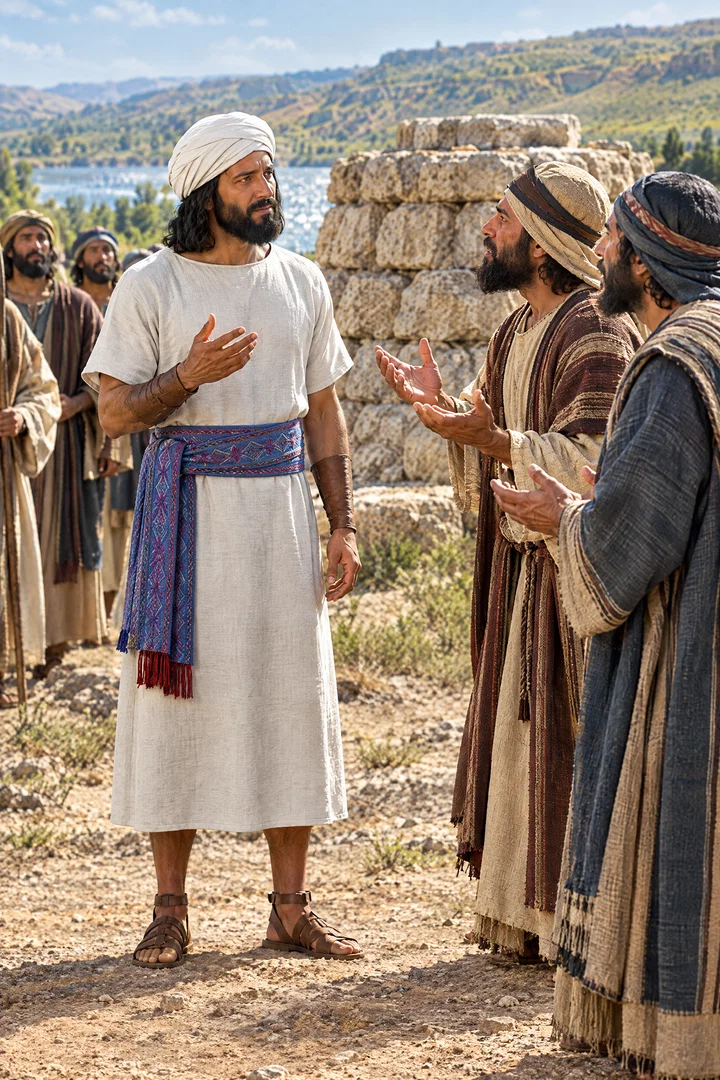
The charge was spoken for the whole congregation by Phinehas the high priest and ten princes, one from each tribe, against the eastern tribes for building a large altar near the Jordan where Israel had crossed.ST May 12, 1881 The verse accuses the builders of trespass and rebellion in turning that day from following the Lord, supposing the altar was designed to take the place of the tabernacle at Shiloh and meant turning from God and dividing in worship.PP 517.4–518.1ST May 12, 1881ST May 12, 1881ST May 12, 1881
The accusers acted from sincere zeal to defend true religion and oppose sin, but in excitement and indignation they first moved toward war and then toward demanding an explanation, treating guilt as already proved.ST May 12, 1881ST May 12, 1881ST May 12, 1881 They feared such unfaithfulness would divide worship, lead away from the true faith, and bring the wrath of God upon the whole nation, remembering when Israel joined themselves to Baal-Peor and when Achan and his family perished and all Israel suffered for one man's transgression, and remembering God's positive command that no sacrifice be offered except at the door of the tabernacle.ST May 12, 1881ST May 12, 1881
The builders meant the altar only as a witness that though separated by the river they were of the same faith and entitled to equal privileges in the tabernacle at Shiloh, with no sacrifice or worship intended on it.ST May 12, 1881 The rebuke arose from mistaken suspicion because the western tribes judged before learning all the facts, so they should first have made a courteous inquiry rather than sharply rebuking on an unproved charge.ST May 12, 1881ST May 12, 1881ST May 12, 1881 The episode shows that people honestly seeking to serve God may be misjudged, that the misunderstanding could have led to grave and even fatal consequences, and that meekness and forbearance in response to accusation can avert serious conflict.ST May 12, 1881
Sources
Pioneers and periodicals
7 sources
Joshua 22:16 belongs to the account of the distribution of Canaan and records Israel's solemn admonition concerning the altar built by the eastern tribes.RH Mar 2, 1916 The builders were the children of Reuben and Gad and half the tribe of Manasseh, the two and one-half tribes returning east of the Jordan.RH Aug 29, 1907 They built a great, large altar by and beyond the Jordan near where Israel had crossed, patterned after the Lord's altar.ST May 12, 1881RH Aug 29, 1907ST May 18, 1904 It was intended only as a witness that though separated by the river they were of the same faith and entitled to equal privileges in the tabernacle at Shiloh, with no sacrifice or worship intended on it.ST May 12, 1881
The charge was spoken for the whole congregation of the Lord by Phinehas the high priest and ten princes, one from each tribe, confronting the eastern tribes.ST May 12, 1881 It asked what trespass they had committed against the God of Israel in turning that day from following the Lord and rebelling by building an altar.ST May 12, 1881RH Aug 29, 1907 The western tribes supposed it was designed to take the place of the tabernacle at Shiloh as rival worship dividing worship, treating guilt as already proved.ST May 12, 1881ST May 12, 1881 The accusation was driven by excitement and indignation that first moved toward war and then toward demanding an explanation.ST May 12, 1881 It was driven also by fear that such unfaithfulness would lead away from the true faith and bring the wrath of God upon the whole nation, as when Israel joined themselves to Baal-Peor and as when Achan and his family perished and all Israel suffered for one man's transgression, with the added warning from God's positive command that no sacrifice be offered except at the door of the tabernacle not to depart from God.ST May 12, 1881
The altar's purpose, rather than its likeness to the Lord's altar, determined whether it was rebellion or idolatry.ST May 18, 1904 The western tribes and Joshua initially judged it to be wrong and mistook it for rival worship, but accepted the explanation and later learned it was built as a witness with a truly devotional purpose and not to turn away from following the Lord or to rebel against God.ST May 18, 1904ST May 25, 1904 The questioning establishes the divine right of the church of Christ to exercise mutual oversight by questioning the conduct, acts, and wisdom of its individual members.RH Aug 29, 1907 Personal rights and individuality, though sacred, do not give freedom to act without accountability, because no one can live to himself and every act carries influence that touches others.RH Aug 29, 1907 Sincere zeal to defend true religion and oppose sin can judge before learning all the facts, circulating unjust suspicions from a mistaken suspicion and easily misconstruing the devotional actions of brethren honestly seeking to serve God as complete apostasy from God.ST May 12, 1881ST May 12, 1881ST May 25, 1904 The misunderstanding could have led to grave, even fatal consequences including war, so accusation should first have been a courteous inquiry, and meekness and forbearance in response to accusation can avert serious conflict.ST May 12, 1881ST May 12, 1881ST May 12, 1881
Sources