Joshua 22:15
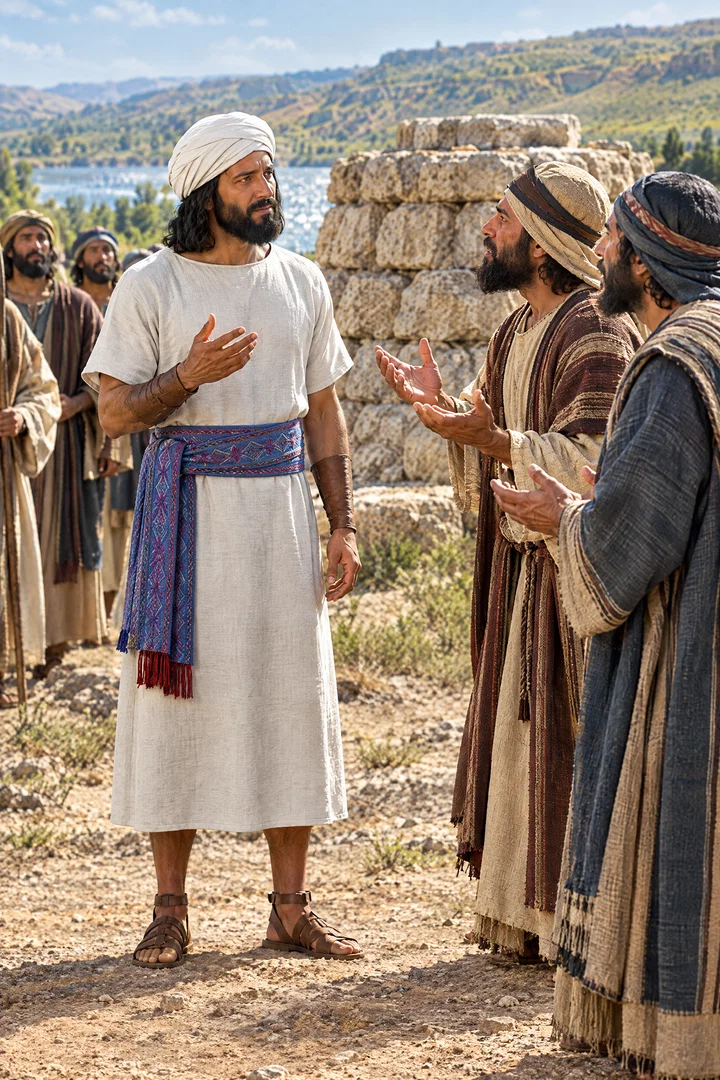
And they came unto the children of Reuben, and to the children of Gad, and to the half tribe of Manasseh, unto the land of Gilead, and they spake with them, saying,
Translations
And they came to the children of Reuben, and to the children of Gad, and to the half tribe of Manasseh, to the land of Gilead, and they spoke with them, saying,
King James Version, KJV Cambridge Paragraph Bible, Revised Version
And they came unto the children of Reuben, and to the children of Gad, and to the half tribe of Manasseh, unto the land of Gilead, and they spake with them, saying,
And they came to the children of Reuben, and to the children of Gad, and to the half-tribe of Manasseh, to the land of Gilead, and they spoke with them, saying,
And they came unto the children of Reuben, and to the children of Gad, and to the half-tribe of Manasseh, unto the land of Gilead, and they spake with them, saying,
And they come in unto the sons of Reuben, and unto the sons of Gad, and unto the half of the tribe of Manasseh, unto the land of Gilead, and speak with them, saying,
And they came to the children of Reuben, and to the children of Gad, and to the half tribe of Manasseh, to the land of Gilead, and spoke with them, saying,
So they came in unto the sons of Reuben and unto the sons of Gad and unto the half tribe of Manasseh, within the land of Gilead,—and spake with them, saying:
Berean Standard Bible, Majority Standard Bible
They went to the Reubenites, the Gadites, and the half-tribe of Manasseh in the land of Gilead and said to them,
They came to the children of Reuben, and to the children of Gad, and to the half-tribe of Manasseh, to the land of Gilead, and they spoke with them, saying,
And they came to the children of Reuben and the children of Gad and the half-tribe of Manasseh, to the land of Gilead, and said to them,
So they went vnto the children of Reuben, and to the children of Gad, and to the halfe tribe of Manasseh, vnto the land of Gilead, and spake with them, saying,
Douay-Rheims (Challoner revision)
Who came to the children of Ruben, and of Gad, and the half tribe of Manasses, into the land of Galaad, and said to them:
Pictures
Cross-references
- Joshua 4:12-13
And the children of Reuben, and the children of Gad, and half the tribe of Manasseh, passed over armed before the children of Israel, as Moses spake unto them:
Reuben, Gad, and Manasseh faithfully served armed across the Jordan.
- Deuteronomy 12:13-14
Take heed to thyself that thou offer not thy burnt offerings in every place that thou seest:
Israel is commanded to offer sacrifices only at the place the LORD chooses.
- Numbers 25:1-9
And Israel abode in Shittim, and the people began to commit whoredom with the daughters of Moab.
Israel’s sin at Baal-Peor serves as a warning.
Commentary
Each commentary is drawn from primary sources: the writings of Ellen G. White and Adventist pioneers and periodicals. Each commentary is separate. Its own words are not a quotation; follow the references to read the source passages.
Ellen G. White
4 sources
The coming to the land of Gilead to speak with the children of Reuben and Gad and the half tribe of Manasseh was a delegation from the tribes west of the Jordan meeting those tribes after they had returned to their possession east of the Jordan.PP 517.4–518.1 Those eastern tribes were pastoral tribes that had received their inheritance before crossing the Jordan, having chosen the wide upland plains and rich forests of Gilead and Bashan for grazing their flocks and herds.PP 517.4–518.1 They had pledged a proportion of armed men to go with their brethren across the Jordan and share their battles until those brethren also entered their inheritance.PP 517.4–518.1 Forty thousand of them passed over before the Lord unto battle to the plains of Jericho and fought bravely for years in faithful discharge of that obligation, then returned with much riches, very much cattle and silver and gold and brass and iron and very much clothing to share with those who had remained with the families and flocks.PP 517.4–518.1 They were then to dwell at a distance from the sanctuary, and their isolated and wandering life on the borders of heathen tribes brought strong temptation to fall into heathen customs, causing anxious concern at their departure.PP 517.4–518.1
The speech introduced here was a confrontation over the altar the eastern tribes had built, which the western tribes treated as a supposed departure and defection from true worship and a possible act of rebellion against God.ST May 12, 1881ST May 12, 1881ST May 12, 1881 The representatives sent by Israel met the tribes east of the Jordan to ask them to explain that altar.ST May 12, 1881 Their prompt rebuke arose from fear that Israel would become divided in its interests and worship.ST May 12, 1881 It was also an act of prompt and earnest zeal against sin driven by memory of divine rebuke for lack of vigilance to discover sin in the case of Achan and by a resolve to act differently in the future.ST May 12, 1881
The representatives warned that such an altar could lead Israel away from the true faith and bring judgment upon the whole nation.ST May 12, 1881 That misunderstanding could have led to grave and even fatal consequences between the tribes.ST May 12, 1881 Instead of meeting their brethren with censure, the delegation should first have made courteous inquiry to learn all the facts, for their course went to the opposite extreme from laxness in dealing with sin into harsh judgment and groundless suspicion, teaching that both laxness and harsh judgment must be shunned.ST May 12, 1881 The incident teaches that people honestly seeking to serve true religion may be wrongly suspected and reprimanded, and that meekness and forbearance on the part of the accused can avert great harm.ST May 12, 1881
Sources
Pioneers and periodicals
5 sources
The verse describes the moment when representatives sent by the nine and one-half tribes came to the children of Reuben and Gad and the half tribe of Manasseh in the land of Gilead to speak with them after those tribes had returned to their inheritance east of the Jordan.ST May 12, 1881 They came to confront them with censure and demand an explanation of the altar they had erected.ST May 12, 1881ST May 25, 1904 They treated the building of the altar as a possible act of rebellion against God, as rival worship and complete apostasy, and as a departure from true worship.ST May 12, 1881ST May 12, 1881ST May 25, 1904
They warned that such an altar could draw Israel away from the true faith and bring judgment upon the whole nation.ST May 12, 1881 In fact the altar had been built with a truly devotional purpose as a witness, not as an object of worship or as rival worship.ST May 18, 1904ST May 25, 1904 Its purpose and use determined whether it was idolatrous.ST May 18, 1904
Israel at first misunderstood the altar and thought the builders had done wrong.ST May 18, 1904 But the explanation given by the builders satisfied Joshua, and the delegation later learned its true character as an altar of witness.ST May 18, 1904 The prompt rebuke had arisen from fear that Israel would be divided in its interests and worship.ST May 12, 1881 It also arose from prompt and earnest zeal against sin, driven by memory of God's rebuke for lack of vigilance to discover sin in Achan's case and by a resolve to act differently in the future.ST May 12, 1881
In so acting they went to the opposite extreme from laxness in dealing with sin into harsh judgment and groundless suspicion.ST May 12, 1881 This shows how easy it is to misconstrue the actions of brethren.ST May 12, 1881ST May 25, 1904 Instead of meeting them with censure they should first have made courteous inquiry to learn all the facts.ST May 12, 1881
The misunderstanding could have led to grave and even fatal consequences.ST May 12, 1881 It teaches that people honestly seeking to serve true religion may be wrongly suspected and reprimanded, and that meekness and forbearance can avert great harm.ST May 12, 1881 It teaches that Christians must shun both laxness in dealing with sin and harsh judgment.ST May 12, 1881 It gives an impressive lesson on the manner in which unjust suspicions are often circulated.ST May 25, 1904
Sources