Joshua 22:26
Therefore we said, Let us now prepare to build us an altar, not for burnt offering, nor for sacrifice:
Translations
American King James Version, King James Version
Therefore we said, Let us now prepare to build us an altar, not for burnt offering, nor for sacrifice:
therefore we said, Let us now prepare to build us an altar, not for burnt offering, nor for sacrifice:
Webster Bible, American Standard Version
Therefore we said, Let us now prepare to build us an altar, not for burnt-offering, nor for sacrifice:
Therefore we said, Let as now prepare to build us an altar, not for burnt offering, nor for sacrifice:
'And we say, Pray let us prepare for ourselves to build the altar — not for burnt-offering nor for sacrifice —
And we said, Let us now set to work to build an altar, not for burnt-offering, nor for sacrifice,
We said, therefore, Let us prepare, we pray you, to build us an altar,—not for ascending-offering, nor for sacrifice;
Berean Standard Bible, Majority Standard Bible
That is why we said, ‘ Let us take action and build an altar for ourselves, but not for burnt offerings or sacrifices.
“ Therefore we said, ‘ Let’s now prepare to build ourselves an altar, not for burnt offering, nor for sacrifice;
So we said, Let us now make an altar for ourselves, not for burned offerings or for the offerings of beasts:
Therefore we said, We will nowe go about to make vs an altar, not for burnt offering, nor for sacrifice,
Douay-Rheims (Challoner revision)
And said: Let us build us an altar, not for holocausts, nor to offer victims,
Pictures
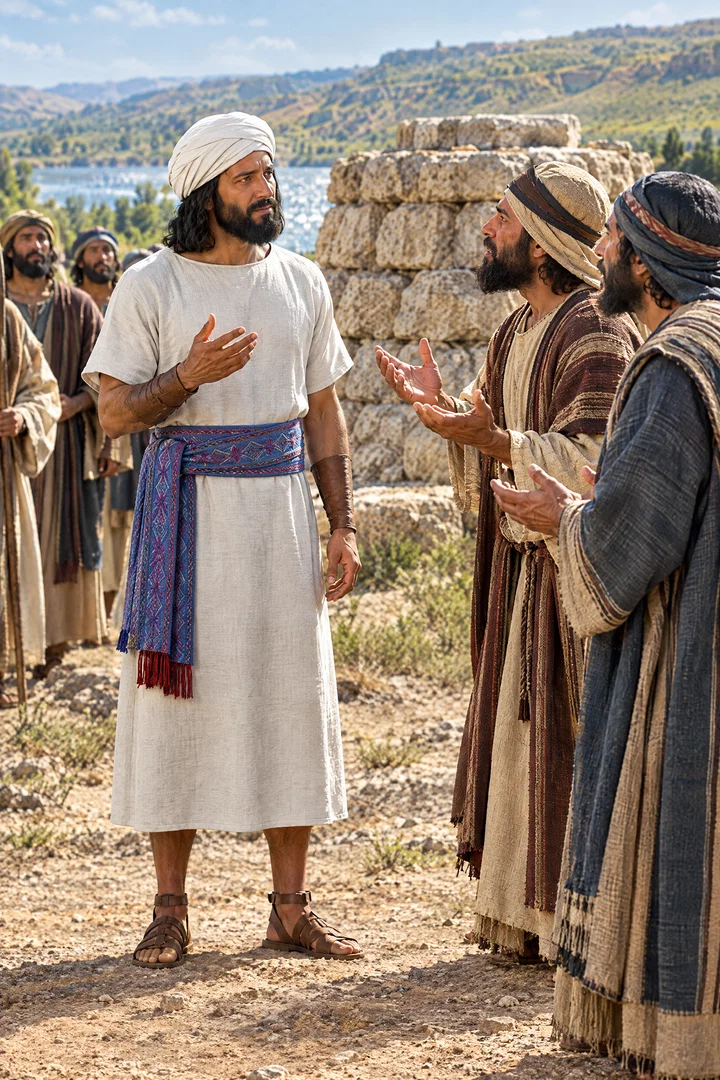
Commentary
Each commentary is drawn from primary sources: the writings of Ellen G. White and Adventist pioneers and periodicals. Each commentary is separate. Its own words are not a quotation; follow the references to read the source passages.
Ellen G. White
4 sources
The two and a half tribes of Gad and Reuben with half Manasseh were returning to their inheritance east of the Jordan in the upland plains and forests of Gilead and Bashan, a region chosen for grazing flocks and herds.PP 517.4–518.1 They had pledged their proportion of armed men to accompany their brethren across the Jordan and share their battles, and forty thousand prepared for war passed over to the plains of Jericho.PP 517.4–518.1 Those men fought bravely for years until the other tribes entered Canaan, then returned with much riches, very much cattle, silver, gold, brass, iron and very much raiment to share with those who had remained with the families and flocks.PP 517.4–518.1 They were to dwell at a distance from the sanctuary, where isolation and a wandering life brought strong temptation to fall into the customs of the heathen tribes on their borders.PP 517.4–518.1
The altar of which the verse speaks was not intended for burnt offerings or for sacrifices.ST May 12, 1881ST May 12, 1881 It was built by the tribes east of the Jordan as a witness that they too worshiped the living God and belonged to Israel.ST May 12, 1881 Its purpose looked to the future, so that their descendants would not be treated as having no share in Israel's worship and community.ST May 12, 1881
The verse belongs to an episode in which Israel's zeal to guard faithfulness, sharpened by what happened in Achan's case, led them to act against Gad and Reuben before learning all the facts.ST May 12, 1881 That concern went to the opposite extreme, for a courteous inquiry should have come before judging their brethren.ST May 12, 1881 The episode shows how a good-faith effort to serve true religion could be mistaken for defection and lead to grave danger.ST May 12, 1881 The accused tribes answered the misunderstanding with wisdom, giving an example of meekness and forbearance rather than anger or retaliation.ST May 12, 1881
Sources
Pioneers and periodicals
6 sources
The chapter stands near the close of the book after the account of Achan's sin, in the part dealing with the conquering of the Canaanites and the division of the land.ST Mar 17, 1909 The altar in the verse was proposed and built by the two and one-half tribes east of the Jordan, and it was patterned after the Lord's altar.ST May 12, 1881ST May 12, 1881ST May 18, 1904ST May 25, 1904 It was not intended as a place for worship through burnt offerings or sacrifices, but as an altar of witness for a devotional purpose.ST May 12, 1881ST May 12, 1881ST May 18, 1904ST May 25, 1904
It was meant as a witness that its builders too worshiped the living God and belonged to Israel, so that their descendants would not be treated as having no share in Israel's worship and community.ST May 12, 1881 The other tribes first mistook it for rival worship, abandonment of God, and defection, and this misunderstanding created grave danger.ST May 12, 1881ST May 25, 1904 Their zeal to guard Israel's faithfulness, sharpened by what happened in Achan's case, went to the opposite extreme and led them to act before learning all the facts.ST May 12, 1881
Once Joshua and the others heard the explanation, they were satisfied and learned that the altar was not made for worship.ST May 18, 1904 The episode teaches that believers can unjustly suspect one another's motives, and that they should first make courteous inquiry rather than judging their brethren.ST May 12, 1881ST May 25, 1904 The accused tribes' wise response to the misunderstanding is an example of meekness and forbearance rather than anger or retaliation.ST May 12, 1881
Sources