Joshua 9:5
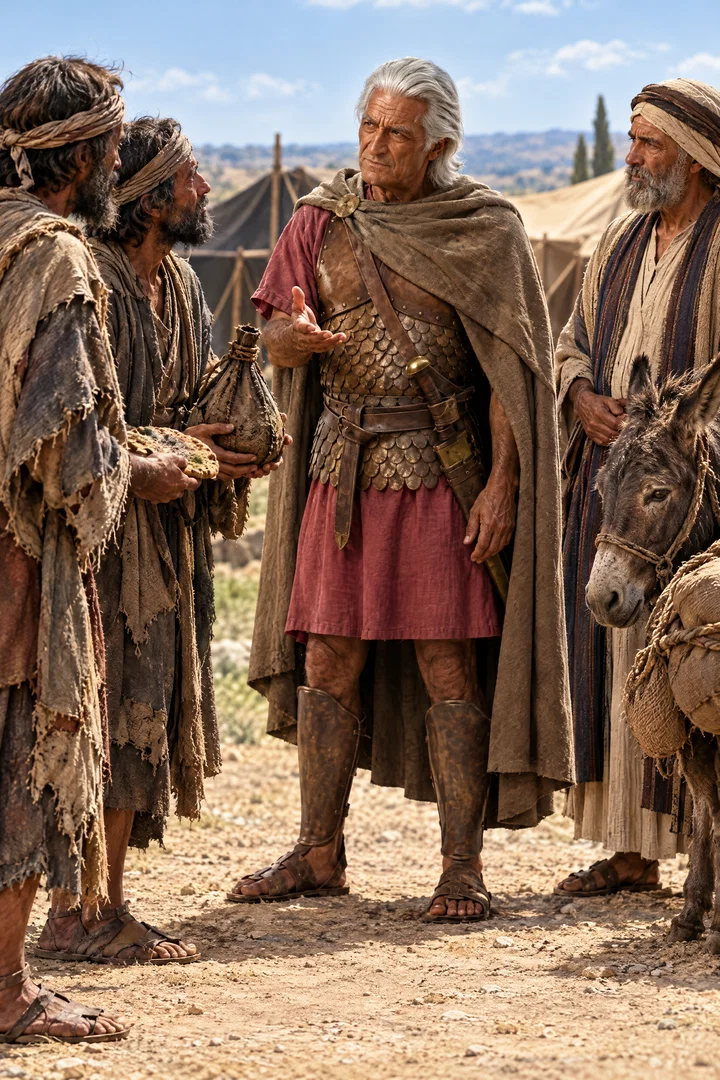
And old shoes and clouted upon their feet, and old garments upon them; and all the bread of their provision was dry and mouldy.
Translations
And old shoes and clouted on their feet, and old garments on them; and all the bread of their provision was dry and moldy.
And old shoes and clouted upon their feet, and old garments upon them; and all the bread of their provision was dry and mouldy.
and old shoes and clouted upon their feet, and old garments upon them; and all the bread of their provision was dry and mouldy.
And old shoes and patched upon their feet, and old garments upon them; and all the bread of their provision was dry and moldy.
and old shoes and clouted upon their feet, and old garments upon them; and all the bread of their provision was dry and was become mouldy.
and old and patched shoes upon their feet, and old garments upon them; and all the bread of their provision was dry and was become mouldy.
and sandals, old and patched, on their feet, and old garments upon them, and all the bread of their provision is dry — it was crumbs.
and old and patched sandals upon their feet, and old garments upon them; and all the bread of their provision was dry [ and] mouldy.
and sandals, old and patched, upon their feet, and worn-out mantles upon them,—and, all the bread of their provision, was dry and broken.
Berean Standard Bible, Majority Standard Bible
They put worn, patched sandals on their feet and threadbare clothing on their bodies, and their whole supply of bread was dry and moldy.
and old and patched sandals on their feet, and wore old garments. All the bread of their food supply was dry and moldy.
And put old stitched-up shoes on their feet, and old clothing on their backs; and all the food they had with them was dry and broken up.
And olde shoes and clouted vpon their feete: also the raiment vpon them was old, and all their prouision of bread was dried, and mouled.
Douay-Rheims (Challoner revision)
And very old shoes, which for a show of age were clouted with patches, and old garments upon them: the leaves also, which they carried for provisions by the way, were hard, and broken into pieces:
Pictures
Cross-references
- 2 Samuel 21:1-2
Then there was a famine in the days of David three years, year after year; and David enquired of the LORD. And the LORD answered, It is for Saul, and for his bloody house, because he slew the Gibeonites.
Famine followed Saul’s violation of Israel’s oath to the Gibeonites.
- Joshua 9:12-13
This our bread we took hot for our provision out of our houses on the day we came forth to go unto you; but now, behold, it is dry, and it is mouldy:
moldy bread and worn clothes offered as proof of long journey
- Joshua 9:14-15
And the men took of their victuals, and asked not counsel at the mouth of the LORD.
Israel trusts appearance without asking the Lord and makes peace
- Joshua 9:16
And it came to pass at the end of three days after they had made a league with them, that they heard that they were their neighbours, and that they dwelt among them.
disguise exposed as neighbors after three days
- Deuteronomy 7:2
And when the LORD thy God shall deliver them before thee; thou shalt smite them, and utterly destroy them; thou shalt make no covenant with them, nor shew mercy unto them:
Israel’s covenant with Gibeon violated this command.
Commentary
Each commentary is drawn from primary sources: the writings of Ellen G. White and Adventist pioneers and periodicals. Each commentary is separate. Its own words are not a quotation; follow the references to read the source passages.
Ellen G. White
4 sources
The old garments, patched sandals, and dry and mouldy bread were a disguise worn by the Gibeonites, together with torn wineskins bound up as if hastily repaired on the journey.PP 505.1–3 They presented this worn appearance as proof that they had come from a distant country beyond Palestine after hearing of the wonders God had wrought for His people.PP 505.1–3 In truth they were neighbors dwelling among Israel who knew they could not resist the Hebrews and used this stratagem to preserve their lives, a fact discovered three days afterward.PP 505.1–3
Israel had been specially warned against entering any league with the idolaters of Canaan, and though the leaders doubted, they were persuaded by these representations.PP 505.1–3 Without asking counsel of the Lord, Joshua made peace with them and the princes swore to let them live.PP 505.1–3 It was an unwise treaty that brought punishment because God was not consulted.PP 505.1–3ST Jul 27, 1882
The Gibeonites were a numerous people who renounced their heathenism, joined Israel, and shared in the blessings of the covenant.RH Jun 17, 1915PK 369.1–2 Their case is an example of God's mercy toward idolaters who acknowledge His divine authority.RH Jun 17, 1915
Sources
Pioneers and periodicals
12 sources
The verse describes the worn and patched footwear, aged clothing, and dry spoiled food the Gibeonites displayed as proof that they had traveled from a far country.ST Jun 16, 1914 The shabby appearance was a deliberate fraud to make a false claim of great age and distance seem credible, when in fact they lived nearby.RH May 26, 1868RH Oct 22, 1861 Israel judged by outward looks instead of asking counsel of God, and so entered a forbidden protective treaty that proved a lasting mistake.ST Jul 27, 1882RH May 26, 1868 That oath-bound league left a heathen people dwelling among Israel for generations, while the Gibeonites themselves were condemned to serve as cutters of wood and carriers of water yet were protected and avenged under the covenant.ST Jul 27, 1882RH May 26, 1868ST Apr 15, 1903ST Oct 27, 1898 Their servitude was public political subjection under the curse on Canaan, not personal ownership after the American pattern, for they stayed free with their own cities, homes and families, having forsaken idolatry to share in the mercy and blessings of Israel's God.RH Jun 17, 1915RH Mar 3, 1863
The Gibeonite Deception
The old and patched shoes upon their feet, the old garments upon them, and the dry and mouldy bread of their provision were put forward as evidence for the claim to have come from a very distant land after a long journey.ST Jun 16, 1914 The worn shoes and clothes and the dry, mouldy bread were meant to make that long journey appear real and the claim to distant origin believable.ST Jun 16, 1914
The worn clothing and provisions were deliberately used to make a false story appear true and to make the supplies appear old.RH May 26, 1868ST Jun 23, 1881 The men were actually from nearby, and the old appearance of garments and provisions did not prove the antiquity claimed.RH Oct 22, 1861 Israel trusted outward appearances instead of seeking counsel from God.
That trust in appearances led to a covenant of protection made against God's command, an unwise treaty and a mistake.ST Jul 27, 1882RH May 26, 1868 The neglect to ask God for counsel brought punishment.ST Jul 27, 1882 The league left a foreign element among Israel for centuries and prevented driving out all the heathen.ST Apr 15, 1903 It brought consequences and punishment upon Israel for generations, yet Joshua was not removed from leadership.ST Jul 27, 1882ST Apr 15, 1903
Because the inhabitants of Gibeon deceived Joshua into an alliance, they were sentenced to serve as hewers of wood and drawers or carriers of water.ST Oct 27, 1898 Though won by craft, the covenant gave the Gibeonites Israel's protection, and God later defended them and held Israel accountable for violating its oath.RH May 26, 1868 The account of the circumstances surrounding Israel's mistake serves as a warning when deciding whether to accept an unusual invitation.RH Aug 8, 1907 The record of worn sandals and clothing as part of an appearance of distant travel is evidence that the clothing and footwear of people in the Holy Land remained recognizable across the centuries.RH Aug 29, 1871
Covenant Mercy and Freedom
The appointment to hew wood and draw water set the Gibeonites to public service, not to chattel slavery after the American pattern.RH Mar 3, 1863 No Israelite owned a Gibeonite or held any personal interest in one, for they remained personally free, keeping their own lands, living in their own city, occupying their own houses, and keeping their own wives and husbands and children.RH Mar 3, 1863 Centuries later they still existed and flourished with political rights, able even to make their own treaty with the king of Israel.RH Mar 3, 1863 Their condition fulfills the curse pronounced upon Canaan as political subjection and political servitude, not chattel slavery, and it gives no justification for American slavery.RH Mar 3, 1863
They renounced their heathenism and joined Israel.RH Jun 17, 1915 They came to share in the blessings of the covenant.RH Jun 17, 1915 Their case stands as an example of mercy toward idolaters who acknowledged divine authority.RH Jun 17, 1915
Spiritual Lessons for Believers
The worn shoes and garments together with the dry and moldy bread portray pilgrims whose spiritual life remains stunted. Though born again, they do not grow in grace. Neglect of prayer is the reason for that lack of growth.
The dry and moldy bread portrays experiences that have become stale and lifeless.ST Jun 23, 1881 It was carried with worn shoes and clothing to make the supplies look old and to make a false story appear true.ST Jun 23, 1881
The Gibeonites portray those found in the train of Israel yet with no title to Israel's portion, Israel's consolations, and Israel's rewards.RH Sep 26, 1865 This means outward closeness to God's people without inward belonging and right.RH Sep 26, 1865 It applies to almost Christians who are regular and moral, free from outward sin, diligent in means of grace, and loving preaching and religious company.RH Sep 26, 1865 Yet they have no movement, life, heat, reality, or going forward in the heart, but remain where they were year after year.RH Sep 26, 1865 Their condition is therefore unsatisfactory and unsafe, and they must awake to danger and strive to enter in.RH Sep 26, 1865
Sources