Leviticus 11:12
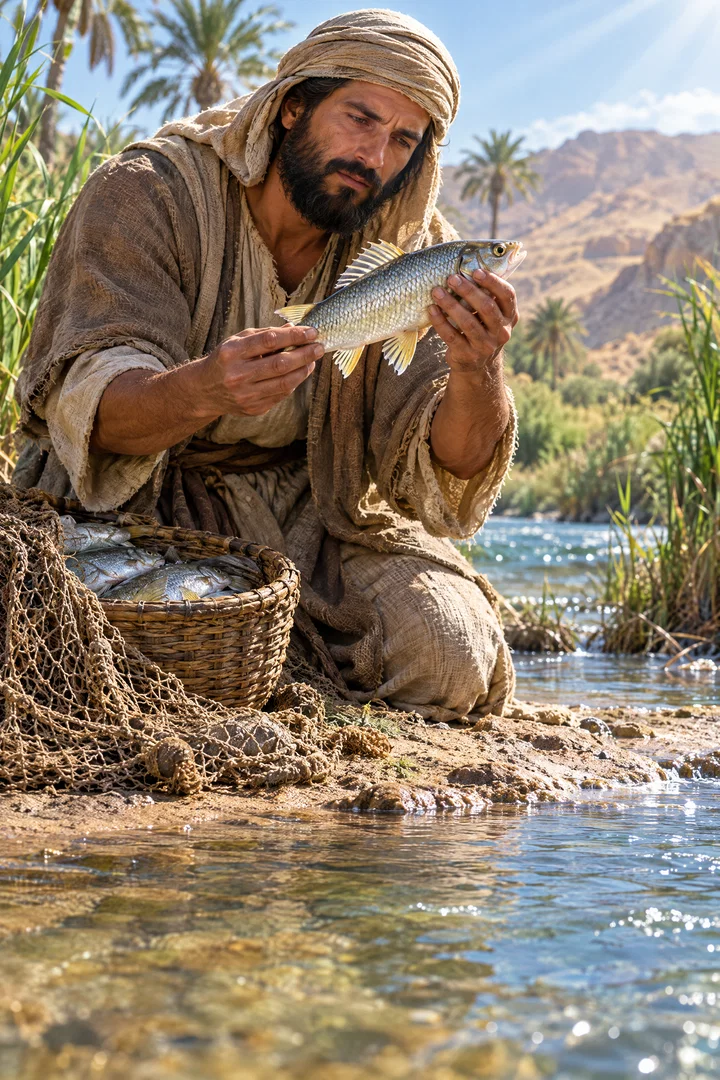
Whatsoever hath no fins nor scales in the waters, that shall be an abomination unto you.
Translations
Whatever has no fins nor scales in the waters, that shall be an abomination to you.
King James Version, KJV Cambridge Paragraph Bible
Whatsoever hath no fins nor scales in the waters, that shall be an abomination unto you.
Whatever hath no fins nor scales in the waters, that shall be an abomination to you.
Revised Version, American Standard Version
Whatsoever hath no fins nor scales in the waters, that is an abomination unto you.
'Any one that hath not fins and scales in the waters — an abomination it [is] to you.
Whatever in the waters hath no fins and scales, that shall be an abomination unto you.
Whatsoever hath not fins and scales in the waters, an abomination, it is unto you.
Berean Standard Bible, Majority Standard Bible
Everything in the water that does not have fins and scales shall be detestable to you.
Whatever has no fins nor scales in the waters is an abomination to you.
Anything in the water which has no special parts for swimming and no thin plates on its skin is disgusting to you.
Whatsoeuer hath not fins nor skales in the waters, that shalbe abomination vnto you.
Douay-Rheims (Challoner revision)
All that have not fins and scales, in the waters, shall be unclean.
Pictures
Cross-references
- Deuteronomy 14:9-10
These ye shall eat of all that are in the waters: all that have fins and scales shall ye eat:
Both distinguish edible water creatures by whether they have fins and scales.
- Acts 10:14-15
But Peter said, Not so, Lord; for I have never eaten any thing that is common or unclean.
Peter’s vision raises the question of whether Leviticus’s food distinctions remain binding.
- Colossians 2:16
Let no man therefore judge you in meat, or in drink, or in respect of an holyday, or of the new moon, or of the sabbath days:
Food laws are raised as a matter of judgment over what one eats.
- Matthew 15:11
Not that which goeth into the mouth defileth a man; but that which cometh out of the mouth, this defileth a man.
Jesus distinguishes what enters the mouth from what defiles a person.
- Romans 14:14
I know, and am persuaded by the Lord Jesus, that there is nothing unclean of itself: but to him that esteemeth any thing to be unclean, to him it is unclean.
Both address distinctions between clean and unclean foods.
- Isaiah 66:17
They that sanctify themselves, and purify themselves in the gardens behind one tree in the midst, eating swine’s flesh, and the abomination, and the mouse, shall be consumed together, saith the LORD.
“The abomination” may include creatures prohibited as food.
- Deuteronomy 12:15
Notwithstanding thou mayest kill and eat flesh in all thy gates, whatsoever thy soul lusteth after, according to the blessing of the LORD thy God which he hath given thee: the unclean and the clean may eat thereof, as of the roebuck, and as of the hart.
Its broad permission is limited by Leviticus 11’s food prohibitions.
- Deuteronomy 14:8
And the swine, because it divideth the hoof, yet cheweth not the cud, it is unclean unto you: ye shall not eat of their flesh, nor touch their dead carcase.
Also prohibits eating an animal declared unclean.
Commentary
Each commentary is drawn from primary sources: the writings of Ellen G. White and Adventist pioneers and periodicals. Each commentary is separate. Its own words are not a quotation; follow the references to read the source passages.
Ellen G. White
10 sources
Every creature in the waters that lacks both fins and scales is unclean, an abomination, and forbidden as food.Ms 132, 1901, par. 11MH 311.3–312.1ST Jun 13, 19163SP 63.2SG4 124.1–2 The rule is part of the law of Moses giving health and sanitary principles to Israel for life in Canaan after settlement, distinguishing between clean and unclean.Ms 132, 1901, par. 11MH 311.3–312.1ST Jun 13, 1916ST May 2, 1878MH 277.1 Meats that were allowed were subject to careful limits, while creatures declared unclean were prohibited.MH 311.3–312.1ST Jun 13, 1916 The king's provisions offered to Daniel included swine's flesh and other meats prohibited by that law.Ms 132, 1901, par. 11BS 17.2–3
The prohibition was given to preserve health and keep mind and body sound.ST Mar 21, 1878MH 277.1 The flesh of creatures designated unfit for food fills the blood with impurities and shortens life, being hurtful and not the best food.DA 617.2SG4 124.1–2ST May 2, 1878 Connected with this law, swine's flesh fills the system with humors and in the warm climate of Israel often produced leprosy, acting far more injuriously there than in a colder climate.SG4 124.1–2 Swine were never designed to be eaten under any circumstances but are useful alive roaming free to devour decaying matter on the ground that would otherwise poison the atmosphere, which preserves health.SG4 124.1–2
Had Israel submitted to these wise prohibitions, God would have removed everything injurious to health and allowed no sickness among them, but because they would not submit He gave them what they lusted for.SG4 124.1–2 The law explains the refusal by Daniel and his companions of the king's provisions, which they believed would defile them, violate God's command, and impair health and ability to serve God.Ms 132, 1901, par. 11BS 17.2–3 Daniel chose obedience despite risk to his position and life.BS 17.2–3
The restrictions gave no authority for added human rules, yet the Pharisees perverted them to unwarranted extremes.DA 617.23SP 63.2ST Mar 21, 1878 They burdened people with traditions and continual scrutiny over clean and unclean.ST Mar 21, 1878 They required all water for use or drinking to be strained to remove the smallest speck or insect that might be classed as unclean.DA 617.23SP 63.2ST Mar 21, 1878
Sources
Pioneers and periodicals
68 sources
Whatsoever lives in the waters without both fins and scales is an abomination, unclean and forbidden as food, including shellfish and like creatures such as oysters, clams, lobster, frog and turtle.ST Jan 2, 1912ST
The division is not arbitrary but rests on the very nature of the creatures as unfit, unwholesome and not good for food, a distinction already known before the Flood and before the law was given when Noah took clean animals by sevens and unclean only by pairs.ST May 8, 1907ST Jan 2, 1912ST Aug 13, 1912ST Jul 15, 1908ST Dec 20, 1905
It was given to preserve a holy people and teach holiness, order and purity, and it rests on sanitary and physiological reasons to safeguard health, strength and mind, for these forbidden water creatures are sea scavengers feeding on vile matter and carrying contamination and disease.ST Oct 11, 1899ST Mar 27, 1907ST Jul 3, 1907
The distinction still stands because it rests on unchanging nature and changeless moral principle and was not blotted out and nailed to the cross with sacrifices and feast days, while those who held its binding force as national Mosaic law to be lifted when the gospel went to the world still taught that the creatures remain unclean forever by nature so the well-instructed soul avoids them.ST May 8, 1907ST Apr 25, 1906ST Feb 4, 1903ST Oct 21, 1908RH Mar 12, 1861
Mark 7 and Matthew 15 concern handwashing and tradition rather than setting aside clean and unclean meats, Romans 14 and 1 Timothy 4 sanctify only what God set apart by His word, and Peter's vision in Acts 10 gives no warrant to change the food distinction.ST May 8, 1907ST Aug 13, 1912ST Oct 31, 1906STST Oct 4, 1910
Wording and Scope
Whatsoever lives in the waters must have both fins and scales to be acceptable as food, and whatsoever lacks one or both is an abomination, unclean and forbidden to eat.ST Jan 2, 1912ST Jun 17, 1903ST Feb 4, 1903 The requirement is of both together, so that a creature with neither is unclean, as with the oyster which has neither fin nor scale.ST Jan 2, 1912ST Mar 12, 1912ST Feb 4, 1903 The distinction is not arbitrary but rests on nature, the unclean being by their nature unfit, unwholesome and not good for food, while the clean are more favorable as food, and the separation was meant to impress holiness to the Lord.ST Jan 2, 1912ST Jun 17, 1903ST Mar 12, 1912ST Feb 4, 1903
The rule includes shellfish and like creatures, such as oysters, clams, lobster, frog and turtle, and broth made generally from abominable things.STST Jan 14, 1889 Oysters and clams are sea scavengers and filthy scavengers feeding on vile and poisonous matter, able to carry harmful contamination and cause poisoning.ST Mar 12, 1912ST Jan 14, 1889 God put the oyster on the unclean list for good reason seen in itself and its habits, and swallowing such a creature whole, entrails and all, whether dead or alive, raw or cooked, is repulsive and to be rejected.ST Mar 12, 1912ST Jan 14, 1889 Its nature has not changed so as to remove the prohibition.ST Feb 4, 1903
The prohibition of water creatures without fins and scales is repeated four times for creatures living in the waters. The verse gives no other rule here about which birds are clean, and geese and ducks are not named among the forbidden fowls.ST Mar 25, 1897
Nature and Origin
The distinction between clean and unclean is not arbitrary, for the creatures called unclean are unclean by their very nature, unfit, unwholesome, and not good for food.ST May 8, 1907ST Jan 2, 1912ST Aug 13, 1912 Water creatures without both fins and scales belong to the foods forbidden as unclean, and with swine and other unclean animals they are declared unclean and an abomination.ST Jan 2, 1912ST Apr 25, 1906 God Himself makes the distinction, not man, and the law states a real difference that it does not create; heavenly wisdom made it on account of the very nature of the animals themselves.ST May 8, 1907ST Aug 13, 1912ST Apr 25, 1906ST Oct 31, 1906 What was unclean then is still unclean, because the nature of the animals has not changed, and the Word of God sanctifies and sets apart what is good to receive with thanksgiving from what is not.ST May 8, 1907ST Apr 25, 1906ST Oct 31, 1906 Unclean animals were also not fit for sacrifice, and Matthew 15, Mark 7, and Romans 14 do not set the distinction aside, since they concern handwashing, traditions, and mere washings and abstinences, teaching that defilement comes from thoughts in the heart and that the heart must first be right with God.ST May 8, 1907ST Aug 13, 1912
The distinction existed before the law was given and was already known in patriarchal times and before the Flood.ST Jul 15, 1908ST Dec 20, 1905ST Dec 17, 1902 Leviticus 11 and its rule that water creatures without fins and scales are an abomination do not make a new law and are not for Jews only, but repeat and state a distinction in the nature of animals that existed and was recognized long before Jews existed.ST Jul 15, 1908ST Dec 20, 1905ST Feb 13, 1893 Noah already understood it, taking clean animals by sevens for food and sacrifice and unclean animals only by pairs, so that enough clean animals were provided without destroying the unclean species, at a time when no plant food was left on the earth.ST Jul 15, 1908ST Dec 20, 1905 The division reaches back to the beginning when sin entered, showing it is not only Levitical law and not only ceremonial uncleanness.ST Aug 26, 1913ST Dec 17, 1902 Creatures without fins and scales were never permitted for food because they were not fit for food even in their best condition, and true science agrees that appetite is best satisfied with good clean healthful food, with grains and fruits cheaper than meat.ST Jul 15, 1908ST Feb 13, 1893
These instructions distinguishing acceptable flesh foods from unacceptable ones were given to preserve the holy seed and to improve existing conditions, but they were not part of God's perfect laws and first plan from the beginning.ST Oct 11, 1899RH Dec 21, 1905ST Nov 29, 1883 The original design was a fleshless diet of primitive plant food and then manna, the food most conducive to health and righteous character, yet Israel refused to be weaned from flesh, lusted after it at any cost, and sickness with leanness of soul followed their indulgence.ST Feb 17, 1904ST Jul 15, 1908RH Dec 21, 1905ST Nov 29, 1883 Because they were determined to eat flesh, God took short steps beside them and gave the statutes regulating flesh-eating, defining in Leviticus 11:12 and Deuteronomy 14 the only prohibitions on what flesh is proper to eat, so they could tell the less harmful from the more harmful, the clean from the unclean.ST Feb 17, 1904ST Jul 15, 1908RH Dec 21, 1905ST Aug 31, 1915 Had they submitted and not lusted after evil things the statutes would never have been necessary, and the permission to eat meat within those prohibitions, like the permission to have kings despite God's opposition, did not make the arrangement best for them.RH Dec 21, 1905ST Nov 29, 1883 From the Deluge to the close of the canon His people ate flesh in harmony with those prohibitions, except for part of the time in the wilderness, and instructions to eat whatsoever is sold in the market or set before them without asking questions for conscience' sake apply only to food proper under those prohibitions and concern food offered to idols, not what kinds may be eaten.ST Jul 15, 1908ST Aug 31, 1915
The laws also teach symbolic lessons beyond health, for some restrictions had ceremonial or symbolic purposes since an unclean animal was not a fit symbol of Christ and His work.ST Oct 4, 1910ST Feb 13, 1896 The mighty object-lessons in Leviticus emphasize everywhere the exceeding sinfulness of sin.ST Feb 13, 1896 Unclean beasts picture Gentiles whom God can cleanse just as He can cleanse Jews, for God has power to cleanse what is unclean, yet the vision of cleansing does not make all beasts fit for food and does not set aside the division demanded by what is in the creatures themselves.ST Oct 4, 1910ST Feb 13, 1896
Purpose and Health Reasons
The food laws that declare finless and scaleless water creatures an abomination were given to preserve the holy seed and to improve conditions, not as part of God's perfect laws from the beginning.ST Oct 11, 1899 They belong to the distinctions between clean and unclean that were meant to impress holiness to the Lord, to teach order, purity, and cleanliness of flesh and spirit, and to keep God's people separate from other peoples and from heathen practices.ST Oct 11, 1899ST Sep 16, 1913ST Jan 7, 1897 They are laws regulating health, cleanliness, and separation rather than regulations of sanctuary ceremony.ST Jan 7, 1897 Fruits and grains were designed for people in the beginning, vegetables were added later, and animal food was permitted later still as people departed further, but even then God separated the clean from what He declared utterly unfit and an abomination.ST The distinction was not arbitrary; He gave it so His people would be holy and would not be corrupted in blood, with better health and longer life as the result.ST
The prohibition serves health and strength so people can glorify God, rather than being intended only for one people or nation.ST Mar 27, 1907 It rests on physiological and sanitary reasons intended to safeguard health, strength, blood, mind, and life, to prevent disease, and to keep minds and bodies sound.ST Mar 27, 1907RH Jun 25, 1914ST Sep 16, 1913 The dietary laws stand at the head of sanitary law as wise protections of health and as proof of divine guidance.RH Nov 12, 1908ST Jul 29, 1889 Their restrictions on which animals could be eaten also show that flesh foods were not part of God's original dietary plan.RH Jun 25, 1914 Although no longer in force as national law, the creatures identified as unfit remain unfit because of principles inherent in their nature, so their underlying principles remain binding.ST Jan 7, 1897RH Nov 12, 1908 Unclean creatures have not changed their habits or nature, and unclean flesh remains always unwholesome, unfitting a person for service and for transmitting pure blood to posterity.ST Jul 3, 1907
Even animals classed as clean were permitted but not necessarily the best food; the best food is the vegetable diet of grains, fruits, and vegetables given at the beginning, and manna was God's preferred food for Israel.ST Feb 3, 1909ST Jul 15, 1908 The division lies in the very nature of the animals themselves, already known at the Flood when clean animals entered the ark by sevens for sacrifice and for food and unclean animals entered only by pairs.ST Jul 15, 1908ST Oct 21, 1908 From the Deluge to the close of the Scripture canon God's people ate flesh within the only prohibitions He placed on flesh-eating in Leviticus 11 and Deuteronomy 14, except for part of the time in the wilderness when manna was their food.ST Jul 15, 1908 Instructions to eat whatsoever is sold in the market or set before them without asking questions for conscience' sake apply only to food that is proper under those prohibitions and concern food offered to idols, not what kinds may be eaten.ST Jul 15, 1908 Increasing disease in animals, greater expense, and greater liability to disease give reason to choose a vegetarian diet as a general rule, and science and practice continually demonstrate that a non-flesh diet is the very best diet, since even clean animals have become so diseased that eating them is unsafe.ST Jul 3, 1907ST Jul 15, 1908 A vegetarian diet is not a matter of Scripture command, though God taught a better, cleaner, purer food in the primitive fleshless diet and in the manna.ST Jul 15, 1908 Thankfulness alone does not make an abominable thing acceptable, because only what is sanctified through the word of God is to be received and eaten to the glory of God.STST
One who knows God's righteousness will seek to glorify God in the body and make the temple clean and effective, and will not consult a perverted appetite; putting into what God has cleansed what He has pronounced unclean and an abomination does not glorify God, and when there are many better foods Christians should not eat it.ST The food permitted to Israel was better than a general flesh diet, and the animals used for food continually recalled sin and death and pointed to the death of the One to come.ST Oct 11, 1899 The laws are to be obeyed as far as possible, but if absolutely nothing but unclean animals can be obtained it is better to eat them than to starve, a rule true then and just as true today.ST Jul 15, 1908ST Sep 16, 1913 Good reason for rejection is seen in the forbidden water creatures themselves and their habits, for they are sea scavengers.ST Mar 12, 1912 Oysters and clams feed on vile and poisonous matter, can carry harmful contamination and cause poisoning, and swallowing such a creature whole, entrails and all, is repulsive, so oysters should be rejected whether dead or alive, raw or cooked.ST Mar 12, 1912ST Jan 14, 1889 Eating unclean beasts is associated with scrofula and cancer.ST Oct 11, 1899 In that light hares are not the best of food and raising Belgian hares for market is not a business to engage in, though no judgment is to be placed on one who is engaged in it, since hares are quite susceptible to germ diseases and are used largely for experiments in germ diseases, and abilities and talents can be turned to a better business that is equally profitable and much more satisfactory.ST Nov 24, 1909
Continuing Validity and Duty
The distinction between clean and unclean still stands because it rests on the very nature of the animals themselves and not on arbitrary appointment, and what was unclean by nature then is still unclean now.ST May 8, 1907ST Apr 25, 1906ST Feb 4, 1903ST Feb 13, 1907ST Apr 29, 1913 It states a real and lasting principle of order and purity about choosing food that supports health and service to God, a principle that was known before Israel, that classifies water creatures lacking both fins and scales as an abomination unfit for food, including shellfish such as oysters, and that still applies.ST May 8, 1907ST Feb 4, 1903ST Feb 13, 1907ST Feb 11, 1889ST Apr 29, 1913 It was not blotted out and nailed to the cross with sacrifices and priesthood and sanctuary and feast days, but is still observed as divine fundamental truth, while the Word of God sanctifies and sets apart what is good to receive with thanksgiving and leaves His children free to walk in its liberty rather than human rules.ST May 8, 1907ST Apr 25, 1906 Mark 7 concerns handwashing and tradition, not a dispute over clean and unclean meats, and Jesus did not set aside the distinction but taught that defilement comes from thoughts in the heart, while a right heart leads a person to choose the right food when available and to eat and drink to God's glory.ST May 8, 1907 No change is known in the nature of the prohibited creatures, though foods viewed as repulsive in one culture, such as locusts, are eaten in others.ST Feb 13, 1907
The prohibitions as binding national or ceremonial or Mosaic law are done away, abolished, or lifted when the gospel was to go to all the world to people who could not carry out those laws, placing men as before the law with no restriction except to abstain from meats offered to idols and from blood and from things strangled.RH Mar 12, 1861RH Mar 30, 1876ST Aug 11, 1909ST Jul 29, 1913ST Jan 7, 1897 After the Flood men could eat any kind of flesh without restriction, then God commanded Israel as His own chosen people not to eat certain kinds including water creatures without fins and scales, and when Israel was rejected from being His people that prohibition as law was done away.RH Mar 12, 1861 The special Jewish diet laws as binding law are abolished and are not laid on Gentile believers scattered through the world, and the food prohibitions, which regulated health and cleanliness and separation from heathen practices rather than sanctuary ceremony, are no longer in force as law.ST Aug 11, 1909ST Jan 7, 1897 Yet the creatures remain unclean forever by nature and principle and unfit for food, so the well-instructed, faithful, obedient soul still remembers the instruction given through Moses, still avoids unwholesome meats, and still gives heed to the distinction out of love to God and His word, eating only to glorify God.ST Oct 21, 1908ST Jul 29, 1913ST Jan 7, 1897ST Dec 17, 1894 The fact that pork was classed as unclean for the Jews is not the present reason to avoid it; the reason is that it is physiologically unfit to eat, and the New Testament removal of the distinction between meats does not mean that every meat is healthy or fit for food.RH Mar 30, 1876
The laws are to be obeyed as far as possible, for they are connected with health and the preservation of the people and with keeping them separate from other peoples.ST Sep 16, 1913ST Dec 17, 1894 The division already existed at the Flood, when clean animals entered the ark by sevens for sacrifice and for food and unclean animals entered only by pairs because there was no plant food left on the earth, and creatures without fins and scales are utterly unfit for food.ST Jul 15, 1908 Clean animals are permitted among the foods given, though some are much better than others and God has shown a better diet than flesh.ST Jul 15, 1908 If absolutely nothing but unclean animals can be obtained it is better to eat them than to starve, a rule true then and just as true today.ST Jul 15, 1908 The specific prohibition no longer binds as law, but the reason and principle behind it still exist now as then, and it is still better to abstain from such unhealthful meats, living by principle.ST Dec 17, 1894
There is no salvation in eating or not eating, for the kingdom of God is not eating and drinking but righteousness and peace and joy in the Holy Spirit, and keeping the distinction saves no one, for salvation is only through Christ Jesus.STST Jul 29, 1913 The matter is left to faith and conscience where God's service in Christ demands and no arbitrary ceremonial law forbids, and where God does not condemn one whose conscience does not condemn him, while one who sees a thing as unclean must follow conviction.ST Jul 8, 1897ST Aug 26, 1913 Romans 14 does not set what to eat or drink but forbids judging one another and putting a stumbling block before a weak brother, and the central duty is not to judge a brother.ST Aug 11, 1909ST Aug 26, 1913 Eating must be by faith, and faith is founded on God's word, so eating follows what God has said about food; sanctified means separated or set apart, and God's word has sanctified only certain foods, so 1 Timothy 4 does not make unclean flesh food fit.STST Aug 26, 1913 One who knows God's righteousness will seek to glorify God in the body and make the temple clean and effective, with the strongest body and clearest mind and a heart responsive to Him, and will not consult a perverted appetite nor make provision for the flesh to fulfill its lusts; putting into what God has cleansed what He has pronounced unclean and an abomination does not glorify Him, and Christians should not eat it when there are many better foods.STST Aug 11, 1909ST Aug 26, 1913 Matthew 15 does not remove the distinction, which was agreed on by Jesus and the Jews, since defilement there concerns tradition and not clean and unclean meats.ST In that light hares are not the best of food and raising Belgian hares for market is not a business to engage in, though no judgment is to be placed on one who is engaged in it; hares are quite susceptible to germ diseases and are used largely for experiments in germ diseases, and abilities and talents can be turned to a better business that is equally profitable and much more satisfactory.ST Nov 24, 1909
God has power to cleanse what is unclean, and the unclean beasts picture Gentiles whom God can cleanse just as He can cleanse Jews.ST Oct 4, 1910 Yet the vision of cleansing does not make all beasts fit for food and does not set aside the division between clean and unclean, which is demanded by what is in the creatures themselves and not an arbitrary rule.ST Oct 4, 1910
The cleansing laws given to ancient Israel serve as an example for God's people not to turn away from the health reform and other cleansing truths.RH Nov 3, 1868 Following this cleansing work teaches bodily cleanliness and makes the body a fit dwelling for God's Spirit, and helps prepare God's people to receive the latter rain.RH Nov 3, 1868 Though its food rules are not treated as binding, the distinction between foods called unclean and those called clean shows that the unclean foods are not as good or wholesome by nature, and the distinction was not arbitrary.RH May 16, 1871
Links to Other Scriptures
The dispute in Mark 7 concerned handwashing and human traditions, not clean and unclean meats, and Jesus did not set aside the distinction between them.ST May 8, 1907ST Aug 13, 1912ST Matthew 15 likewise does not remove what was agreed on by Jesus and the Jews, for making religion consist in mere washings and abstinences misses that the heart must first be right with God.ST Aug 13, 1912ST Defilement comes from thoughts in the heart rather than from the particular food eaten, while the kingdom of God is not meat and drink but righteousness and peace and joy in the Holy Ghost.ST May 8, 1907ST Aug 13, 1912ST
Romans 14 also does not set aside the distinction, since ceremonial uncleanness and conscience are in view and eating must be by faith founded on God's word.ST Aug 13, 1912ST Jul 15, 1908ST First Timothy 4 does not make every creature fit for food, for sanctified means separated or set apart and only what God sanctified by His word is to be received with thanksgiving and eaten to His glory.ST Jul 3, 1907ST Feb 13, 1907STST Thankfulness alone does not make an abominable thing acceptable, and early disputes over meats regarded as unclean led some to eat only vegetables.ST Aug 13, 1912ST Instructions to eat whatsoever is sold in the market or set before them without asking questions for conscience sake apply only to food that is proper under the prohibitions of Leviticus 11 and Deuteronomy 14 and concern food offered to idols, not what kinds may be eaten.ST Jul 15, 1908 The prohibition of water creatures without fins and scales rests on sound principles that still bind because their habits and nature have not changed, and a vegetarian diet beyond those prohibitions is not a matter of Scripture command but a general rule commended by the primitive fleshless diet, by manna, by increasing disease and expense in animals, and by science and practice showing a non-flesh diet best.ST Jul 3, 1907ST Jul 15, 1908ST Feb 13, 1907
Peter's vision in Acts 10 has no reference to changing the food distinction and does not set it aside.ST Oct 31, 1906ST Oct 4, 1910ST Jul 12, 1883ST Jul 12, 1883 The law remained in the Scriptures in Peter's day, and he held that he had never violated it and could not violate it now.ST Oct 31, 1906ST Jul 12, 1883 God has power to cleanse what is unclean, and unclean beasts picture Gentiles whom He can cleanse as He can cleanse Jews, yet the vision of cleansing does not make all beasts fit for food.ST Oct 4, 1910
The permission to eat whatsoever in Deuteronomy 12:15 is limited by the rule forbidding aquatic creatures without both fins and scales, so it does not include unclean animal foods.ST May 24, 1905 The permission to choose food at Israel's yearly gatherings in Deuteronomy 14:26 is likewise limited by the specific prohibitions of the food laws.ST Apr 15, 1897 The law did not permit every kind of flesh, since it prohibited swine's flesh, and therefore cannot be used as blanket approval for eating meat.RH Apr 9, 1867
Shellfish and similar creatures classed as an abomination in the chapter may be among the things called an abomination in Isaiah 66:17, and what matters more than exact identification is the disregard of God's instructions that such prohibited practices represent.ST Aug 12, 1913 Eating unclean meats would violate the law God had given, so Daniel may have refused some of the king's food partly because it could have included unclean meats.ST Sep 10, 1894ST Sep 10, 1894RH Jan 12, 1869
The chapter gives a full account of which creatures were clean and which were unclean, showing which were anciently permitted for food and which were spoken of as not fit to be eaten.ST Mar 31, 1914 It formed part of the dietary instruction given to Israel when led out of slavery, alongside instruction about preventing and spreading disease.RH Feb 23, 1911 God's people are to discard things He classifies as unclean and unsuitable for food.RH Mar 3, 1904
Adherence to the meat laws is reported among the Abyssinians as a national peculiarity possibly inherited from Semitic peoples rather than positive evidence of a Jewish period before Christianity.ST Mar 5, 1894 The Passaginians are described as abstaining from foods prohibited under that Mosaic food law declaring aquatic creatures without both fins and scales unclean and forbidden.RH May 13, 1862
The dietary teaching stands among the Scriptures forbidding certain flesh foods, distinct from the broader choice to avoid meat as a common food, which is a healthful practice rather than a commandment.RH Mar 7, 1907
Daily Diet and Holiness
The rule for water creatures without fins and scales belongs to a real distinction between clean and unclean that is grounded in the nature of the creatures and not made arbitrarily.ST May 8, 1907ST Oct 21, 1908STSTST Apr 29, 1913 What was unclean then is still unclean, for the animals have not changed and remain unfit, unwholesome, and unsuitable for food.ST May 8, 1907STSTST Apr 29, 1913 The prohibition was given for health and strength and longer life, to keep blood from corruption and to keep people holy, so that they can serve God and glorify Him.ST Mar 27, 1907STSTST Apr 29, 1913 A right heart therefore leads a person to choose the right food when it is available and to eat and drink to God's glory.ST May 8, 1907ST Mar 27, 1907ST Oct 21, 1908
Only what God has separated and set apart by His word is sanctified to be received and eaten to His glory, and thankfulness alone does not make an abominable thing acceptable.STST Putting into what God has cleansed what He has pronounced unclean and an abomination does not glorify Him, and continuing in transgression cannot glorify Him.ST Oct 21, 1908ST One who knows God's righteousness will seek to glorify God in the body and make the temple clean and effective, with the strongest body, clearest mind, and responsive heart.ST Such a person will not consult perverted appetite or make provision for the flesh, but will choose from among the many better foods when they can be had.STSTST Apr 29, 1913 Defilement comes from thoughts in the heart rather than from handwashing and outward washings, yet the inward cleansing taught in Mark 7 and Matthew 15 does not set aside the distinction between clean and unclean meats.ST May 8, 1907ST
In light of Scripture and science people should seek the healthiest diet and, as far as they can, follow the original plant-based food of grains, fruits, and vegetables, with animal food permitted only later as people departed further.ST Jul 3, 1907STST Aug 13, 1912ST Aug 13, 1912 Unclean flesh remains always unwholesome, unfitting a person for service and for transmitting pure blood to posterity, while even clean animals have become so diseased that eating them is unsafe and a non-flesh diet is shown to be the very best diet.ST Jul 3, 1907ST Feb 13, 1893 True science agrees with the distinction, for creatures unfit even in their best condition were never permitted for food.ST Feb 13, 1893 Eating such flesh continues only from appetite and cheapness, while appetite is best satisfied with good clean healthful food, and grains and fruits satisfy appetite more cheaply than meat.ST Jul 3, 1907ST Feb 13, 1893 Although the prohibitions as binding law were lifted when the gospel went to the Gentiles so as not to keep them from it, knowledge of Scripture and science still gives reason to avoid unclean foods and follow the diet God approved.ST Aug 13, 1912ST Aug 13, 1912
The dietary rules were given to preserve health and keep minds and bodies sound, but the Pharisees carried them to unreasonable lengths with traditions and continual scrutiny over clean and unclean, even straining water to remove the smallest speck or insect.ST Mar 21, 1878 The healthful diet was present truth and light to keep and guide Israel in the way to Heaven and keep them near to God.RH Jan 14, 1873 Heeding it rendered them strong to endure hardship without complaint and brought prosperity, while disobeying the precepts brought disaster and defeat.RH Jan 14, 1873 The marking of water creatures without both fins and scales as unclean and forbidden forms part of the Bible's teaching on the true diet.RH Jan 14, 1873RH Jun 18, 1908
Sources