Leviticus 11:9
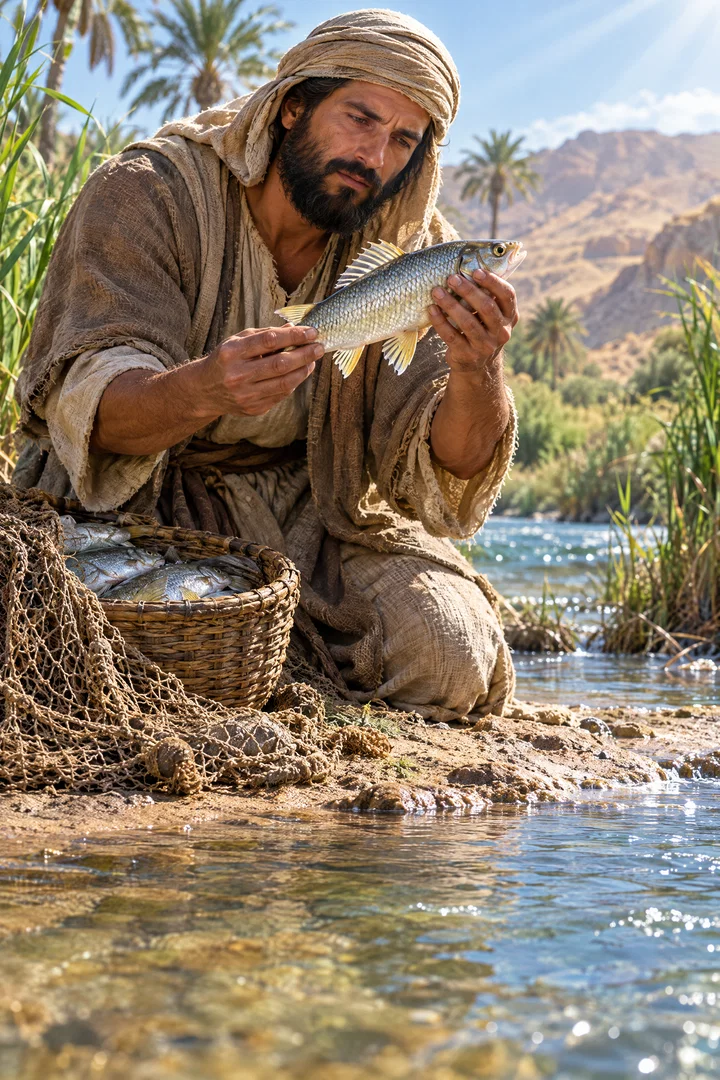
These shall ye eat of all that are in the waters: whatsoever hath fins and scales in the waters, in the seas, and in the rivers, them shall ye eat.
Translations
These shall you eat of all that are in the waters: whatever has fins and scales in the waters, in the seas, and in the rivers, them shall you eat.
King James Version, KJV Cambridge Paragraph Bible, Revised Version
These shall ye eat of all that are in the waters: whatsoever hath fins and scales in the waters, in the seas, and in the rivers, them shall ye eat.
These shall ye eat, of all that are in the waters: whatever hath fins and scales in the waters, in the seas, and in the rivers, them shall ye eat.
These may ye eat of all that are in the waters: whatsoever hath fins and scales in the waters, in the seas, and in the rivers, that may ye eat.
'This ye do eat of all which [are] in the waters; any one that hath fins and scales in the waters, in the seas, and in the brooks, them ye do eat;
These shall ye eat of all that are in the waters: whatever hath fins and scales in waters, in seas and in rivers, these shall ye eat;
these, may ye eat, of all that are in the waters,—all that have fins and scales in the waters, in the seas and in the rivers, them, may ye eat.
Berean Standard Bible, Majority Standard Bible
Of all the creatures that live in the water, whether in the seas or in the streams, you may eat anything with fins and scales.
“‘ You may eat of all these that are in the waters: whatever has fins and scales in the waters, in the seas, and in the rivers, that you may eat.
These you may have for food of all things living in the water: anything living in the water, in the seas or rivers, which has special parts for swimming and skin formed of thin plates, may be used for food.
These shall ye eate, of all that are in the waters: whatsoeuer hath finnes and skales in ye waters, in the seas, or in the riuers, them shall ye eate.
Douay-Rheims (Challoner revision)
These are the things that breed in the waters, and which it is lawful to eat. All that hath fins, and scales, as well in the sea, as in the rivers, and the pools, you shall eat.
Pictures
Cross-references
- Deuteronomy 14:9-10
These ye shall eat of all that are in the waters: all that have fins and scales shall ye eat:
Both distinguish water creatures permitted for food by fins and scales.
- Acts 10:12-15
Wherein were all manner of fourfooted beasts of the earth, and wild beasts, and creeping things, and fowls of the air.
Peter’s vision challenges his distinction between clean and unclean animals.
- Deuteronomy 14:3-8
Thou shalt not eat any abominable thing.
Cited alongside Leviticus 11 as teaching the food distinction.
- Mark 7:18-19
And he saith unto them, Are ye so without understanding also? Do ye not perceive, that whatsoever thing from without entereth into the man, it can not defile him;
Jesus distinguishes inward uncleanness from the food laws.
Commentary
Each commentary is drawn from primary sources: the writings of Ellen G. White and Adventist pioneers and periodicals. Each commentary is separate. Its own words are not a quotation; follow the references to read the source passages.
Ellen G. White
10 sources
Of all that live in the waters, in seas and in rivers, only those having both fins and scales may be eaten, and all other water creatures are forbidden as unclean.Ms 132, 1901, par. 11MH 311.3–312.1ST Jun 13, 1916SG4 124.1–2 This is one of the restrictions on animal food given to Israel, belonging to the law given through Moses that distinguished clean foods from unclean foods.Ms 132, 1901, par. 11MH 311.3–312.13SP 63.2BS 17.2–3ST May 2, 1878 Under that law swine's flesh and the flesh of certain other animals were forbidden to the Hebrews.DA 617.23SP 63.2BS 17.2–3ST May 2, 1878
It was part of health and sanitary instruction by which Israel were trained in the wilderness to leave behind unhealthful habits before entering Canaan, where the food restrictions applied.ST Jun 13, 1916MH 277.1 The distinction was wise and not arbitrary, for the forbidden creatures were not the best articles of food but were unfit and injurious to health.3SP 63.2SG4 124.1–2ST Mar 21, 1878 Such food fills and pollutes the blood with impurities and shortens life, while the permitted foods were the least objectionable; the restrictions were intended to preserve life and health, to keep the blood pure, and to lessen the harmful results of eating animal food.DA 617.23SP 63.2ST Jun 13, 1916ST May 2, 1878ST Mar 21, 1878 If Israel had submitted to this prohibition together with the rest of the food laws, everything injurious to health would have been removed from them and no sickness would have been allowed among them.SG4 124.1–2
The rule was perverted by unwarranted extremes beyond what was required, adding minute regulations and traditions about clean and unclean that made the law burdensome and kept people constantly anxious.DA 617.23SP 63.2ST Mar 21, 1878 Notably, requiring the straining of all water used and of drinking water to remove the smallest insect that might be classed with unclean animals was never commanded.DA 617.2ST May 2, 1878ST Mar 21, 1878 Daniel and his companions illustrate its application by refusing foods at the king's table that the law pronounced unclean, in order to preserve their health and clear minds for service.Ms 132, 1901, par. 11
Sources
Pioneers and periodicals
66 sources
God allows people to eat the creatures living in seas and rivers that have both fins and scales, and forbids the rest of the water creatures as unclean, including oysters, clams and other shellfish with lobster, turtle and frog.ST Mar 12, 1912ST Sep 20, 1899STST Feb 7, 1911 The difference rests in the nature of the creatures and their fitness for food, was already known before Moses in Noah's day, and has not changed so that what was unfit and unwholesome then remains so now.ST May 8, 1907ST Jan 2, 1912ST Oct 31, 1906ST Jul 15, 1908 It was given as sanitary instruction to preserve life and health and keep blood pure and prevent disease, and to guard a holy people from corruption and separation from heathen practices.ST Oct 11, 1899ST Feb 3, 1909STST Feb 17, 1904RH Jun 25, 1914 Peter's vision in Acts 10 did not abolish the distinction or make everything lawful to eat, but taught that no person should be called common or unclean.ST Oct 31, 1906RH May 23, 1854ST Oct 4, 1910 As binding law it was done away and is not imposed on Gentile converts, yet as a changeless moral lesson of purity and a fact of nature it still binds Christians, so those who know Scripture should when possible avoid unclean meats and choose the cleanest diet.ST Oct 21, 1908RH Mar 12, 1861RH Feb 8, 1912
Water Creatures Rule
These may be eaten from all that live in the waters, whether in seas or in rivers, when they have both fins and scales together.ST Sep 20, 1899STST Feb 7, 1911ST Oct 4, 1910ST Aug 11, 1909 This is part of the division between clean and unclean creatures, with fish having fins and scales counted clean.STST Feb 7, 1911ST Oct 4, 1910ST Aug 11, 1909ST Mar 25, 1897 The distinction was not arbitrary but according to the nature of the creatures and their fitness for food, as instruction for a holy people to guard them from corruption through diet.STST Feb 7, 1911ST Oct 4, 1910ST Aug 11, 1909
What lives in the water without fins and scales is forbidden as unclean and an abomination.ST Mar 12, 1912STST Aug 12, 1913ST Jan 30, 1901 This includes oysters, clams and other shellfish, as well as lobster, turtle and frog.ST Mar 12, 1912STST Aug 12, 1913ST Jan 30, 1901 The oyster is unclean because it has neither fins nor scales, and the wisdom of placing it on the unclean list is seen in its scavenging of filthy poisonous matter, its liability to cause fatal poisoning, and how repulsive it is to swallow such a creature whole with its entrails, dead or alive, raw or cooked.ST Mar 12, 1912ST Eating what is thus forbidden shows no regard for God's word and delight in abominations, while handling and selling the forbidden shellfish to strangers is governed by doing to others as one would be done by.ST
The permission to eat the clean kinds sets definite limits on flesh eating and is not a command to eat flesh as the best food.ST Feb 3, 1909ST May 24, 1905ST Jul 15, 1908ST Jul 3, 1907 The best food remains the vegetable food given at the beginning, and God preferred that Israel eat manna in the wilderness.ST Feb 3, 1909ST Jul 15, 1908 What was permitted within the limits laid down in Leviticus 11 and Deuteronomy 14 was only the less harmful kinds, received with thanksgiving and set apart through the word of God and prayer, and general permissions to eat whatsoever or to eat food sold in the market or set before disciples are to be understood as proper food under that law.ST May 24, 1905ST Jul 15, 1908ST Jul 3, 1907ST Feb 10, 1898 Even the clean creatures have now become so diseased that flesh is unsafe, so a vegetarian and non-flesh diet is for reasons of disease, expense and health generally the wisest and very best choice, though not a matter of Scripture command.ST Jul 15, 1908ST Jul 3, 1907
Nature and Origin
The rule that only water creatures having both fins and scales may be eaten states a difference already present in the creatures themselves, not a line drawn at will by the law, for the clean are by nature more fit for food and the unclean are by nature unfit and not acceptable even for sacrifice.ST May 8, 1907ST Jan 2, 1912ST Aug 13, 1912 Oysters lack fins and scales and therefore stand among the forbidden, and they are also to be avoided because they feed by scavenging and can bring poisoning. Fish with fins and scales are identified as fit to eat, while the creatures barred are declared unclean by nature and not good for food. The underlying principle is avoidance of unwholesome food, to be followed when circumstances permit by choosing what serves God's glory and human good, even though the ceremonial form given to Israel is not laid upon Gentile converts. Moral uncleanness itself does not come from food but from the thoughts of the heart, yet a right heart will choose the right food when it is available and will honor God in eating and drinking.ST May 8, 1907
The distinction set down in law had already been recognized before Israel's time in the animals taken into the ark and in those offered in sacrifice.ST May 8, 1907 It was not first made in the days of Moses but already existed in the days of Noah, when clean animals entered by sevens and unclean by pairs only, so that clean animals would remain for sacrifice and for food after the Flood destroyed vegetable food.ST Jul 15, 1908ST Dec 20, 1905ST Apr 29, 1913 Only two of each unclean kind entered while fourteen of each clean kind entered to preserve the species and to supply food and sacrifice, since only clean animals could be eaten and offered.ST Dec 20, 1905 The same discrimination is traced to the very beginning when sin entered, as shown in Noah's history, and the law given to the Jews later passed away while the natural distinction remains.ST Aug 26, 1913ST Jul 13, 1904 If nothing but unclean animals can be had, it is better to eat them than to starve, and that was true then and is true today.ST Jul 15, 1908
The nature of these creatures has not changed, so what was then unclean, unfit, unwholesome and an abomination remains so now.ST Oct 31, 1906ST Apr 25, 1906ST Jul 15, 1908STST Jul 3, 1907 Swine are unclean by nature in a world affected by sin, not merely by arbitrary declaration, and eating pork violates physical law with greater exposure to disease and bodily decay, though people may do so in ignorance. Creatures lacking fins and scales are utterly unfit for food, while those having fins and scales are permitted among the flesh foods God gave, though some permitted foods are much better than others and a flesh diet itself is permitted but not the best.ST Jul 15, 1908 The separation, sanctification and setting apart of certain water creatures as fit and the rest as not fit was given by the Son of God and agreed upon by Jesus and the Jews.ST The distinction between creatures to be eaten and unclean creatures not to be eaten rests on sound principles that still hold because unclean creatures have not changed their habits or nature, and indeed even clean creatures have now become so diseased that flesh is unsafe and a non-flesh diet is the very best.ST Jul 3, 1907
These food laws were not part of God's perfect laws at the beginning but were given to preserve the holy seed while accommodating existing conditions that could not then be entirely changed because of unbelief and ignorance.ST Oct 11, 1899 From the Deluge to the close of the Scripture canon God's people ate flesh in harmony with the prohibitions of Leviticus 11 and Deuteronomy 14, except for part of the time in the wilderness when manna was their food, and God showed something better in the primitive fleshless diet and in manna.ST Jul 15, 1908 The setting apart of clean animals and forbidding of unclean animals is presented as a restriction God gave Israel after they rejected His desire to free them from disease, with flesh permitted but not an absolute necessity.ST Feb 17, 1904 The statutes distinguishing more harmful from less harmful animals, or unclean from clean, came after Israel insisted on eating flesh instead of following God's provision, as a step for people unwilling to follow His plan fully, and the clean-unclean designation belongs to that permission to eat meat rather than to the Creator's original design for human food.RH Dec 21, 1905ST Nov 29, 1883 Those who held that the prohibition has ended taught that after the Flood men could eat any kind of flesh with no restriction, that the forbidding of certain kinds began when God chose Israel, and that it was done away when God rejected Israel, leaving men as before with only abstinence from meats offered to idols, from blood, and from things strangled.RH Mar 12, 1861
What was told to Israel after coming out of Egypt about which water creatures are clean did not create an arbitrary or ceremonial barrier in order to separate Jews from Gentiles, but stated what already existed in the nature of the animals themselves.STST Jul 12, 1883 The difference was already known when clean and unclean beasts and birds went into the ark with Noah several hundred years before the Jews existed as a nation and before God had called out anyone to be separate.ST Jul 12, 1883 Amid every wrong practice prevailing in Egypt, God was not bringing about a new order of things but declaring the order already present from the beginning.ST Jul 12, 1883 Peter's vision therefore did not remove this distinction or give permission to eat every kind of animal, for its lesson was that no person should be called common or unclean.ST Oct 31, 1906 Likewise the teaching that food is to be received with thanksgiving and set apart through the word of God and prayer means only what God has given within the limits He laid down, and eating must be by faith founded upon God's Word to give the strongest body, clearest mind and responsive heart, without judging a brother.ST Jul 3, 1907ST Aug 26, 1913
Binding Force Today
The prohibition belonged to the Levitical-Mosaic law given to Israel, and as binding law it was done away and is not imposed on Gentile converts or other nations.RH Mar 12, 1861RH Mar 30, 1876ST Jul 13, 1904 After the Flood men could eat any kind of flesh with no restriction, but when God chose Israel for His own people He forbade certain kinds, and when God rejected Israel from being His people that prohibition was done away and men were placed on the same footing as before the command was given, with the only remaining restrictions to abstain from meats offered to idols and from blood and from things strangled.RH Mar 12, 1861 The former-dispensation distinction between clean and unclean meats is done away under the present dispensation, so objection to eating pork today rests not on its having been classed unclean for the Jews but on its being physiologically unfit for food, and removal of the ceremonial distinction does not make every kind of meat healthful.RH Mar 30, 1876 The legal prohibition was lifted when the gospel was to go to all the world where many could not carry out the Mosaic laws, so that dietary rules would not hinder the gospel, yet the principle abides and is still to be learned from.ST Oct 21, 1908ST Jul 29, 1913 The distinction between clean and unclean is not merely arbitrary but reflects the nature of the animals, and the underlying principle of avoiding unwholesome food remains even though the ceremonial law was for Israel and is not imposed on Gentile converts.ST Oct 21, 1908ST Jul 13, 1904
The distinction is also a moral and holy lesson about order and purity of flesh and spirit, not a Jewish benefit only and not a shadow nailed to the cross like the sacrifices, priesthood, sanctuary and feast days. It remains changeless with the character of God and binding on Christians, so that eating swine, turtle, lobster, frog and the broth of abominable things is uncleanness of the flesh, and water creatures with fins and scales are allowed for food while others such as lobster, turtle and frog are forbidden. The dietary laws are divine and fundamental Bible truths given to the world through Moses and the prophets, still to be observed by Christian Sabbath-keepers, and the true Christian religion taught in the New Testament confirms this Old Testament truth rather than setting it aside.RH Feb 8, 1912
Even where the legal prohibition is treated as lifted, its principle, reason and facts of nature abide.ST Oct 21, 1908ST Feb 11, 1889ST Apr 29, 1913ST Jul 8, 1897 The same principles used to classify animals as clean or unclean in ancient times still apply, and the distinction existed before Israel, as shown by the different numbers of clean and unclean animals taken into the ark.ST Feb 11, 1889ST Apr 29, 1913 Some animals, including swine and rabbits, are not good or wholesome food while better foods are available, and these distinctions were for the good of the people because unclean meats were considered unwholesome, though the verse does not make avoiding all meat a requirement.ST Apr 29, 1913ST Aug 10, 1915 The distinction among meats is for a reason beyond mere ceremony and remains part of God's will for His people to respect, and those with knowledge from Scripture and science should when circumstances permit avoid unclean food and choose what serves God's glory and their own good, selecting food to glorify God and keep body, mind and spirit in the best condition and choosing the cleanest, healthiest diet.ST Oct 21, 1908ST Jul 8, 1897ST Aug 10, 1915 Only what God gave and set apart for food is sanctified by the word of God and prayer, and nothing God created for good is to be rejected at the command of men, while one who loves God and His word gives heed to the clean and unclean distinction, with the swine remaining unclean forever and shut out by the rule to do all to the glory of God.ST Jul 29, 1913 Keeping the food distinction does not save, just as no abstinence or work saves, since salvation is only through Christ Jesus with obedience coming as the result of connection with Him.ST Jul 29, 1913
If nothing but unclean animals can be had, it is better to eat them than to starve, and that was true then and is true today.ST Jul 15, 1908 The chapter gives dietary rules, but this verse is cited as an example of a collection of commands rather than as a complete formula for health reform or a guarantee that following food rules alone will improve health.RH Jul 21, 1904
Health and Holiness Purpose
Leviticus 11:9 belongs to sanitary instruction and a health code that still stands at the head of sanitary laws, given to preserve the holy seed and the life and health of the people, to keep the blood pure, to prevent disease and bodily decay, and to support physical strength, clear thought and moral perception.ST Feb 3, 1909ST Feb 17, 1904RH Jun 25, 1914RH Jan 6, 1910ST Sep 16, 1913 The division of creatures into clean and unclean rests on distinctions inherent in their nature and on physiological reasons rather than arbitrary decree, and science has confirmed the truth of the classification in forbidding what was prohibited.ST Feb 3, 1909STST Feb 17, 1904RH Jun 25, 1914ST Jun 11, 1912 The permission to eat certain creatures is not a command to choose them as the best food, for the best food remains the vegetable food given at the beginning, and the restriction on flesh eating was given after Israel rejected fuller deliverance from disease, so that eating flesh was permitted but never made an absolute necessity.ST Feb 3, 1909ST Feb 17, 1904RH Jun 25, 1914 The dietary restrictions also took account of health and preservation of the people together with sanitary concerns, climate, and separation from other peoples, showing that not every creature is fit or best for food but only what was created to be received with thanksgiving by those who believe and know the truth and set apart through the Word of God and prayer.ST Sep 16, 1913ST Jun 11, 1912
It was instruction for a holy people to guard them from corruption through diet, to keep them separate from other peoples and heathen practices, to lessen the harmful results of animal food, and to prepare them for entering Canaan, including reform of physical habits after slavery and a simple diet intended to purify the blood and make them holy and happy.ST Oct 11, 1899STRH Jan 6, 1910ST Sep 16, 1913ST Jan 7, 1897 These food laws were not part of the perfect law at the beginning but accommodated existing conditions, unbelief and ignorance that could not then be entirely changed.ST Oct 11, 1899 The prohibitions are rules for health, cleanliness and separation from heathen practices rather than ceremonial rules of sanctuary worship.ST Jan 7, 1897
Oysters lack fins and scales and therefore fall among the creatures forbidden for food, and clams likewise do not meet the rule of fins and scales for water creatures permitted to be eaten.ST Mar 12, 1912ST Jan 14, 1889 Oysters and clams are unfit because they scavenge filthy poisonous matter and can cause fatal and other poisoning.ST Jan 14, 1889 God had wise reason for placing the oyster on the unclean list, seen on careful examination of the oyster and its habits and in how repulsive it is to swallow such a creature whole with entrails, dead or alive, raw or cooked.ST Mar 12, 1912
Even the animals called clean were clean by nature and more favorable as food, yet flesh was not the best food, for God preferred manna for Israel in the wilderness and showed a better food in the primitive fleshless diet given to man.ST Jan 2, 1912ST Feb 3, 1909ST Jul 15, 1908 The same physiological reasons behind the distinction now support avoiding flesh foods altogether under present conditions, since even clean creatures have become so diseased that it is not safe to eat them, and a fleshless, non-flesh diet is the very best diet.RH Jun 25, 1914ST Jul 3, 1907 A vegetarian diet is not a matter of Scripture command, though disease, expense and health give reason to choose it as a general rule and to do all eating to the glory of God.ST Jul 15, 1908
Cleansing the body by obeying these laws of health, with temperance in all things and putting away secret sins, is health reform that perfects holiness, presents the body a living sacrifice holy and acceptable as the temple of God's Spirit, and prepares clean vessels to receive the latter rain and enter the kingdom of Christ and of God, since no unclean person has inheritance there.RH Nov 3, 1868 The healthful diet was present truth and light to keep and guide ancient Israel in the way to heaven, keeping them near to God and strong to endure hardship without complaint, so that while they heeded this light prosperity attended them and when they disobeyed disaster and defeat were their portion.RH Jan 14, 1873 Israel's failure under these cleansing truths is a type and example for the remnant upon whom the ends of the world are come, warning not to lust after evil things and not to fall away from health reform and other cleansing truths as Israel did.RH Nov 3, 1868
The restrictions on animals whose flesh was unfit to eat were given because it could pollute the blood and shorten life, and the permitted foods were specified as the least objectionable for eating.ST May 2, 1878ST Mar 21, 1878 The rule did not command straining drinking water to remove tiny insects, and requiring this went beyond what God had specified.ST May 2, 1878 The dietary rule was not an arbitrary restriction, but the Pharisees made such laws burdensome by adding minute regulations and traditions that kept people constantly anxious about what was clean or unclean.ST Mar 21, 1878
Other Scripture Connections
Peter's vision in Acts 10:9-16 did not abolish the distinction between clean and unclean or make every creature lawful to eat, for Peter knew that law and had never violated it.ST Oct 31, 1906RH May 23, 1854ST Oct 4, 1910ST Jul 12, 1883 The division shown in the rule for fish with fins and scales is not arbitrary but rests on what is actually in the creatures themselves, and their nature has not changed.ST Oct 31, 1906ST Oct 4, 1910 God has power to cleanse what is unclean, and He used the picture of unclean beasts to teach Peter that He could cleanse Gentiles as well as Jews.ST Oct 4, 1910 The lesson of the vision is that no person should be called common or unclean, removing Jewish prejudice against Gentiles and preparing Peter to preach to them and to eat with them.ST Oct 31, 1906RH May 23, 1854
Romans 14:14 does not make every creature fit for food, for the chapter's great central thought is not a diet question but that man should not judge his brother.ST Aug 26, 1913 It has reference to ceremonial uncleanness and conscience, where Gentiles eating things abhorrent to Jews are not judged if conscience does not condemn them, while those better instructed who see some things as unclean must follow their convictions.ST Aug 26, 1913 Eating must be by faith, and faith is founded upon God's Word, so that whether eating or drinking all must be done to the glory of God by using the blessings God has given for food in the way that gives the strongest body, clearest mind, and a heart responsive to Him.ST Aug 26, 1913
The declaration that every creature of God is good and to be received with thanksgiving in 1 Timothy 4:1-4 means only what God created to be received by those who believe and know the truth, sanctified or set apart through the word of God and prayer for food.ST Feb 13, 1907ST Jul 3, 1907ST Feb 10, 1898ST Jun 11, 1912ST Jul 29, 1913 Not every creature is approved or fit or best for food, for God Himself separated between clean and unclean, designating what was allowable and what was unfit to eat because the prohibited animals were unclean by nature and not made unclean by the law.ST Feb 13, 1907ST Feb 10, 1898ST Jun 11, 1912 The distinction between water creatures with fins and scales to be eaten and unclean water creatures not to be eaten rests on sound principles that still hold, because unclean creatures have not changed their habits or nature since.ST Jul 3, 1907 Science has demonstrated the truthfulness of God's classification in absolutely forbidding what He prohibited, and even clean creatures have become so diseased that it is not safe to eat them, so that a non-flesh diet is the very best diet.ST Jul 3, 1907ST Jun 11, 1912 Nothing God created for good is to be rejected at the command of men, yet only what God gave and set apart for food is sanctified by the word of God and prayer, within the limits He laid down.ST Jul 29, 1913
General permissions to eat whatsoever do not include unclean foods, for Leviticus 11 sets definite limits on which animal foods may be eaten.ST May 24, 1905ST Apr 1, 1889RH Apr 9, 1867 Permission to eat flesh allows only those kinds God allows, so swine's flesh remained forbidden and a general statement must be read within its limits without making distinct things common or erasing God's specific requirements.ST Apr 1, 1889RH Apr 9, 1867 The specific prohibitions also limited what could be eaten at Israel's yearly gatherings, so that the food permitted in Deuteronomy 14:26 did not include foods prohibited by that chapter.ST Apr 15, 1897 Deuteronomy 14 repeats the instruction about clean and unclean meats, distinguishing edible water creatures by requiring both fins and scales.ST Mar 18, 1913
Some of the king's foods in Daniel's day may have included unclean meats, so that eating them would have violated God's law distinguishing clean from unclean animals.ST Sep 10, 1894ST Sep 10, 1894 The Jewish law classified some animal foods as unclean, and Daniel could not eat certain items from the king's table without violating his religious convictions.RH Jan 12, 1869 The dry details of laws and regulations in Leviticus, including this rule for water creatures, are mighty object-lessons emphasizing the exceeding sinfulness of sin, and they are given new life and blessing when Jesus Christ is seen in them as the Lamb of God that takes away the sin of the world. The dispute among primitive Christians about eating concerned those animals the law called unclean, with those weak in faith and insight into Christianity choosing to confine themselves to vegetables rather than eat meats they still esteemed unclean.RH Jul 16, 1861
Christian Living Application
Moral uncleanness comes from the thoughts of the heart, not from particular food itself, yet a person with a right heart who knows God's righteousness will choose the right food when it is available and will honor God in eating and drinking.ST May 8, 1907ST Such a one seeks to glorify God in the body, to keep His temple clean and effective, refusing a perverted appetite and refusing to put into what He has cleansed what He pronounced unclean and an abomination.STST Aug 26, 1913 Eating and drinking to God's glory means using the blessings He gave for food in the way that gives the strongest body, clearest mind, and a heart responsive to Him, serving both His glory and one's own good.ST Oct 21, 1908ST Aug 26, 1913 There is no salvation in eating or not eating, for the kingdom of God is not eating and drinking, and keeping the distinction between clean fish with fins and scales and unclean kinds does not save, since salvation is only through Christ Jesus with obedience coming as the result of connection with Him.STST Jul 29, 1913
Rejecting foods forbidden by Scripture is part of health reform as privilege and duty, applying the moral and holy lesson of order and purity of flesh and spirit and cleansing the body by obeying the laws of health with temperance and putting away secret sins.RH Nov 3, 1868RH Mar 7, 1907 That cleansing work prepares clean vessels to receive the latter rain and enter the kingdom of Christ and of God, since no unclean person has inheritance there, while Israel's failure under these cleansing truths warns the remnant not to lust after evil things and not to fall away.RH Nov 3, 1868 Eating the forbidden shellfish, repeatedly called an abomination, shows no regard for God's word and delight in abominations, placing the obstinate among God's people with the lowest heathen to come to an end together at Christ's coming in judgment.ST Handling and selling the forbidden shellfish to strangers is governed by doing to others as one would be done by.ST
Faithfulness is shown by eating only fish with scales, as the New Guinea Sabbath-keepers did, and by refusing unclean meat even when forced by a parent and under persecution.RH Jul 27, 1905ST Apr 29, 1913 Food sold in the market or set before disciples is to be understood as proper food under this law, since the disciples went among those eating the food permitted by God within the limits laid down for flesh eating.ST Jul 15, 1908ST Aug 10, 1915 A vegetarian diet is not a matter of Scripture command and avoiding all meat is not required, though disease, expense, and health give reason to choose it as a general rule and to choose the cleanest, most wholesome, and healthful way of living.ST Jul 15, 1908ST Aug 10, 1915RH Mar 7, 1907 Genuine Christianity upholds the true diet, discarding what is classified unclean and unsuitable and following the Word of God.RH Jun 18, 1908RH Mar 3, 1904
Sources