Leviticus 21:20
Or crookbackt, or a dwarf, or that hath a blemish in his eye, or be scurvy, or scabbed, or hath his stones broken;
Translations
Or hunch back, or a dwarf, or that has a blemish in his eye, or be scurvy, or scabbed, or has his stones broken;
Or crookbackt, or a dwarf, or that hath a blemish in his eye, or be scurvy, or scabbed, or hath his stones broken;
or crookbackt, or a dwarf, or that hath a blemish in his eye, or be scurvy, or scabbed, or hath his stones broken;
Or crooked-backed, or a dwarf, or that hath a blemish in his eye, or be scurvy, or scabbed, or hath his peculiar members broken:
or crookbackt, or a dwarf, or that hath a blemish in his eye, or is scurvy, or scabbed, or hath his stones broken;
or crook-backed, or a dwarf, or that hath a blemish in his eye, or is scurvy, or scabbed, or hath his stones broken;
or hump-backed, or a dwarf, or with a mixture in his eye, or a scurvy person, or scabbed, or broken-testicled.
or hump-backed, or withered, or that hath a spot in his eye, or hath the itch, or scabs, or his testicles broken.
or is hump-backed or a dwarf, or hath defective vision,—or hath scurvy or scab, or is crushed in the stones:
Berean Standard Bible, Majority Standard Bible
or who is a hunchback or dwarf, or who has an eye defect, a festering rash, scabs, or a crushed testicle.
or hunchbacked, or a dwarf, or one who has a defect in his eye, or an itching disease, or scabs, or who has damaged testicles.
Or one whose back is bent, or one who is unnaturally small, or one who has a damaged eye, or whose skin is diseased, or whose sex parts are damaged;
Or is crooke backt, or bleare eyed, or hath a blemish in his eye, or be skiruie, or skabbed, or haue his stones broken.
Douay-Rheims (Challoner revision)
If he be crookbacked, or blear eyed, or have a pearl in his eye, or a continual scab, or a dry scurf in his body, or a rupture:
Pictures
Commentary
Each commentary is drawn from primary sources: the writings of Ellen G. White and Adventist pioneers and periodicals. Each commentary is separate. Its own words are not a quotation; follow the references to read the source passages.
Ellen G. White
3 sources
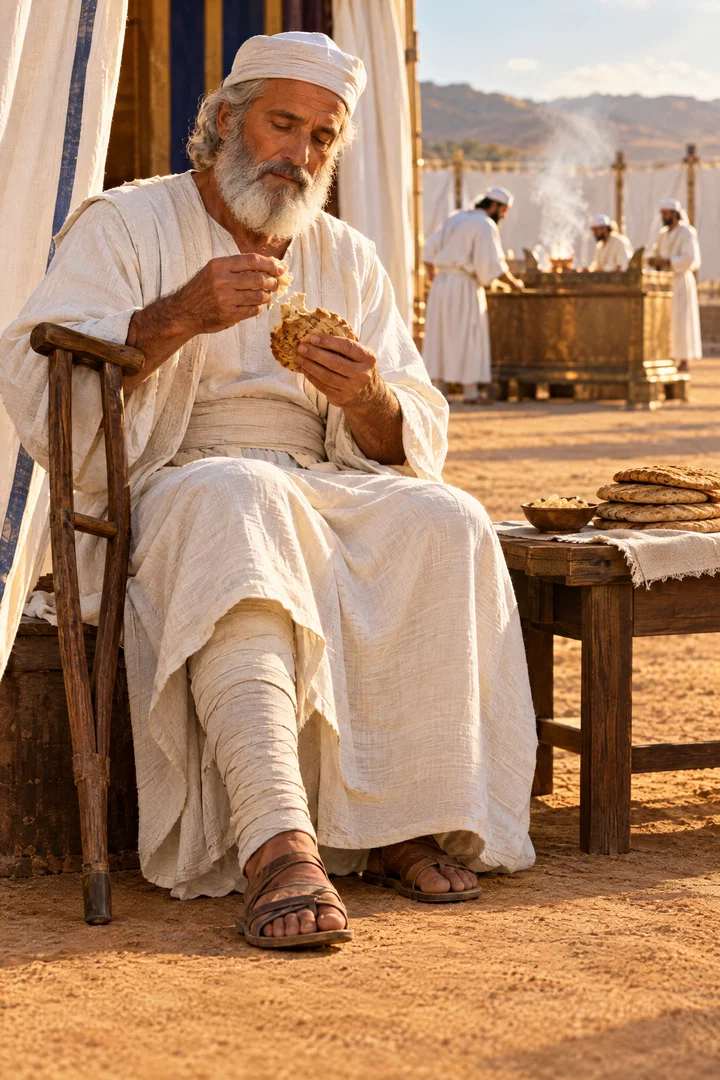
Leviticus 21:20 stands within the regulations of Leviticus 21:17-23 for the priests of Israel's sanctuary, barring a priest with a physical blemish from serving in the sanctuary.EW 82.2SCEV 21.1Ms 2, 1853, par. 2–3 The exclusion taught that those who minister before God must be holy, pure, and without blemish.EW 82.2SCEV 21.1Ms 2, 1853, par. 2–3 The reason was that their work brought them into close connection with God.SCEV 21.1 Sanctuary ministers who were not holy and pure would be destroyed by God.Ms 2, 1853, par. 2–3
God's holiness and His exacting standard in this requirement have not changed.SCEV 21.1 The same standard applies to ministers of Christ.EW 82.2 They should live with holiness and deep piety.EW 82.2
Sources
Pioneers and periodicals
4 sources
The sons of Aaron with bodily defects were barred from serving as priests in the temple, and the defects named include being hunchbacked, being a dwarf, having a defect of the eye, having skin disease, and having injured reproductive organs.ST Aug 21, 1884RH Apr 1, 1909RH Sep 30, 1873 A priest ministering in the temple was required to be physically without blemish, so these listed defects illustrate the standard of physical wholeness demanded for priestly service.ST Aug 21, 1884 Among the Jews this disqualification applied to the highest offices in the service of God.RH Apr 1, 1909
The larger passage of Leviticus 21:16-23 belongs among the texts that describe the offerings and sacrifices as most holy.RH Jun 10, 1862 It therefore figures in the comparison of the holiness of the Sabbath with the holiness of offerings and sacrifices.RH Jun 10, 1862 Its wording does not establish that the offerings are holier than the Sabbath.RH Jun 10, 1862
The exclusion of the bodily blemished son of Aaron from the priesthood applies as a principle for the ministry.RH Sep 30, 1873 The church should not educate dull or mediocre men for the ministry merely because they are pious.RH Sep 30, 1873
Sources