Leviticus 26:5
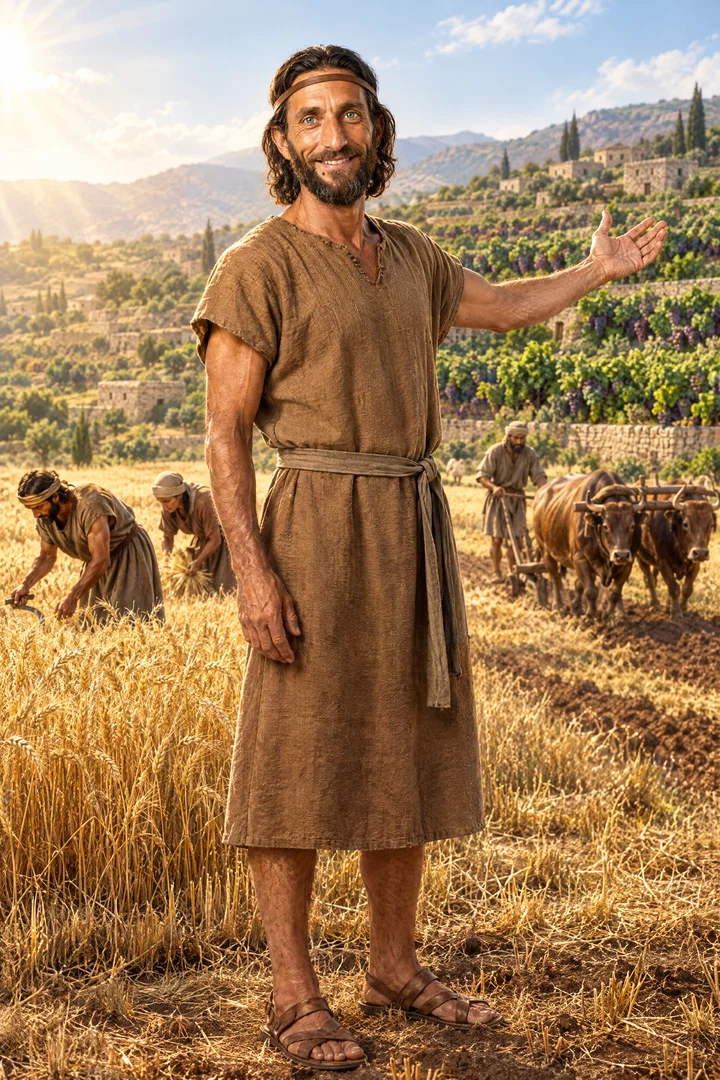
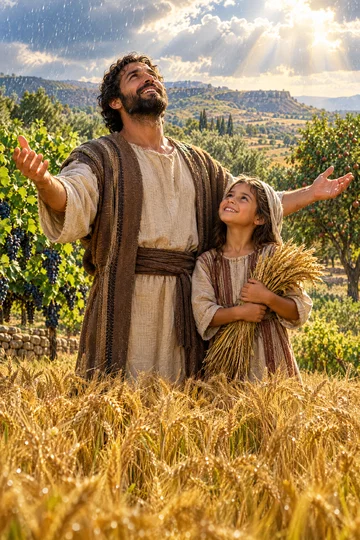
And your threshing shall reach unto the vintage, and the vintage shall reach unto the sowing time: and ye shall eat your bread to the full, and dwell in your land safely.
Translations
And your threshing shall reach to the vintage, and the vintage shall reach to the sowing time: and you shall eat your bread to the full, and dwell in your land safely.
King James Version, KJV Cambridge Paragraph Bible, Revised Version
And your threshing shall reach unto the vintage, and the vintage shall reach unto the sowing time: and ye shall eat your bread to the full, and dwell in your land safely.
And your threshing shall reach to the vintage, and the vintage shall reach to the sowing time; and ye shall eat your bread to the full, and dwell in your land safely.
And your threshing shall reach unto the vintage, and the vintage shall reach unto the sowing time; and ye shall eat your bread to the full, and dwell in your land safely.
and reached to you hath the threshing, the gathering, and the gathering doth reach the sowing -[time]; and ye have eaten your bread to satiety, and have dwelt confidently in your land.
and your threshing shall reach unto the vintage, and the vintage shall reach unto the sowing-time; and ye shall eat your bread to the full, and dwell in your land securely.
Then shall your threshing reach unto the vintage, And, the vintage, shall reach unto the seedtime,—And ye shall eat your food to the full, And shall dwell securely in your land.
Berean Standard Bible, Majority Standard Bible
Your threshing will continue until the grape harvest, and the grape harvest will continue until sowing time; you will have your fill of food to eat and will dwell securely in your land.
Your threshing shall continue until the vintage, and the vintage shall continue until the sowing time. You shall eat your bread to the full, and dwell in your land safely.
And the crushing of the grain will overtake the cutting of the grapes, and the cutting of the grapes will overtake the planting of the seed, and there will be bread in full measure, and you will be living in your land safely.
And your threshing shall reache vnto the vintage, and the vintage shall reache vnto sowing time, and you shall eate your bread in plenteousnesse, and dwell in your land safely.
Douay-Rheims (Challoner revision)
The threshing of your harvest shall reach unto the vintage, and the vintage shall reach unto the sowing time: and you shall eat your bread to the full, and dwell in your land without fear.
Pictures
Cross-references
- Deuteronomy 28:1-14
And it shall come to pass, if thou shalt hearken diligently unto the voice of the LORD thy God, to observe and to do all his commandments which I command thee this day, that the LORD thy God will set thee on high above all nations of the earth:
Both passages promise Israel abundant provision and security for obedience.
- Leviticus 26:14-20
But if ye will not hearken unto me, and will not do all these commandments;
Disobedience brings covenant curses, the opposite of the promised abundance.
- Deuteronomy 11:13-15
And it shall come to pass, if ye shall hearken diligently unto my commandments which I command you this day, to love the LORD your God, and to serve him with all your heart and with all your soul,
Land’s harvest and provision are blessings tied to Israel’s obedience.
- Malachi 3:10-12
Bring ye all the tithes into the storehouse, that there may be meat in mine house, and prove me now herewith, saith the LORD of hosts, if I will not open you the windows of heaven, and pour you out a blessing, that there shall not be room enough to receive it.
Both connect faithfulness to God with abundant harvests and blessing.
- Leviticus 26:20
And your strength shall be spent in vain: for your land shall not yield her increase, neither shall the trees of the land yield their fruits.
opposite curse of vain labor without yield
- Deuteronomy 28:51
And he shall eat the fruit of thy cattle, and the fruit of thy land, until thou be destroyed: which also shall not leave thee either corn, wine, or oil, or the increase of thy kine, or flocks of thy sheep, until he have destroyed thee.
Both contrast covenant blessings with the loss of the land’s produce.
- Leviticus 26:19
And I will break the pride of your power; and I will make your heaven as iron, and your earth as brass:
opposite curse of iron heaven and brass earth
- Proverbs 3:23-24
Then shalt thou walk in thy way safely, and thy foot shall not stumble.
Both promise safety and freedom from fear.
- Deuteronomy 8:7-10
For the LORD thy God bringeth thee into a good land, a land of brooks of water, of fountains and depths that spring out of valleys and hills;
The promised land provides abundant crops, food, and fullness.
- Deuteronomy 11:17
And then the LORD’s wrath be kindled against you, and he shut up the heaven, that there be no rain, and that the land yield not her fruit; and lest ye perish quickly from off the good land which the LORD giveth you.
Both describe the land’s agricultural prosperity or failure in relation to obedience.
Commentary
Each commentary is drawn from primary sources: the writings of Ellen G. White and Adventist pioneers and periodicals. Each commentary is separate. Its own words are not a quotation; follow the references to read the source passages.
Ellen G. White
8 sources
The verse is part of God's covenant blessings to Israel, spoken from the pillar of cloud, conditional on obedience to His commandments, including keeping His Sabbaths and reverencing His sanctuary.Ms 40, 1898, par. 2–4Lt 55, 1900, par. 9–112T 661.1–2 Obedience would make Israel the most powerful people on the earth, while refusal would require Him in justice to treat them as apostates.Ms 40, 1898, par. 2–4 By obedience on earth, people bear witness to God's goodness, and He rewards that obedience with abundance and safety.Lt 55, 1900, par. 9–11
Its harvest language means continuous, unbroken agricultural plenty, where threshing lasts until the grape harvest and grape gathering lasts until sowing and planting time, so one harvest continues until the next season and planting follows at once.ED 140.4–5Ms 40, 1898, par. 2–4Lt 55, 1900, par. 9–11PP 535.12T 661.1–2 The obedient will eat bread to the full and dwell safely in their land, with abundance and security.ED 140.4–5Ms 40, 1898, par. 2–4Lt 55, 1900, par. 9–11PP 535.12T 661.1–2 The promise belongs with rain in due season, the land yielding its increase and trees yielding fruit, enemies perishing, and God not abhorring Israel but walking with them to be their God while they are His people.ST Aug 6, 1894
The blessings stand opposite the threatened curse for disobedience and disregard of God's requirements: crop failure and hardship, broken pride of power, heaven as iron and earth as brass, strength spent in vain without yield, suffering under foreign rule, withdrawal of prosperity, and in justice being treated as apostates.Ms 40, 1898, par. 2–4Lt 34, 1899, par. 39–412T 661.1–21RED 40.1–41.1ST Aug 6, 1894 The promises are conditional on faithfulness, so later suffering under foreign rule shows the curse that followed disobedience, not a claim to the blessings promised to the obedient.1RED 40.1–41.1 The chapter is an admonition for people living at the end of the world, where greater light brings greater responsibility, obedience bears witness to God's goodness, and the prophecy's time is nearly accomplished, pointing to the soon coming of the One whose right it is to reign to receive the kingdom and sit on His Father's throne.Lt 55, 1900, par. 9–11Lt 34, 1899, par. 39–41
Sources
Pioneers and periodicals
30 sources
It promises overlapping abundance where threshing lasts until the grape harvest and the grape harvest lasts until sowing time, so there is bread to eat to the full, safe dwelling in the land, and a storehouse that will not fail.ST Nov 29, 1899ST May 1, 1907RH Apr 21, 1903 It is conditional on walking in God's statutes and keeping His commandments, belonging to Israel's welfare in literal Canaan under the covenant made at Horeb and concerning prosperity in this life rather than eternal life.RH Aug 15, 1871ST Feb 15, 1910RH Dec 9, 1851 It stands with rain in due season, the land yielding increase and trees yielding fruit, and God walking with Israel to be their God, and stands opposite the curse of heaven as iron and earth as brass, strength spent in vain without yield, and terror, sorrow and desolation for apostasy and worshiping gods made by men's hands, covering much the same ground as Deuteronomy 28.ST Aug 6, 1894ST Jul 22, 1913RH Aug 15, 1871 The chapter is given in the plainest literal language and is a prophetic outline of Israel's future history whose predictions about blessing for obedience and scattering and suffering for rebellion are accurately and literally fulfilled in Jewish history.ST May 8, 1907RH Mar 21, 1871ST May 6, 1889ST Apr 9, 1896 It threatens punishment increased sevenfold in severity if Israel did not repent rather than setting any span of prophetic time to calculate,RH Jan 27, 1903RH May 13, 1875 while those who held the other taught its seven times were seven prophetic years totaling 2,520 years of bondage beginning with Manasseh's captivity in 677 B.C. and ending in A.D. 1843.SMV 18.3RH Jan 3, 1856RH Jan 17, 1856
Promise for Obedient Israel
The threshing would last until the grape harvest and the grape harvest until the sowing time, harvest overlapping harvest in unbroken abundance.ST Nov 29, 1899ST May 1, 1907RH Apr 21, 1903ST Jun 10, 1913RH Dec 9, 1851 Bread would be eaten to the full and the land dwelt in safely, with full supply of food and secure dwelling as God's providential blessing on an obedient people.ST Nov 29, 1899ST May 1, 1907RH Apr 21, 1903ST Jun 10, 1913RH Jul 12, 1870 The storehouse would not fail while obedience continued.RH Jul 12, 1870
The promise was conditional on walking in God's statutes and keeping and doing His commandments, belonging only while the covenant conditions were met and forfeited by failure.RH Aug 15, 1871ST Feb 15, 1910RH Dec 9, 1851RH Jan 19, 1860RH Jan 13, 1852 Faith that believes God's word and shows itself in obedience gives confidence to rely on His assurance of provision and safety.ST Apr 24, 1893 It was spoken under the covenant made at Horeb for Israel's welfare in literal Canaan, concerning prosperity in this life rather than eternal life and therefore inferior to the promises of the new covenant.RH Dec 9, 1851RH Jan 13, 1852
It stands together with rain in due season, the land yielding its increase and trees yielding their fruit, enemies perishing, and God not abhorring Israel but walking with them to be their God while they are His people.ST Aug 6, 1894 It covers much the same ground as Deuteronomy 28, setting blessing for obedience against punishment for disobedience.ST Jul 22, 1913 The opposite curse for despising God's statutes, breaking His covenant and disregarding His requirements is broken pride of power, heaven as iron and earth as brass, strength spent in vain without yield, with terror and fear.ST Aug 6, 1894RH Aug 15, 1871 Sorrow, anguish of spirit, desolation of heart, and sure withdrawal of blessing would follow sliding into apostasy, worshiping gods formed by men's hands, forgetting the deliverance from oppression in Egypt and thrusting aside the miraculous entrance into Canaan.ST Aug 1, 1911
The chapter is revelation in the plainest literal language without symbol and figure, like Deuteronomy 28 and Matthew 24, in contrast to revelation through symbols and figures by Daniel and John or by parables.ST May 6, 1889 It is equally inspired by the same Spirit as those symbolic messages, though the human instruments are more or less illuminated, with Moses understanding more than Ezekiel.ST May 6, 1889 It is stated so clearly in simple plain language that only those who will not may fail to understand, showing the promised land, the coming and death of Christ, the tribulation of the Jews, and the glorious consummation in Christ's eternal triumph.ST May 6, 1889ST Apr 9, 1896 These blessings were seen in David's and Solomon's time and to a degree under some later kings, but Israel refused to meet God's requirements and received the curses instead of the blessings.ST Jun 10, 1913ST Feb 15, 1910
Prophecy Fulfilled and Disputed
The chapter is a prophetic outline of Israel's future history, promising blessing for obedience and warning that rebellion would bring scattering among the nations and persecution.ST May 8, 1907ST Sep 26, 1895 It foretold Israel's later infidelities and sufferings, setting out abundant harvests with threshing reaching to the vintage and the vintage to sowing, and safe dwelling in the land as the blessings of obedience.RH Mar 21, 1871ST Sep 26, 1895 Its literal predictions about the Jews and their future were accurately and literally fulfilled in Jewish history.RH Mar 21, 1871ST Jan 17, 1906
It prophesied that Israel would be removed from its land and given over to Gentile rule, fulfilled in the Assyrian removal of Israel.RH Jan 10, 1856 Transgression brings calamities and trouble upon God's people, and turning from God to worship other gods is the outcome of unrepented sin.ST Mar 12, 1912 Its very solemn and fearful warnings of the calamities that would come if they rejected Him, emphasized over and over, are strikingly fulfilled in Israel.ST Feb 25, 1913ST Feb 14, 1911
The multiplied predictions regarding the Jews given from Moses to New Testament times prove the inspiration of the Bible.ST Oct 13, 1909 Both the foretold faithfulness and prosperity fulfilled and the disobedience and calamities fulfilled stand as a mighty and undeniable witness to the Word that came through that nation.ST Oct 13, 1909
The seven times of the chapter are seven prophetic years of chastisement, each counted as 360 years for a total of 2,520 years of bondage and indignation under earthly kingdoms.SMV 18.3RH Jan 3, 1856RH Jan 17, 1856 This period began with Manasseh's captivity in 677 B.C. and ended in A.D. 1843, when punishment and bondage would cease.SMV 18.3 It was the only revealed appointed time covering the indignation when Gabriel told Daniel that at the time appointed the end shall be, so he could have referred to no other appointed time.RH Jan 3, 1856 The curse, which is the 2520 years indignation spoken of in Daniel, ceases at the end of the 1290 days, when the yoke of cruel bondage is broken, Jacob is redeemed and ransomed from the hand of him that was stronger than he, captivity is turned, and Jacob rejoices and Israel is glad.RH Jan 17, 1856
On another understanding, seven times means sevenfold, describing only the increased severity or degree of punishment threatened if Israel did not repent, not a span of prophetic time.RH Jan 27, 1903RH May 13, 1875 So it sets out no 2,520-year period, gives no prophetic period to calculate, and sets no date for the Lord's coming.RH Jan 27, 1903RH May 13, 1875
Sources