Translations
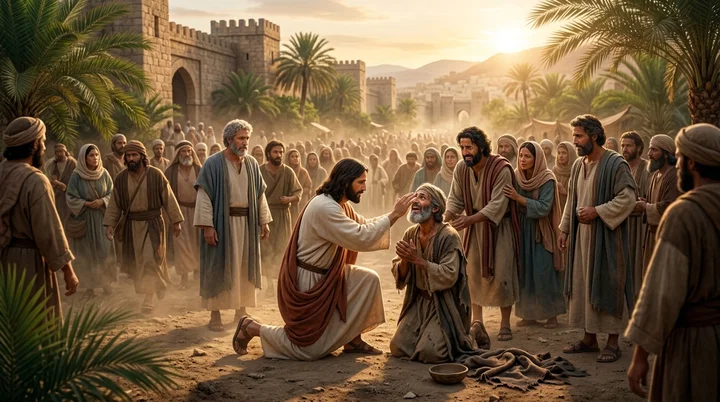
And he cried, saying, Jesus, you son of David, have mercy on me.
King James Version, KJV Cambridge Paragraph Bible
And he cried, saying, Jesus, thou Son of David, have mercy on me.
Webster Bible, Revised Version, American Standard Version
And he cried, saying, Jesus, thou son of David, have mercy on me.
and he cried out, saying, 'Jesus, Son of David, deal kindly with me;'
And he called out saying, Jesus, Son of David, have mercy on me.
And he cried aloud, saying—Jesus, son of David! have mercy upon me!
Berean Standard Bible, Majority Standard Bible
So he called out, “ Jesus, Son of David, have mercy on me!”
He cried out, “ Jesus, you son of David, have mercy on me!”
And he said in a loud voice, Jesus, Son of David, have mercy on me.
Then hee cried, saying, Iesus the Sonne of Dauid, haue mercie on me.
Douay-Rheims (Challoner revision)
And he cried out, saying: Jesus, son of David, have mercy on me.
Pictures
Cross-references
- Matthew 20:30-34
And, behold, two blind men sitting by the way side, when they heard that Jesus passed by, cried out, saying, Have mercy on us, O Lord, thou Son of David.
Blind men cry to Jesus for mercy, and he heals them.
- Mark 10:47-52
And when he heard that it was Jesus of Nazareth, he began to cry out, and say, Jesus, thou Son of David, have mercy on me.
Bartimaeus cries to Jesus for mercy and receives his sight.
- Matthew 9:27
And when Jesus departed thence, two blind men followed him, crying, and saying, Thou Son of David, have mercy on us.
Blind men address Jesus as the Son of David and ask for mercy.
- Matthew 15:22
And, behold, a woman of Canaan came out of the same coasts, and cried unto him, saying, Have mercy on me, O Lord, thou Son of David; my daughter is grievously vexed with a devil.
The woman of Canaan’s appeal to Jesus parallels the blind man’s appeal.
- Luke 18:42
And Jesus said unto him, Receive thy sight: thy faith hath saved thee.
Jesus answers the plea by restoring sight.
- Matthew 12:22-23
Then was brought unto him one possessed with a devil, blind, and dumb: and he healed him, insomuch that the blind and dumb both spake and saw.
Jesus heals a blind man, prompting recognition of the Son of David.
- Isaiah 35:5
Then the eyes of the blind shall be opened, and the ears of the deaf shall be unstopped.
The promised opening of blind eyes is fulfilled in the Messiah’s healing.
- Mark 8:22-26
And he cometh to Bethsaida; and they bring a blind man unto him, and besought him to touch him.
Jesus heals a blind man.
- Matthew 8:28-34
And when he was come to the other side into the country of the Gergesenes, there met him two possessed with devils, coming out of the tombs, exceeding fierce, so that no man might pass by that way.
Matthew’s parallel account of the Gadara event mentions two demoniacs.
- Luke 19:1-10
And Jesus entered and passed through Jericho.
The Zacchaeus encounter followed the healing of Bartimaeus.
- Matthew 8:2-3
And, behold, there came a leper and worshipped him, saying, Lord, if thou wilt, thou canst make me clean.
The leper’s appeal to Jesus illustrates faith in his power to cleanse.
Commentary
Each commentary is drawn from primary sources: the writings of Ellen G. White and Adventist pioneers and periodicals. Each commentary is separate. Its own words are not a quotation; follow the references to read the source passages.
Ellen G. White
6 sources
The verse records the cry of blind Bartimaeus to Jesus for mercy.RH Jan 10, 1856SG2 202.1–2 The setting is Jesus being near and passing by, offering a blessing that must be earnestly seized and not allowed to pass unreceived.7T 190.119MR 18.2Ms 128, 1901, par. 31 The verse shows the person should cry earnestly to Jesus as the Son of David for mercy.7T 190.119MR 18.2
For fallen sinners, lifting this cry to Christ in hope and expectation is what the word of God encourages and is the plain response of belief in God's word, without needing to understand the philosophy of how divinity and humanity unite in Christ.ST Jul 2, 1896 The Christ to whom the cry looks is the effectual remedy for the leprosy of sin, the ransom provided for rebels and enemies, and the revelation of God's unparalleled mercy.ST Jul 2, 1896 The same cry is the way to seek healing from Jesus as the great Physician, by bringing a sick person to Jesus in the arms of faith and crying for mercy for them.RH Jan 10, 1856SG2 202.1–2
That faith means relying alone on the arm of the great Physician and laying aside all medicine, while continuing to ask and hold faith for complete and entire restoration and expecting to see and feel more of God's salvation.RH Jan 10, 1856SG2 202.1–2 Jesus answers by giving sight and clearer sight through God's grace, a gift more valuable than gold, silver, or precious stones, and by bringing comfort through felt healing power.7T 190.1RH Jan 10, 1856SG2 202.1–219MR 18.2 Answered in this way, the cry brings peace like a river, triumph in God, unspeakable gratitude for tokens of God's love, new dedication to God, and strength to sound the last warning to the world.SG2 202.1–2
For commandment-keeping people and every worker, humbly receiving the blessing glorifies His name and means walking humbly before Him, coming down from self-exaltation, and seeking the Lord with all heart and soul and strength and mind by searching the heart, setting in order things that ought to have been set in order, and preparing the King's highway.Ms 128, 1901, par. 31
Sources
Pioneers and periodicals
25 sources
The blind beggar who cried for mercy sat by the wayside at Jericho as Jesus passed on His final journey to Jerusalem, born blind and begging in abject poverty, with a second blind man beside him for whom he spoke as the more conspicuous and persistent voice.ST Nov 21, 1900ST Mar 18, 1889ST Mar 8, 1905ST Aug 30, 1905 Having learned that Jesus of Nazareth was passing by, he appealed to Him as Son of David in helpless dependence, able to do nothing for himself but trusting in faith the Saviour who was near to seek and to save.ST Sep 3, 1894ST Jan 3, 1911ST Jul 29, 1897 His physical blindness and beggary pictures the moral state of every person by nature, blind to God's glories in His works and word and spiritually poor and perishing while fancying themselves increased in goods and needing nothing. His cry teaches persevering, agonizing prayer that will not be silenced by rebuke but cries so much the more because the only Saviour is passing now and may never pass again, and such crying, brief and humble prayer stops Jesus, causes Him to stand still, and is heard and answered.RH Mar 22, 1870ST Jan 3, 1911RH Jul 21, 1863 As he received physical sight by appealing in faith, so all in spiritual poverty and blindness who turn to Christ and ask for mercy receive spiritual sight, riches, rest and righteousness, and the oppressed people of God near the end will in the same united day-and-night cry be delivered.ST Sep 3, 1894RH Feb 25, 1862ST Jul 29, 1897ST Aug 30, 1905RH Feb 25, 1873
Blind Beggar's Cry
The cry was raised at Jericho as Jesus was passing through on His final journey to Jerusalem.ST Sep 13, 1899ST Nov 21, 1900 It belongs to the healing of the blind man, one of the principal events in the section from Luke 18:24 through Luke 21, with parallel accounts in Mark 10:46-52 and Matthew 20:29-34.ST Nov 21, 1900ST Apr 21, 1909 The healing took place between the two Jerichos and shortly before the encounter with Zacchaeus in the newer, Roman-built city.ST Nov 21, 1900
Two blind men were healed at Jericho, and Bartimeus is named as the one blind beggar because he was the more conspicuous and persistent.ST Mar 18, 1889ST Mar 8, 1905 He may have spoken for both himself and his companion.ST Mar 18, 1889 Their plea sought the sight that His power gives, and the change from darkness to light also shows how He gives spiritual life and love.ST Aug 30, 1905
The call for mercy was the blind man's first effort to gain Jesus' attention as Jesus was entering Jericho, before the healing that occurred as Jesus left the city.ST Mar 18, 1889
The beggar is Bartimeus, born blind and sitting by the wayside begging. He was deprived of sight of the sun, of God's works, of nature's beauties, and of friends' faces, in abject poverty as an object of pity showing what sin has done. Such a condition is found neither in Eden nor in heaven.
His physical blindness and beggary pictures every person's moral state by nature. By nature all are blind to God's glories in His works and word, ignorant of self, of the Saviour, and of salvation. All are spiritually poor and blind and ready to perish while fancying themselves increased in goods and needing nothing.
Having learned that Jesus of Nazareth was passing by, he addressed Jesus as Son of David and pleaded for mercy.ST Sep 3, 1894ST Jan 3, 1911ST Jul 29, 1897ST Apr 24, 1901ST Jul 7, 1898 His plea expressed helpless dependence, since he could do nothing to heal himself.ST Sep 3, 1894 Though people tried to silence him, he cried out all the more.ST Jan 3, 1911 He looked in faith to the Saviour who is near by humanity and by divinity, come to seek and save, and able and willing to save.ST Apr 24, 1901ST Jul 7, 1898 Looking to Him brings sight and restored faith, His love reaches the heart, and the divine touch opens the eyes and leads to following Him.ST Jul 29, 1897ST Apr 24, 1901ST Jul 7, 1898
Prayer Lessons Applied
The verse teaches crying, persevering prayer in which a distressed mind pushes through, struggles, wrestles and agonizes to be heard and helped now or never, because the only Saviour from the malady is passing by and may never pass again with all hope hung upon that one moment and upon Jesus only. Therefore he will not be silenced and will not give up, but when rebuked cries so much the more, earnestly calling for mercy while Jesus passes through Jericho.ST Jan 3, 1911 It is not fine prayers nor eloquent prayers but such crying prayers that attract notice and are heard and answered, having power to stop Jesus in His way and cause Him to stand still.
The chapter illustrates brief, pointed prayer made directly to the Saviour.RH Mar 22, 1870RH Jul 21, 1863 Its pattern is the short, self-abasing plea for mercy, showing humility and awareness of need.RH Mar 22, 1870 The blind man's appeal is the example of such earnest prayer made directly to Jesus.RH Jul 21, 1863
His cry illustrates coming to Jesus through the heart's desire for help: feeling one's need, believing Jesus can and will save, asking Him for help, and trusting Him even without seeing Him.RH Jul 15, 1862 He can seek Christ's help without understanding how Christ will heal him, asking to have his eyes opened and being healed.RH Jul 2, 1861 Such simple knowledge of the change — from blindness to sight — is enough to bear witness to what Christ has done.RH Jul 2, 1861
Earnest asking for mercy is heard by God, so that those seeking righteousness receive divine help and praying, believing people are under His special care.RH Dec 16, 1909 God cares for them even when feeling is lacking, and Jesus delivers His people in peril.RH Dec 16, 1909 As Jesus passes by He is ready to receive needy callers who cry out to Him for mercy.ST Oct 23, 1901 The proper response is constant exercise of intelligent faith that grows continually and grasps the promises of God until they are fulfilled.RH Dec 16, 1909
The same cry applies to bringing a sick person to Jesus in faith and seeking healing.RH Jan 10, 1856 God's healing power brings comfort, and faith continues to ask for complete restoration.RH Jan 10, 1856 Jesus is the one who can answer the cry of need as He passes by, addressed as the Son of David and pleaded with for mercy.ST Apr 24, 1901 Looking to Him brings sight and restored faith, as His love reaches the heart.ST Apr 24, 1901
As the beggar received physical sight by appealing to Jesus in faith after learning that Jesus of Nazareth was passing by, people who come to the Lord in their spiritual poverty and blindness can receive spiritual sight and riches.ST Sep 3, 1894 His plea expresses dependence on the Lord, since he could do nothing to heal himself, and Jesus readily received and healed him.ST Sep 3, 1894 Turning the eyes to Christ and asking for mercy is the plain response of belief in God's word, without needing to understand the philosophy of how divinity and humanity unite in Christ.ST Jul 2, 1896 It looks to Christ as the effectual remedy for the leprosy of sin, the ransom provided for rebels and enemies, and the revelation of God's unparalleled mercy, which fallen sinners are encouraged to lift to Him in hope and expectation.ST Jul 2, 1896 The helpless blind sinner calling as Son of David receives the divine touch that opens the eyes.ST Jul 7, 1898 The plea is a prayer for Jesus to heal spiritual blindness caused by sin, draw the person near, and lead them to follow Him, with spiritual sight joined with love.ST Jul 29, 1897 Human standing and possessions cannot supply what is lacking, but the change from darkness to light shows how He gives spiritual life and love, giving rest, sight, health and righteousness and clothing the needy soul in righteousness.ST Aug 30, 1905
The account shows Christ as a missionary to the poor by opening the blind beggar's eyes.ST Jun 14, 1905 Jesus taking time to stop and bless him as he called while passing by is an example of how to respond to those who call for help.RH Feb 2, 1905 People should not pass them by, but make time to show compassion.RH Feb 2, 1905
The cry in Luke 18 belongs to the oppressed people of God, who near the end of the church's history in this world will unite in day-and-night prayer for deliverance.RH Feb 25, 1862 In answer, the commandment-keeping remnant with the testimony of Jesus will be delivered.RH Feb 25, 1862 Even the faintest earnest cry, O Lord, have pity, save or I die, is ever answered.RH Feb 25, 1873 It must be made now and every day as Jesus of Nazareth passes this way, without waiting for a more convenient time, and those who cry out and stay faithful here will soon stand before the Father at His right hand.RH Feb 25, 1873
Sources