Matthew 20:30
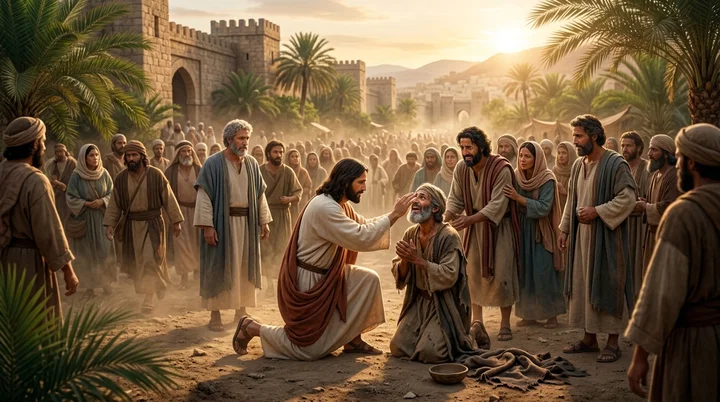
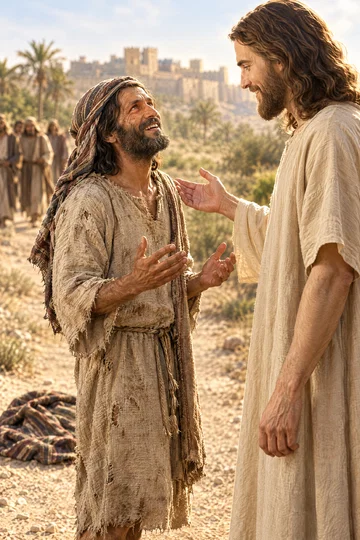
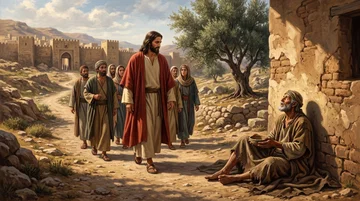
And, behold, two blind men sitting by the way side, when they heard that Jesus passed by, cried out, saying, Have mercy on us, O Lord, thou Son of David.
Translations
And, behold, two blind men sitting by the way side, when they heard that Jesus passed by, cried out, saying, Have mercy on us, O Lord, you son of David.
And, behold, two blind men sitting by the way side, when they heard that Jesus passed by, cried out, saying, Have mercy on us, O Lord, thou Son of David.
And behold, two blind men sitting by the way side, when they heard that Jesus passed by, cried out, saying, Have mercy on us, O Lord, thou Son of David.
And behold, two blind men sitting by the way-side, when they heard that Jesus passed by, cried out, saying, Have mercy on us, O Lord, thou son of David.
Revised Version, American Standard Version
And behold, two blind men sitting by the way side, when they heard that Jesus was passing by, cried out, saying, Lord, have mercy on us, thou son of David.
and lo, two blind men sitting by the way, having heard that Jesus doth pass by, cried, saying, 'Deal kindly with us, sir — Son of David.'
And lo, two blind men, sitting by the wayside, having heard that Jesus was passing by, cried out saying, Have mercy on us, Lord, Son of David.
and lo! two blind men, sitting beside the road, hearing that Jesus was passing by, cried aloud saying—Lord! have mercy on us! Son of David!
And there were two blind men sitting beside the road. When they heard that Jesus was passing by, they cried out, “ Lord, Son of David, have mercy on us!”
And there were two blind men sitting beside the road. When they heard that Jesus was passing by, they cried out, “ Have mercy on us, Lord, Son of David!”
Behold, two blind men sitting by the road, when they heard that Jesus was passing by, cried out, “ Lord, have mercy on us, you son of David!”
And two blind men seated by the wayside, when they had the news that Jesus was going by, gave a loud cry, saying, Lord, Son of David, have mercy on us.
And beholde, two blinde men, sitting by the way side, when they heard that Iesus passed by, cryed, saying, O Lord, the Sonne of Dauid, haue mercie on vs.
Douay-Rheims (Challoner revision)
And behold two blind men sitting by the way side, heard that Jesus passed by, and they cried out, saying: O Lord, thou son of David, have mercy on us.
Pictures
Cross-references
- Mark 10:46-52
And they came to Jericho: and as he went out of Jericho with his disciples and a great number of people, blind Bartimæus, the son of Timæus, sat by the highway side begging.
Parallel account of blind beggars calling to Jesus for mercy and receiving sight.
- Luke 18:35-43
And it came to pass, that as he was come nigh unto Jericho, a certain blind man sat by the way side begging:
Parallel account of the blind beggar calling to Jesus and receiving sight.
- Matthew 9:27-31
And when Jesus departed thence, two blind men followed him, crying, and saying, Thou Son of David, have mercy on us.
Two blind men ask Jesus for mercy and are healed.
- Isaiah 35:5
Then the eyes of the blind shall be opened, and the ears of the deaf shall be unstopped.
Sight given to the blind is a sign of the Messiah’s saving work.
- Matthew 12:22-23
Then was brought unto him one possessed with a devil, blind, and dumb: and he healed him, insomuch that the blind and dumb both spake and saw.
Jesus heals the blind, prompting recognition as the Son of David.
- Mark 8:22-26
And he cometh to Bethsaida; and they bring a blind man unto him, and besought him to touch him.
Both texts describe Jesus healing a blind man.
- John 9:1-7
And as Jesus passed by, he saw a man which was blind from his birth.
Jesus gives sight to a blind man.
Commentary
Each commentary is drawn from primary sources: the writings of Ellen G. White and Adventist pioneers and periodicals. Each commentary is separate. Its own words are not a quotation; follow the references to read the source passages.
Ellen G. White
4 sources
Two blind men were sitting by the wayside, and when they heard that Jesus was passing by they cried out to him for mercy.7T 190.1RH Jan 10, 1856SG2 202.1–2GC 109.2 Their address to him as Son of David was a plea to him as the promised Messiah.7T 190.1 The same cry is also set forth as that of blind Bartimeus pleading to Jesus as the Son of David for mercy.RH Jan 10, 1856
The cry stands as a pattern of faith for bringing a sick person to Jesus as the great Physician, where relying on his healing power brings comfort.RH Jan 10, 1856SG2 202.1–2 That faith looks to him and to God for healing and complete restoration.RH Jan 10, 1856SG2 202.1–2 For spiritual blindness the call urges each person to seek Jesus urgently for himself, trusting that through God's grace sight will be given that is more valuable than riches.7T 190.1
The cry became the song of a faithful believer fastened to the stake with the fire kindled about him.GC 109.2 He would not renounce what he had written and preached to rescue souls from sin and perdition.GC 109.2 He sang most joyfully until his voice was silenced forever, thus sealing with his blood the truth he had taught in life.GC 109.2
Sources
Pioneers and periodicals
21 sources
Two blind beggars sat beside the highway outside Jericho as Jesus passed by on his final journey to Jerusalem with a great crowd.ST Sep 13, 1899ST Aug 29, 1911ST Nov 21, 1900 Though Matthew tells of two men, only Bartimaeus is named elsewhere because he was the more prominent beggar and spoke for both.ST Mar 18, 1889ST Nov 20, 1901 Calling him Lord and Son of David, they showed they knew him as the promised Messiah who could give sight, and though the crowd tried to silence them they cried out all the more because he might soon pass beyond reach.ST Sep 13, 1899ST Nov 21, 1900ST Mar 18, 1889ST Aug 29, 1911ST Jan 3, 1911 Their urgency teaches to seek mercy while he is near, letting no outward hindrance stop prayer, since he hears even the heart's silent cry.ST Aug 29, 1911ST Aug 29, 1911 Their blindness pictures the spiritual poverty and helplessness of all sinners, whom he touches to bring from darkness into light, freedom, and following him.ST Aug 29, 1911ST Aug 30, 1905ST Jul 29, 1897ST Nov 20, 1901
Setting and Circumstances
Two blind men were sitting beside the roadside highway near Jericho as Jesus passed by, leaving the city on his final journey to Jerusalem accompanied by a great crowd.ST Sep 13, 1899ST Aug 29, 1911ST Nov 21, 1900ST Jan 3, 1911ST Nov 20, 1901 They sat by the way calling to him for mercy when they heard he was passing, addressing him as Son of David.ST Sep 13, 1899ST Nov 21, 1900ST Jan 3, 1911ST Nov 20, 1901 Despite the crowd's attempt to silence them, they persisted in the appeal.ST Sep 13, 1899ST Jan 3, 1911
The men were blind beggars sitting beside the highway, dependent on passersby for daily food and small coins.ST Mar 18, 1889ST Nov 20, 1901ST Nov 20, 1901 Matthew records two, while Mark and Luke name only Bartimaeus because he was the more conspicuous beggar and spoke for himself and his companion.ST Mar 18, 1889
The cry may have followed an earlier unsuccessful attempt to gain attention as Jesus entered the city, with waiting at the other gate to renew the plea as he came out.ST Mar 18, 1889 Their healing is one of seven healings of blind people specially noted, besides the healing of the man born blind at Jerusalem.ST Mar 8, 1905
Faith and Persistent Prayer
By calling out to him as Lord and Son of David, the two blind men by the wayside acknowledged him as the promised Messiah.ST Sep 13, 1899ST Nov 21, 1900ST Mar 18, 1889ST Aug 30, 1905 They had heard of his love and miraculous power and of the life and light he brings, and they pleaded that he would give them sight.ST Aug 30, 1905ST Aug 30, 1905ST Aug 29, 1911 Their cry showed faith in him and hope that he could help them.ST Sep 13, 1899ST Nov 21, 1900ST Aug 30, 1905 They may have taken their place beside the road deliberately because they knew he would pass by.ST Aug 29, 1911
Though the crowd tried to silence them, they persisted and cried out still more urgently.ST Sep 13, 1899ST Jan 3, 1911ST Aug 29, 1911 They cried urgently because Jesus was passing by and might soon be gone, believing that mercy was available in him.ST Aug 29, 1911ST Aug 29, 1911 Their affliction had brought them to seek Jesus, showing that affliction can be a blessing when it turns the heart to God.ST Aug 29, 1911 Their urgency teaches urgency in prayer, to seek his mercy while he is near because time and the opportunity to pray are passing.ST Aug 29, 1911
Their example also teaches that outward difficulties need not prevent prayer, for even when privacy cannot be found or words cannot be spoken aloud, Jesus hears and attends to the heart's silent cry.ST Aug 29, 1911 Their request for mercy may express every human need, since people are sinful, ignorant and weak and face temptations and ordinary troubles.ST Aug 29, 1911 Though Jesus knows what is needed before asking, he invites telling him particular wants, and he gives relief and blessing as is best.ST Aug 29, 1911 Inability to explain how he could heal does not prevent receiving healing or knowing the change from having been blind to now seeing.RH Jul 2, 1861
The appeal is a pattern of faith for bringing a sick person to Jesus as the great Physician and relying on his healing power.RH Jan 10, 1856 Such faith looking to God brings comfort and complete restoration.RH Jan 10, 1856RH Jan 25, 1906 As reflected in a blind woman's prayer for the Saviour to restore her sight, there remains hope that Jesus can heal blindness.RH Jan 25, 1906
Spiritual Meaning and Application
The two blind beggars picture the spiritual poverty, blindness, and helplessness of all people.ST Aug 30, 1905ST Jul 29, 1897ST Nov 20, 1901ST Nov 20, 1901 Sin blinds the soul.ST Jul 29, 1897 Human claims and possessions cannot supply what is lacking, including true righteousness.ST Aug 30, 1905ST Nov 20, 1901 Jesus touches blind eyes and brings from physical darkness into sight and from spiritual darkness into the light of love and life.ST Aug 30, 1905 He frees from sin, brings near, and leads to follow him, and sight is linked with love and closeness to him.ST Jul 29, 1897 He gives to the needy sight, rest, health, wealth, and life, and clothes the soul in righteousness.ST Aug 30, 1905ST Nov 20, 1901
Though a great crowd followed Jesus out of Jericho, outwardly following him was not the same as being his disciple.ST Aug 29, 1911 The call therefore is to follow him wholeheartedly.ST Aug 29, 1911 That means learning from him, believing in him, loving him, and serving him.ST Aug 29, 1911
Their desperate need calls for mercy and humane care.ST Nov 20, 1901 The poor and disabled are God's poor, and their need pleads in His name.ST Nov 20, 1901 Those who hear a cry for help should take time to respond as Jesus stopped and blessed when called.RH Feb 2, 1905 Especially this means bringing the gospel to blind people.RH Feb 2, 1905
Sources