Luke 7:1
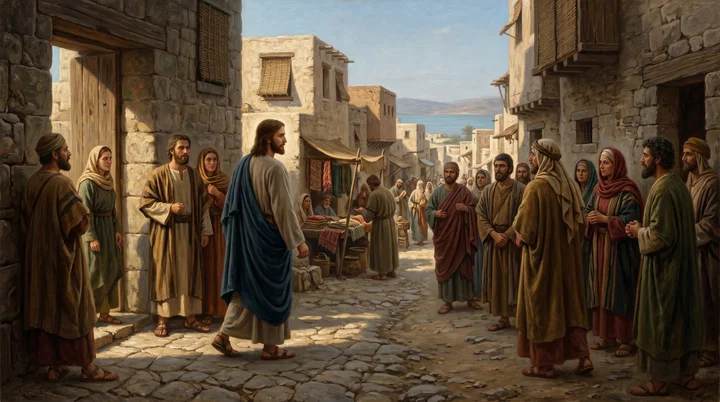
Now when he had ended all his sayings in the audience of the people, he entered into Capernaum.
Translations
American King James Version, King James Version, KJV Cambridge Paragraph Bible, Webster Bible
Now when he had ended all his sayings in the audience of the people, he entered into Capernaum.
Revised Version, American Standard Version
After he had ended all his sayings in the ears of the people, he entered into Capernaum.
And when he completed all his sayings in the ears of the people, he went into Capernaum;
And when he had completed all his words in the hearing of the people, he entered into Capernaum.
After he had completed all his sayings within the hearing of the people, he entered into Capernaum.
Berean Standard Bible, Majority Standard Bible
When Jesus had concluded His discourse in the hearing of the people, He went to Capernaum.
After he had finished speaking in the hearing of the people, he entered into Capernaum.
After he had come to the end of all his words in the hearing of the people, he went into Capernaum.
When hee had ended all his sayings in the audience of the people, he entred into Capernaum.
Douay-Rheims (Challoner revision)
And when he had finished all his words in the hearing of the people, he entered into Capharnaum.
Pictures
Cross-references
- Matthew 8:5-13
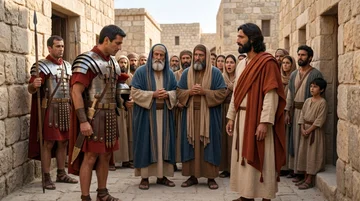
And when Jesus was entered into Capernaum, there came unto him a centurion, beseeching him,
Parallel account of the centurion’s appeal and Jesus healing his servant.
- Matthew 9:1
And he entered into a ship, and passed over, and came into his own city.
Both identify Capernaum as Jesus’ own city.
- Luke 7:7
Wherefore neither thought I myself worthy to come unto thee: but say in a word, and my servant shall be healed.
The centurion trusts Jesus to heal his servant by command from a distance.
Commentary
Each commentary is drawn from primary sources: the writings of Ellen G. White and Adventist pioneers and periodicals. Each commentary is separate. Its own words are not a quotation; follow the references to read the source passages.
Ellen G. White
5 sources
When He had ended all His sayings in the audience of the people, He entered into Capernaum.DA 315.2–316.1DA 315.1ST Aug 8, 1916AA 19.2–20.1 On entering He was met by Jewish elders appealing for the healing of a Roman centurion's dying servant, who was a slave, and the healing followed.DA 315.2–316.1DA 315.1ST Aug 8, 1916 The centurion deeply loved and cared for his servant and sought his recovery; though a Roman conqueror, he had overcome national prejudice, respected God's worship, shown kindness to the Jews, and built them a synagogue.DA 315.2–316.1ST Aug 8, 1916 Though he had never seen Jesus, reports about Him and His teaching met the centurion's spiritual need and produced faith that trusted Jesus' power; feeling unworthy to approach Jesus himself, he asked the Jewish elders to present his request.DA 315.2–316.1ST Aug 8, 1916
In Capernaum Jesus rewarded this Gentile centurion's faith, showing that those considered outside Israel could hunger for truth and receive salvation.AA 19.2–20.1ST Apr 23, 1885 His conversion was an instance of Christ's direct work among Gentiles reaching beyond Israel.AA 19.2–20.1ST Apr 23, 1885 By this He sought to lead the Jews out of their exclusiveness and taught the disciples that God's kingdom sets no boundary separating Jew from Gentile.AA 19.2–20.1ST Apr 23, 1885
Sources
Pioneers and periodicals
19 sources
After he had finished all his instruction to the listening crowds in the Sermon on the Mount, he came down from the mountain with his disciples and the multitudes and entered Capernaum, his own city.ST Jun 2, 1881ST Mar 26, 1894ST May 31, 1905 The entry marks the time and place for what follows immediately afterward, the healing of the centurion's servant at Capernaum among the notable miracles of Luke 7:1-17.ST Mar 26, 1894ST May 31, 1905 Capernaum was under Roman military rule with a garrison in the town, and the centurion connected with it had made his home there, though a heathen Roman loving the Jews and building their synagogue where Jairus was ruler.ST Sep 20, 1910ST Apr 11, 1900ST Nov 8, 1899 The servant brought to Jesus was an enslaved slave, sick and dying and near death, for whom the centurion sought healing out of tender and deep concern.ST Jul 17, 1884ST Apr 11, 1900 His faith looked to Jesus to heal by his word alone without being personally present, trusting that what is done by agents sent in his place is his own work and that the healing power lies in God's living word, and his conversion shows Christ's work reaching beyond Israel.ST Apr 23, 1885ST Apr 23, 1896ST May 31, 1905ST Apr 11, 1900
Setting and Sequence
The verse closes all his sayings to the people, namely the Sermon on the Mount, and records his entry into Capernaum, called his own city.ST Jun 2, 1881ST Mar 26, 1894ST May 31, 1905ST Apr 11, 1900 He had come down from the mountain with his disciples and the crowds, and the centurion's request for his servant's healing followed soon after his arrival.ST Jun 2, 1881 After finishing all his sayings in the hearing of the people he entered Capernaum, setting the time and place for the healing of the centurion's servant that follows.ST Mar 26, 1894ST Jun 13, 1900 The teaching he had finished was the Sermon on the Mount, and the centurion's servant account that follows takes place there shortly after it.ST May 31, 1905ST Apr 11, 1900
The entry fixes the time and place for what follows and begins the account of the healing of the centurion's servant at Capernaum.ST Mar 26, 1894ST Apr 11, 1900ST Jun 13, 1900 That healing came shortly and immediately afterward, as the centurion's appeal for his dying servant came immediately after Jesus finished teaching the people in the Sermon on the Mount and entered Capernaum, where the healing account begins.ST Jun 2, 1881ST May 31, 1905ST Jul 17, 1884 It stands among the notable miracles recorded in Luke 7:1-17, with the servant brought to his attention for healing there.ST Apr 11, 1900 Capernaum was under Roman military rule with a Roman garrison in the town, Palestine then having garrisons in various towns.ST Apr 11, 1900 The centurion in the following account was likely connected with that garrison, and he had made his home there.ST Sep 20, 1910ST Apr 11, 1900
The centurion, though regarded as a heathen Roman, loved the Jews and had built the synagogue at Capernaum where Jairus was ruler.ST Nov 8, 1899 After finishing his sayings before the people, Jesus went to Capernaum, where Jewish elders met him on behalf of the centurion whose servant was ill. Jairus afterward heard of this healing.ST Nov 8, 1899 The servant brought to Jesus' attention was an enslaved slave, ill and dying and near death.ST Aug 8, 1916ST Jul 17, 1884ST Sep 20, 1910 The centurion sought his healing out of tender and deep concern, caring deeply for him though he was a slave.ST Aug 8, 1916
Faith Healing and Witness
Luke gives the fuller account in which the centurion made his request through Jewish elders and friends rather than speaking to Jesus in person, while Matthew gives the shorter account that presents their exchange without mentioning the intermediaries, so the two accounts do not conflict.ST Sep 15, 1887 What a man does or says by his agents he does himself, since those sent stand in his place and represent him.ST Apr 23, 1896 The centurion himself stated this principle in his words about his soldiers, and his faith rested on it in believing that Jesus could heal his servant without being personally present by sending spiritual agents, the healing still being Christ's own work.ST Apr 23, 1896 Luke's omission of the centurion's meeting with Jesus does not contradict Matthew's account that he met him, for the centurion himself met and spoke with Jesus before Jesus reached the house.ST Mar 26, 1894ST Apr 11, 1900 The accounts can be read together to include all the details, without letting the effort to harmonize them distract from the story's lessons.ST Mar 26, 1894
Matthew also shows the centurion as making the appeal through Jewish elders who represented him. The centurion's faith showed that Jesus could heal without being physically present, for he trusted that as one who exercised authority through those under him Jesus could command spiritual agents to act, and Jesus honored this faith.ST May 31, 1905 Jesus spoke the word and the servant was made whole as the centurion expected, for the healing power lay in God's living word and not in the messenger, angels could carry that word without diminishing its power, and Christ ministering in heaven can send his word to heal both body and soul.ST May 31, 1905ST Apr 11, 1900 Although the centurion had never seen Jesus, reports about him inspired faith and Jesus' teaching met his spiritual need, and feeling unworthy to approach Jesus himself he asked Jewish elders to make the request.ST Aug 8, 1916 The centurion, a Roman whose servant was a slave, cared deeply for him and sought his healing out of tender concern.ST Aug 8, 1916
Faith joined with humility receives a swift response from God.ST Jul 17, 1884 A sense of personal unworthiness does not discourage a believing petitioner but leads to reliance on divine grace and to seeking appropriate intercession, and as the centurion sought the elders' advocacy, believers may appeal to God through the advocacy of the Son of God.ST Jul 17, 1884 The account shows Christ's work reaching beyond Israel, with the centurion's conversion as an instance of his direct work among Gentiles as he sought to lead the Jews out of their exclusiveness.ST Apr 23, 1885 The centurion's faith was stronger and more comprehensive than Jairus's, for the centurion relied on Jesus' word alone while Jairus asked Jesus to come in person.ST Feb 6, 1896
Sources